Artwork
Învierea Domnului încadrată de praznice
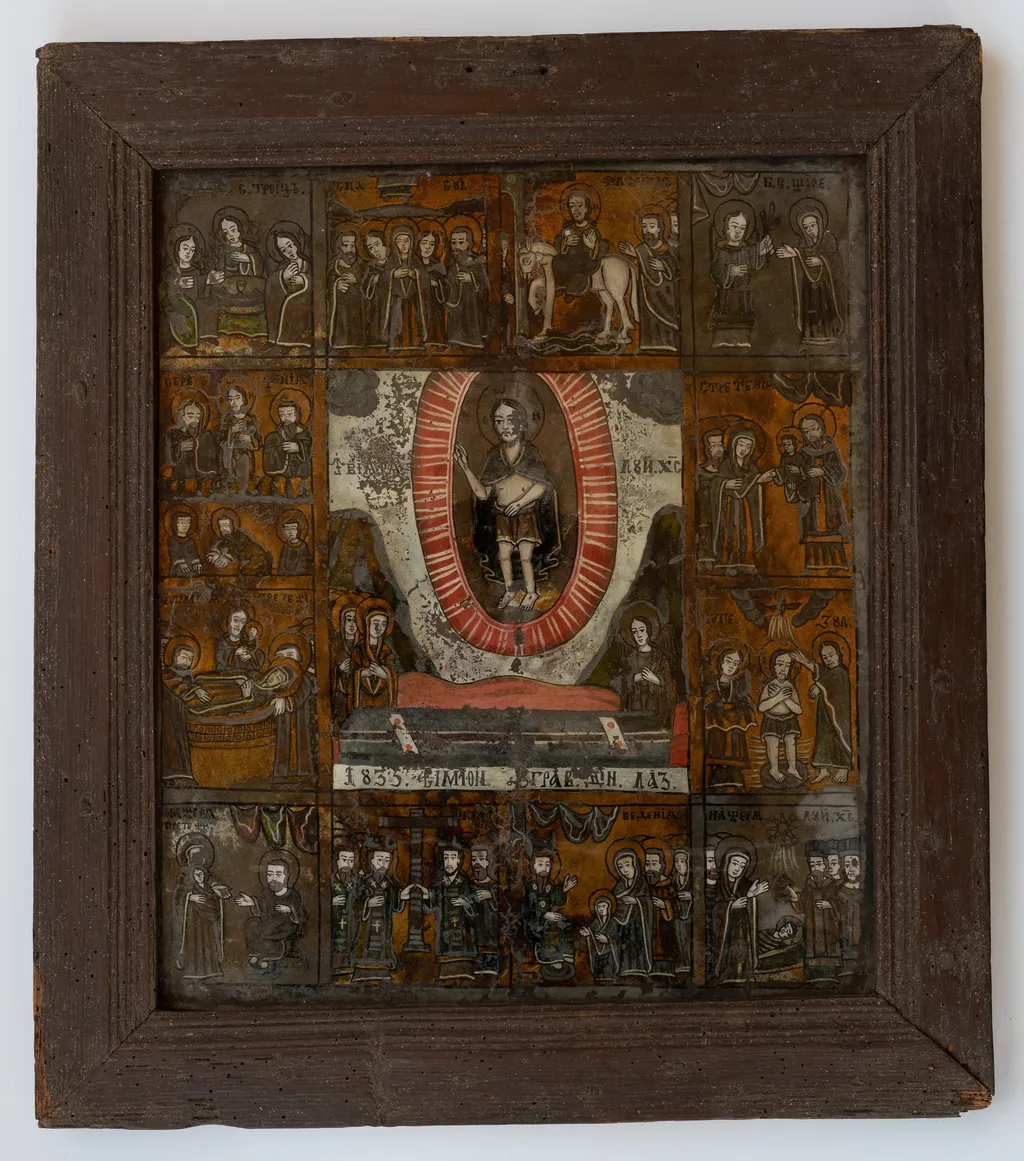
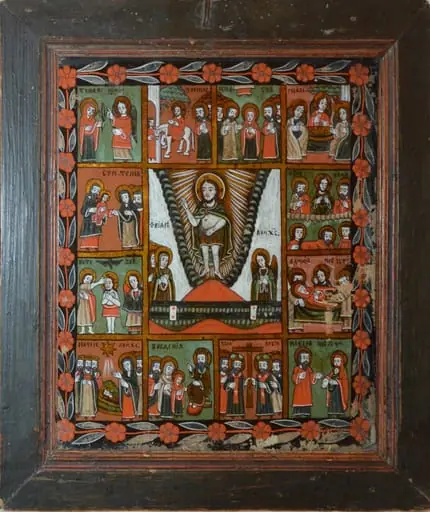
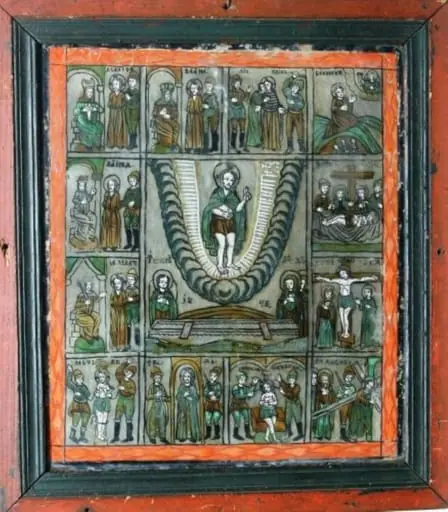
Învierea Domnului încadrată de praznice is a drawing by the Romanticist artist Simion Poienaru. It dates from 1835 and is held in the collection of the National Museum of Transylvanian History.
About this work
Around him are scenes of other people—some standing, some kneeling, some holding books or baskets.
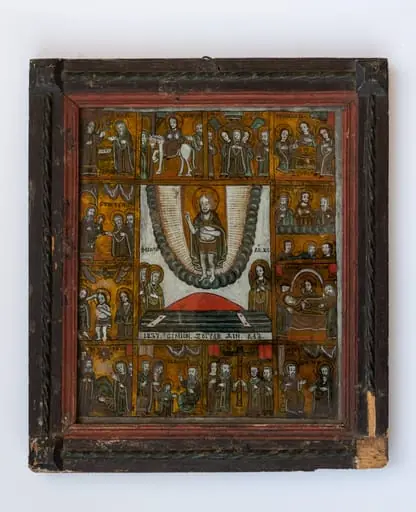
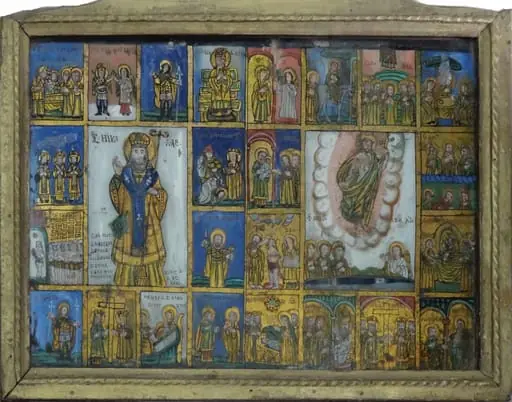
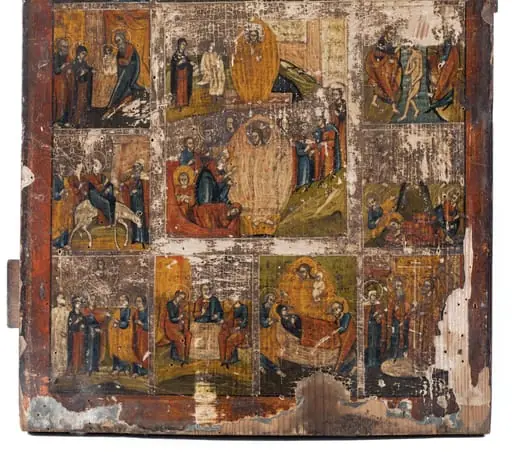
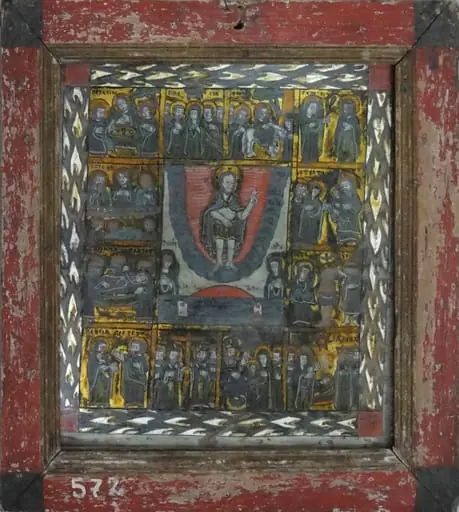
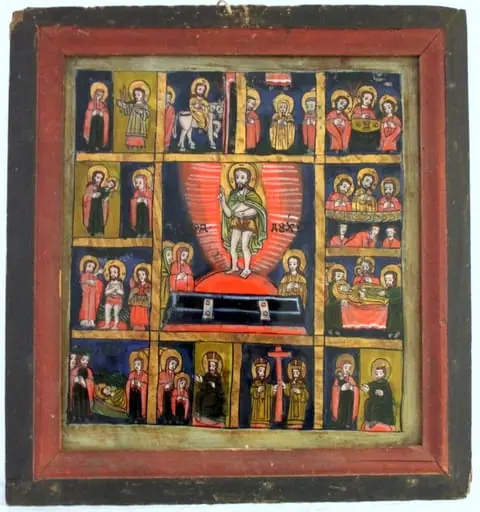
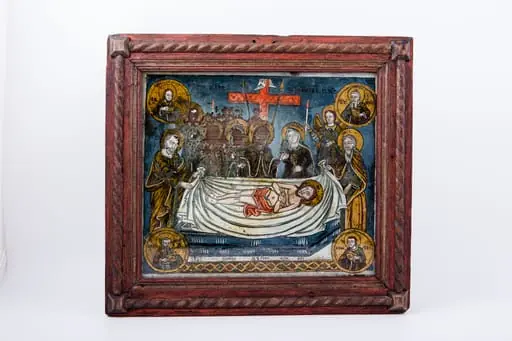
This wooden panel is packed with small, flat figures arranged in neat rows. At the center sits a bearded man in a red robe, floating above a half-moon shape. Around him are scenes of other people—some standing, some kneeling, some holding books or baskets. The colors are earthy browns, greens, and reds, with gold halos around many heads.
The figures look stiff and symbolic, not quite lifelike. The artist used simple lines and bold outlines, almost like a storybook illustration. The date "1835" is written at the bottom, along with the name *Simion Poienaru*.
Next, look up cross-hatching to see how artists create shading with lines.
Overview
A wooden panel painting titled 'Învierea Domnului încadrată de praznice' was created by Simion Poienaru in 1835. The work features numerous small figures arranged in a structured composition.
Subject & Meaning
The central figure is a bearded man in a red robe, surrounded by various scenes depicting people in different postures and activities. The imagery is symbolic and suggestive of a narrative, likely related to a religious theme.
Technique & Style
The artist employed a style characterized by simple lines, bold outlines, and flat figures. The color palette is subdued, with earthy tones and gold accents used for halos. The overall effect is reminiscent of a storybook illustration, with an emphasis on clarity over naturalism.
Artist & collection
Artist
Simion Poienaru liked to tuck little parties around his holy scenes—tiny figures dancing in the margins of Jesus’s resurrection, like uninvited guests who’d wandered in from a village wedding.

Museum
National Museum of Transylvanian History
Continue through works from the same source collection.