Artwork
Maica Domnului cu Pruncul
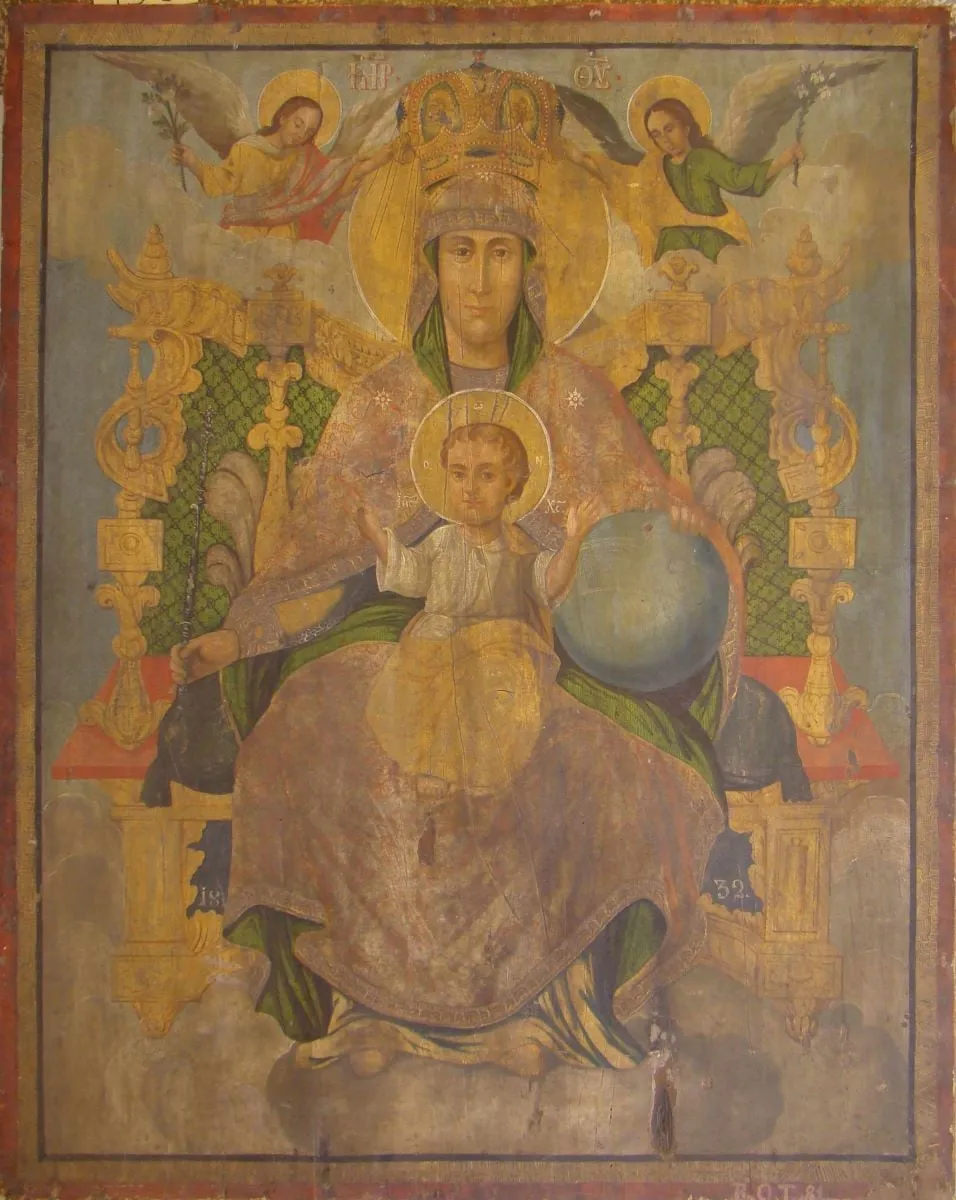
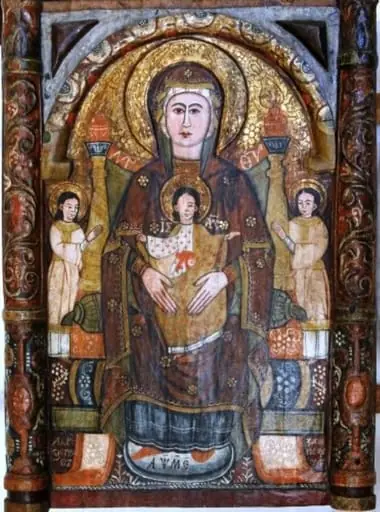
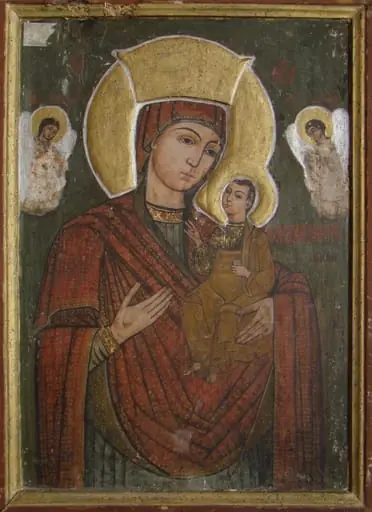
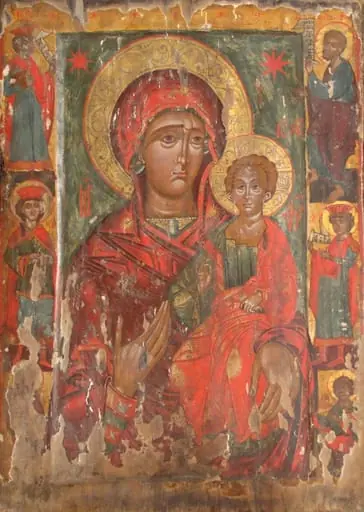
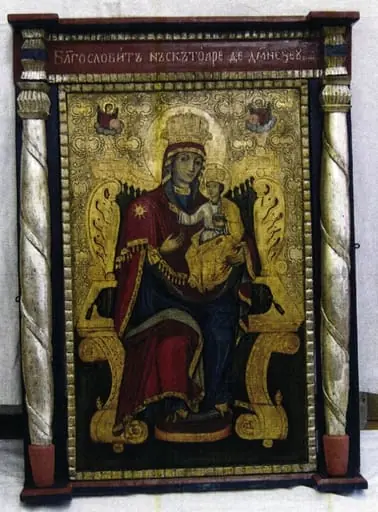
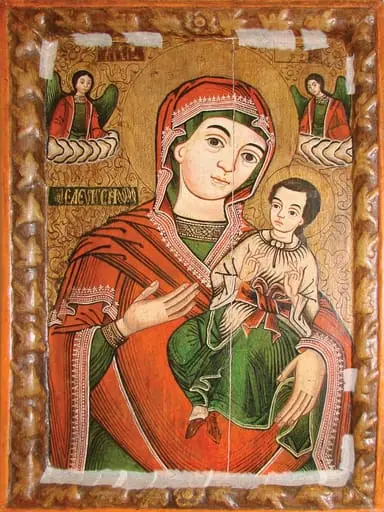
Maica Domnului cu Pruncul is a drawing by the Romanticist artist Popa Ștefan și fratele său Ioan. It dates from 1832 and is held in the collection of the Alba Iulia Orthodox Archdiocese. Painted in 1832 by Popa Ștefan and his brother Ioan, this devotional image depicts the Virgin Mary with the Christ Child.
About this work
Overview
Painted in 1832 by Popa Ștefan and his brother Ioan, this devotional image depicts the Virgin Mary with the Christ Child. Executed in tempera and gold leaf on wood, it reflects the traditions of Romanian religious iconography. The work is part of the collection at the Museum of Ethnography, where it is preserved as an example of 19th-century ecclesiastical art from Moldavia.
Subject & Meaning
The child’s halo and Mary’s regal attire signify their sacred status.
The Virgin Mary, crowned and seated, holds the Christ Child on her lap, a common motif in Orthodox Christian iconography symbolizing divine motherhood and intercession. The child’s halo and Mary’s regal attire signify their sacred status. The composition follows established theological conventions, emphasizing spiritual authority rather than naturalistic emotion, intended to inspire reverence in worship.
Technique & Style
The artists employed tempera paint with extensive gold leaf detailing, particularly in the halos, crowns, and background accents. Fine brushwork renders intricate patterns on garments and decorative borders. The flat, frontal perspective and stylized forms align with Byzantine-derived traditions, while the rich materials reflect a desire to convey divine splendor through material luxury.
History & Provenance
Created in 1832, the painting likely originated in a local church or private chapel in Moldavia. It entered the Museum of Ethnography’s collection in the 20th century, where it was cataloged as part of Romania’s religious folk art heritage. Its survival through political and social upheavals underscores its cultural significance beyond purely liturgical use.
Context
In early 19th-century Romania, religious painting remained central to spiritual life, especially in rural communities. Artists like Popa Ștefan, often clergy themselves, blended traditional iconographic formulas with regional decorative sensibilities. This work exemplifies how local artisans sustained Orthodox visual culture amid broader European artistic shifts.
Legacy
The painting contributes to the understanding of Romanian ecclesiastical art’s continuity in the 19th century. It illustrates how traditional iconography persisted in provincial contexts, even as urban centers adopted Western styles. Today, it serves as a reference point for studies on vernacular religious expression and the role of craftsmanship in sacred art.
Artist & collection
Artist
Popa Ștefan și fratele său Ioan
These two brothers from 19th-century Wallachia turned Bible scenes into everyday street scenes: imagine angels in long robes acting like neighbors chatting by the town well.
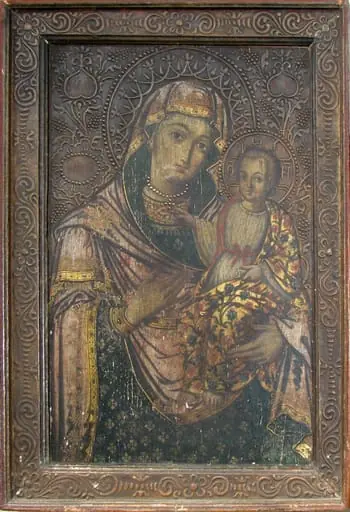 Maica Domnului cu Pruncul
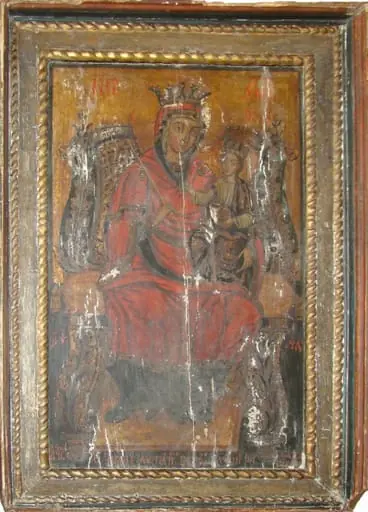 Maica Domnului cu Pruncul
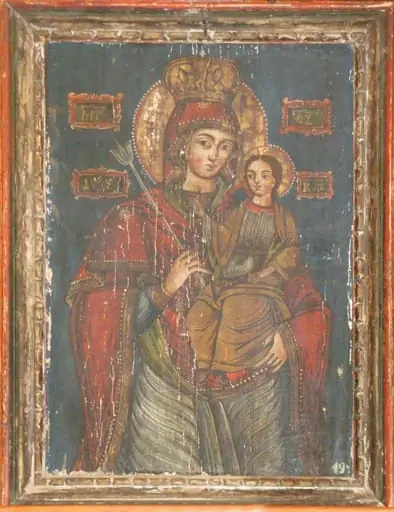 Maica Domnului cu Pruncul
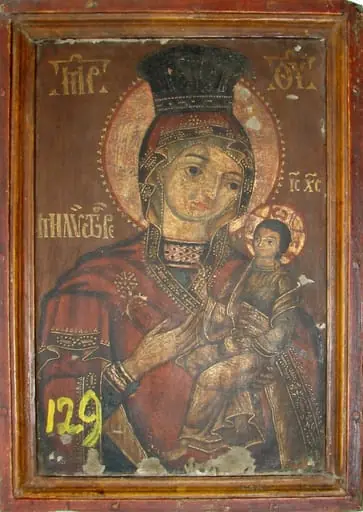 Maica Domnului cu Pruncul
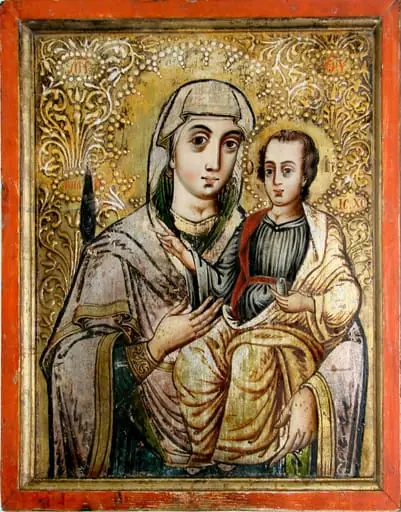 Maica Domnului cu Pruncul
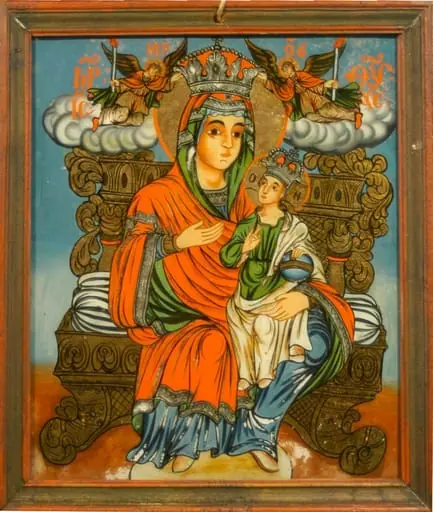 Maica Domnului cu Pruncul
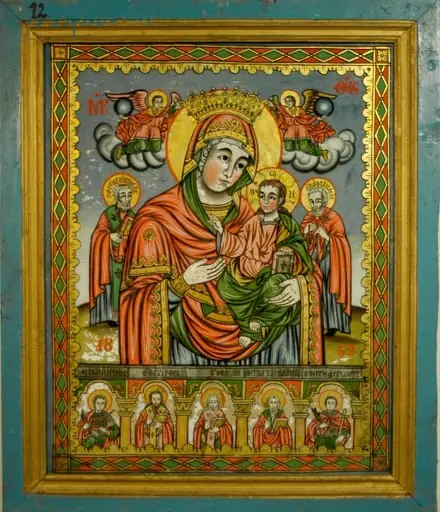 Maica Domnului cu Pruncul
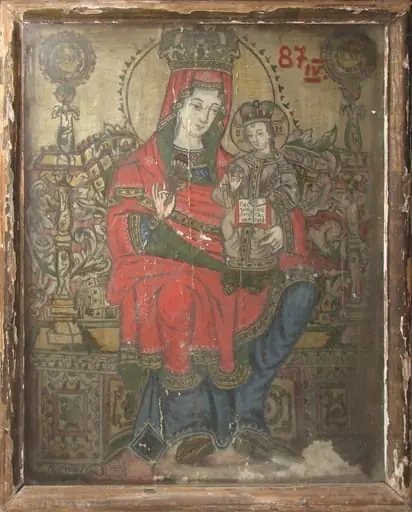 Maica Domnului cu Pruncul, floarea neveștejită
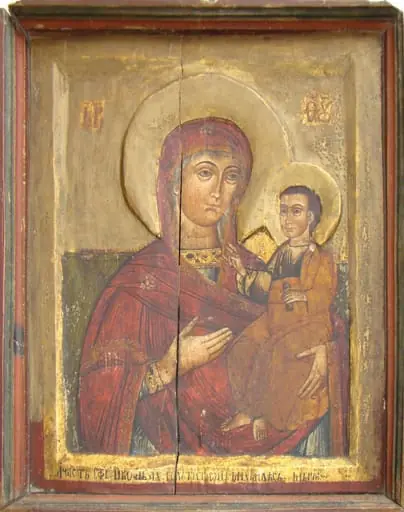 Maica Domnului cu Pruncul
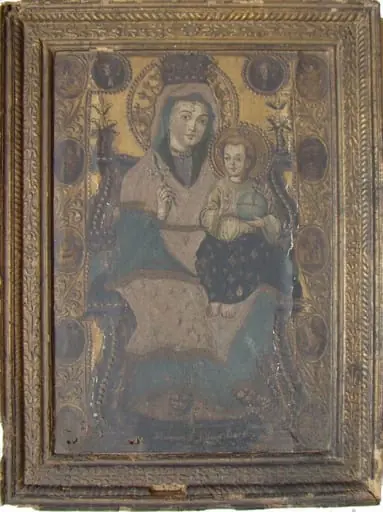 Maica Domnului cu Pruncul, floarea neveștejită
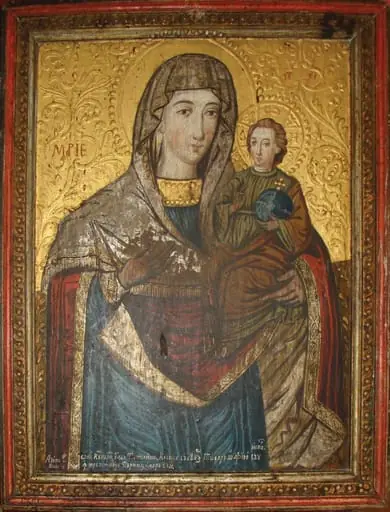 Maica Domnului cu Pruncul
 Maica Domnului cu Pruncul