Artwork
Flori
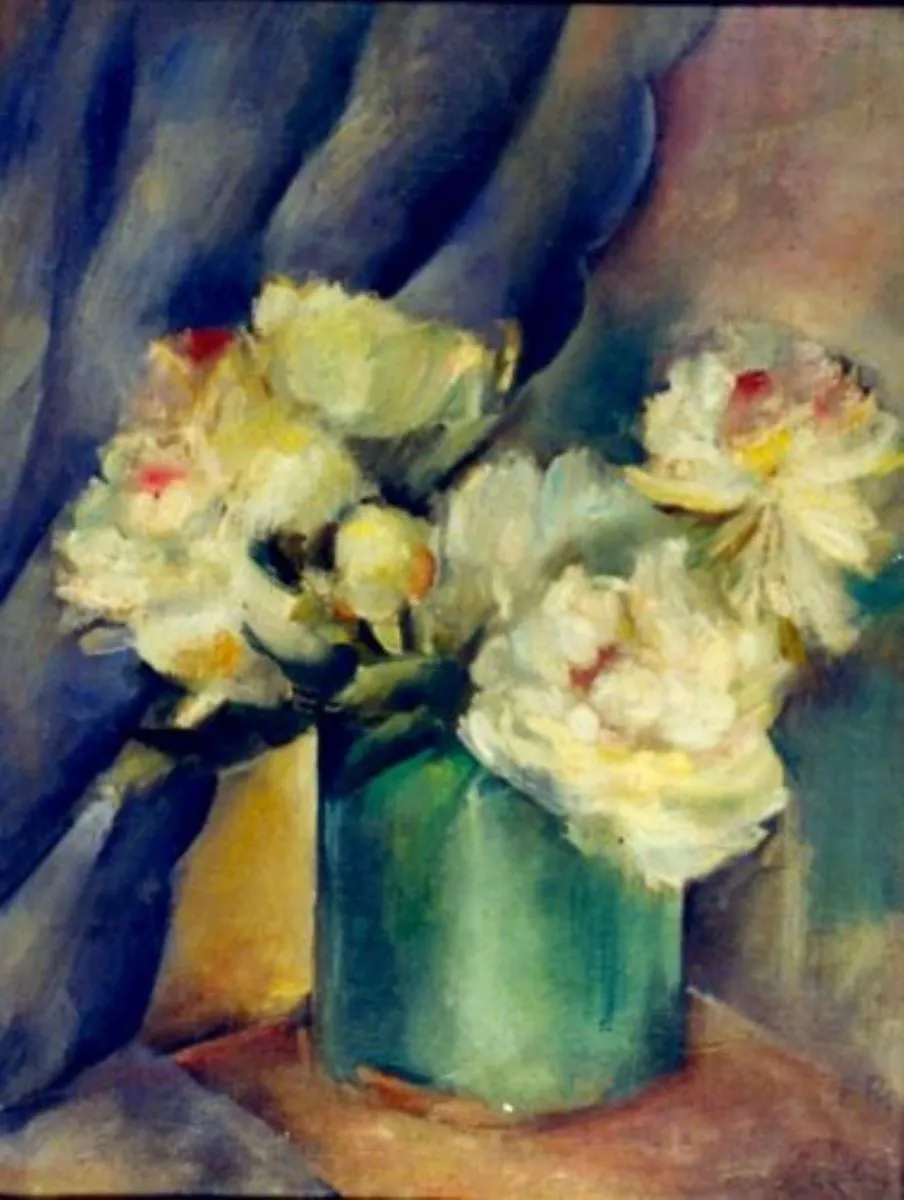
Flori is an unspecified painting by Elena Popea. It is held in the collection of the Cotroceni National Museum.
About this work
Overview
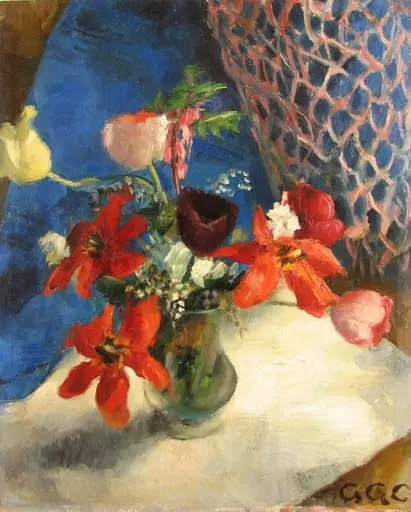
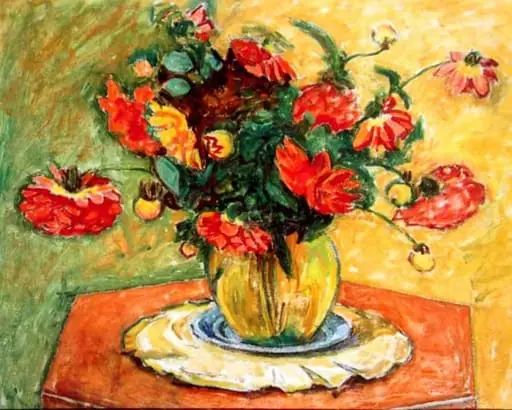
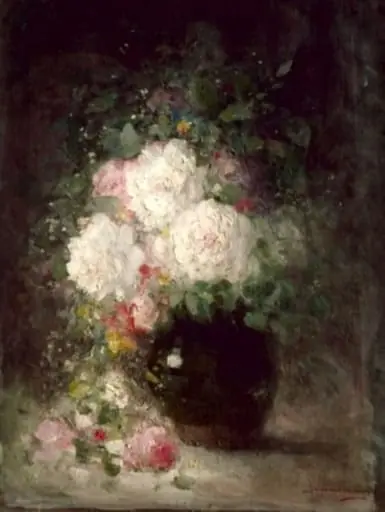
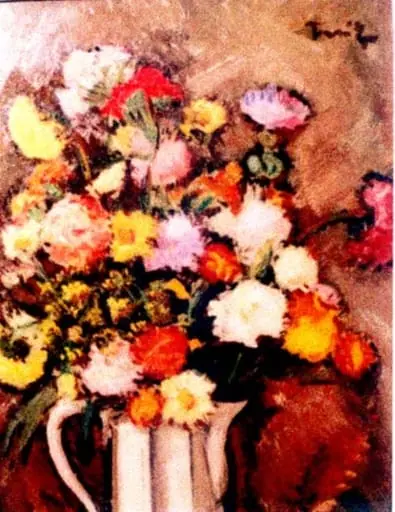
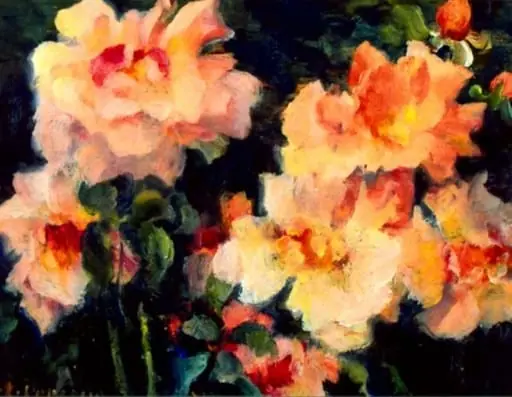
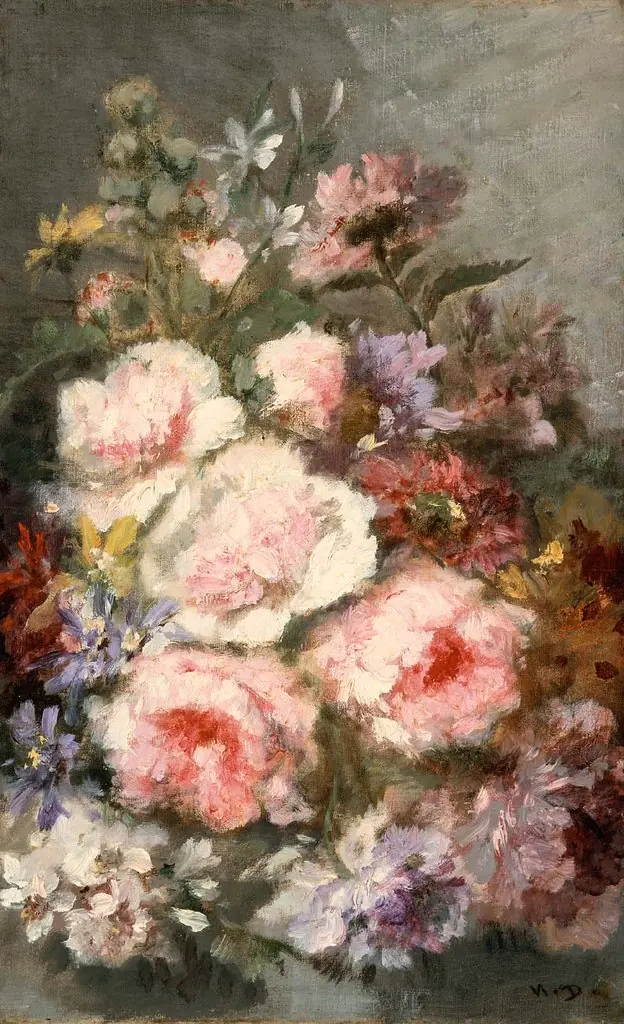
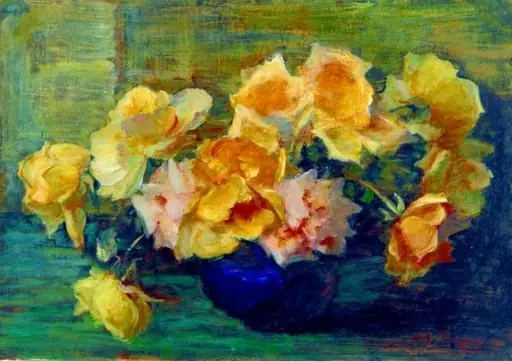
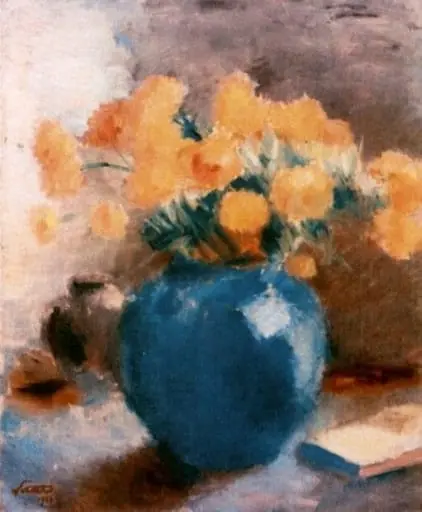
Created circa 1949 by Elena Popea, *Flori* is a still‑life oil painting that resides in the Museum of Ethnography. The composition centers on a green vase filled with a loosely arranged bouquet, its white and yellow blossoms accented by small red specks. A dark blue and muted brown background frames the arrangement, emphasizing the contrast between the luminous flowers and the surrounding tones.
Subject & Meaning
The work presents a simple domestic scene—a vase of mixed flowers—yet the choice of color and loose arrangement suggests a fleeting, almost spontaneous observation of nature. By focusing on everyday botanical forms, Popea aligns the piece with a broader modernist interest in ordinary subjects rendered with heightened visual sensitivity.
Technique & Style
Popea applies paint with thick, textured strokes, a technique known as impasto, which gives the petals a palpable, three‑dimensional quality. The bold handling of brushwork and the juxtaposition of vivid floral hues against a darker field reflect the combined influence of Impressionist light, Expressionist emotion, and Cubist structural experimentation.
History & Provenance
Born in the Austro‑Hungarian Empire and later active in Romania, Popea worked within the early‑20th‑century modernist currents before completing *Flori* in the post‑war period. The painting entered the Museum of Ethnography’s collection, where it is displayed as part of the institution’s effort to preserve Romanian modern art.
Artist & collection
Artist
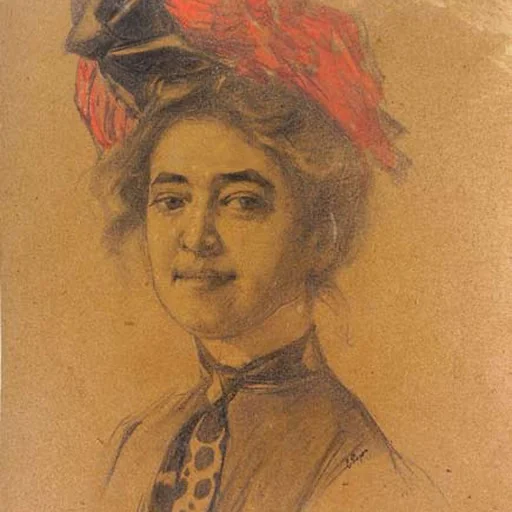
Elena Popea (15 April 1879, Brașov – 19 June 1941, Bucharest) was an Austro-Hungarian-born Romanian Modernist painter whose influences included Impressionism, Expressionism and Cubism.