Artwork
Chermeză în Bretania
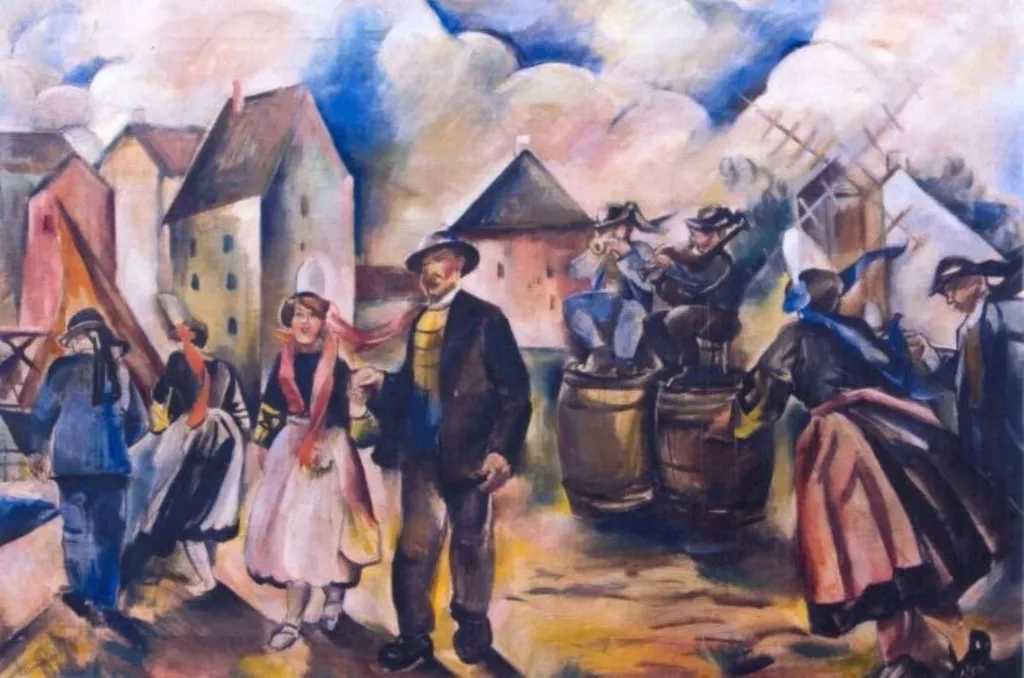
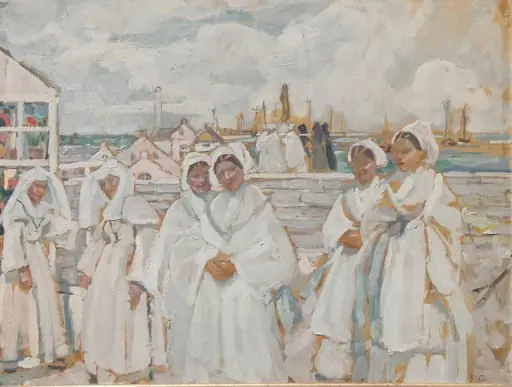
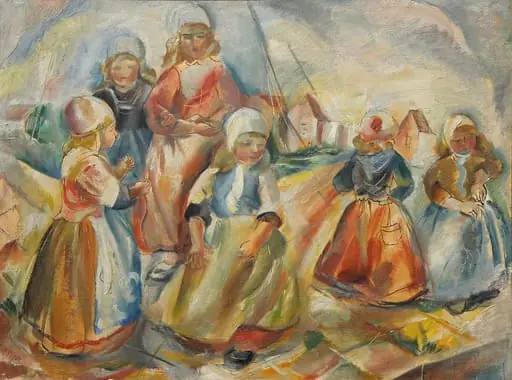
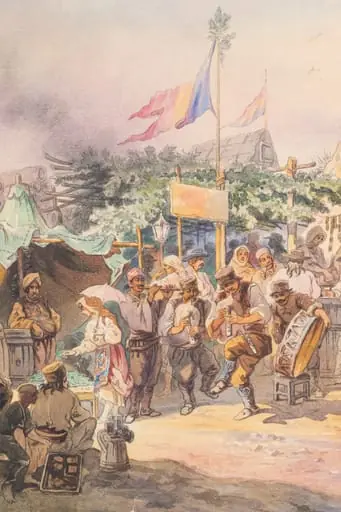
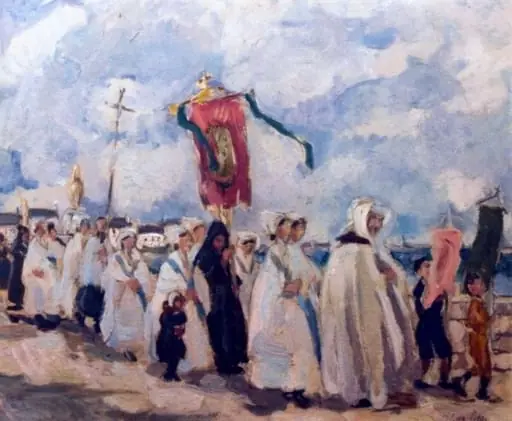
Chermeză în Bretania is an unspecified painting by Elena Popea. It dates from 1920 and is held in the collection of the National Museum of Art of Romania.
About this work
Overview
Painted during a period of artistic experimentation, it captures a moment of public celebration, likely in rural Brittany, where she spent time outside Romania.
Elena Popea, an Austro-Hungarian-born Romanian painter active in the early 20th century, produced *Chermeză în Bretania* circa 1920. The work belongs to her series of landscapes and genre scenes, reflecting her engagement with European modernist movements. Painted during a period of artistic experimentation, it captures a moment of public celebration, likely in rural Brittany, where she spent time outside Romania.
Subject & Meaning
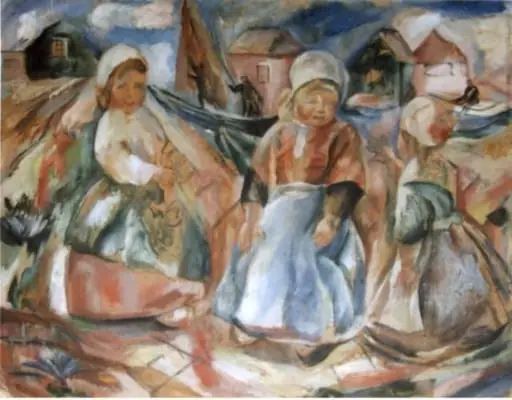
The painting portrays a street festival in a Breton village, centered on a woman waving a flag beside a man in formal attire. Behind them, musicians play drums and wind instruments, drawing a small crowd. The scene suggests a local observance—perhaps a religious or seasonal event—emphasizing communal participation. Popea’s focus on ordinary people in ritualized motion reflects her interest in cultural continuity amid modernization.
Technique & Style
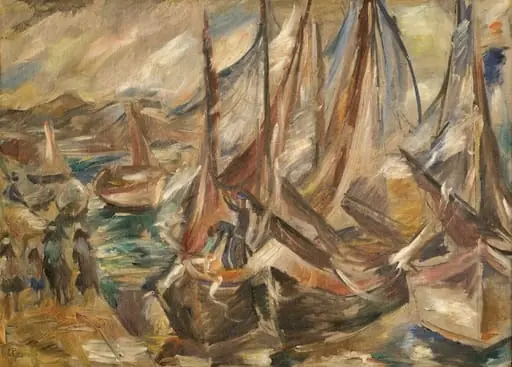
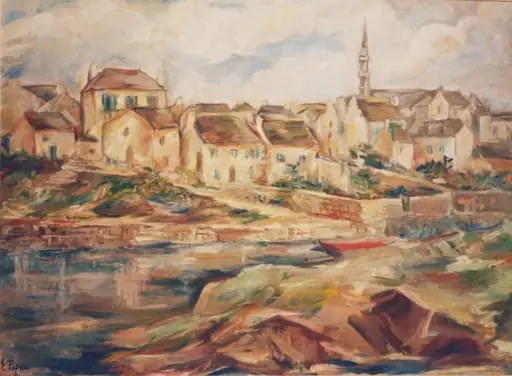
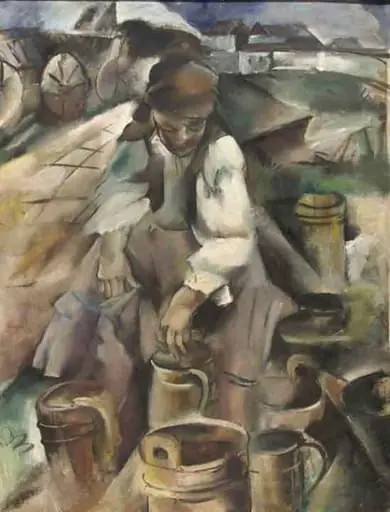
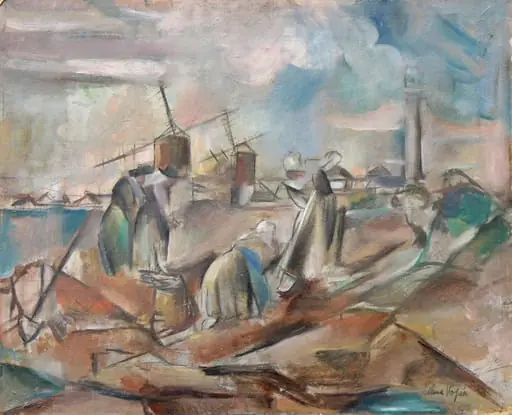
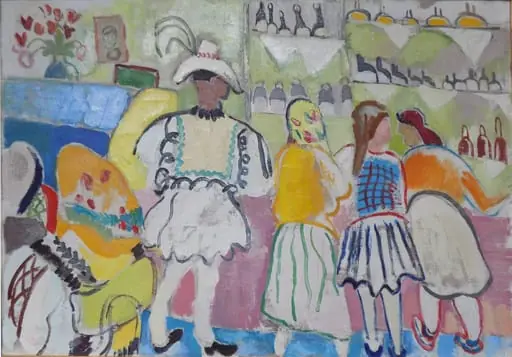
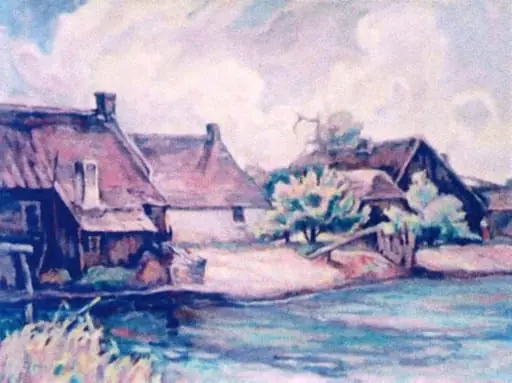
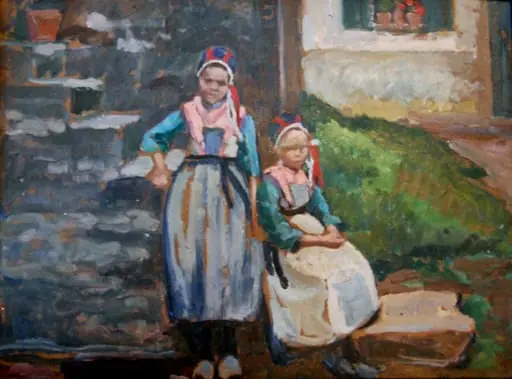
Popea employed bold, saturated hues and energetic brushwork to convey motion and atmosphere. Forms are simplified yet distinct, showing traces of Impressionist light, Expressionist intensity, and Cubist fragmentation. The thick application of paint enhances the tactile quality of fabric, skin, and architecture. The composition lacks perspective depth, instead favoring a flattened plane that heightens the sense of immediacy and rhythmic activity.
History & Provenance
Created during Popea’s formative years as a modernist, the painting emerged from her travels in France and her engagement with avant-garde circles. It remained in private collections in Romania until the mid-20th century. Documentation is sparse, but its survival reflects its recognition within Romanian modernist networks. No public exhibition history is widely recorded prior to late 20th-century scholarly interest.
Context
In the 1920s, Romanian artists increasingly looked to Western Europe for stylistic models. Popea’s work in Brittany aligns with a broader trend of Eastern European modernists engaging with French rural life as a counterpoint to urban industrialization. Her synthesis of local tradition with modernist techniques mirrored a wider cultural negotiation between heritage and innovation in post-war Europe.
Legacy
Though not widely exhibited internationally, *Chermeză în Bretania* is recognized in Romanian art history as a key example of early modernist genre painting. It illustrates Popea’s unique ability to merge ethnographic observation with expressive form. Her focus on everyday rituals influenced later generations of Romanian painters seeking to ground modernism in lived cultural experience.
Artist & collection
Artist
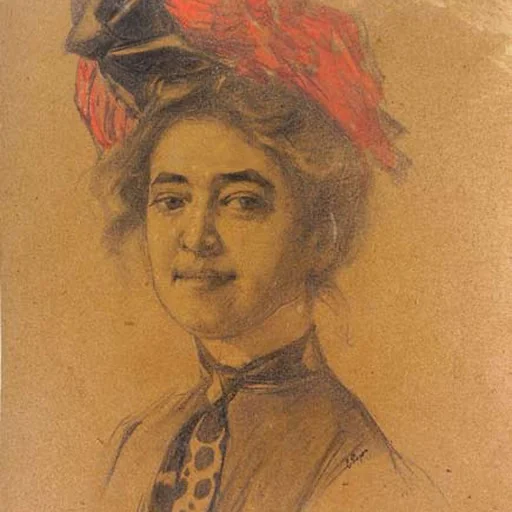
Elena Popea (15 April 1879, Brașov – 19 June 1941, Bucharest) was an Austro-Hungarian-born Romanian Modernist painter whose influences included Impressionism, Expressionism and Cubism.