Artwork
Drawing of the front and end of the altar, St. Clement Danes, Strand, W.C.
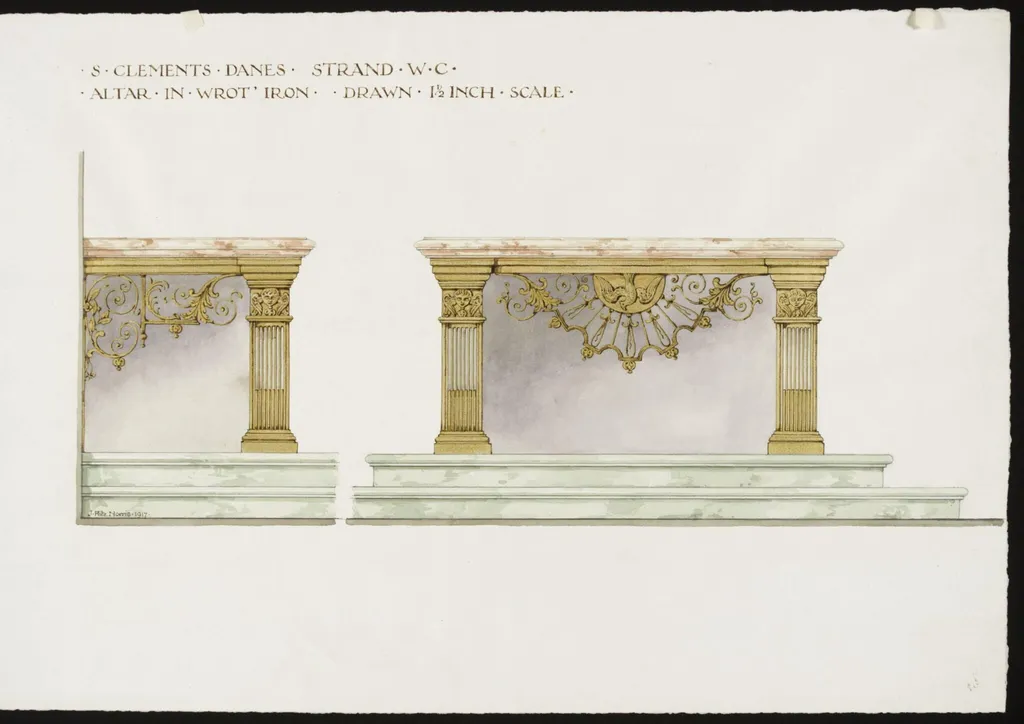
Drawing of the front and end of the altar, St. Clement Danes, Strand, W.C. is a print by John T. Pote-Norris. It dates from 1917 and is held in the collection of the Victoria and Albert Museum. This 1917 pen and watercolor drawing by John T.
About this work
The columns have fancy swirls carved into them, and the front view includes a small cross shape in the middle.
This drawing shows two views of a simple altar with two gold columns and a flat top. The columns have fancy swirls carved into them, and the front view includes a small cross shape in the middle. The background is plain, and the whole thing looks like it’s made of stone.
The text at the top says it’s for St. Clement Danes church, drawn to scale in 1917. The artist signed it "J. Pote-Norris."
Check out the Victoria and Albert Museum to see more drawings like this.
Overview
This 1917 pen and watercolor drawing by John T. Pote-Norris records the architectural details of the altar at St. Clement Danes Church in London. Rendered to scale, it presents both front and rear elevations of the structure, emphasizing its formal proportions and decorative elements. The work belongs to a tradition of architectural documentation, intended for preservation and study rather than artistic display.
Subject & Meaning
The drawing captures a simple stone altar with two slender columns adorned with carved spirals, supporting a flat surface. A small cross is centered on the front face, signaling its liturgical function. The plain background and lack of ornamentation reflect a restrained ecclesiastical aesthetic, likely aligned with early 20th-century Anglican preferences for clarity and solemnity over elaborate decoration.
Technique & Style
Pote-Norris employed fine pen lines to define the altar’s contours, complemented by delicate watercolor washes to suggest stone texture and shadow. The precision of the draftsmanship and adherence to scale indicate a technical, survey-oriented approach. The restrained palette and absence of background detail focus attention entirely on the altar’s form and ornamentation.
History & Provenance
Created in 1917 during a period of active church preservation efforts, the drawing was likely produced for archival or restoration purposes. Signed by the artist as 'J. Pote-Norris,' it entered the collection of the Victoria and Albert Museum, where it remains part of a broader archive of British architectural drawings from the early 20th century.
Context
In the context of World War I, many British churches underwent maintenance or documentation as part of cultural preservation. This drawing reflects a broader movement to record ecclesiastical furnishings, particularly in historic London parishes. St. Clement Danes, though damaged later in the war, was then still intact, making such records valuable for future restoration.
Legacy
The drawing serves as a precise historical record of an altar that may no longer exist in its original form. As part of the V&A’s architectural collection, it contributes to the understanding of early 20th-century church design and the role of detailed documentation in heritage conservation. Its value lies in its accuracy and its place within a systematic effort to preserve Britain’s ecclesiastical heritage.
Artist & collection
Artist
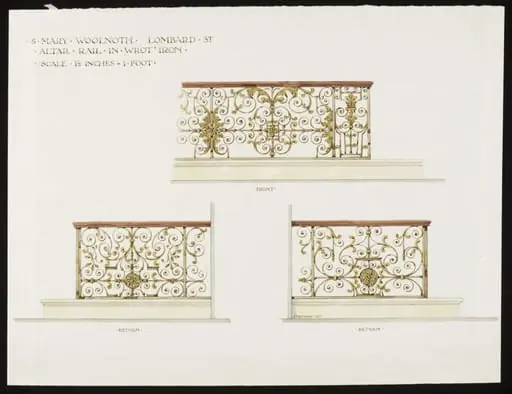
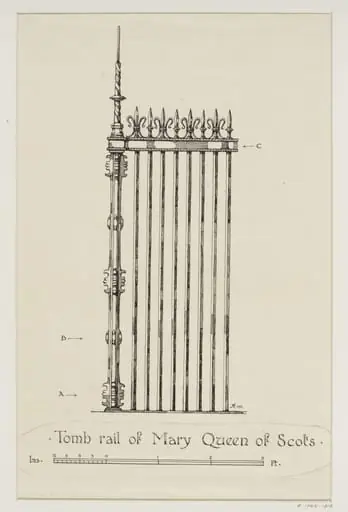
John T. Pote-Norris made detailed pencil drawings of church woodwork in early 1900s London. His prints show altar rails and tomb carvings inside St. Mary Woolnoth, St. Clement Danes, and other Wren churches. He focused…

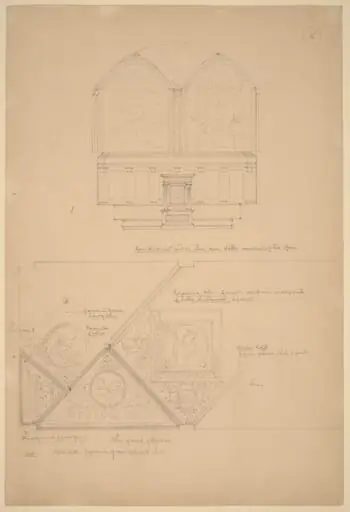 Study of an Altarpiece and Ceiling Panels
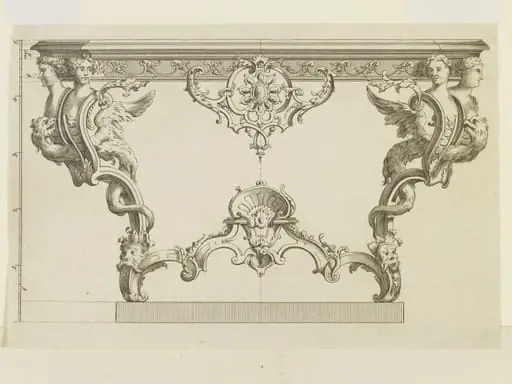 Nouveaux Desseins de Pieds de Tables et de Vases et Consoles de Sculpture
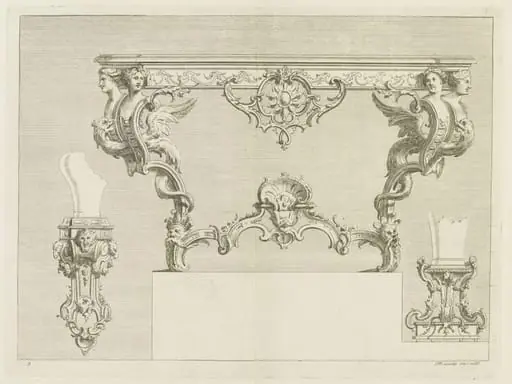 Nouveaux Desseins de Pieds de Tables et de Vases et Consoles de sculpture en bois Inventes par le sieur Pineau sculpteur
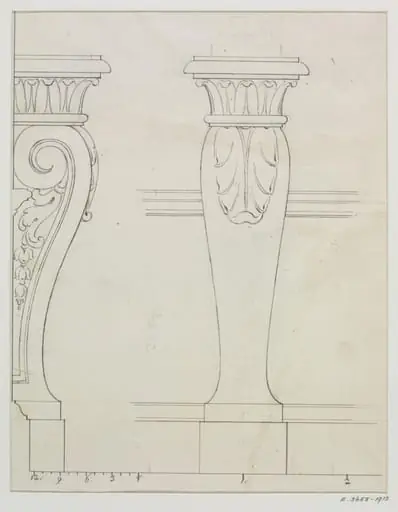 Untitled
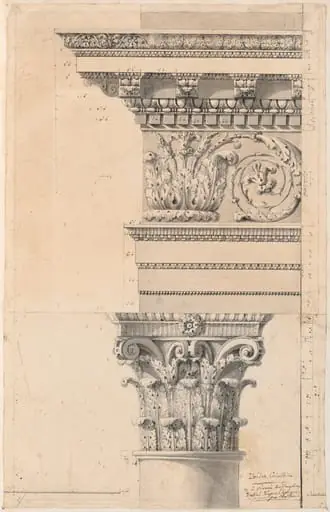 L'Ordre Corinthian
 Arcade Decoration
 Drawing rooms at Drapers' Hall, London
 Reredos, fonts, a pulpit and monuments
 Untitled
 Drawing room at the Royal Pavilion, Brighton
 Studies for Mrs Browning's Tomb at Florence, side and end elevation with some small details of ornament