Artwork
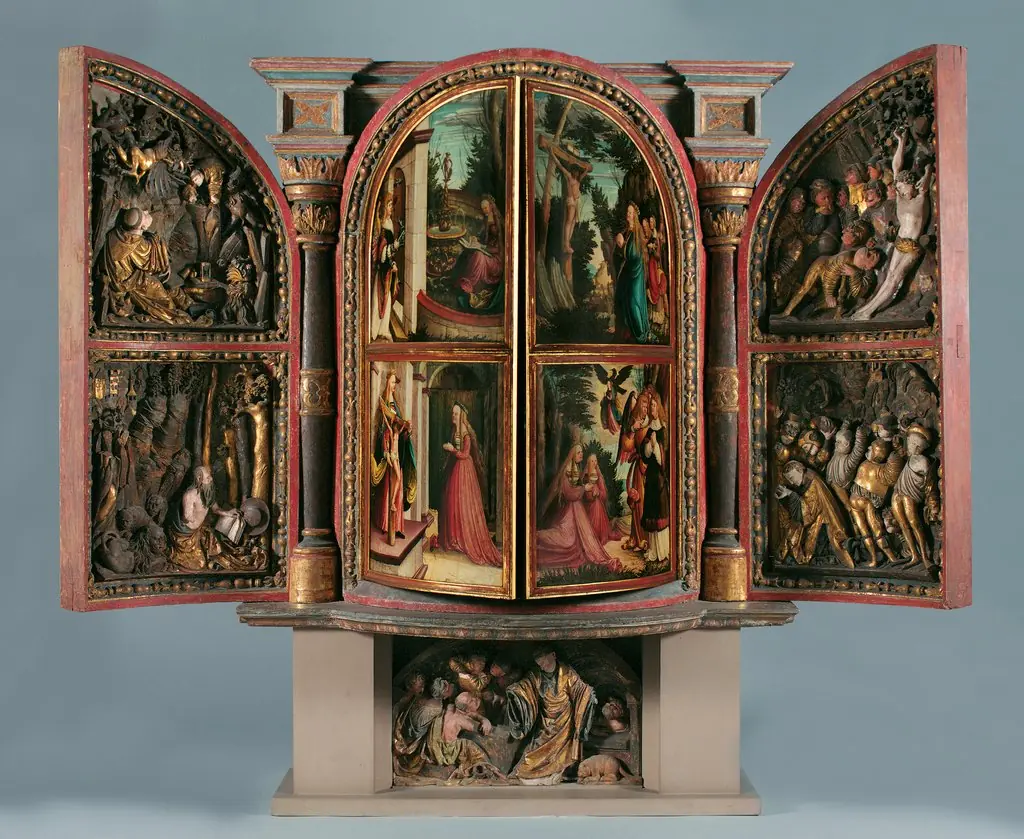
Winged Altarpiece
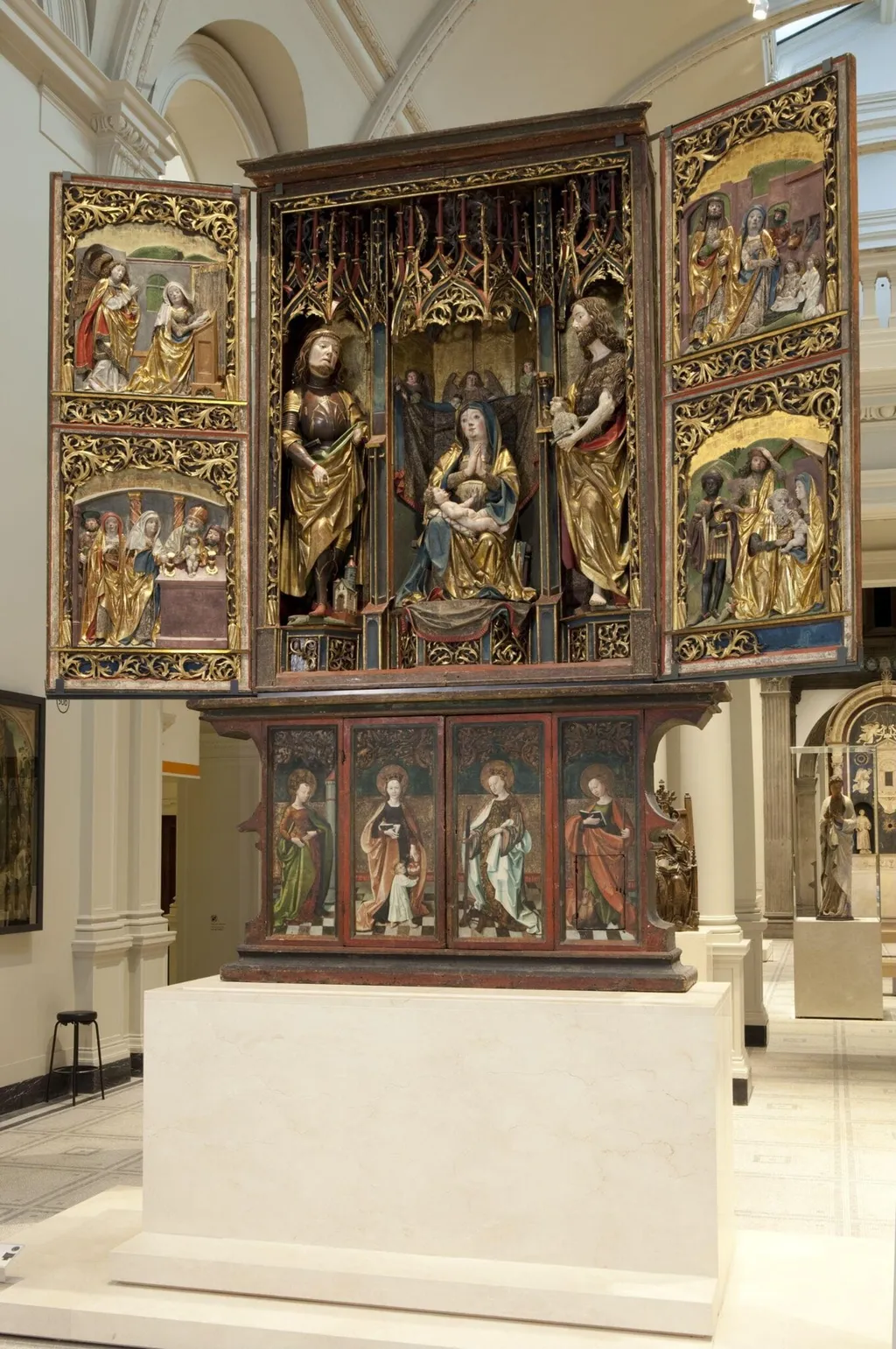
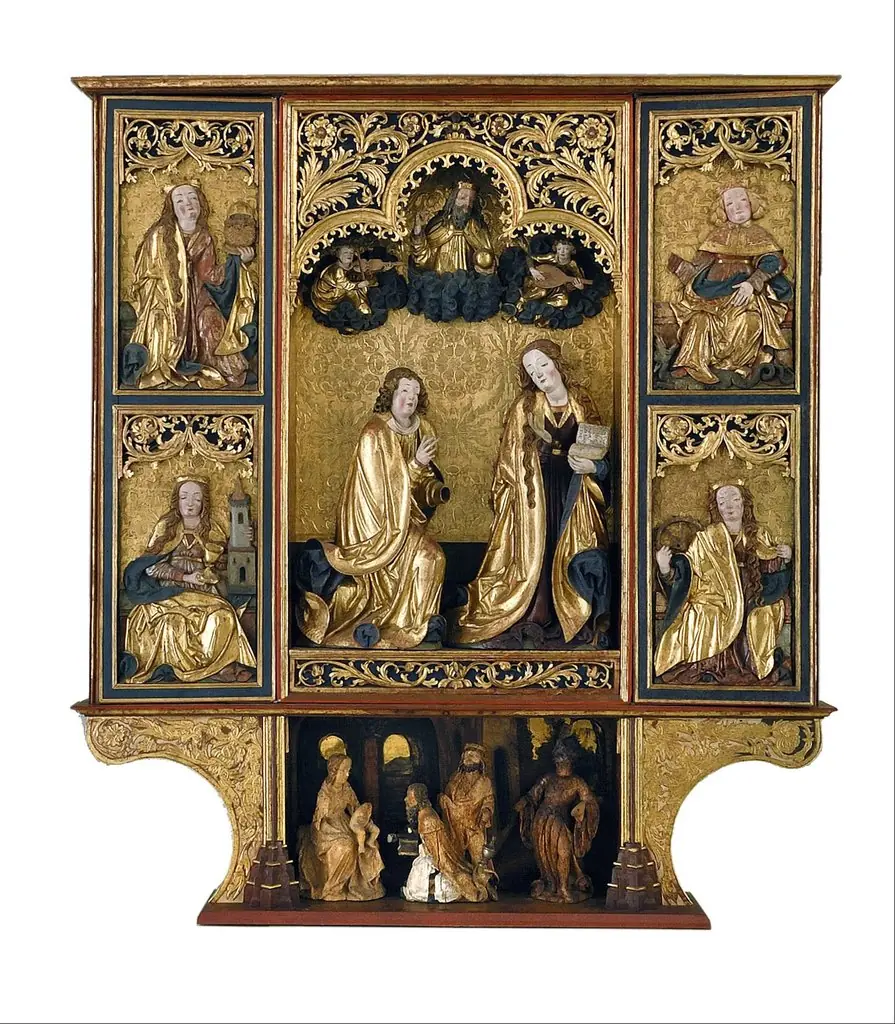
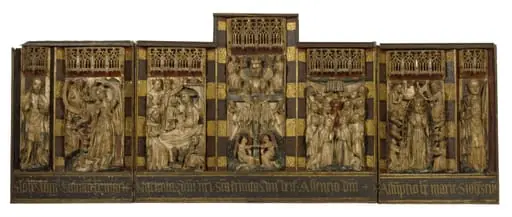
Winged Altarpiece is a work on paper by the Renaissance artist Rupert Potsch. It dates from 1500 and is held in the collection of the Victoria and Albert Museum.
About this work
The job wasn’t done all at once; a 1509 note says some parts still needed fixes and a coat of arms.
This carved wood altarpiece was made to stand behind the altar in a church. Made by Rupert Potsch around 1500-1510, it’s a fine example of Renaissance craftsmanship. The job wasn’t done all at once; a 1509 note says some parts still needed fixes and a coat of arms.
The altarpiece came from a church rebuilt in the late 1400s. It fits the choir perfectly, with a predella about two meters wide. Despite its size, no one wrote down what the carvings looked like.
If you like carved altarpieces, check out work by Tilman Riemenschneider.
Overview
This carved wood altarpiece was created to stand behind an altar in a Christian church, exemplifying Renaissance craftsmanship in its intricate design and construction.
History & Provenance
Attributed to Rupert Potsch, the altarpiece was likely produced between 1500 and 1510. Local tradition associates it with the church of St Andrew in Klausen, Italy, which was rebuilt between 1482 and 1498. Although it fits the choir's dimensions, there is no definitive proof linking it to this church.
Technique & Style
The altarpiece features a predella, a decorated base supporting the main frame, measuring 2.27 meters wide. A document from 1509 indicates that the work was largely complete but required additional details, including a coat of arms and painted floral ornaments on the reverse.
Subject & Meaning
The altarpiece's iconographical scheme is notable for omitting St Andrew, the patron saint of the church with which it is traditionally associated, suggesting a broader thematic focus.
Artist & collection
Artist
Rupert Potsch painted religious scenes on big wooden altarpieces in the early 1500s.