Artwork
Portrait of Trehem[?]Walid 'Abdullah, an Arab from Iraq
![Portrait of Trehem[?]Walid 'Abdullah, an Arab from Iraq, by Aloysius Rosarius Amadeus Raymondus Andreas Preziosi, watercolor, 1854](https://artifactworldgallery.com/img/aloysius-rosarius-amadeus-raymondus-andreas-preziosi--portrait-of-trehem-walid-abdullah-an-arab-from-iraq--2476a3692d0929a5-w1024.webp)
Portrait of Trehem[?]Walid 'Abdullah, an Arab from Iraq is a watercolor work on paper by the Impressionist artist Aloysius Rosarius Amadeus Raymondus Andreas Preziosi. It dates from 1854 and is held in the collection of the Victoria and Albert Museum.
About this work
You can learn more about the style and technique used in this watercolour by looking into the movement of Realism.
This painting is a portrait of Trehem Walid 'Abdullah, an Arab from Iraq. It was created in 1854.
The subject of the portrait is described as wearing distinctive headgear and robes of the region. This gives a hint about the cultural context of the painting. The inscription by the artist mentions that the man was from 'Babilonia', which is now part of modern Iraq.
You can learn more about the style and technique used in this watercolour by looking into the movement of Realism.
Overview
Created in 1854, this watercolour depicts Trehem Walid ‘Abdullah, an Arab identified by the artist as originating from “Babilonia,” a historic region that now lies within the borders of Iraq. The portrait presents the sitter in traditional attire, rendered with the observational precision characteristic of mid‑nineteenth‑century realism.
Subject & Meaning
The figure is shown wearing the distinctive headgear and flowing robes associated with the cultural dress of the Babylonian area, a visual cue that situates him within the fertile lands between the Tigris and Euphrates rivers. The attire underscores his regional identity and offers a glimpse into the everyday appearance of an Arab inhabitant of that locale during the period.
Technique & Style
Executed in transparent watercolour, the work employs fine brushwork and a restrained palette to model facial features and fabric folds. The handling of light and shadow reflects realist concerns for accurate representation, while the delicate washes convey the softness of skin tones and the texture of the woven garments.
Context
Babylon, the ancient city after which the region is named, lies roughly sixty miles south of modern Baghdad. By the mid‑1800s, European interest in the Near East was growing, and portraiture of local individuals served both documentary and ethnographic purposes. This painting thus functions as a visual record of a specific person within a broader imperial curiosity about Iraq’s cultural landscape.
Artist & collection
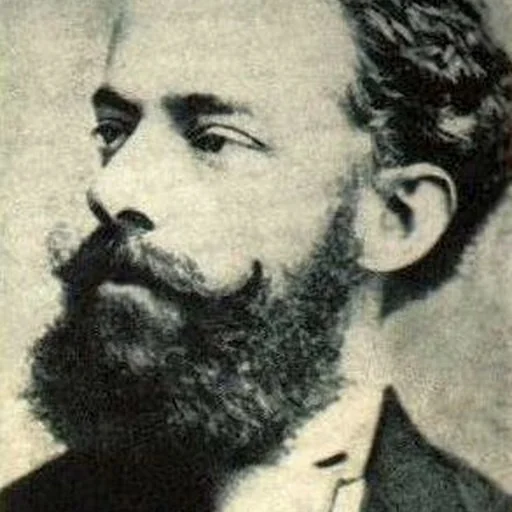
Artist
Aloysius Rosarius Amadeus Raymondus Andreas Preziosi
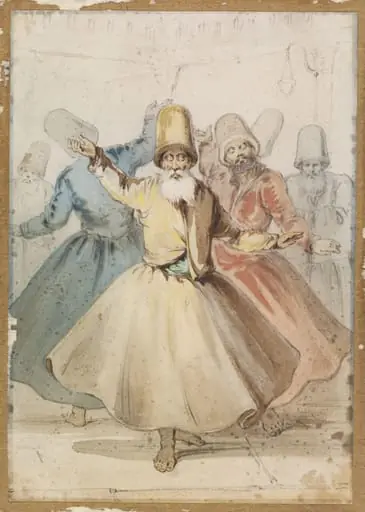
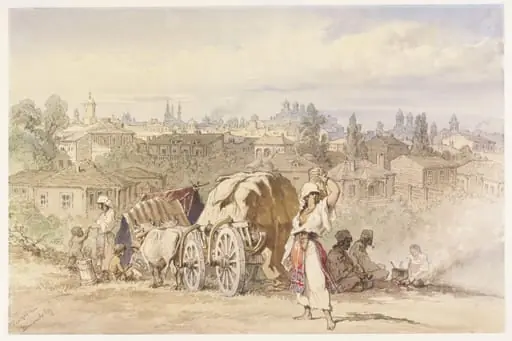
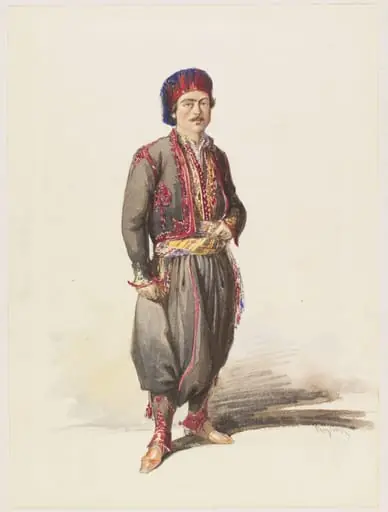
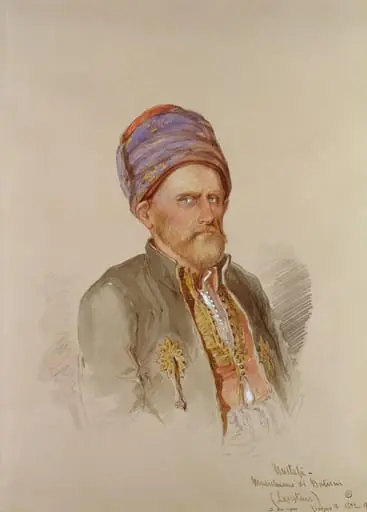
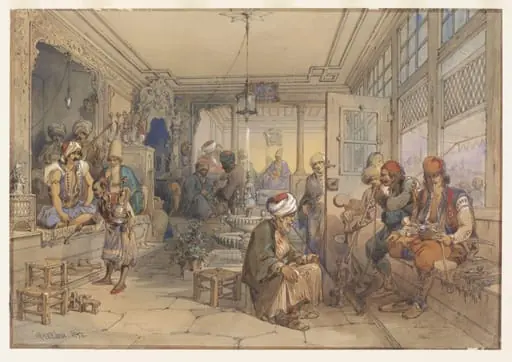
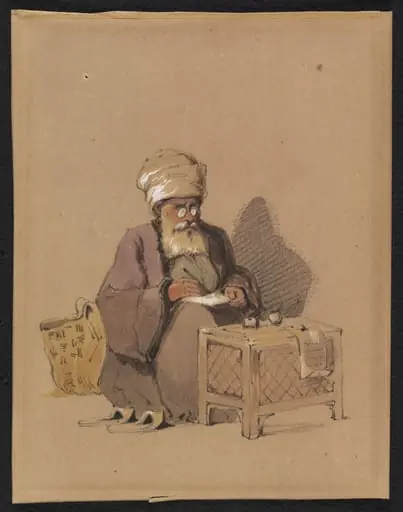
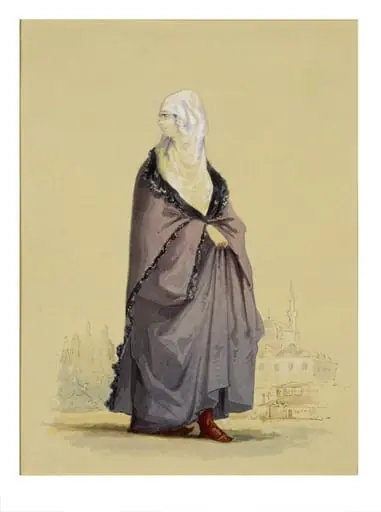
Amedeo Preziosi (2 December 1816 – 27 September 1882) was a Maltese painter and traveler known for his watercolours and prints of Constantinople, the Balkans, Ottoman Empire, and Romania.

![A Seller of Milk-puddings [Mahallebi], by Aloysius Rosarius Amadeus Raymondus Andreas Preziosi](https://artifactworldgallery.com/img/aloysius-rosarius-amadeus-raymondus-andreas-preziosi--a-seller-of-milk-puddings-mahallebi--3da9fd2db017402d-w320.webp)
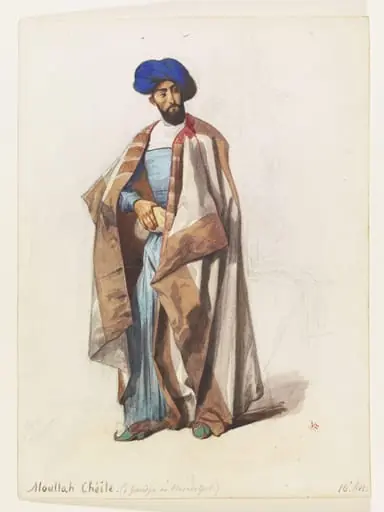 Moullah Chéite - (à Gandjà ou Elisavetopol.)
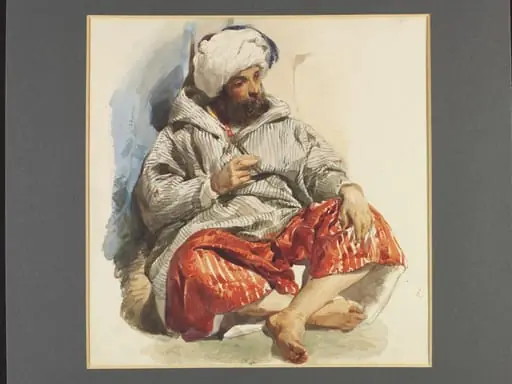 A European in Oriental dress, seated cross legged
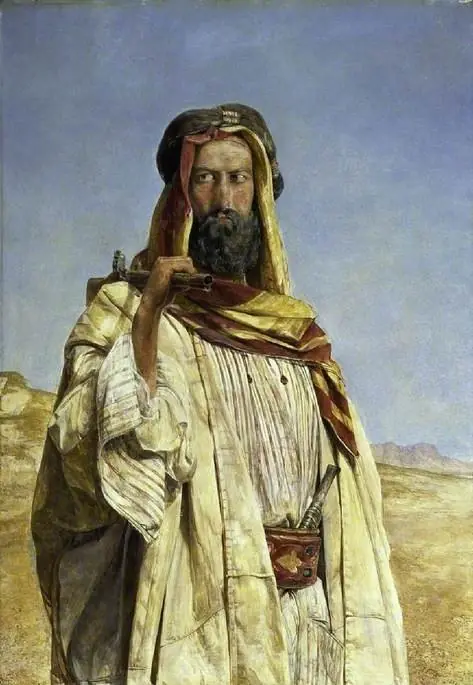 A Syrian Sheik, Egypt
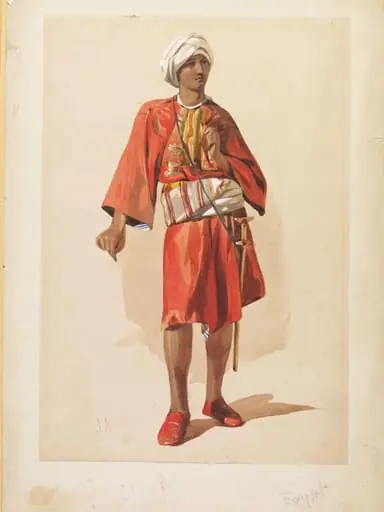 Young Soldier
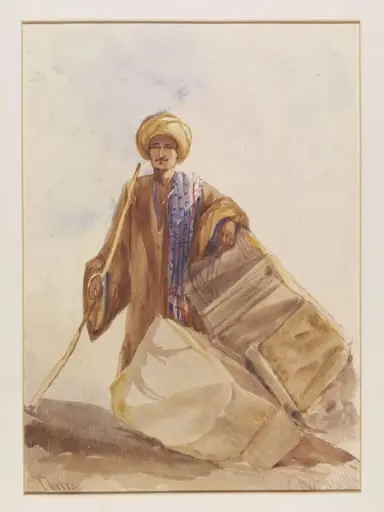 A Man standing by Rocks, Thebes
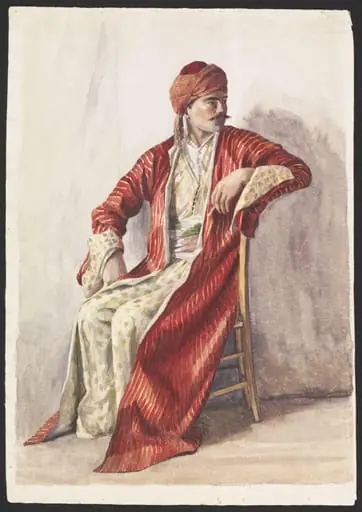 Portrait, full-length, facing right, of a Man in Arab dress, possibly smoking a cheroot
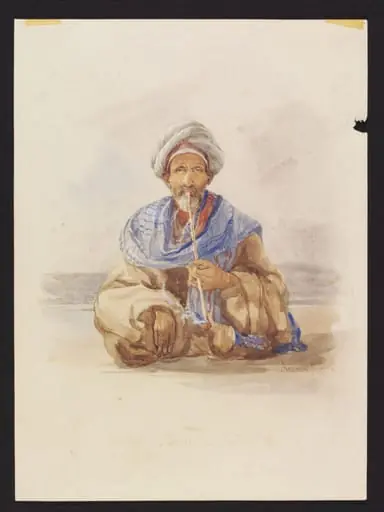 Achmet Girgeh
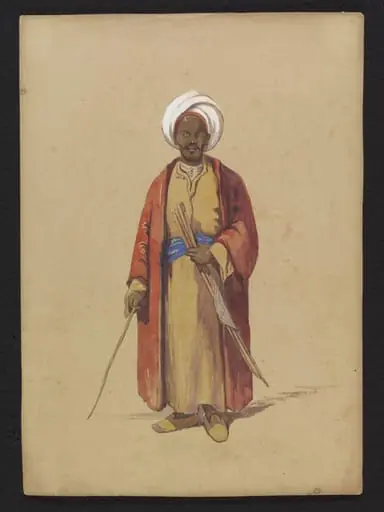 A Nubian selling Canes
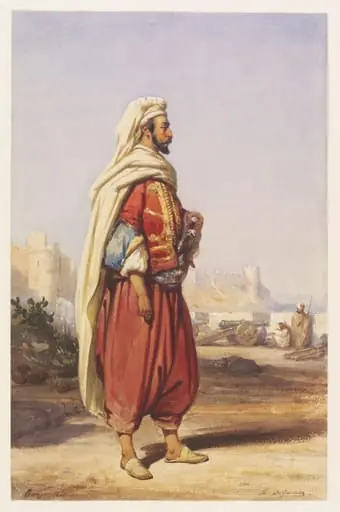 A Moroccan Amir
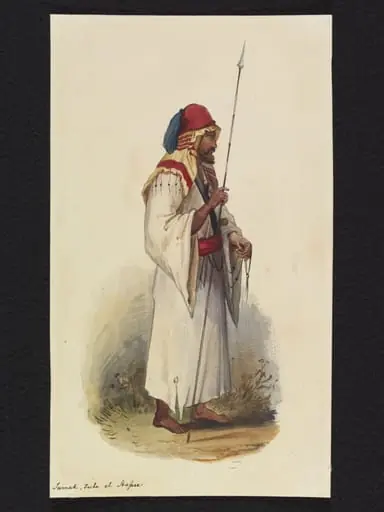 Jumah, Tribe el Hassee
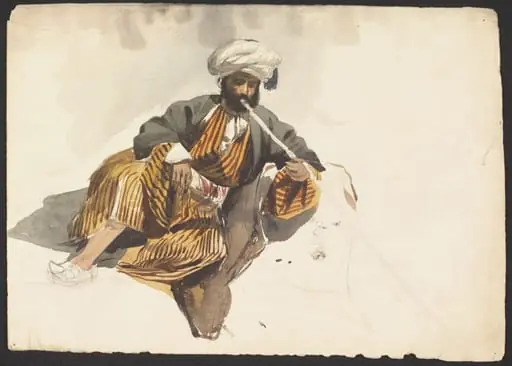 Figure of a Man in Arab dress, reclining, smoking a chibouk