Artwork
Maica Domnului cu Pruncul, încadrată de Arhangheli
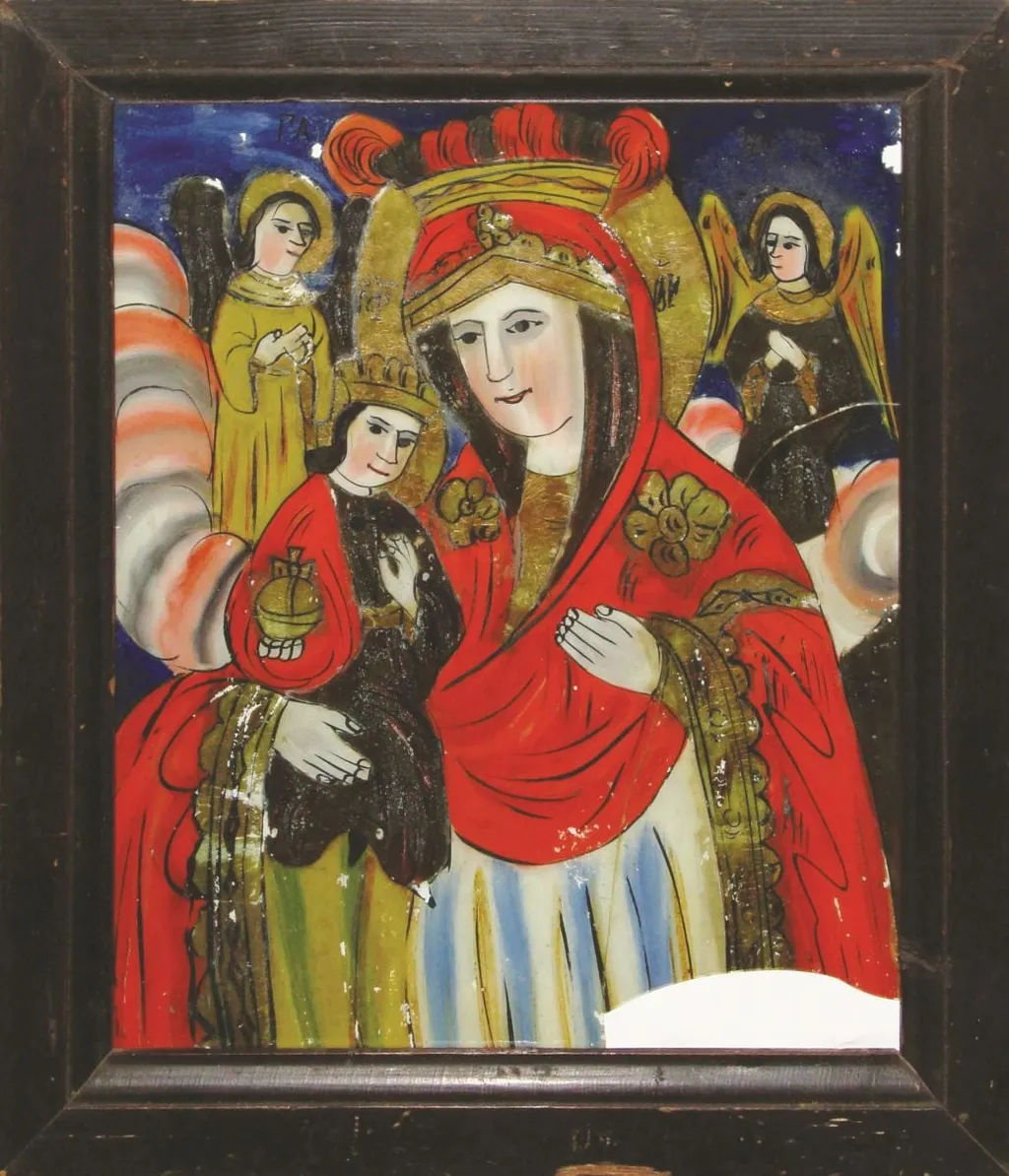
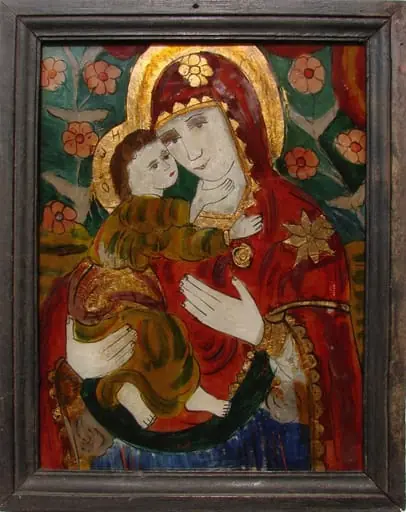
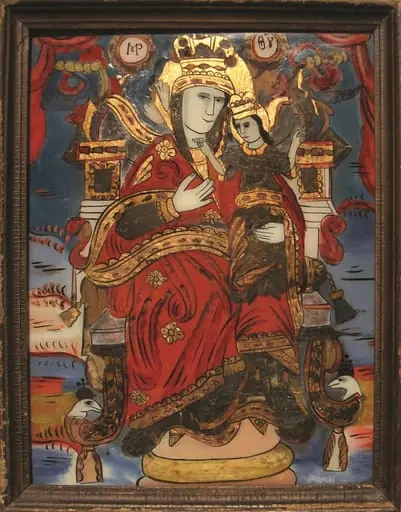
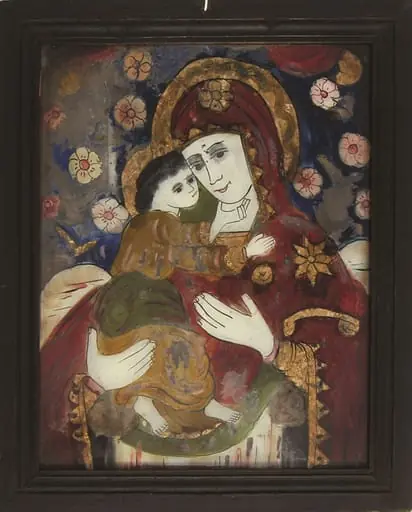
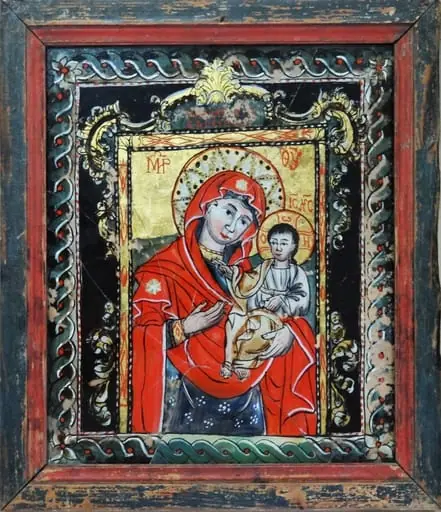
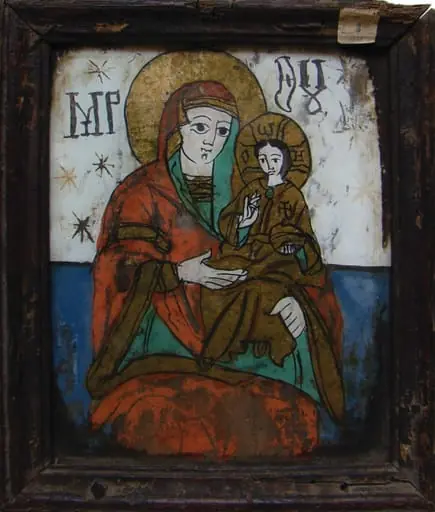
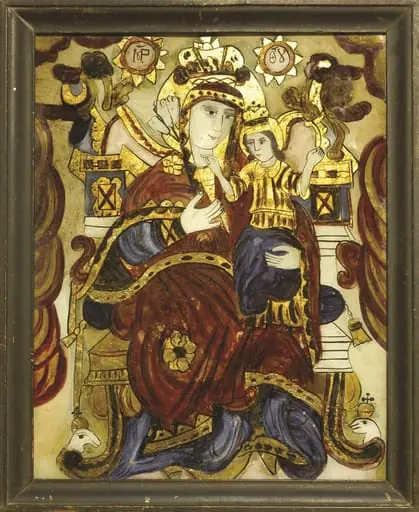
Maica Domnului cu Pruncul, încadrată de Arhangheli is an unspecified painting by Petru Prodan. It is held in the collection of the Alba Iulia Unification National Museum. This devotional panel portrays the Virgin Mary holding the Christ Child, flanked by two archangels.
About this work
Overview
Rendered in a Byzantine-influenced style, the composition centers the figures against a richly colored background of deep blue and luminous clouds.
This devotional panel portrays the Virgin Mary holding the Christ Child, flanked by two archangels. Rendered in a Byzantine-influenced style, the composition centers the figures against a richly colored background of deep blue and luminous clouds. Gold leaf accents highlight garments and halos, emphasizing sacred status. The quiet stillness of the figures and the absence of narrative detail focus attention on spiritual presence rather than action.
Subject & Meaning
The Virgin Mary, depicted as the Theotokos, is shown in regal attire, signifying her role as Mother of God. The Christ Child, crowned and dressed in dark robes, reflects his dual nature as divine and human. The archangels, positioned symmetrically, serve as celestial witnesses, reinforcing the holiness of the scene. The imagery aligns with Eastern Orthodox traditions of Marian veneration, where formality conveys theological truth rather than emotional expression.
Technique & Style
The painting employs tempera and gold leaf on a wooden panel, typical of late medieval Balkan iconography. Facial features are stylized with elongated proportions and serene expressions, avoiding naturalism in favor of symbolic clarity. The swirling clouds behind the figures suggest heavenly space, while the use of contrasting colors—red, gold, black, and deep blue—enhances visual hierarchy and spiritual depth without perspective or shading.
History & Provenance
Attributed to the workshop of Prodan or Petru, likely active in the 15th or early 16th century in the Romanian principalities, this work reflects regional adaptations of Byzantine models. It may have originated in a monastery or noble chapel, serving liturgical or private devotion. Its survival suggests careful preservation, though its exact early ownership and movement remain undocumented in public records.
Context
Created during a period when Orthodox Christian communities in the Carpathian region maintained strong ties to Constantinopolitan artistic traditions, the painting embodies a continuity of iconographic formulas. Local artisans adapted these models using available materials and regional aesthetic preferences, resulting in works that were both spiritually authoritative and culturally distinct within the broader Orthodox world.
Legacy
This icon contributes to a corpus of Romanian religious art that preserved Byzantine conventions through centuries of political change. Its preservation offers insight into devotional practices and the transmission of sacred imagery beyond major centers. While not widely known outside regional collections, it remains a representative example of how spiritual ideals were visually sustained in Eastern European ecclesiastical culture.
Artist & collection
Artist
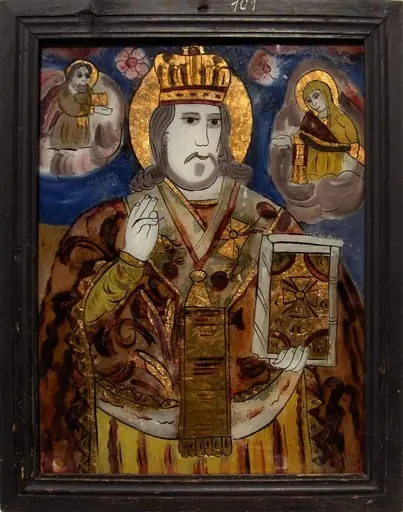
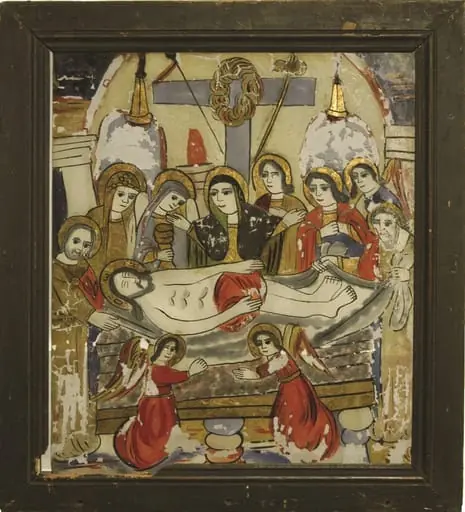
Petru Prodan painted religious scenes in the icon tradition. His works include *Sf. Nicolae* and *Prohodul lui Iisus*, showing saints and biblical figures in gold-leaf settings. The figures are stiff and frontal,…
Museum
Alba Iulia Unification National Museum
Continue through works from the same source collection.