Artwork
Bamberg
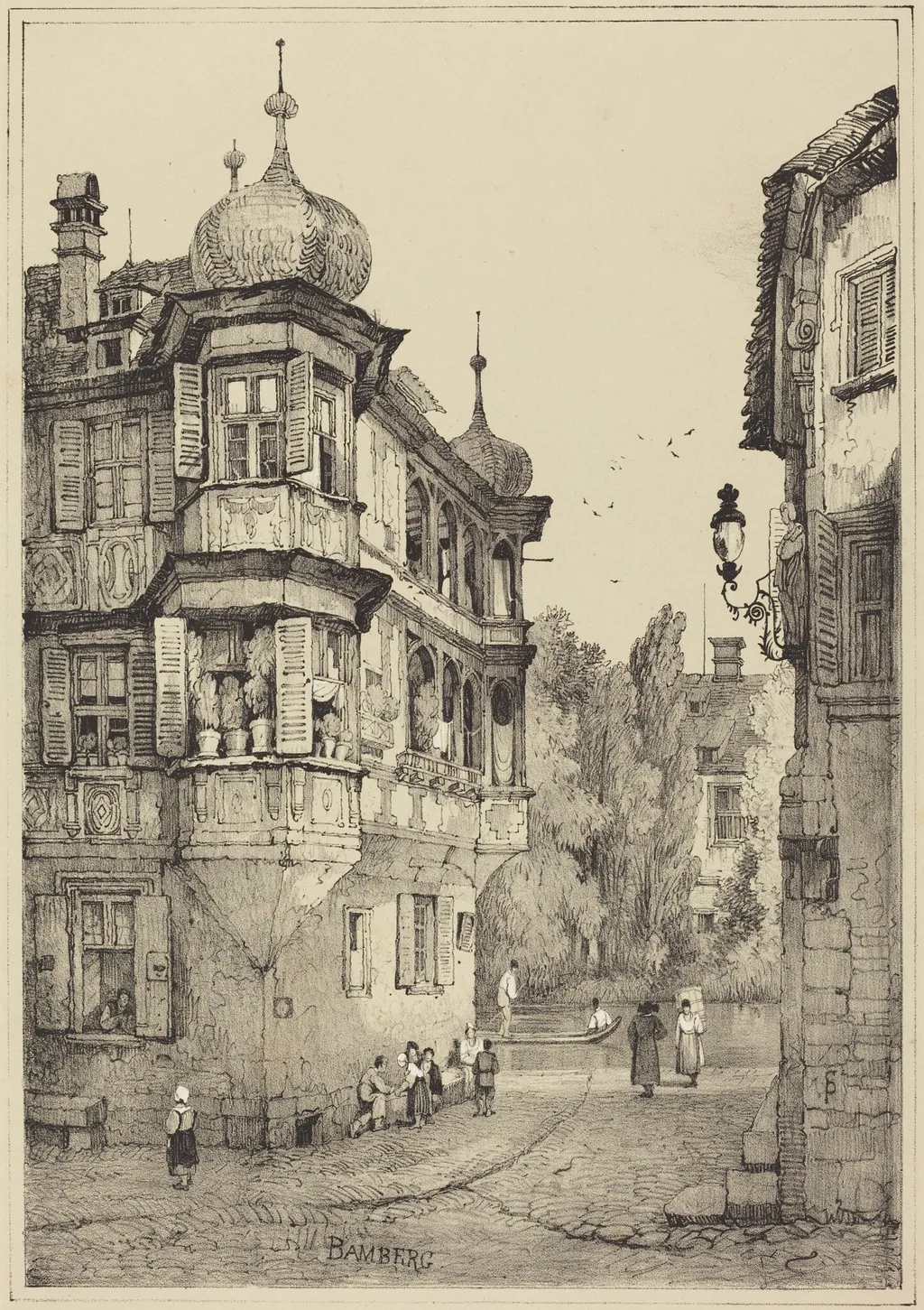
Bamberg is a gouache print by the Romanticist artist Samuel Prout. It dates from 1818 and is held in the collection of the National Gallery of Art.
About this work
Overview
Bamberg is a lithograph touched with white gouache on wove paper, created by Samuel Prout in 1818. It is a print depicting a scene from the German city of Bamberg.
Subject & Meaning
The work shows a narrow street with a large, domed building on the left and a smaller one on the right, with people and a boat in the background. The detailed rendering of the architecture and figures suggests a focus on capturing the character of the city.
Technique & Style
The use of lithography and white gouache on wove paper gives the print a soft, nuanced appearance, with a range of gray tones. The level of detail in the buildings and figures indicates a high level of craftsmanship.
History & Provenance
Samuel Prout was a British watercolourist who later became Painter in Water-Colours in Ordinary to King George IV and Queen Victoria, indicating a high level of esteem for his work.
Context
Prout's work was admired by notable figures such as John Ruskin, and is associated with the Romanticism movement, which often emphasized detailed and atmospheric depictions of landscapes and cityscapes.
Artist & collection

Artist
Samuel Prout (; 17 September 1783 – 10 February 1852) was a British watercolourist, and one of the masters of watercolour architectural painting, who largely invented the genre of the grand steet scene in British…

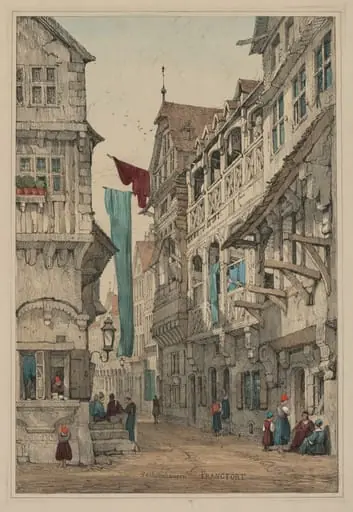 Facisimilies of Sketches made in Flanders and Germany: Sachsenhausen Francfort
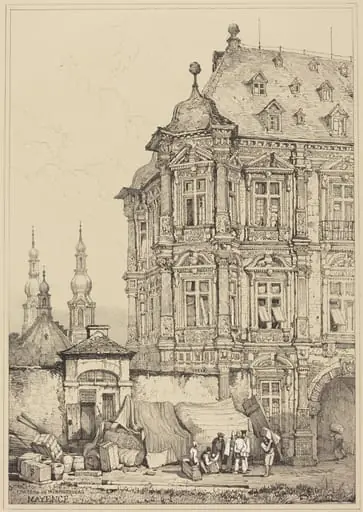
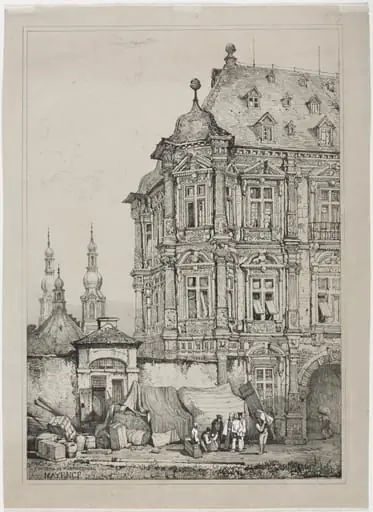 Castle of Martinsburg, Mainz, Germany
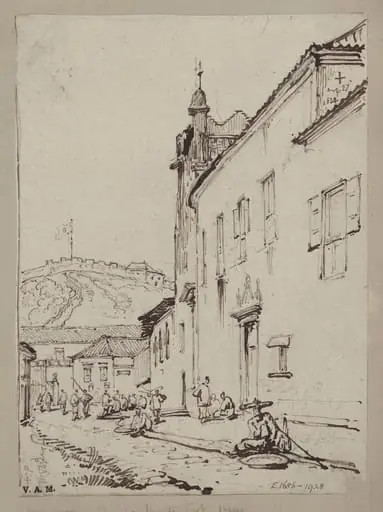 A view past the Misericordia Church towards Fort Monte, Macau
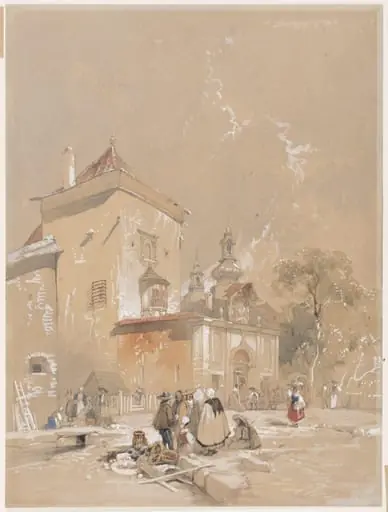 Gateway and buildings in Spain
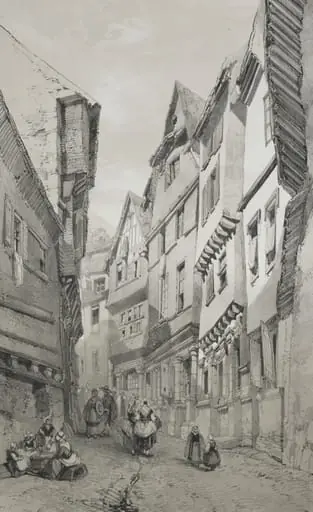 Voyages pittoresques et romantiques dans l'ancienne France. Bretagne: Morlaix
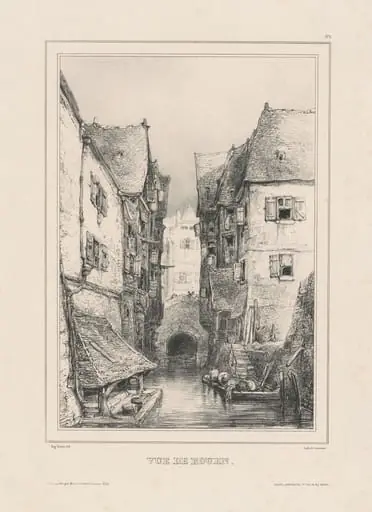 Vue de Rouen
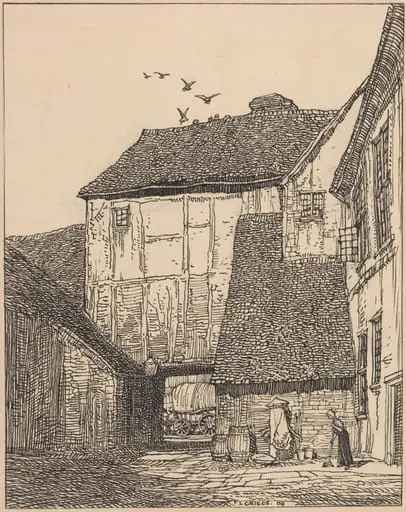 The George Inn, Beaconsfield
 Facisimilies of Sketches made in Flanders and Germany: Thein Church, Prague
 Sketches at Home and Abroad: Trento
 Hôtel du Grand Cerf, Les Andelys