Artwork
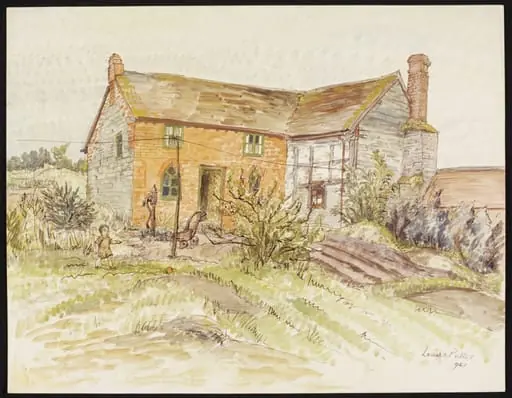
Grange Farm (Wigmore Abbey remains)
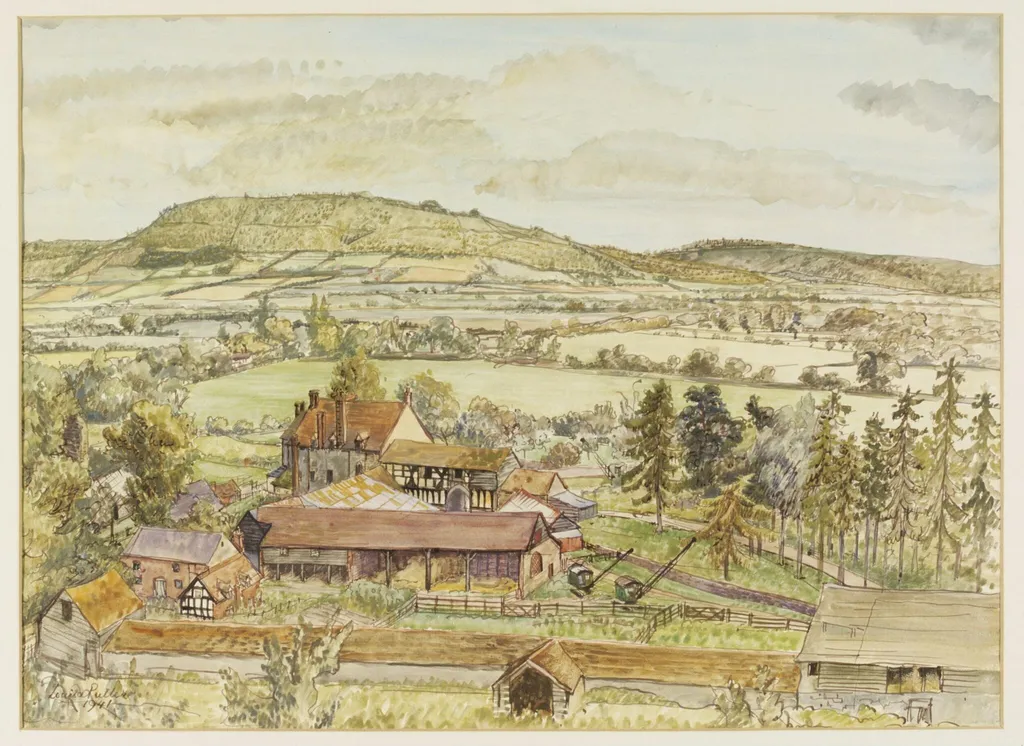
Grange Farm (Wigmore Abbey remains) is a watercolor work on paper by the Social Realist artist Puller. It is held in the collection of the Victoria and Albert Museum.
About this work
Overview
The composition extends outward to gentle, green fields that ascend toward low hills on the horizon, rendered in a muted palette of earth tones and soft blues.
The watercolour titled *Grange Farm (Wigmore Abbey remains)* was executed in 1941 by the artist Puller. It records the ruins of Wigmore Abbey together with the surrounding farm structures at Wigmore, Herefordshire, seen from an elevated viewpoint. The composition extends outward to gentle, green fields that ascend toward low hills on the horizon, rendered in a muted palette of earth tones and soft blues.
Subject & Meaning
The picture juxtaposes the decayed stone remnants of the medieval abbey with the working farm buildings that have grown around it, suggesting a continuity between historic ruin and contemporary rural life. Small details—a horse‑drawn cart, distant figures—hint at everyday activity, while the tranquil atmosphere emphasizes the persistence of the landscape despite the passage of time.
Technique & Style
Puller employed a loose, sketch‑like approach typical of wartime field studies, using broad washes of colour and minimal line to capture the scene quickly. The watercolour medium allows for the soft, atmospheric effect seen in the subdued browns, pale greens and muted blues that convey both the texture of the ruins and the surrounding countryside.
History & Provenance
The work was created under the Recording Britain scheme, a wartime project launched in 1940 to document vulnerable historic sites and rural environments. Funded by the Pilgrim Trust and administered by Sir Kenneth Clark, the initiative commissioned artists to produce visual records of places thought at risk from bombing, redevelopment or neglect.
Context
During the early 1940s, Britain faced extensive aerial bombardment and rapid social change, prompting concerns that many cultural landmarks might be lost. Recording Britain sought to preserve a visual archive of the nation’s architectural and natural heritage, and Puller’s depiction of Wigmore Abbey contributes to that collective record of endangered sites.
Legacy
As part of the broader Recording Britain collection, the watercolour serves as both an artistic study and a historical document. It offers contemporary viewers insight into the condition of Wigmore Abbey and its rural setting in the early 1940s, informing later conservation efforts and scholarly research on wartime landscape documentation.
Artist & collection

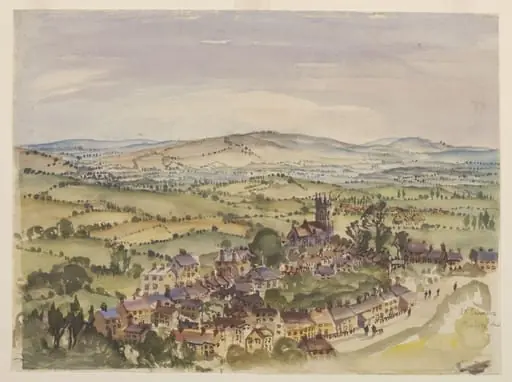 Shaftesbury St. James
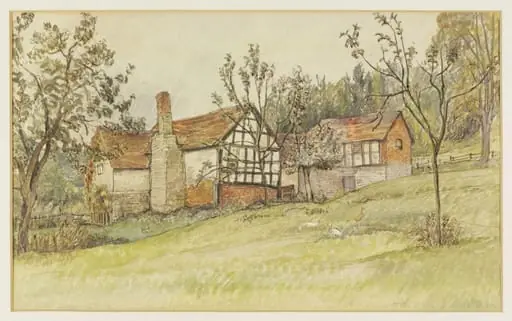 Oldfield Farm, between Leinthall Earls and Richard's Castle
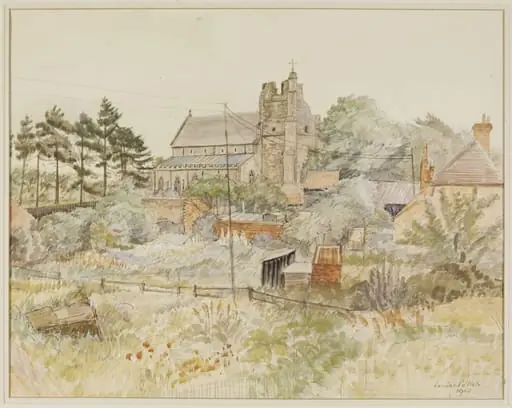 St. Bartholomew's Church, Orford, from the North-West
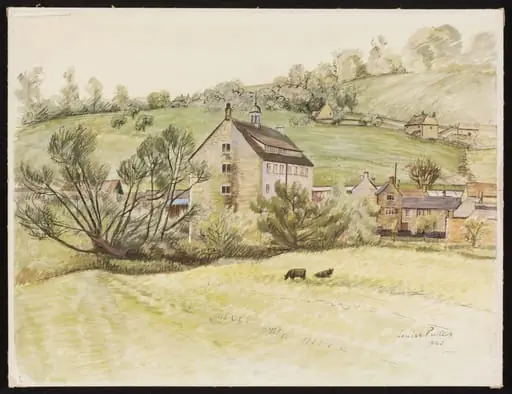 Brimscombe Factory, Nr. Stroud
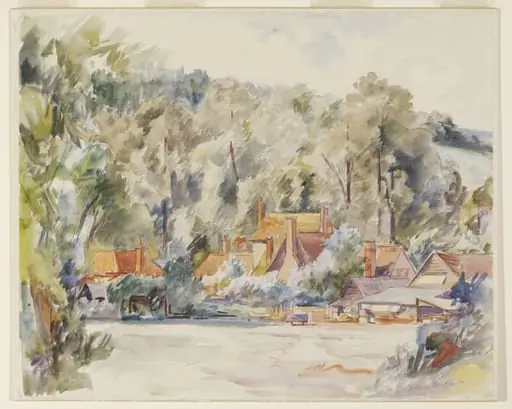 The Chequers Inn, Fingest
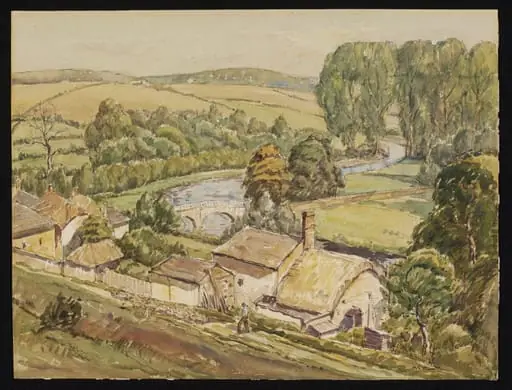 Woodford Bridge in the Avon Valley
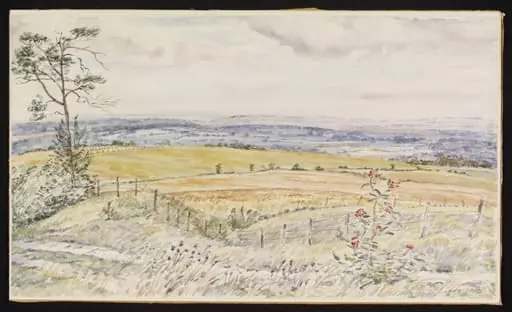 View from Calne Golf Course near Heddington
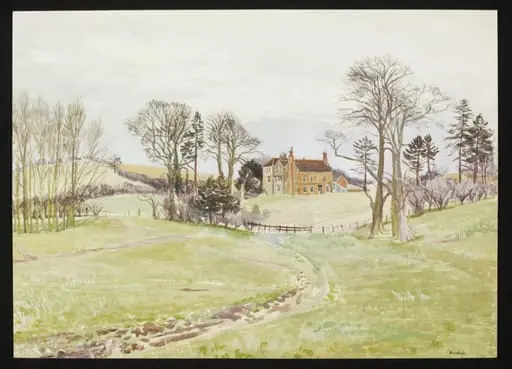 The Vicarage, Braughing
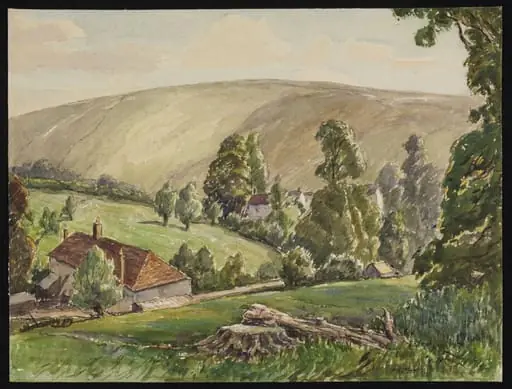 Bowerchalke
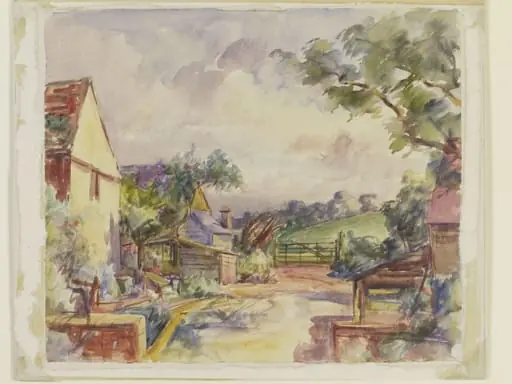 Glebe Farm, Fingest
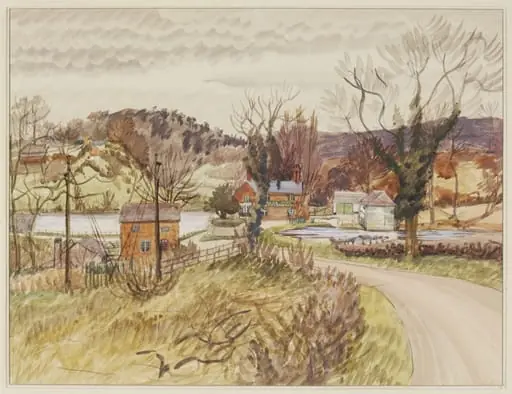 Looking towards The Boar Inn, near Modishall
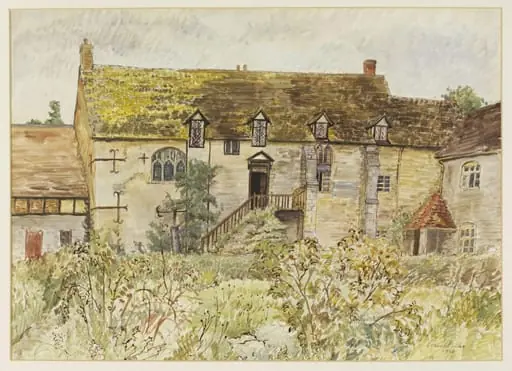 Grange Farm, The Abbot's House, Wigmore Abbey remains