Artwork
Constantinople From Pera
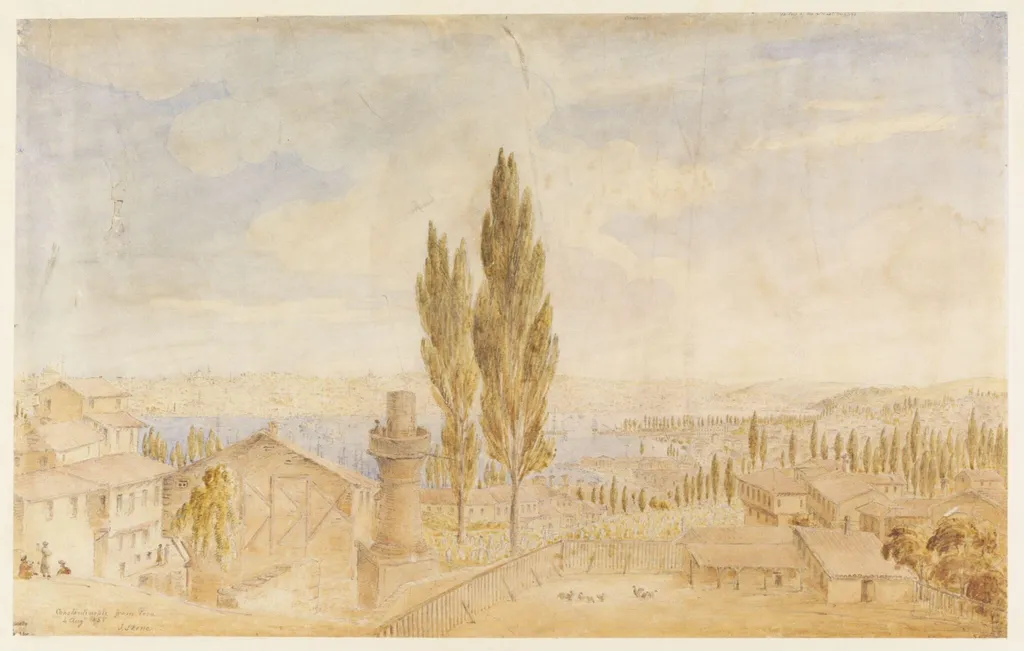
Constantinople From Pera is a watercolor work on paper by the British Romanticist artist James Skene. It dates from 1838 and is held in the collection of the Victoria and Albert Museum.
About this work
Overview
James Skene’s watercolour, *Constantinople From Pera*, offers a panoramic view of the Ottoman capital as seen from the Pera quarter. Rendered in a light, airy palette, the composition balances a solitary, slender tree in the foreground with the sprawling urban fabric and distant waterway beyond, all under a softly clouded sky.
Subject & Meaning
The work records the city’s architectural silhouette and its relationship to the surrounding landscape, emphasizing a tranquil atmosphere rather than bustling activity. The fence at the lower edge creates a visual barrier, inviting the viewer to observe the scene from a calm, detached perspective.
Technique & Style
Executed in transparent watercolour washes, Skene employs delicate brushwork to suggest architectural details and atmospheric depth. The muted tones and gentle lines align the piece with Romantic sensibilities, where mood and the sublime qualities of place are foregrounded over precise topographical accuracy.
History & Provenance
The drawing is dated to around 1838, coinciding with Skene’s travels in the eastern Mediterranean. It forms part of a larger series of travel sketches produced during his journey to Greece and the surrounding regions, documenting his observations of notable locales.
Context
Created during a period when Western artists were increasingly fascinated by the Ottoman Empire, the watercolour reflects contemporary interest in exotic urban vistas. Its serene treatment contrasts with the more dramatic, often politically charged depictions of the same city by other Romantic travelers.
Artist & collection

Artist
James Skene of Rubislaw (1775–1864) was a Scottish lawyer and amateur artist, best known as a friend of Sir Walter Scott.

 Castel Sant'Angelo from the Northwest
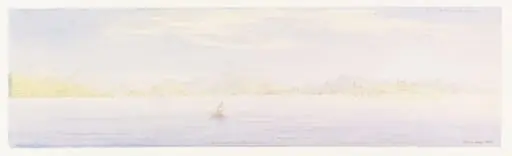
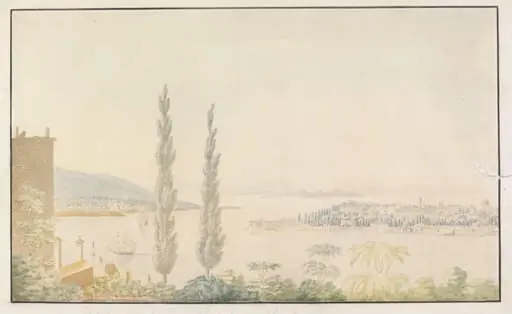 Üsküdar and Saray Burnu from Galata, with the Sea of Marmara in the distance
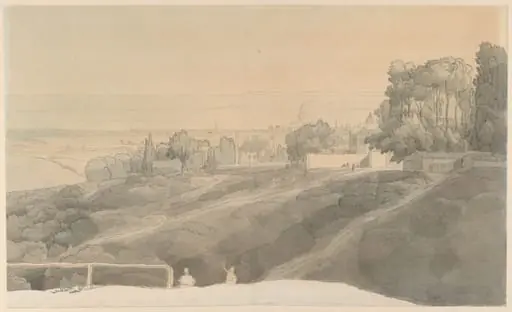 Hampstead Heath, Evening Light
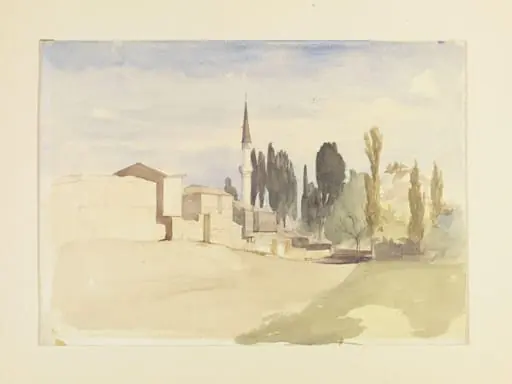 A group of houses, a minaret and cypress trees
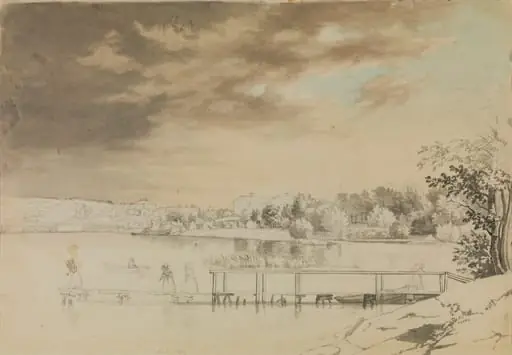 Kaisaniemenlahti, keskeneräinen teos
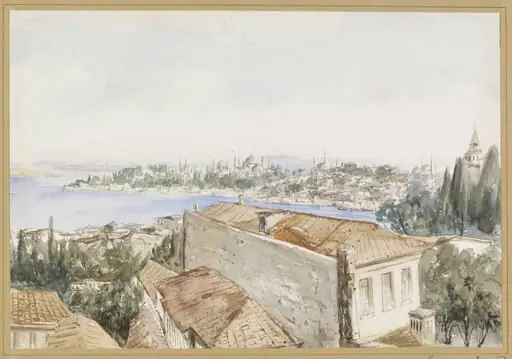 La Pointe du serail, Constantinople
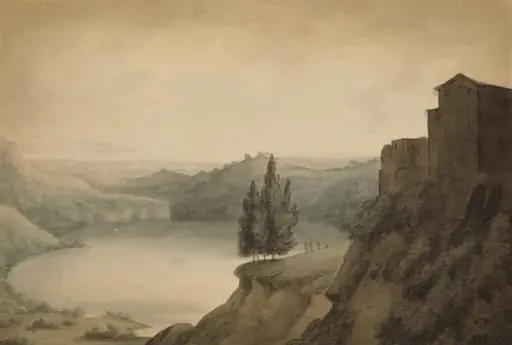 The Lake of Nemi
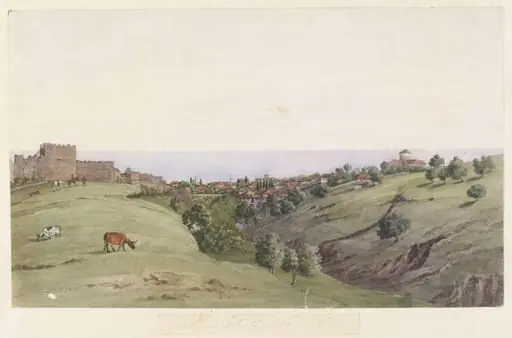 Trebizond
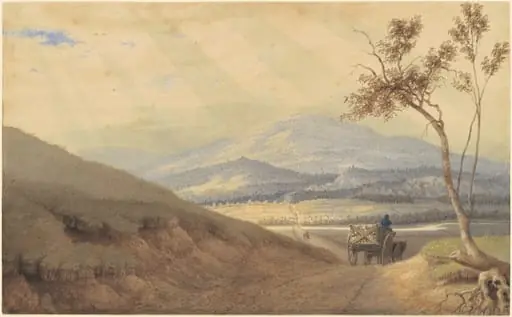 A Gleamy Effect—Hollidaysburg, Pennsylvania
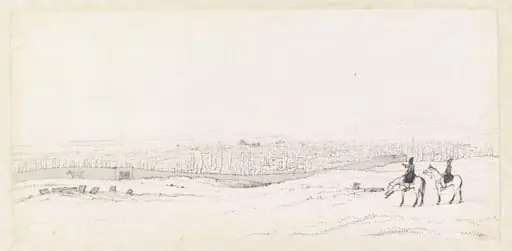 Tabriz
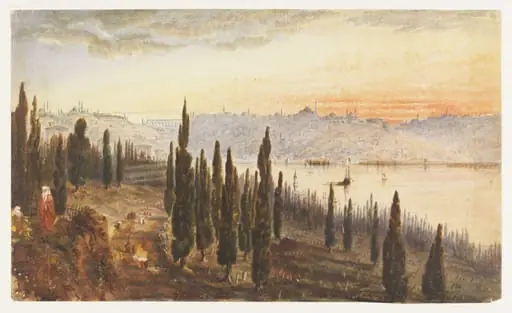 View of Constantinople from the cemetery at Pera
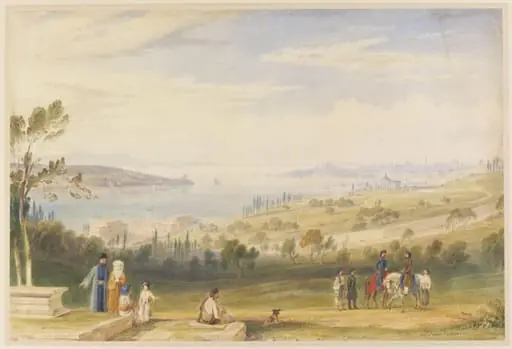 View of the Bosphorus from above Dolmabahçe, looking towards the Sea of Marmara