Artwork
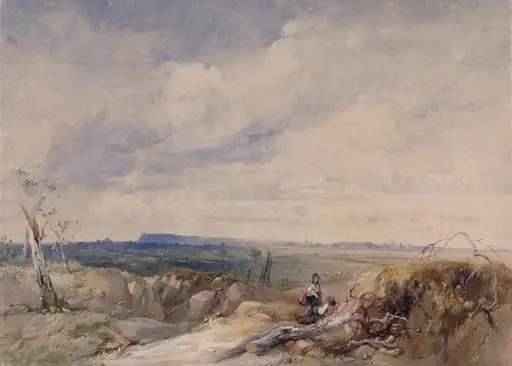
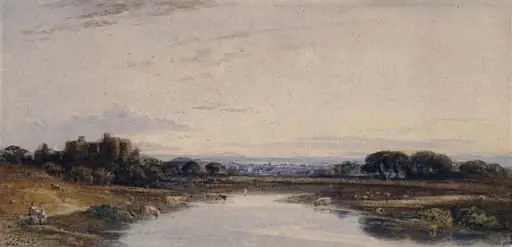
Distant view of Arundel Castle
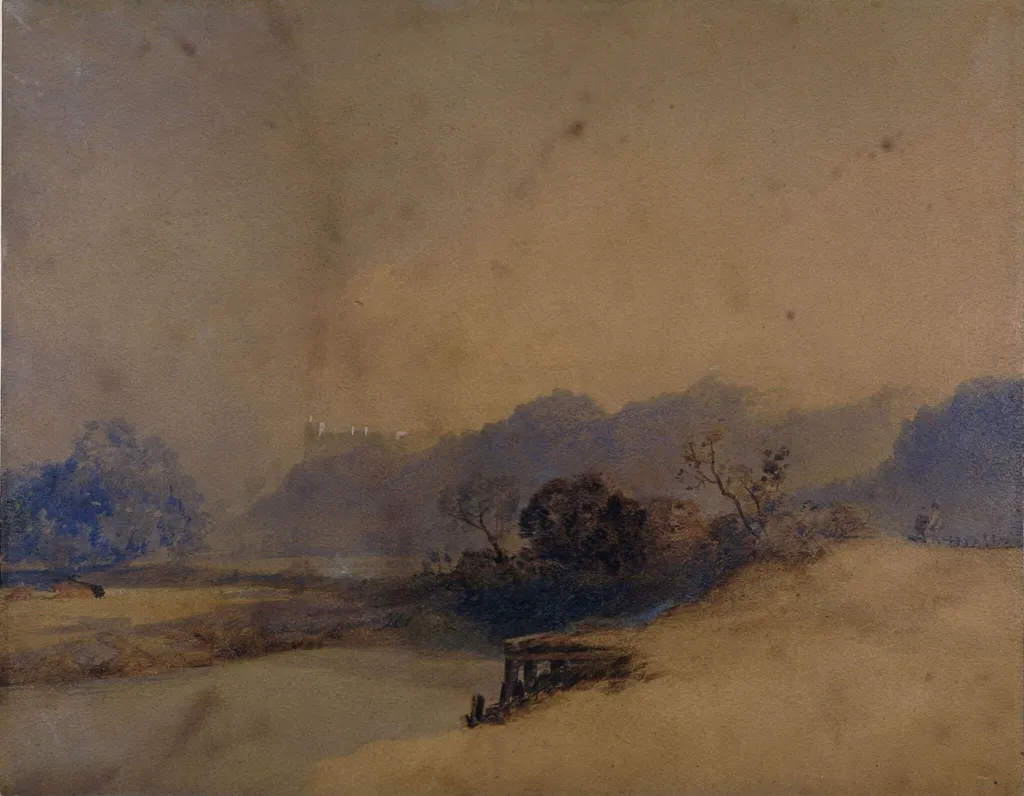
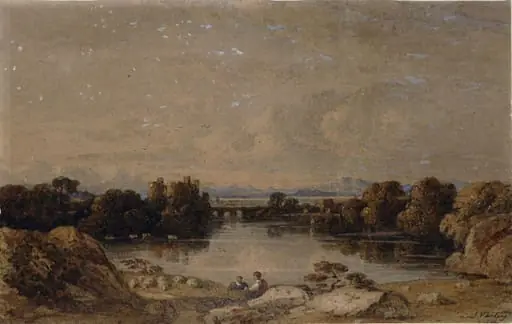
Distant view of Arundel Castle is a watercolor work on paper by the British Romanticist artist James Baker Pyne. It dates from 1820 and is held in the collection of the Victoria and Albert Museum.
About this work
Overview
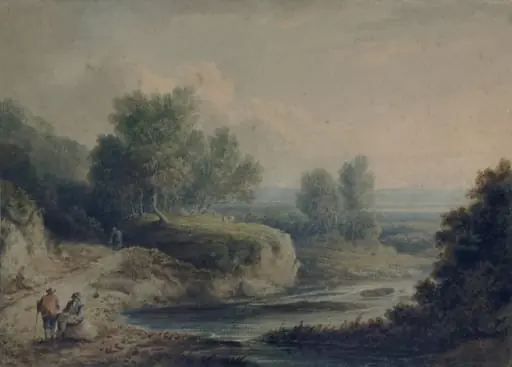
James Baker Pyne’s 1820 watercolour, *Distant View of Arundel Castle*, presents a tranquil rural landscape framed by gentle hills and sparse trees.
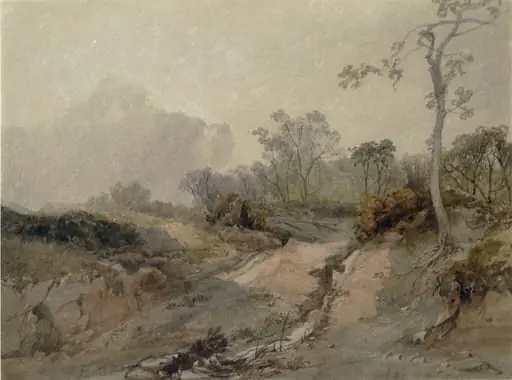
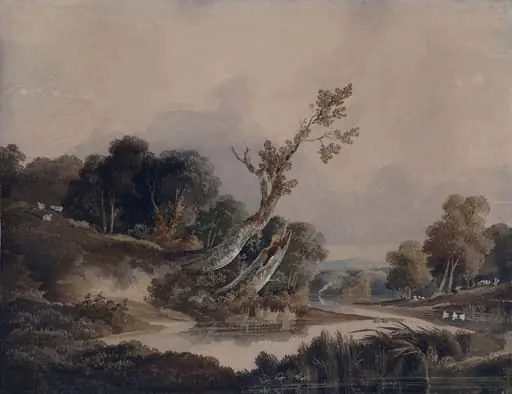
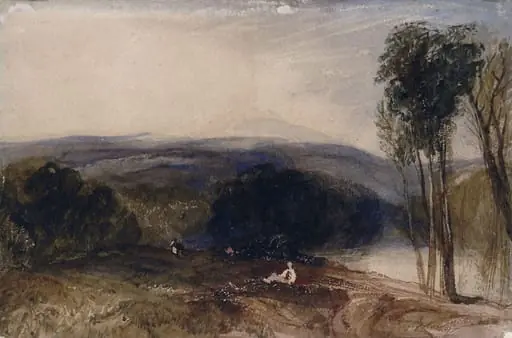
James Baker Pyne’s 1820 watercolour, *Distant View of Arundel Castle*, presents a tranquil rural landscape framed by gentle hills and sparse trees. Rendered in muted browns, greens and blues, the composition conveys a mist‑laden atmosphere that recedes toward a faint silhouette of the castle perched on a distant rise. The work exemplifies the soft, atmospheric quality characteristic of early‑nineteenth‑century British Romantic landscape painting.
Subject & Meaning
The painting captures a panoramic view of the historic Arundel Castle set within its surrounding countryside. By positioning the fortress as a barely discernible form on the horizon, Pyne emphasizes the passage of time and the integration of human architecture into the natural environment, a common Romantic preoccupation with the sublime and the fleeting nature of human achievement.
Technique & Style
Pyne employs light, transparent washes of watercolour to suggest depth and atmosphere, allowing the hills and foliage to dissolve into the sky. The simplified forms and sketch‑like treatment of trees and terrain echo the spontaneous approach of the Bristol School, while the subtle handling of light hints at the later influence of J.M.W. Turner’s luminous techniques.
History & Provenance
Created during Pyne’s early career, the work reflects his initial association with the Bristol School of artists before his style evolved under Turner’s impact. The piece remained in private collections throughout the nineteenth century before entering a public museum collection in the early twentieth century, where it has been displayed as an example of Romantic watercolour landscape.
Context
Produced at a time when British artists were increasingly drawn to the emotive potential of the natural world, Pyne’s watercolour aligns with the Romantic movement’s focus on mood and the sublime. The choice of Arundel Castle—a medieval structure set in a bucolic setting—mirrors contemporary interests in historic ruins as symbols of decay and continuity within the landscape.
Artist & collection
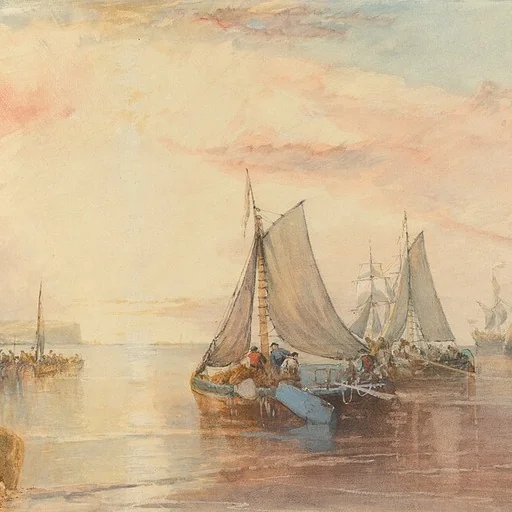
Artist
James Baker Pyne (5 December 1800 – 29 July 1870) was an English landscape painter who became a successful follower of Turner, after having been in his earlier years a member of the Bristol School of artists and a follower of Francis Danby.