Artwork
Spring Morning in the Han Palace

Spring Morning in the Han Palace is an unspecified painting by the Chinese Orthodox School artist Qiu Ying. It dates from 1552 and is held in the collection of the National Palace Museum.
About this work
Overview
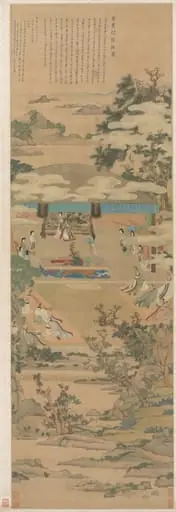
Spring Morning in the Han Palace, painted by Qiu Ying in 1552, is part of the collection of the National Palace Museum. The work presents a tranquil courtyard scene within an imperial setting, populated by figures in richly colored traditional dress. The composition balances architectural elements with foliage, guiding the eye through multiple planes of activity and repose.
Subject & Meaning
The painting captures a leisurely morning in a Han dynasty palace, where women gather near a pavilion while others stroll or pause in the open space. The arrangement of figures and the surrounding trees suggest a celebration of seasonal renewal and courtly elegance, emphasizing harmony between human presence and the cultivated environment.
Technique & Style
Qiu Ying employs delicate brushwork and a refined palette of vivid pigments to render intricate costume patterns and architectural details. Layered washes create subtle depth, while precise outlines define the figures and structures. The careful modulation of light and shadow contributes to a sense of spatial recession, revealing the artist’s mastery of the gongbi (meticulous) painting technique.
History & Provenance
Created during the Ming dynasty, the work has been preserved for over four centuries before entering the National Palace Museum’s holdings. Its provenance traces back to imperial collections, reflecting the high esteem in which Qiu Ying’s court paintings were regarded. The museum’s acquisition ensures public access to this exemplary example of mid‑16th‑century Chinese art.
Context
Qiu Ying, a native of Suzhou, was renowned for his ability to emulate earlier Song and Yuan styles while infusing them with contemporary court aesthetics.
Qiu Ying, a native of Suzhou, was renowned for his ability to emulate earlier Song and Yuan styles while infusing them with contemporary court aesthetics. This painting aligns with the Ming court’s interest in reviving Han dynasty motifs, serving both decorative and didactic purposes within elite spaces. Its subject matter mirrors the period’s fascination with historical nostalgia and refined domestic scenes.
Artist & collection


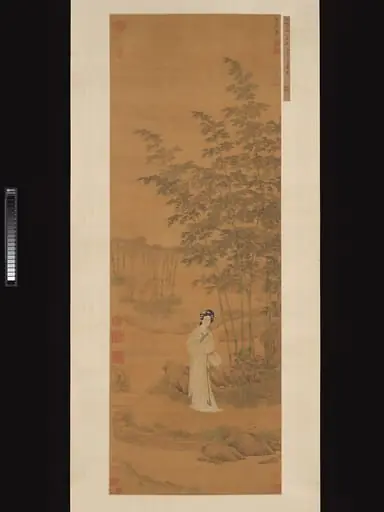 明 傳仇英 文玉圖 軸圖 軸|Lady in a Bamboo Grove
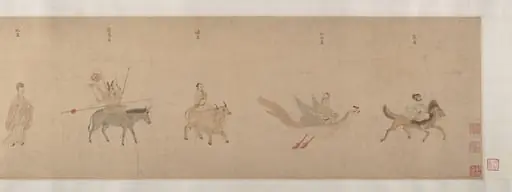 明 傳仇英 五星二十八宿神形圖 卷|Divinities of the Planets and Constellations
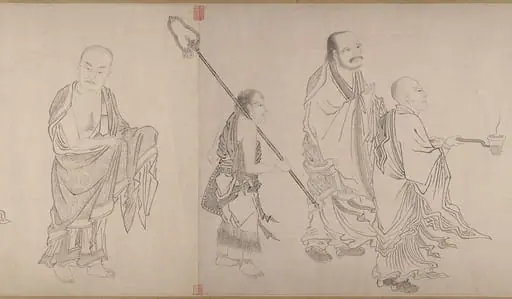 明 傳仇英 十六羅漢圖 卷|The Sixteen Luohans
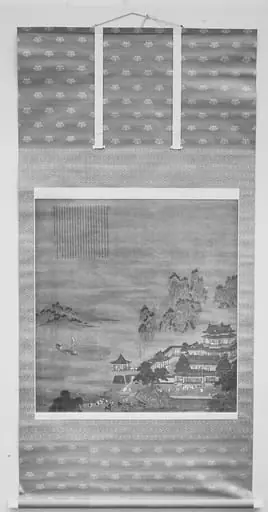 明 佚名 傳仇英 唐宫圖 軸|A Tang Palace
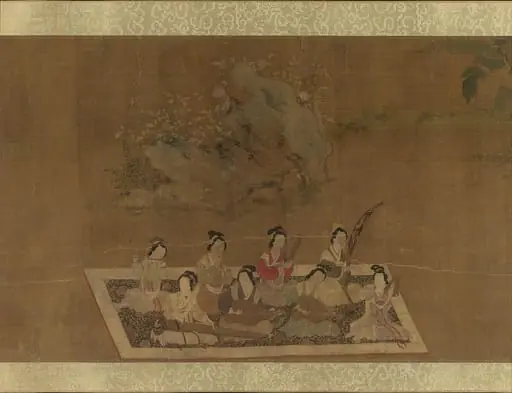 明 佚名 蘇蕙璇璣圖 卷|Lady Su Hui and Her Verse Puzzle
 Zhao Mengfu Writing the Heart (Hridaya) Sutra in Exchange for Tea
 Garden for Solitary Enjoyment
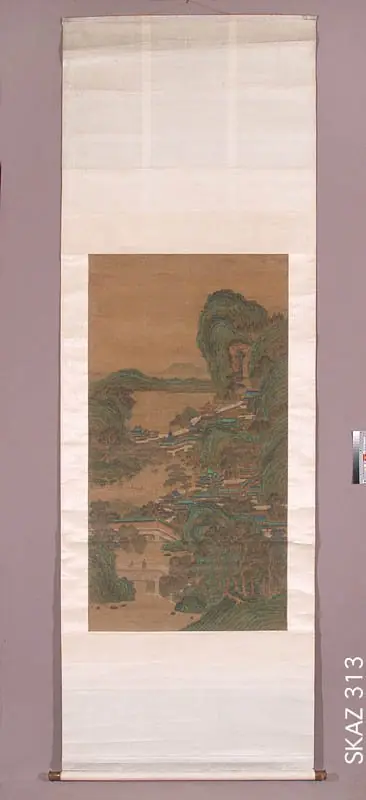 Pałac nad brzegiem jeziora - pejzaż
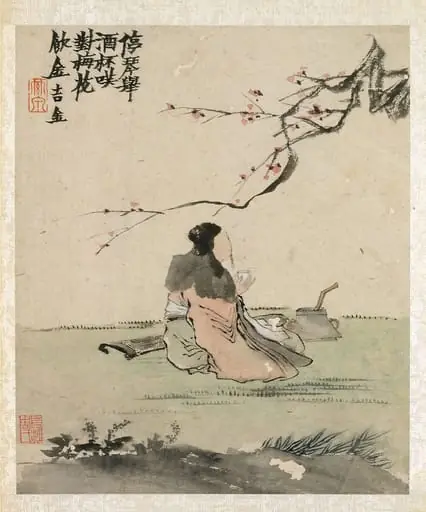 Untitled
 Palace Ladies
 Reviewing the Examination Results
 Watching Geese at Lan-t'ing Pavilion
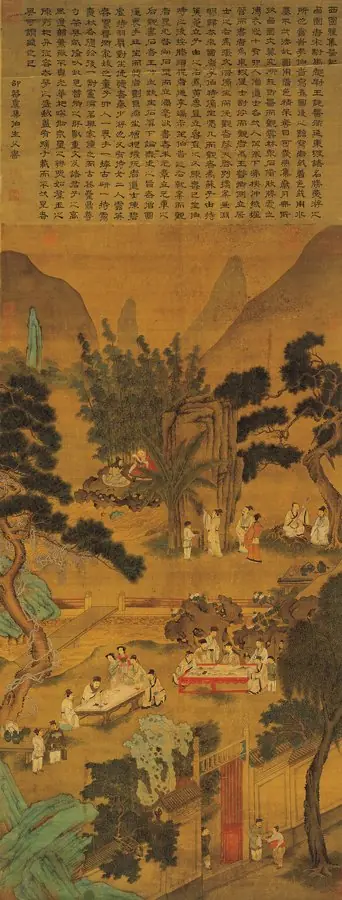 Elegant Gathering in the Western Garden
 Lady Xuanwen Giving Instruction on the Rites of Zhou
 Untitled
 Purification at the Orchid Pavilion
 Banquet at the Peach and Pear Blossom Garden on a Spring Evening
 A Gentle Recitation in the Wind and Rain
 Nymph of the Luo River, Taipei copy B
 One Hundred Children in the Long Spring