Artwork
Gentleman Seen from Behind
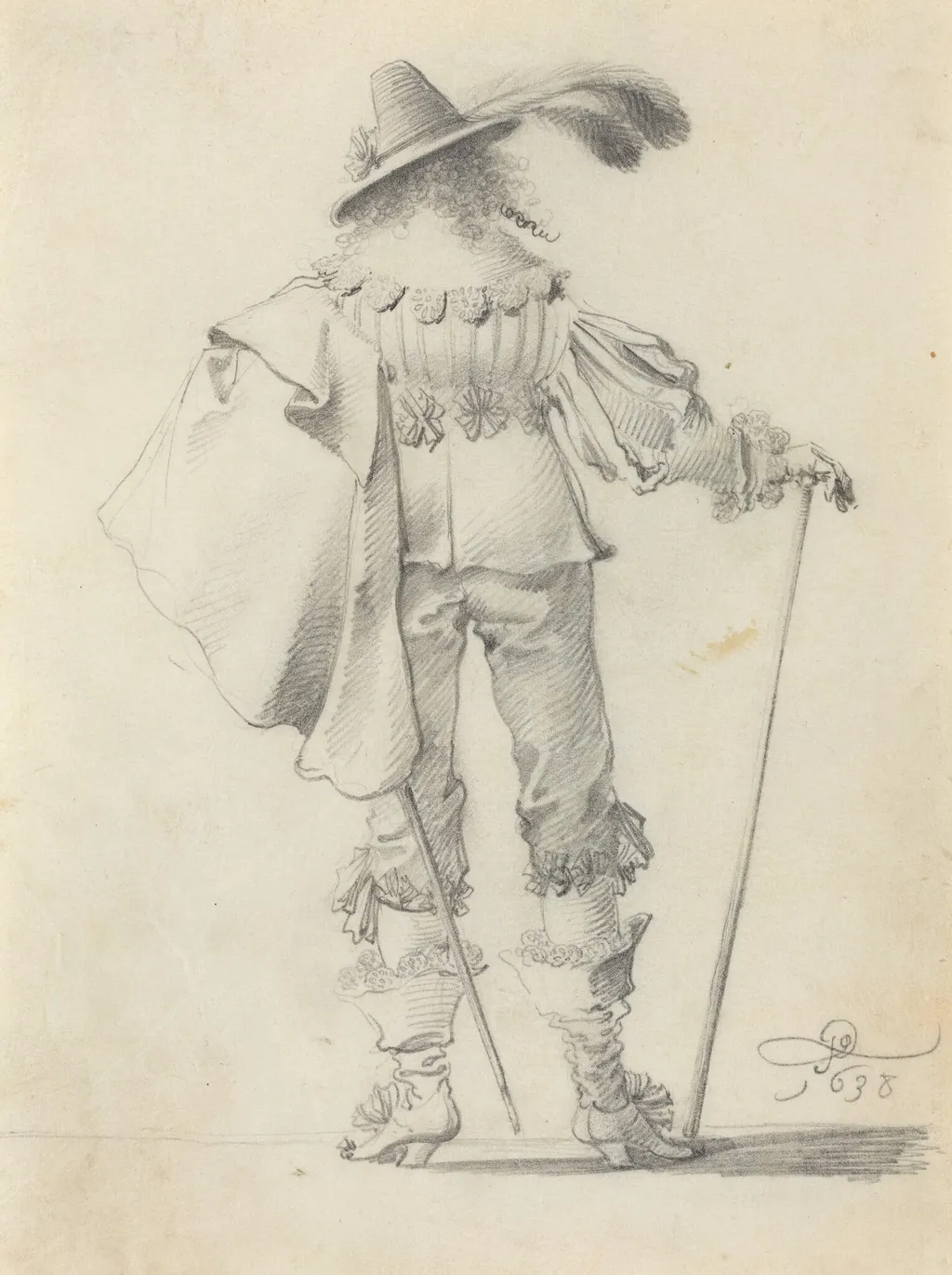
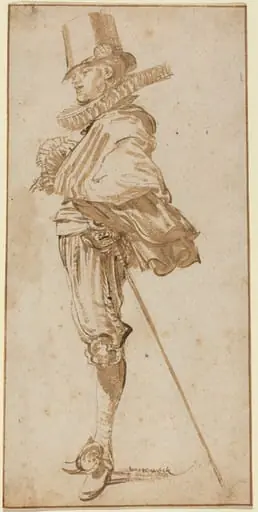
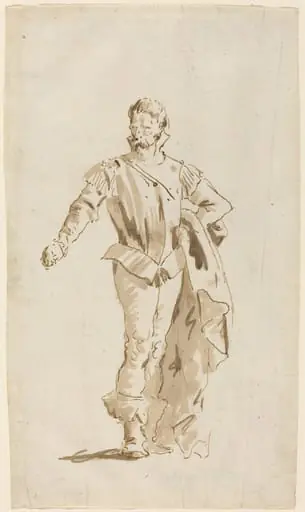
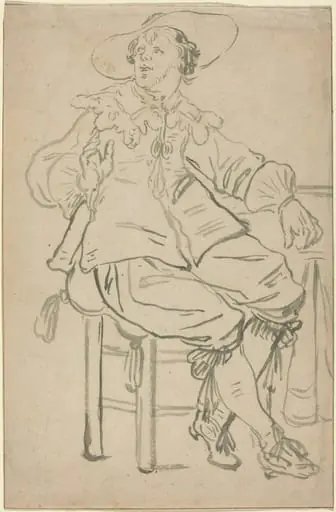
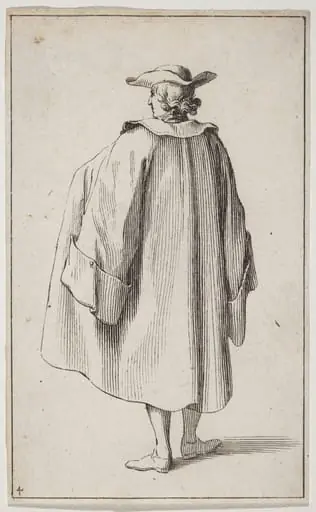
Gentleman Seen from Behind is a graphite drawing by the Baroque artist Pieter Jansz Quast. It dates from 1638 and is held in the collection of the National Gallery of Art.
About this work
Overview
Pieter Jansz Quast’s 1638 drawing, titled Gentleman Seen from Behind, is executed in graphite on vellum. The work presents a solitary figure viewed from the rear, dressed in elaborate early‑seventeenth‑century attire. The composition is limited to the outline of the man’s clothing and stance, offering a concise study of fashion and posture rather than a fully rendered portrait.
Subject & Meaning
The figure is a gentleman clad in a wide‑brimmed hat adorned with a feather, a ruffled shirt, and voluminous breeches trimmed with lace. One hand supports a walking stick while the other grasps a loose strip of fabric, suggesting a moment of casual movement or preparation. The rear view invites contemplation of identity through dress rather than facial expression.
Technique & Style
Quast employs a light, confident graphite line on smooth vellum, allowing the drawing to retain a sketch‑like immediacy. The strokes emphasize the drapery and silhouette, with minimal cross‑hatching, creating a sense of fluidity and motion. The economy of detail reflects a Baroque interest in capturing fleeting gestures and the texture of luxurious fabrics.
History & Provenance
Created in 1638, the drawing belongs to Quast’s early output during the Dutch Baroque period. While specific ownership records are scarce, the piece has been catalogued among his surviving works and is referenced in scholarly surveys of 17th‑century Dutch drawing practices.
Context
The work aligns with contemporary Dutch interest in genre scenes and the depiction of everyday figures, even when presented in an aristocratic guise. By focusing on attire and posture, Quast contributes to a visual discourse on social status and fashion that was prevalent in the Netherlands during the mid‑1600s.
Artist & collection