Artwork
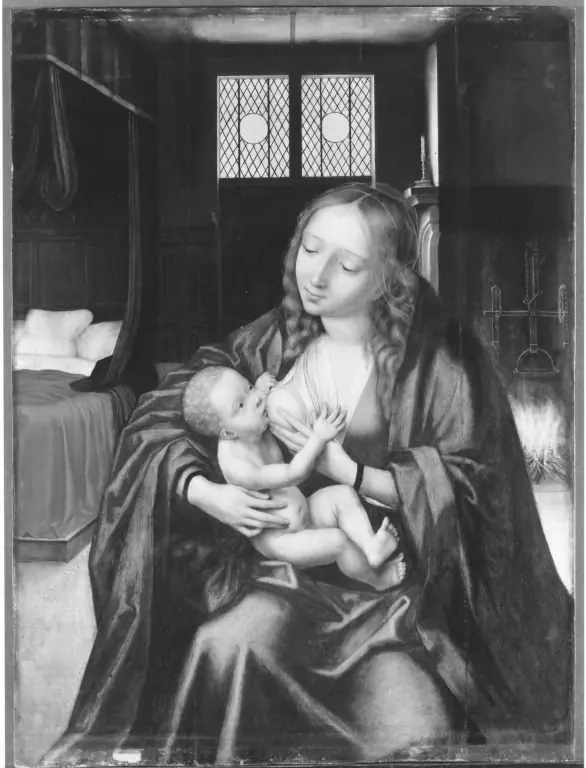
Rem-Altar: Maria mit Kind
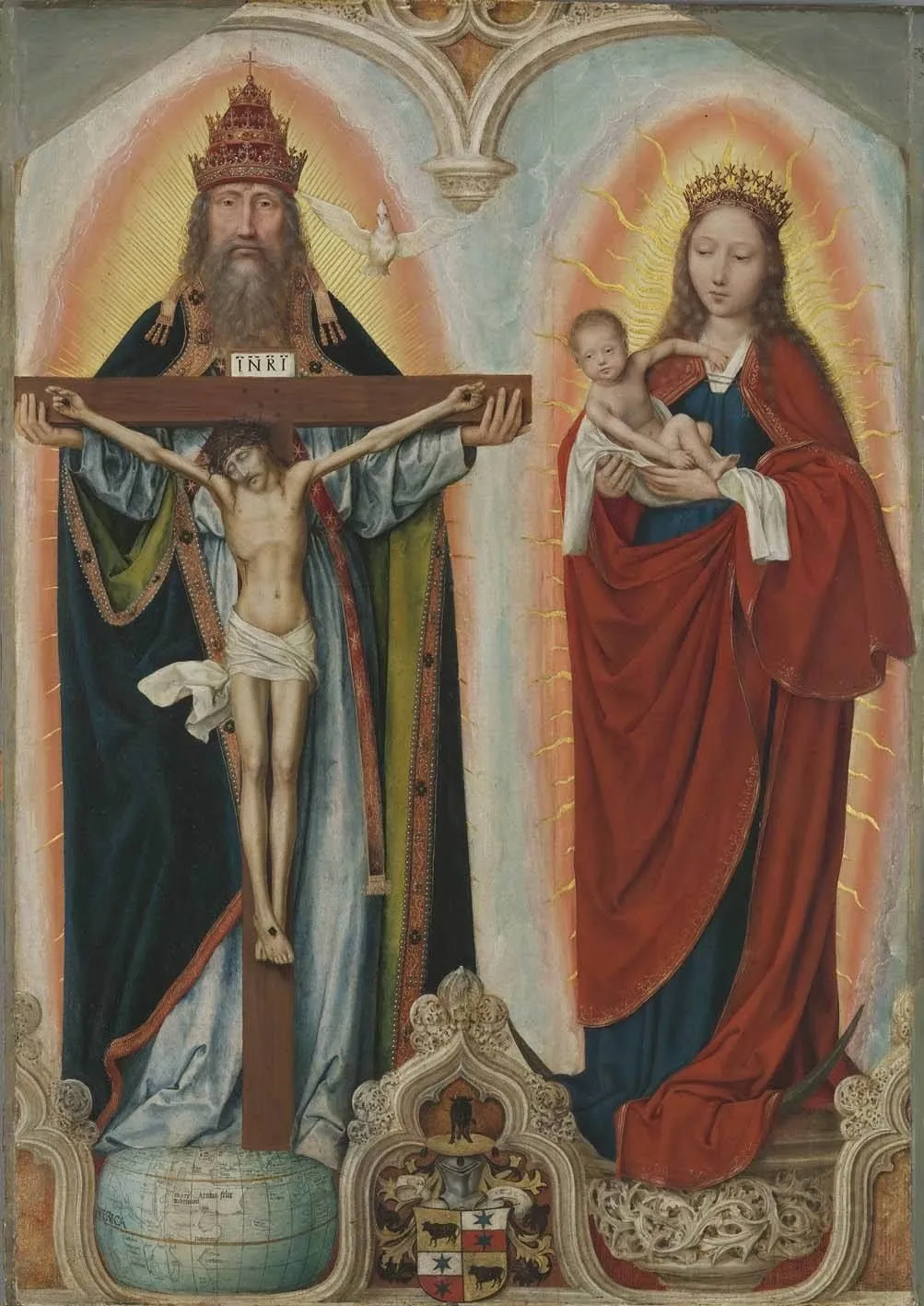
Rem-Altar: Maria mit Kind is an unspecified painting by the Northern Renaissance artist Quinten Metsys. It dates from 1518 and is held in the collection of the Bavarian State Painting Collections. Quentin Matsys, a Flemish painter active in the early sixteenth century, completed *Rem‑Altar: Maria mit Kind* in 1518.
About this work
Overview
Quentin Matsys, a Flemish painter active in the early sixteenth century, completed *Rem‑Altar: Maria mit Kind* in 1518. Executed during the Northern Renaissance, the oil work belongs to the religious genre that dominated much of Matsys’s output. The painting is part of the Alte Pinakothek’s collection in Munich and exemplifies the artist’s blend of devotional imagery with moral undertones.
Subject & Meaning
On the right, a woman in a red robe gently holds an infant, both suffused with a subtle glow, suggesting the Virgin Mary with the Christ Child.
The composition presents three figures arranged horizontally. To the left, a crowned, bearded man clutches a cross bearing a nailed figure, evoking the crucifixion. Central is a serene figure marked by an inscription reading “INRI,” identifying him as the crucified Christ. On the right, a woman in a red robe gently holds an infant, both suffused with a subtle glow, suggesting the Virgin Mary with the Christ Child.
Technique & Style
Matsys employs a restrained palette of bright yet muted tones, allowing the figures to emerge from a patterned, throne‑like base. The gold‑toned sky and a soaring dove provide a celestial backdrop. Light falls across the scene in a manner reminiscent of chiaroscuro, modeling forms through contrasts of illumination and shadow to create a sense of spatial depth.
History & Provenance
Born in Leuven in 1466, Matsys first trained as an ironsmith before moving to Antwerp, where he became a leading painter. *Rem‑Altar: Maria mit Kind* remained in private and ecclesiastical hands before entering the Alte Pinakothek, where it has been displayed as part of the museum’s Early Netherlandish holdings.
Context
The work reflects the Northern Renaissance’s emphasis on detailed realism and devotional content, while also echoing Matsys’s interest in moralizing subjects. Its iconography aligns with contemporary Catholic practices of venerating the Virgin and Child, and the inclusion of the crucifixion scene underscores the theological focus on Christ’s sacrifice prevalent in early sixteenth‑century Flemish art.
Artist & collection
Artist
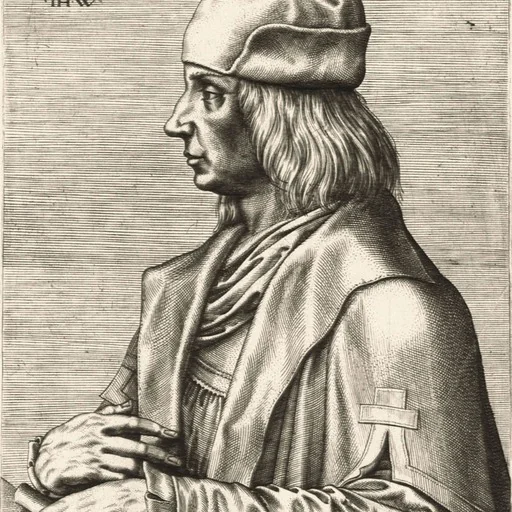
Quentin Matsys (UK: MAT-sysse, US: MAHT-sysse; also Massys or Metsys; Flemish: Quinten Matsijs ; 1466–1530) was a Flemish painter in the Early Netherlandish tradition.

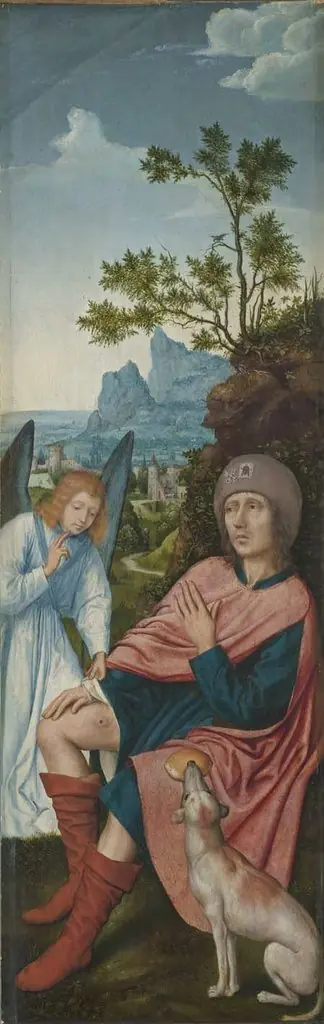
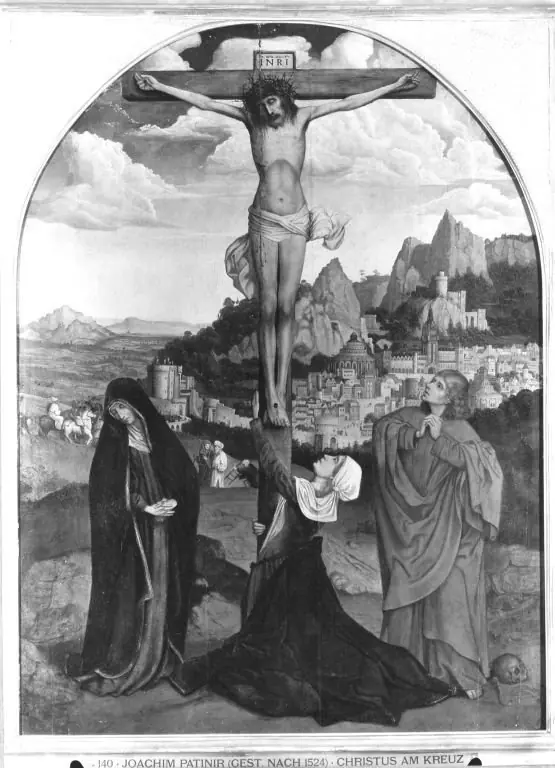
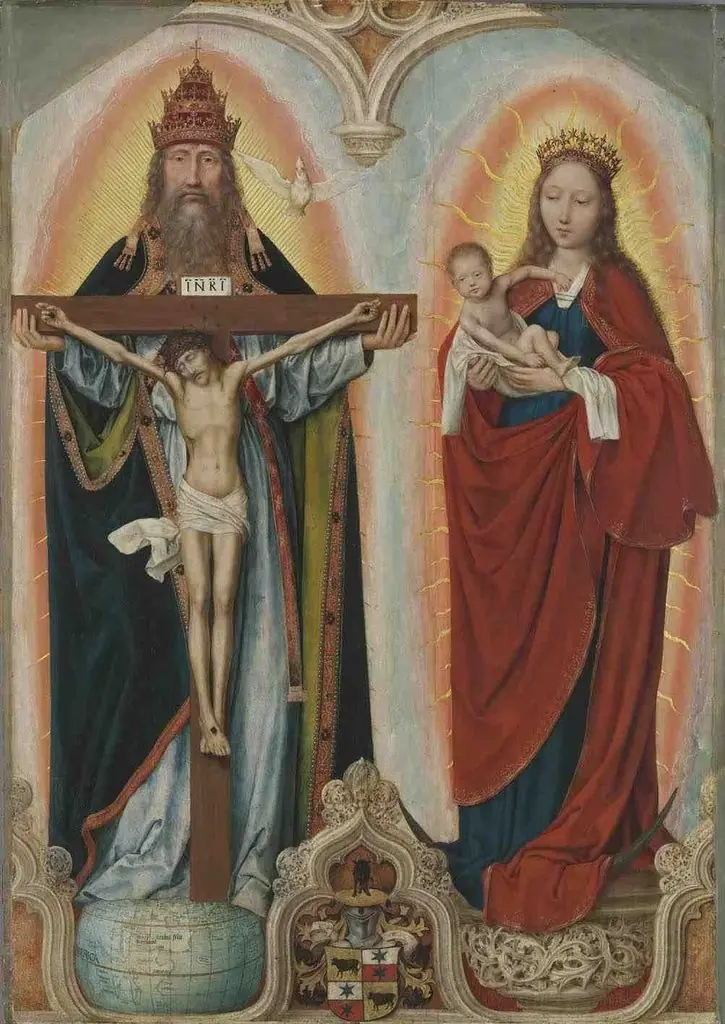 Rem-Altar: Heilige Dreifaltigkeit ("Gnadenstuhl")
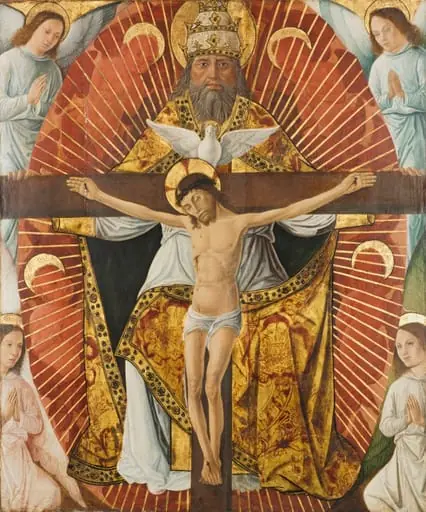 The Trinity
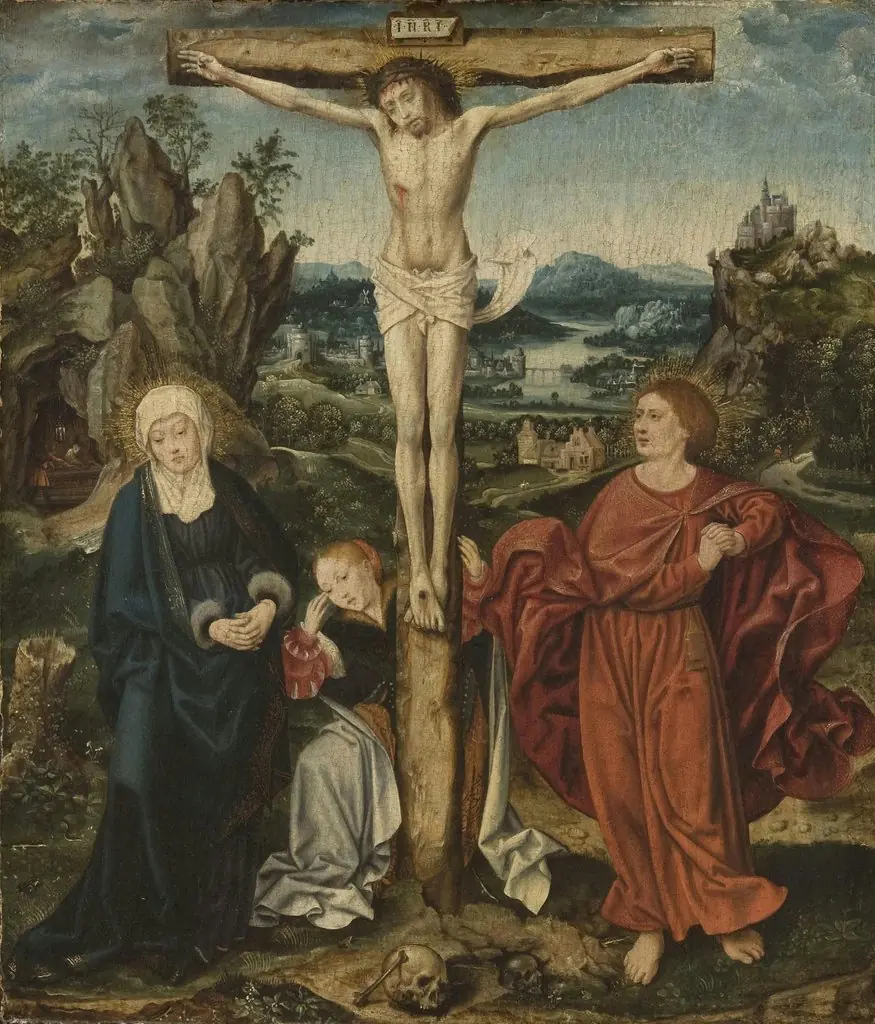 Crucifixion
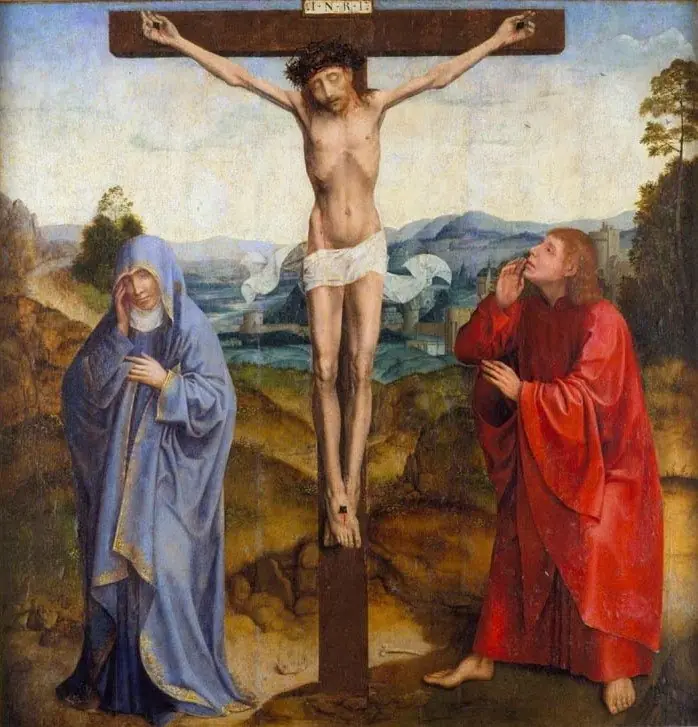 Calvary
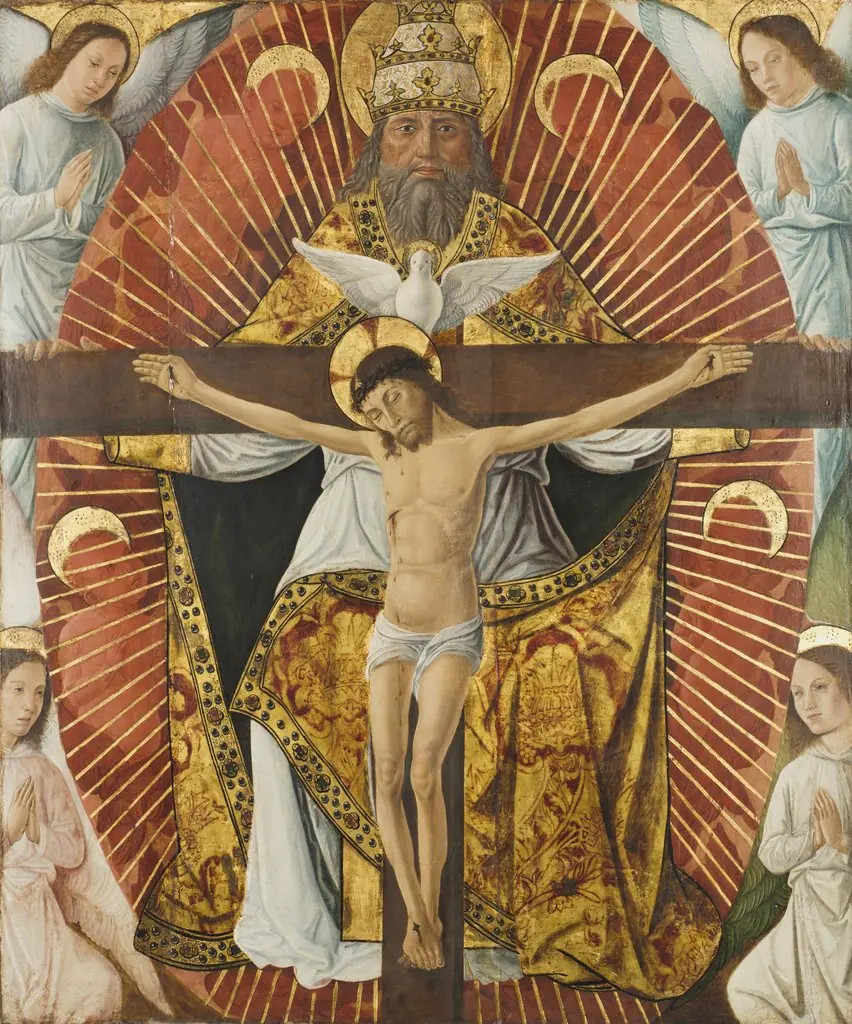 The Trinity
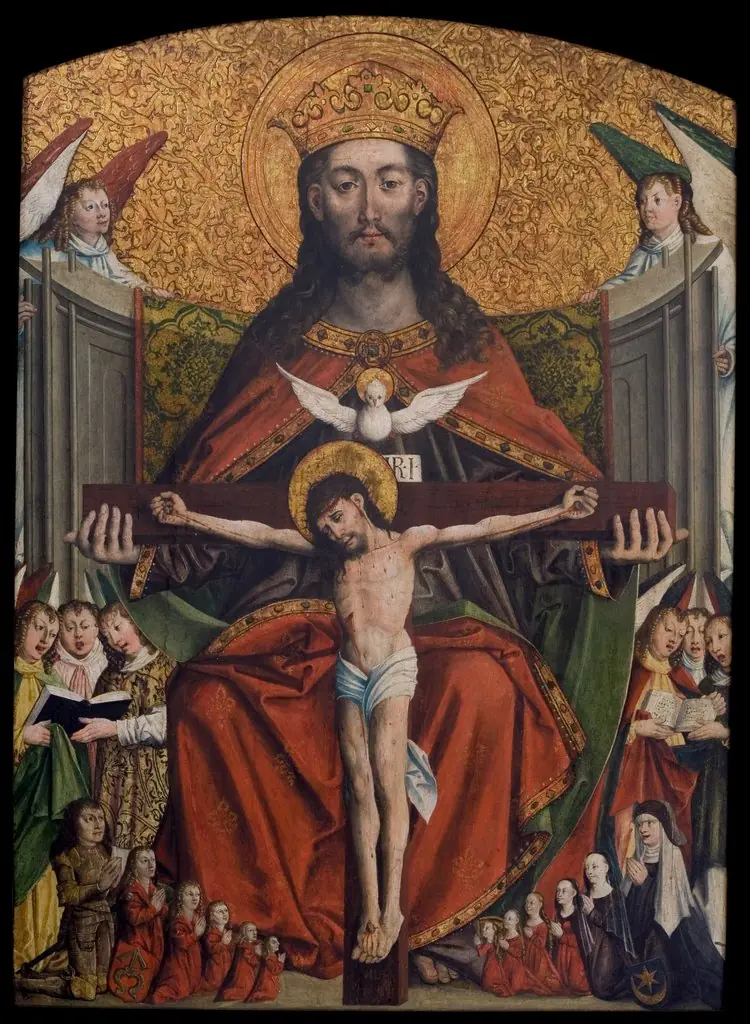 Holy Trinity. Votive painting of Jakub Dębiński, from the Parish Church of St Margaret in Dębno near Brzesko
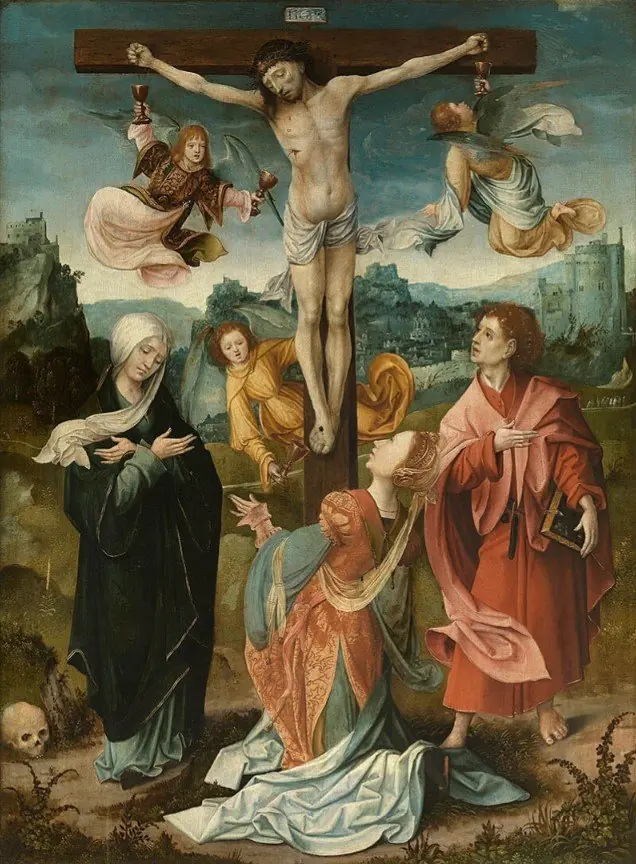 Crucifixion
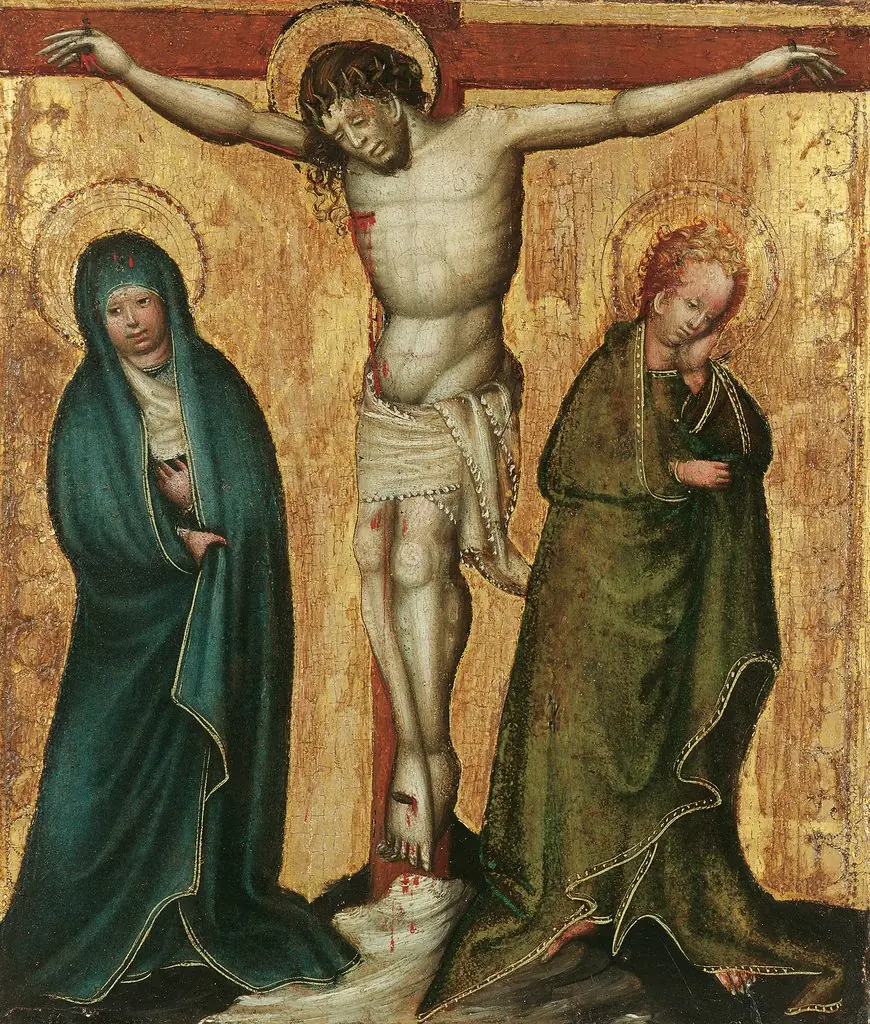 Dreifigurige Kreuzigung
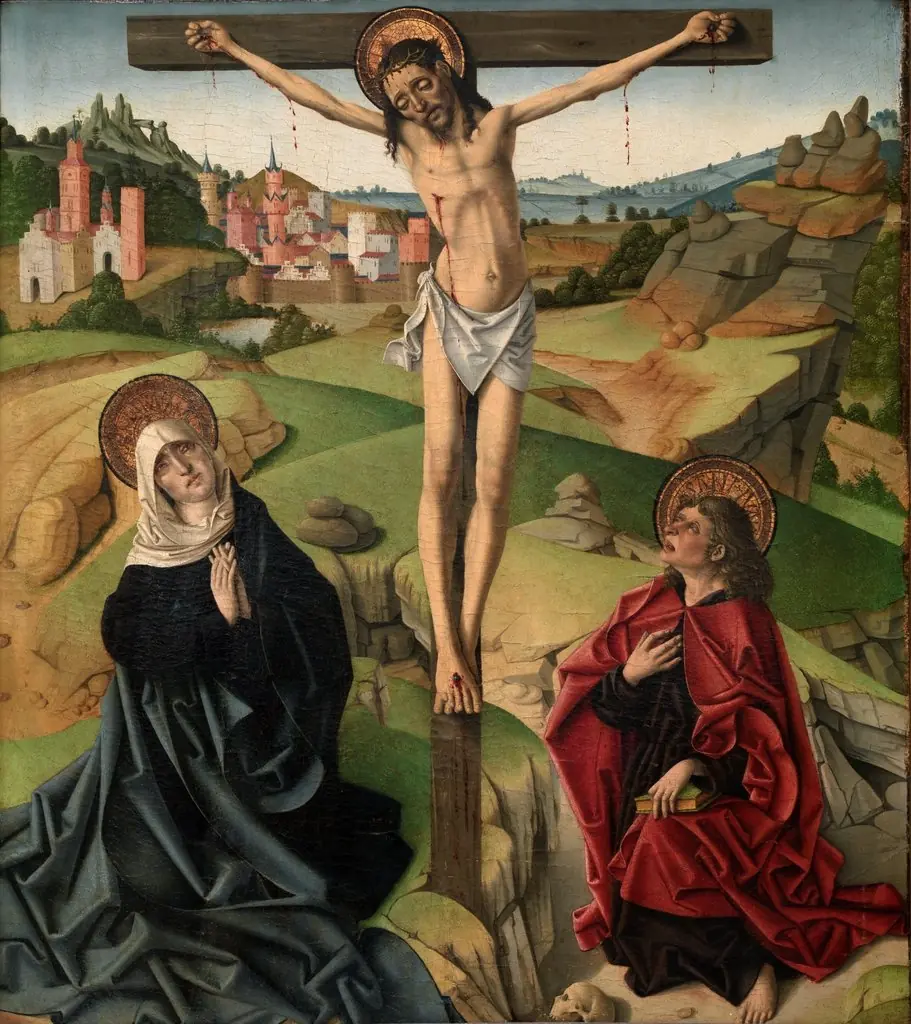 The Crucifixion
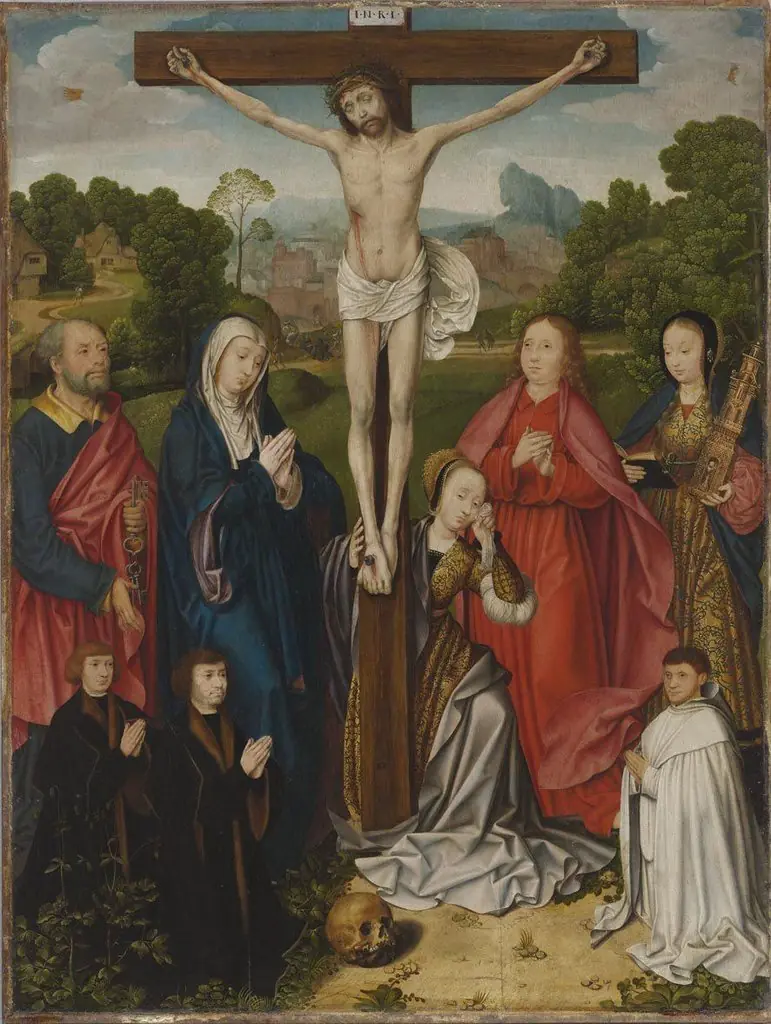 Christ on the cross with the saints Peter, Mary, Mary Magdalene, John the Evangelist and Barbara, with three donors
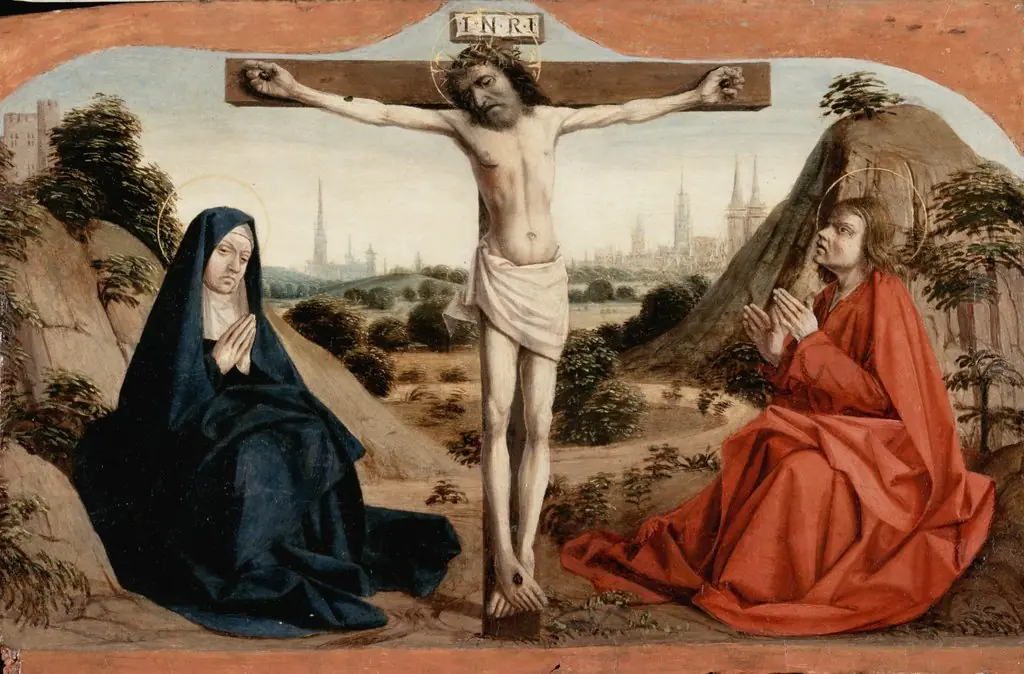 Crucifixion
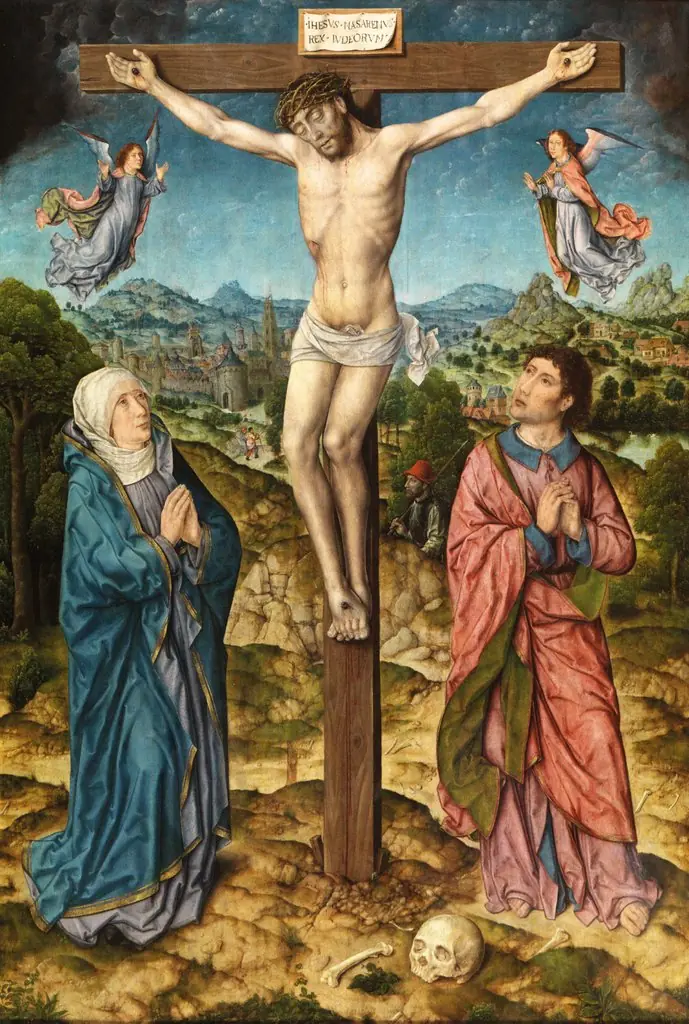 The Crucifixion