Artwork
Jupiter and Antiope
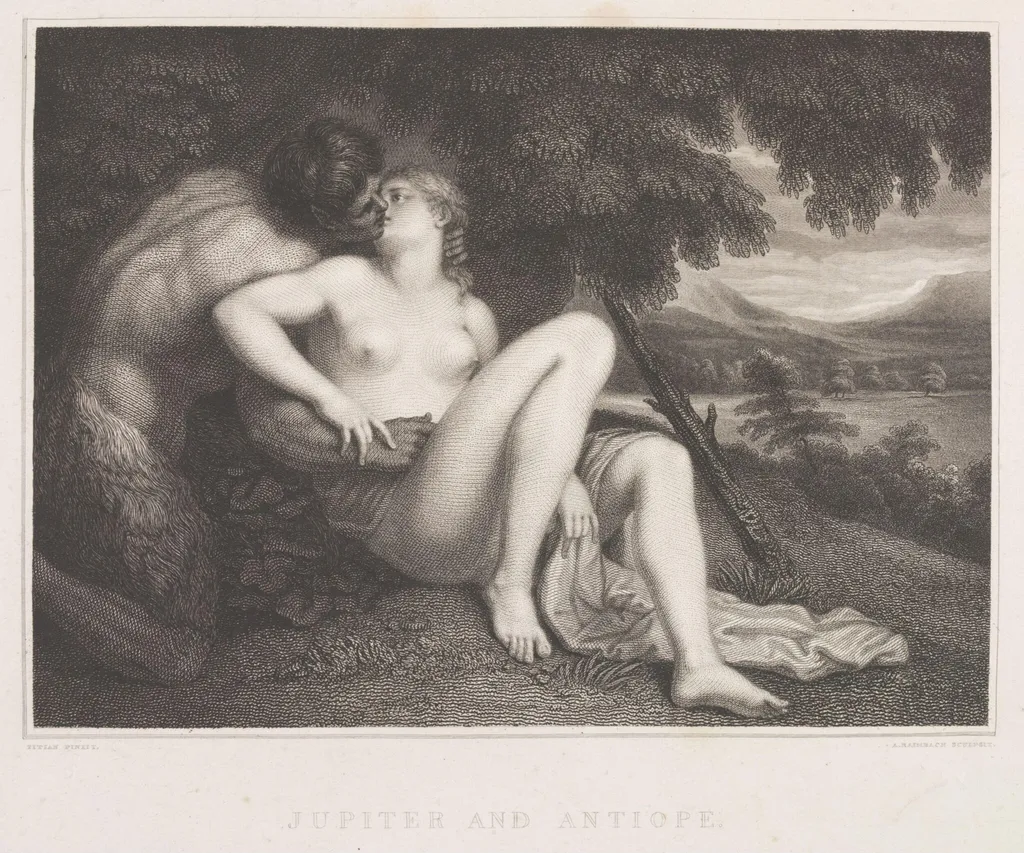
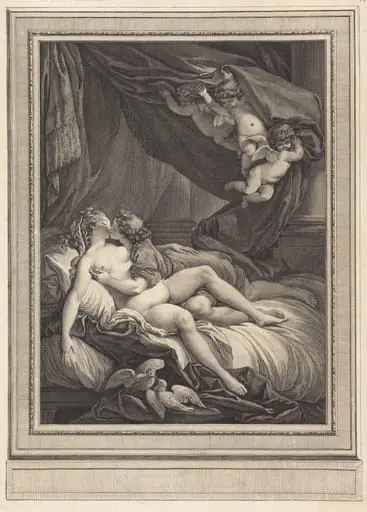
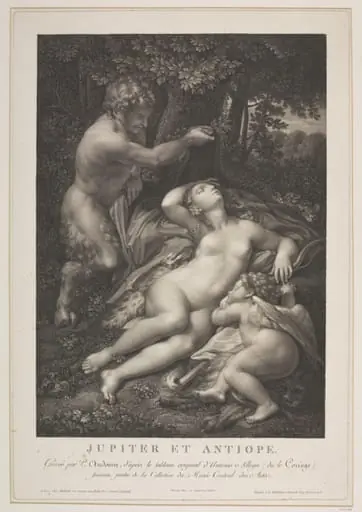
Jupiter and Antiope is a print by Abraham Raimbach. It is held in the collection of the Victoria and Albert Museum.
About this work
Overview
The image relies on tonal contrast to define form and space, translating the oil painting’s atmosphere into a graphic medium.
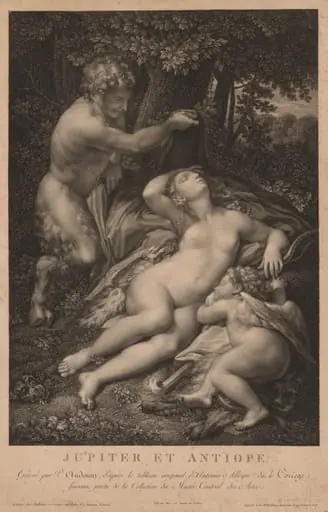
This 1850 print by Abraham Raimbach reproduces a composition originally painted by Titian. Executed on paper, it captures a mythological encounter between Jupiter and Antiope within a forested setting. The image relies on tonal contrast to define form and space, translating the oil painting’s atmosphere into a graphic medium. Raimbach’s technique emphasizes the figures’ physical presence through careful gradations of light and shadow.
Subject & Meaning
The scene depicts Jupiter, the Roman god, in human form, seated beside Antiope, a nymph from Greek myth. She kneels before him, hands clasped in supplication, while he rests with casual authority. The moment suggests a divine encounter—perhaps the myth of Jupiter’s seduction of Antiope. The wooded backdrop and distant horizon imply a liminal space between the natural and the divine, reinforcing the narrative’s mythic tone without overt symbolism.
Technique & Style
Raimbach employed chiaroscuro to model the figures, using dense shadows and subtle highlights to create volume and spatial depth. The background is rendered in darker, looser strokes, allowing the illuminated forms of the bodies to emerge with clarity. Line work is restrained, prioritizing tone over contour, a method suited to reproductive printmaking of the period. The effect is atmospheric, emphasizing mood over detail.
History & Provenance
Created in 1850, the print was part of a broader 19th-century effort to disseminate Old Master compositions through engraved reproductions. Raimbach, known for translating paintings into prints, worked from Titian’s original, now lost or altered. This version circulated among collectors and art students, serving as an accessible reference to Renaissance composition before the era of photographic reproduction.
Context
In mid-19th-century Europe, reproductive prints were vital for art education and public engagement with canonical works. Titian’s mythological subjects remained influential, and artists like Raimbach bridged the gap between original paintings and wider audiences. This print reflects a time when access to major collections was limited, making accurate engravings essential for artistic study and cultural memory.
Legacy
Though not an original composition, Raimbach’s print preserved Titian’s narrative and compositional structure for later generations. It contributed to the continued circulation of Renaissance themes in Victorian visual culture. Today, such prints serve as historical records of how classical subjects were interpreted and transmitted before modern reproduction technologies rendered them obsolete.
Artist & collection