Artwork
Two Nude Men
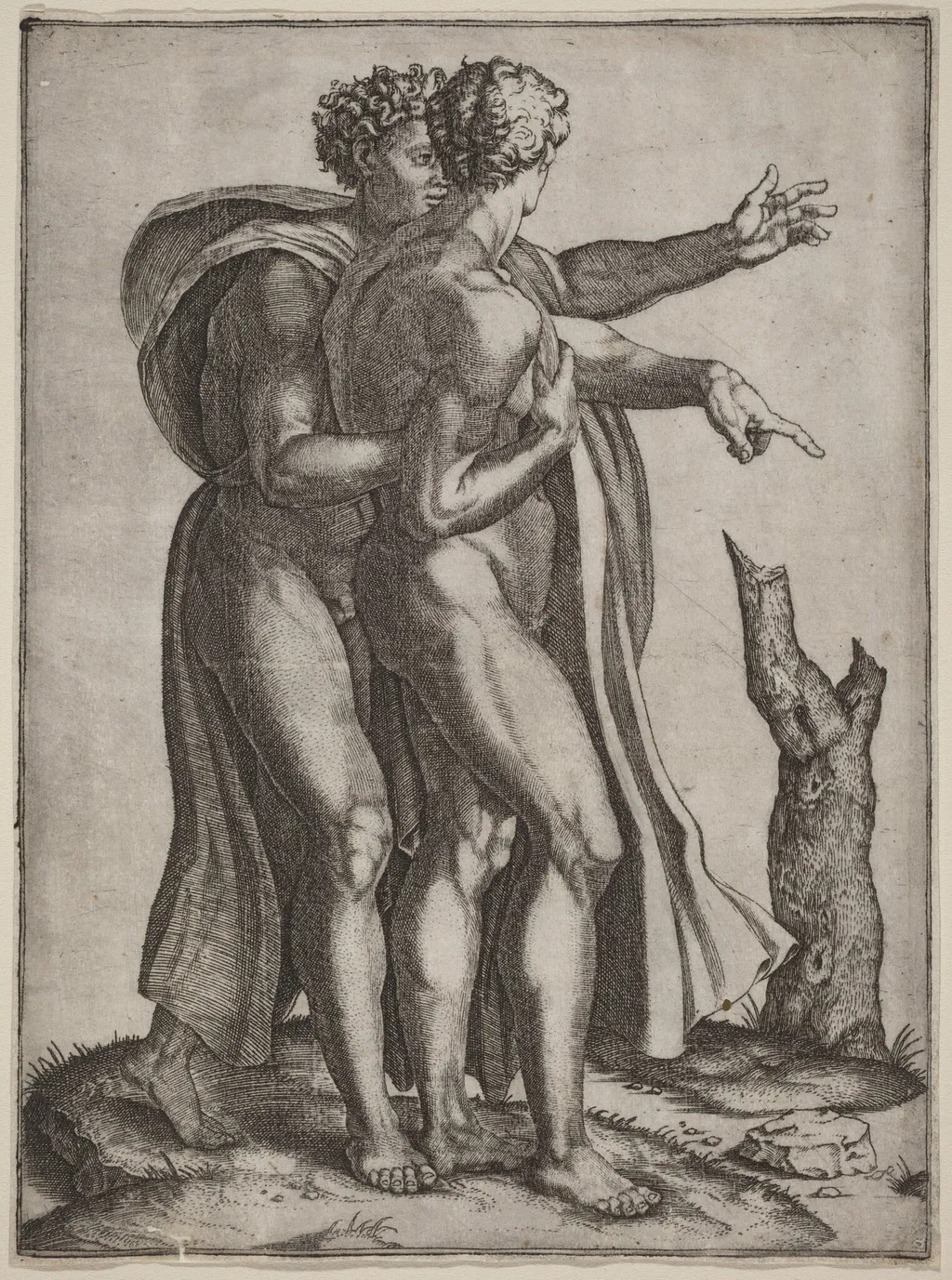
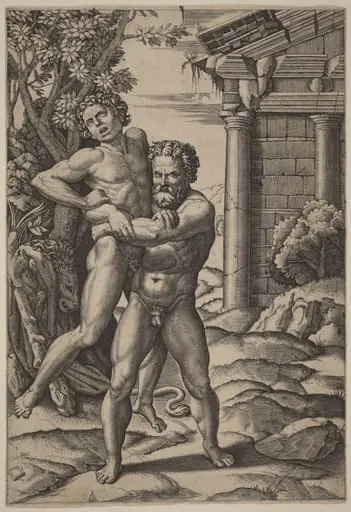
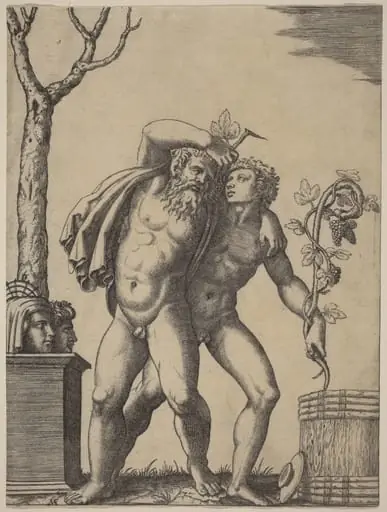
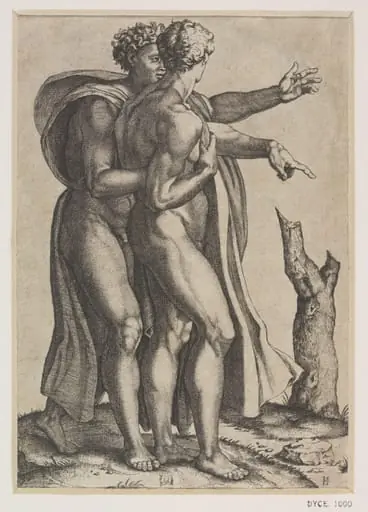
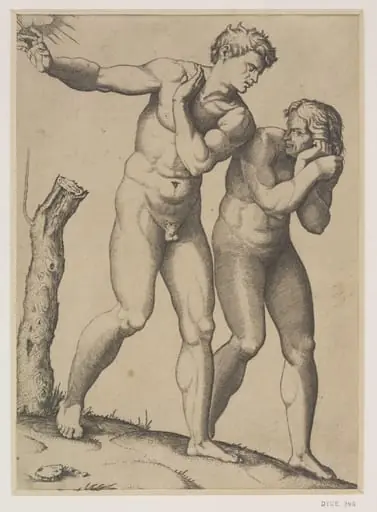
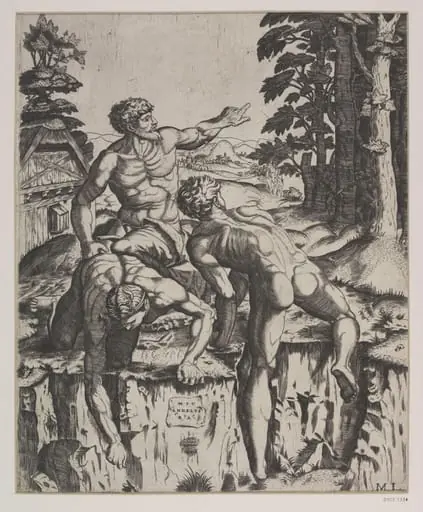
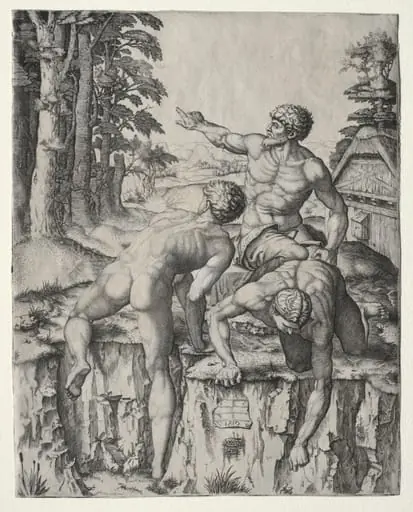
Two Nude Men is an ink print by the Renaissance artist Marcantonio Raimondi. It dates from 1507 and is held in the collection of the National Gallery of Art. Created in 1507, this black‑and‑white engraving presents two nude male figures set against a rocky landscape.
About this work
Overview
Created in 1507, this black‑and‑white engraving presents two nude male figures set against a rocky landscape. One figure leans forward, draping a curved object—perhaps a shield or cloth—over his shoulder, while the other stands upright, gesturing toward an unseen point with his right hand. Both men display curly hair, bare feet, and pronounced musculature, rendered through fine linear detail.
Subject & Meaning
The composition focuses on the idealized human body, a central concern of High Renaissance art, emphasizing anatomical precision and balanced poses.
The composition focuses on the idealized human body, a central concern of High Renaissance art, emphasizing anatomical precision and balanced poses. The interaction between the two figures, one protective and the other directive, suggests a narrative of partnership or instruction, though no explicit story is provided, allowing viewers to contemplate themes of strength, guidance, and classical heroism.
Technique & Style
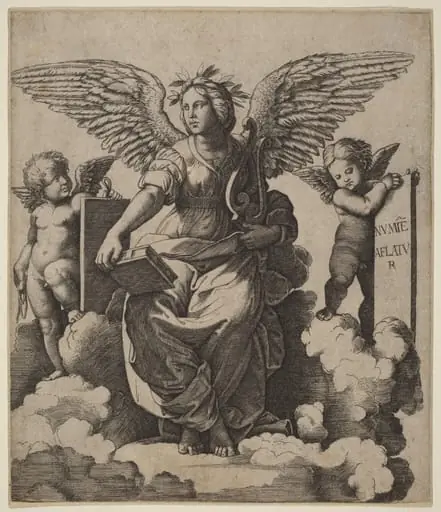
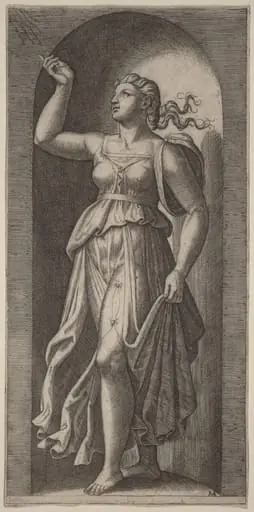
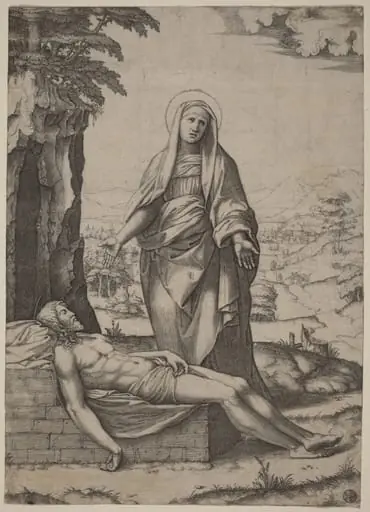
Raimondi employs meticulous cross‑hatching, layering intersecting lines to model form and suggest volume. This method creates subtle gradations of light and shadow, defining muscle tone, drapery, and the textured ground. The crisp contours and controlled line work reflect the engraver’s systematic approach, characteristic of early 16th‑century printmaking that sought to translate painterly designs into reproducible images.
History & Provenance
The print is attributed to Marcantonio Raimondi, an Italian engraver renowned for reproducing works by leading painters such as Raphael. By adapting designs from these masters, Raimondi helped disseminate High Renaissance aesthetics across Europe. The piece exemplifies his early independent output before his extensive collaborations, marking a pivotal moment in his development as a leading figure in reproductive engraving.
Context
During the early 1500s, the demand for portable, affordable art grew, and engravings served as a primary means of circulating artistic ideas. Raimondi’s work aligns with this trend, translating the era’s fascination with the classical nude into a format accessible to collectors and scholars beyond the confines of frescoes and panels.
Own this work as a print
Artist & collection

Artist
Marcantonio Raimondi, often called simply Marcantonio (c. 1470/82 – c. 1534), was an Italian engraver, known for being the first important printmaker whose body of work consists largely of prints copying paintings. He…