Artwork
His Honor The Lieutenant Governor of the Punjab and Party, Shimla
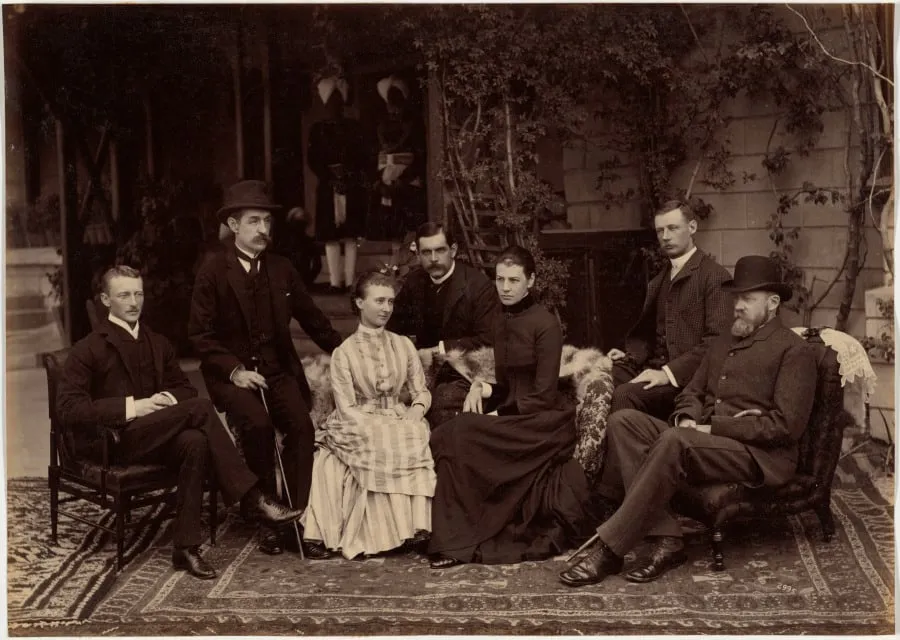
His Honor The Lieutenant Governor of the Punjab and Party, Shimla is a photography by the Impressionist artist Raja Deen Dayal. It dates from 1887 and is held in the collection of the Cleveland Museum of Art.
About this work
This is a group photo from 1887. A man in a suit stands at center. Three others sit beside him. Two women in dark dresses stand to the left.
It’s a rare look at British rule in India. The man in charge of Punjab sits next to his brother who just retired. They’re all dressed in stiff Victorian clothes under a bright Indian sky.
Want more like this? Check out Raja Deen Dayal.
Overview
James Lyall, newly appointed lieutenant governor of the Punjab, is seated at the center, flanked by his recently retired brother Alfred and other relatives.
Taken in 1887 in Shimla, this photograph captures a gathering of the Lyall family during a transitional moment in British colonial administration. James Lyall, newly appointed lieutenant governor of the Punjab, is seated at the center, flanked by his recently retired brother Alfred and other relatives. The image reflects both familial ties and institutional hierarchy, framed within the formal conventions of colonial portraiture.
Subject & Meaning
The group includes James Lyall, his elder brother Alfred—who had just stepped down as lieutenant governor of the North-Western Provinces—and two women, likely Alfred’s daughter Mary Evelina and James’s wife. Their gathering in Shimla, the summer capital, symbolizes both personal reunion and the continuity of administrative lineage within the British elite in India, where family networks often reinforced political authority.
Technique & Style
Deen Dayal employed deliberate compositional strategies: seated figures are arranged by height and position to denote status, while standing women anchor the left side, creating visual balance. The rigid postures, formal attire, and controlled lighting reflect Victorian portraiture norms, yet the setting—lush hills and open sky—grounds the scene in its Indian context, subtly contrasting colonial formality with local environment.
History & Provenance
The photograph was taken shortly after Alfred Lyall’s retirement and recovery from illness, during his visit to James in Shimla. Deen Dayal, a prominent Indian photographer serving colonial elites, documented such gatherings with precision. The image survives as part of a broader archive of colonial life, preserved in institutional collections and later studied for its insights into British-Indian social dynamics.
Context
Shimla served as the administrative summer capital of British India, where officials retreated from the heat of the plains. Such gatherings were not merely social but reinforced networks of power among colonial families. The Lyalls exemplified a pattern where senior positions passed between relatives, embedding familial ties within the machinery of imperial governance.
Legacy
Deen Dayal’s work, including this image, offers a rare visual record of British colonial families in India, capturing the intersection of personal and political life. The photograph remains a key reference for understanding how colonial authority was performed and sustained through ritual, dress, and spatial arrangement, beyond official documents and reports.
Artist & collection

Artist
Raja Lala Deen Dayal, famously known as Raja Deen Dayal) was an Indian photographer.

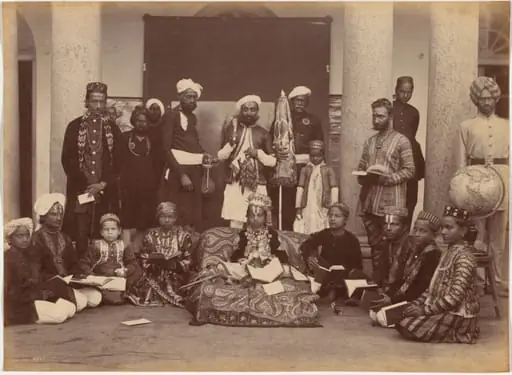 Maharaja of Rewa and Classmates
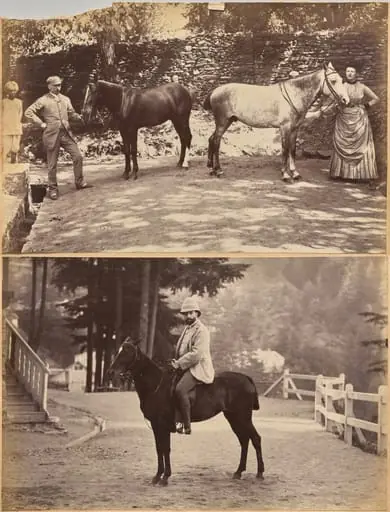 Col. F. G. Oldham (recto, top); Mr. Nowell, Shimla (recto, bottom)
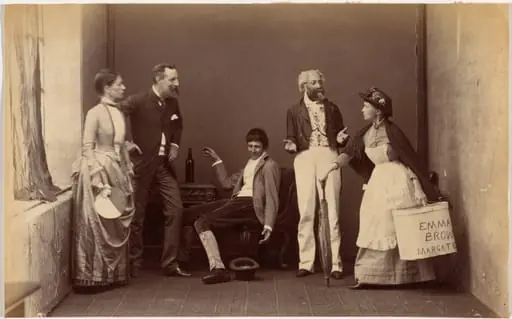 Fancy Group, Indore I
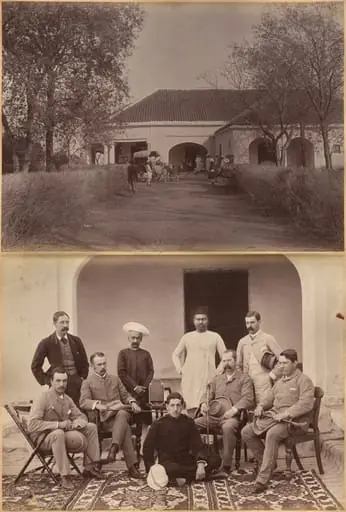 Civil officers at Jhansi (recto); Mr. William's House, Jhansi (verso)
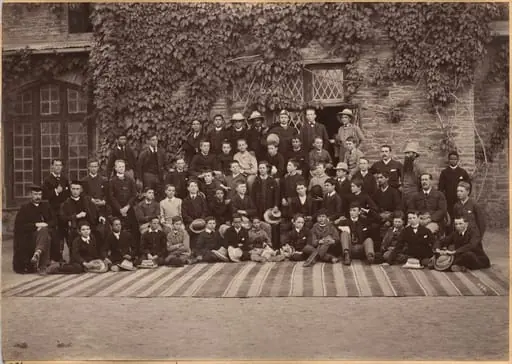 Middle Class Students and Staff, Bishop Cotton School, Shimla (verso)
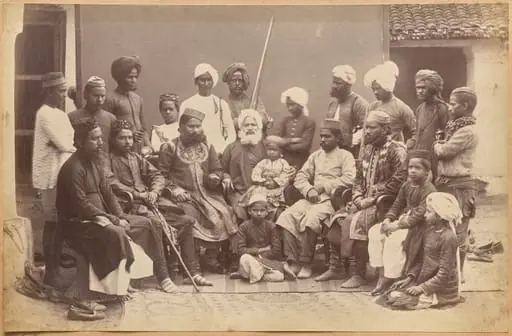 Mowhri Rahman Alli Khan family, Rewa (recto, bottom)
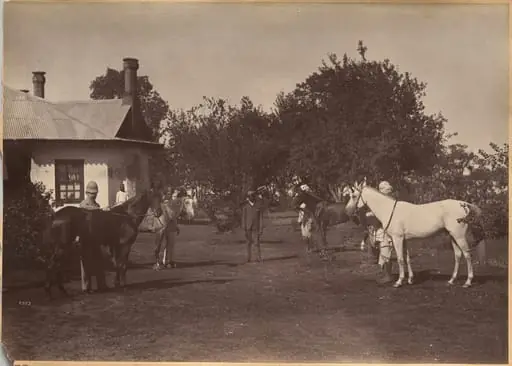 Lord William Beresford's horses
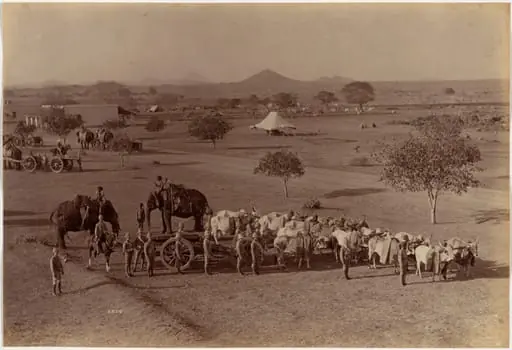 Heavy Field Battery, Jhansi
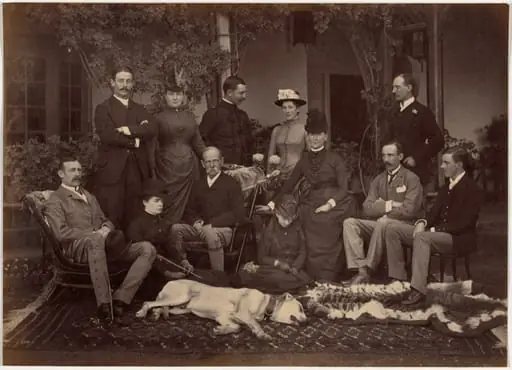 His Eminence Commander in Chief and Party, Shimla
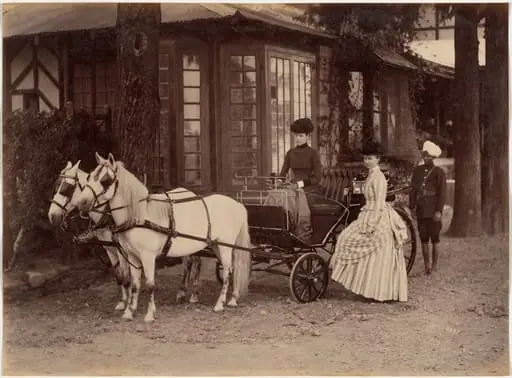 Mrs. and Miss Lyall, Shimla
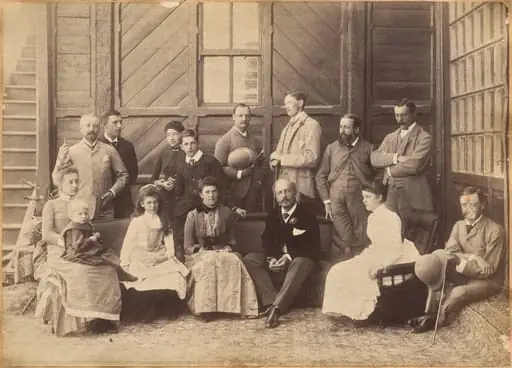 Shimla 17th May 1887: Viceregal party. Lord William Beresford, Military Secretary, Captain Leonard Gordon A.D.C., Mademoiselle Clerc, The Honorable Basit Blackwood, Major F. R. Hamilton A.D.C., Mr. Oglivie Grant, Sir Donald Mackenzie Wallace K.C.E., Private Secretary, Dr. J. Findlay, Mrs. F. R. Hamilton, Master G. Hamilton, Lady Victoria Blackwood, H. E. The Countess of Dufferin, H. E. The Earl of Dufferin, Lady Hermione Blackwood, Lord Herbrand Russell, A.D.C. (recto)
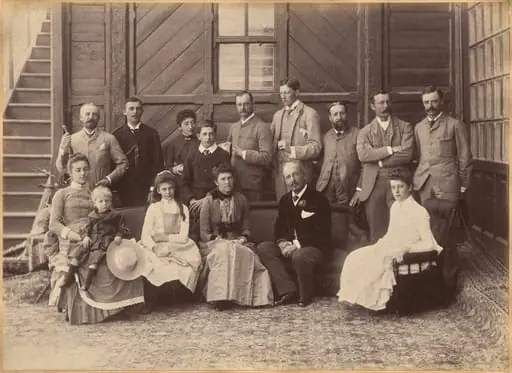 Viceregal Party Shimla (verso)
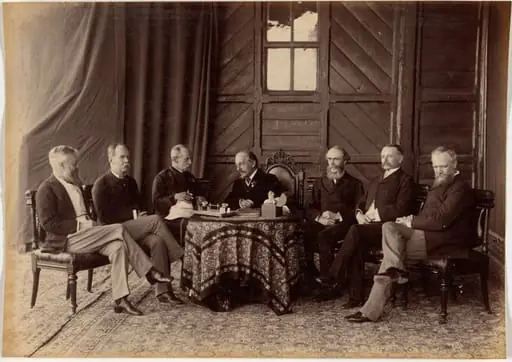 Lord Dufferin and the Supreme Council of Government of India
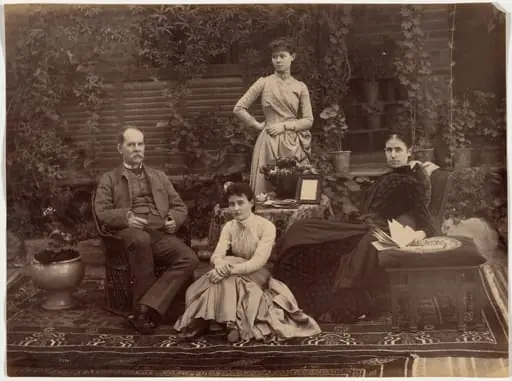 Sir Auckland Colvin and Family, Shimla
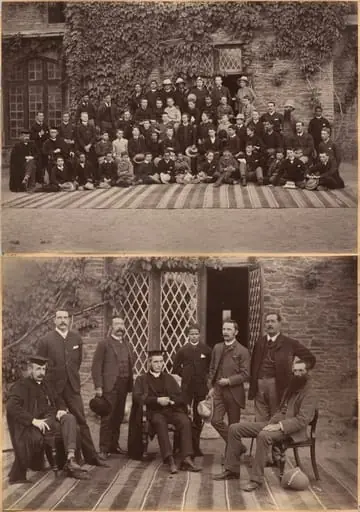 Principal and Teachers of Bishop Cotton School, Shimla (recto); Middle Class Students and Staff, Bishop Cotton School, Shimla (verso)
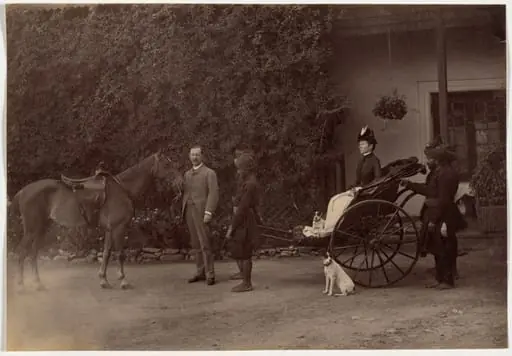 Colonel H.R. Thuillier and His Wife Emmeline Williams Thuillier, Shimla
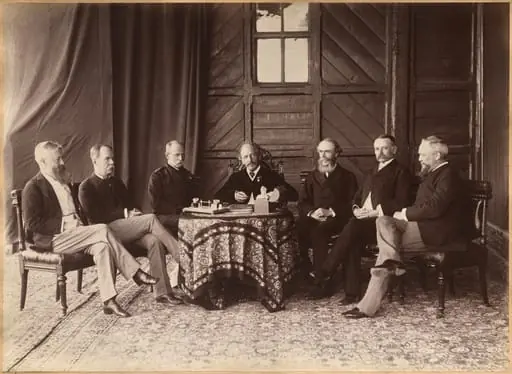 The Viceregal Council
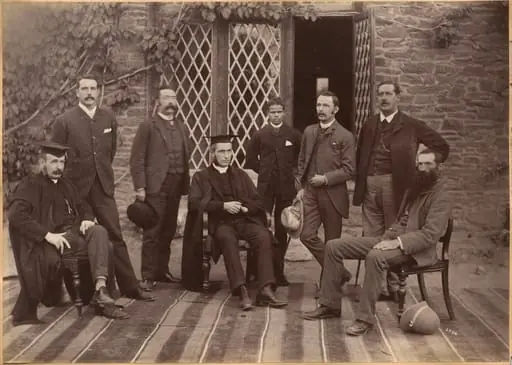 Principal and Teachers of Bishop Cotton School, Shimla (recto)