Artwork
The Viceregal Council
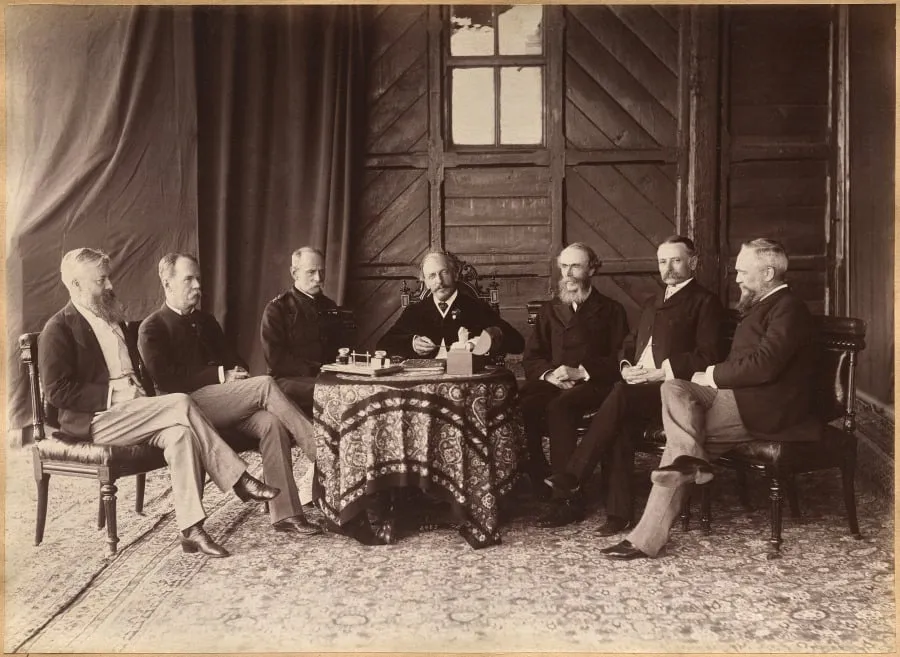
The Viceregal Council is a photography by the Impressionist artist Raja Deen Dayal. It dates from 1884 and is held in the collection of the Cleveland Museum of Art. This photograph is one of approximately 105 images compiled in a private album created between 1885 and 1887 in India.
About this work
Raja Deen Dayal was one of the first Indian photographers to document British colonial life, blending local and foreign customs in one frame.
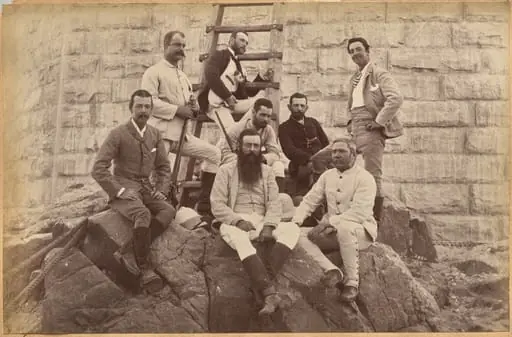
Here’s a group of men in formal coats and turbans, posed stiffly around a long table. The room is dim, with heavy curtains and a single lamp casting sharp shadows.
This isn’t just a portrait—it’s a photograph from the 1880s, rare for its time in India. Raja Deen Dayal was one of the first Indian photographers to document British colonial life, blending local and foreign customs in one frame. The men’s expressions are serious, almost frozen, hinting at the tension of power and tradition.
Look up more of Raja Deen Dayal (Indian, 1844–1905) to see how he framed India’s past.
Overview
This photograph is one of approximately 105 images compiled in a private album created between 1885 and 1887 in India. Taken by Raja Deen Dayal, it captures a formal gathering of colonial and Indian elites. The album, now dispersed, was likely assembled as a personal memento by a British official stationed in India. The museum holds another 37 photographs from the same collection, acquired in 2016.
Subject & Meaning
The image depicts a group of men—British colonial officers and Indian nobility—seated around a long table in formal attire, including turbans and tailored coats. Their rigid postures and solemn expressions reflect the ceremonial nature of the occasion, possibly a council meeting. The composition suggests a fragile coexistence of authority and tradition, where power dynamics are silently negotiated through dress, posture, and space.
Technique & Style
Raja Deen Dayal employed large-format plate photography, capturing fine detail in low light. The dim interior, lit by a single lamp, creates stark contrasts and deep shadows, emphasizing the formality of the scene. His careful framing avoids theatricality, instead presenting the subjects with clinical precision. The use of naturalistic lighting and controlled composition reflects his technical mastery and familiarity with both European photographic conventions and Indian aesthetic sensibilities.
History & Provenance
The photograph originated in a personal album commissioned around 1888, likely by a British civil servant documenting his time in India. After the album’s disassembly, individual prints entered private and institutional collections. The museum’s portion, acquired in 2016, includes 37 images from this set. Deen Dayal’s role as both an Indian artist and a documentarian of colonial life lends the work historical complexity, bridging cultural perspectives through the lens.
Context
In the late 19th century, photography in India was still emerging as a tool of both record and assertion. While British photographers often portrayed India through exoticizing lenses, Deen Dayal, as a native practitioner, offered a more nuanced view. His work captured the intersection of colonial administration and Indian aristocracy, revealing how power, identity, and tradition were visually negotiated during the height of the Raj.
Legacy
Raja Deen Dayal is recognized as among the first Indian photographers to gain prominence in documenting colonial society from within. His images, including this one, provide rare insight into the daily rituals of power and the blending of cultural codes. Today, his work is valued not only for its technical quality but for its quiet challenge to colonial narratives, offering a perspective shaped by insider knowledge rather than external observation.
Artist & collection

Artist
Raja Lala Deen Dayal, famously known as Raja Deen Dayal) was an Indian photographer.

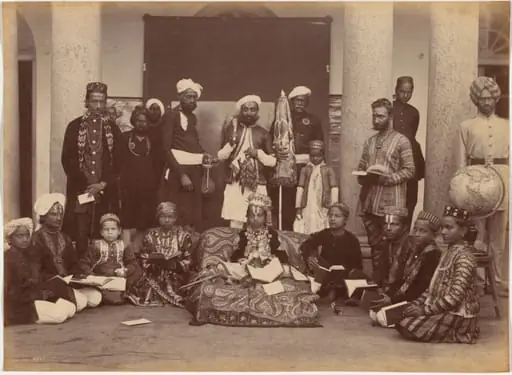 Maharaja of Rewa and Classmates
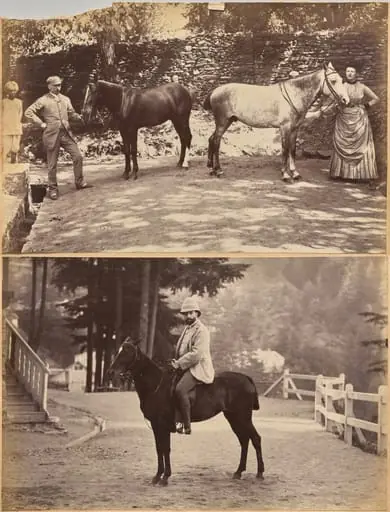 Col. F. G. Oldham (recto, top); Mr. Nowell, Shimla (recto, bottom)
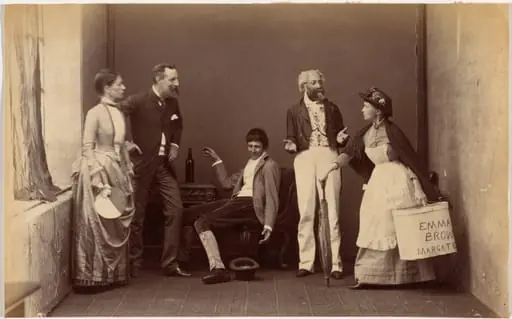 Fancy Group, Indore I
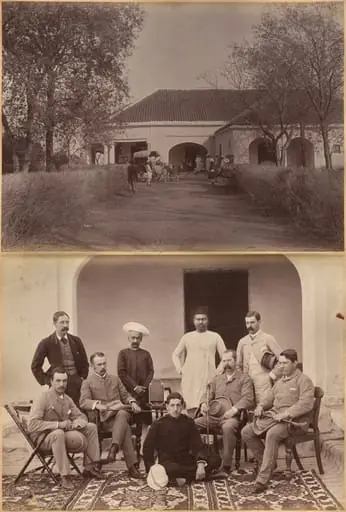 Civil officers at Jhansi (recto); Mr. William's House, Jhansi (verso)
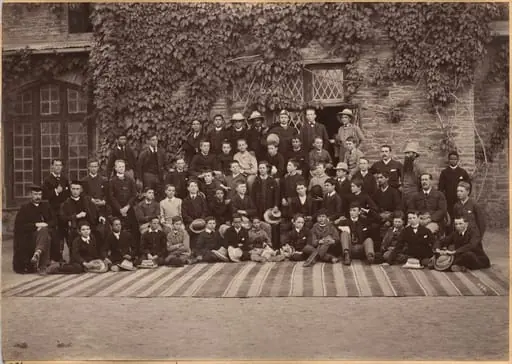 Middle Class Students and Staff, Bishop Cotton School, Shimla (verso)
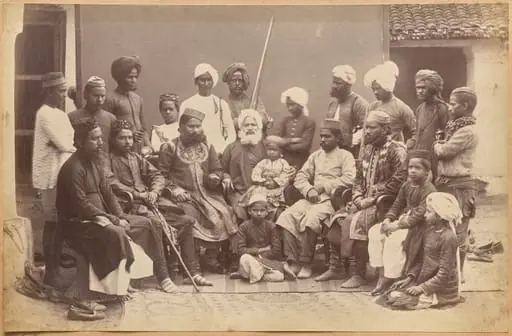 Mowhri Rahman Alli Khan family, Rewa (recto, bottom)
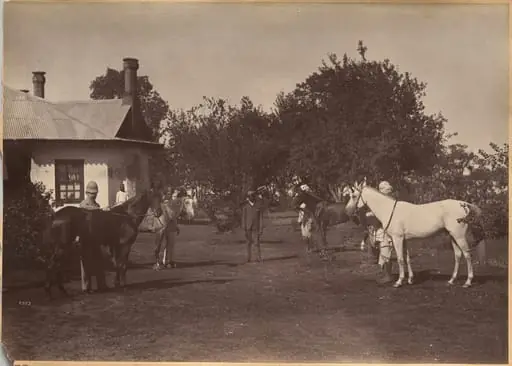 Lord William Beresford's horses
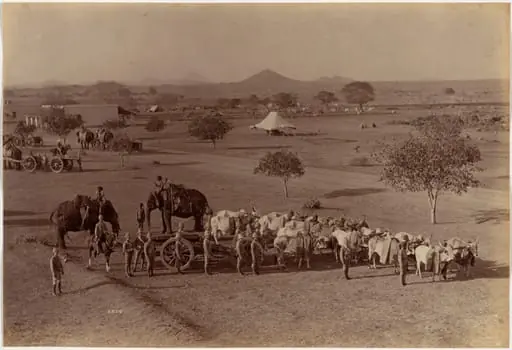 Heavy Field Battery, Jhansi
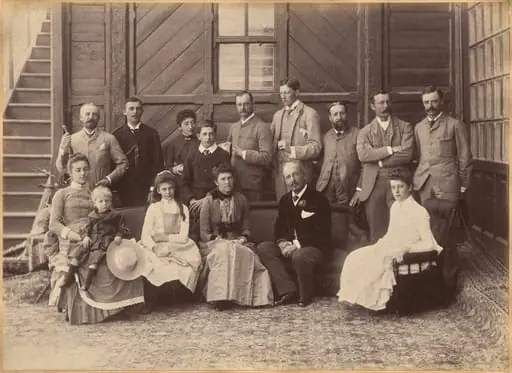 Viceregal Party Shimla (verso)
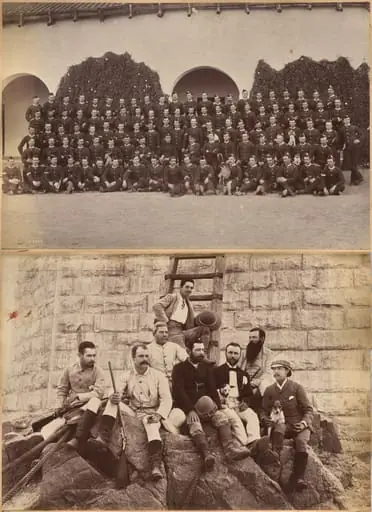 B. c/o Devonshire Regiment, Jhansi (recto); Staff of Messrs. Glover & Co., Sindh Bridge (verso)
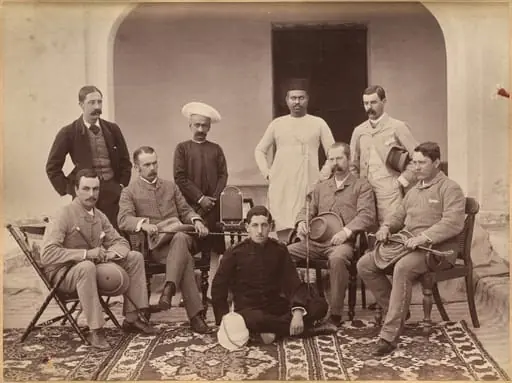 Civil officers at Jhansi (recto)
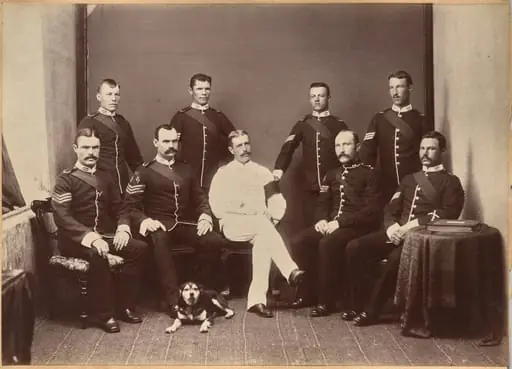 Captain Watkins and Non Com. officers
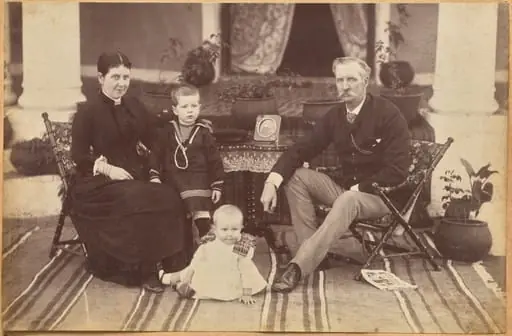 Col. Carpendale and family, Neemuch (recto, bottom)
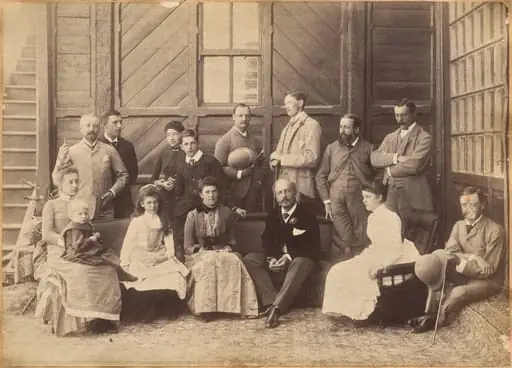 Shimla 17th May 1887: Viceregal party. Lord William Beresford, Military Secretary, Captain Leonard Gordon A.D.C., Mademoiselle Clerc, The Honorable Basit Blackwood, Major F. R. Hamilton A.D.C., Mr. Oglivie Grant, Sir Donald Mackenzie Wallace K.C.E., Private Secretary, Dr. J. Findlay, Mrs. F. R. Hamilton, Master G. Hamilton, Lady Victoria Blackwood, H. E. The Countess of Dufferin, H. E. The Earl of Dufferin, Lady Hermione Blackwood, Lord Herbrand Russell, A.D.C. (recto)
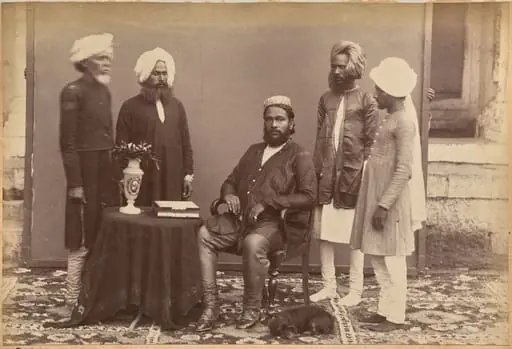 Ramkishore Singh, Rewa (recto, top)
 Managing staff of Meprs. Glover & Co. at Sindh Bridge (recto, top)