Artwork
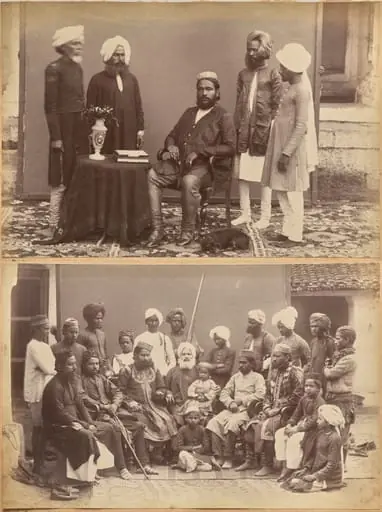
Ramkishore Singh, Rewa (recto, top)
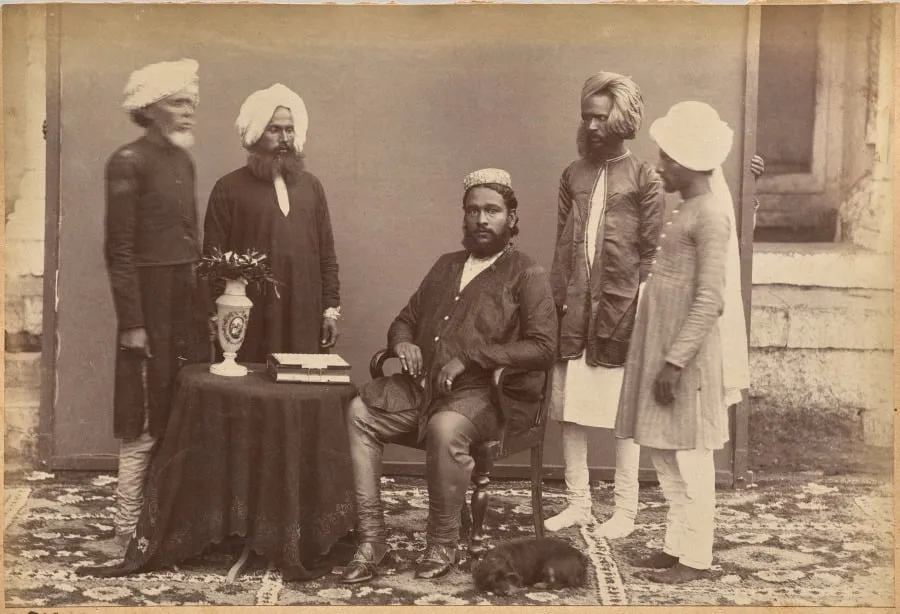
Ramkishore Singh, Rewa (recto, top) is a photography by the Impressionist artist Raja Deen Dayal. It dates from 1884 and is held in the collection of the Cleveland Museum of Art. This photograph is one of approximately 105 images compiled in a now-disassembled album, taken in India between 1885 and mid-1887.
About this work
The image was likely taken to show British visitors the "exotic" side of India—wealthy Indians in traditional dress.
A man in a turban sits on a carved wooden chair, holding a sword across his lap. Behind him, a servant fans him with a large leaf.
This is a photograph from British colonial India, not a painting. The man is Ramkishore Singh, a local ruler. The image was likely taken to show British visitors the "exotic" side of India—wealthy Indians in traditional dress. But it also quietly shows Singh’s authority, even under colonial rule.
To see more colonial-era Indian portraits, look up Raja Deen Dayal (Indian, 1844–1905).
Overview
This photograph is one of approximately 105 images compiled in a now-disassembled album, taken in India between 1885 and mid-1887. It was likely assembled as a personal memento by a British civil servant stationed in the region. The image captures Ramkishore Singh, a regional ruler, in a formal portrait that blends indigenous regalia with colonial-era photographic conventions, reflecting the complex social dynamics of late 19th-century India.
Subject & Meaning
Ramkishore Singh, seated on an intricately carved wooden chair, holds a ceremonial sword across his lap, a symbol of his authority. A servant stands behind him, offering shade with a large leaf fan. The composition emphasizes his status and dignity, countering colonial stereotypes of passive subjects. While framed for British viewers as an exotic curiosity, the image subtly asserts Singh’s autonomy and enduring local power within the colonial framework.
Technique & Style
The photograph is rendered in the sharp, detailed style typical of late 19th-century studio portraiture in India. Natural light is carefully managed to highlight the textures of Singh’s attire and the woodwork of the chair. The background is uncluttered, focusing attention on the subject. The use of a servant in the frame adds depth and context without distracting from the central figure’s presence.
History & Provenance
The photograph originated in a larger album of 105 images, likely commissioned around 1888 by a British official as a record of his time in India. The museum holds another 37 photographs from this same collection (accession 2016.266). The album was later disassembled, with individual prints dispersed across institutions and private collections, making this image part of a fragmented historical archive.
Context
During this period, Indian royalty and elites were frequently photographed by both local and foreign studios to document their status. British patrons often collected such images as curiosities, yet Indian subjects used the medium to assert identity and authority. Ramkishore Singh’s portrait aligns with a broader trend of self-representation among Indian nobility, who navigated colonial pressures by embracing photography as a tool of cultural affirmation.
Legacy
The photograph contributes to a growing body of visual records that complicate colonial narratives of passive subjects. It stands alongside the work of Indian photographers like Raja Deen Dayal, who similarly portrayed Indian elites with dignity and precision. These images now serve as critical resources for understanding how power, identity, and representation were negotiated in colonial India.
Artist & collection

Artist
Raja Lala Deen Dayal, famously known as Raja Deen Dayal) was an Indian photographer.

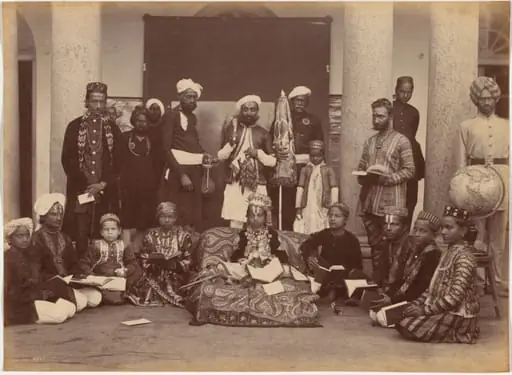 Maharaja of Rewa and Classmates
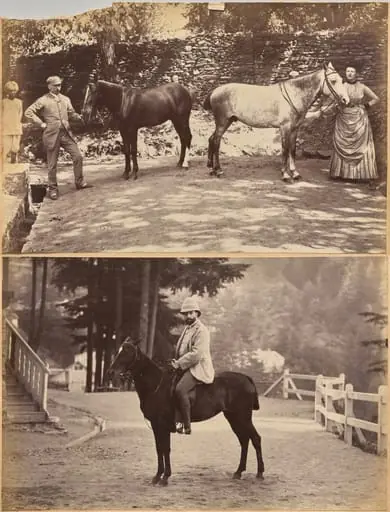 Col. F. G. Oldham (recto, top); Mr. Nowell, Shimla (recto, bottom)
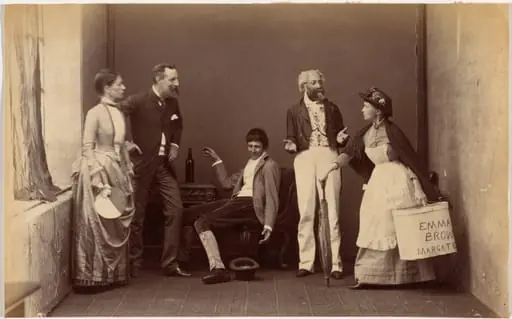 Fancy Group, Indore I
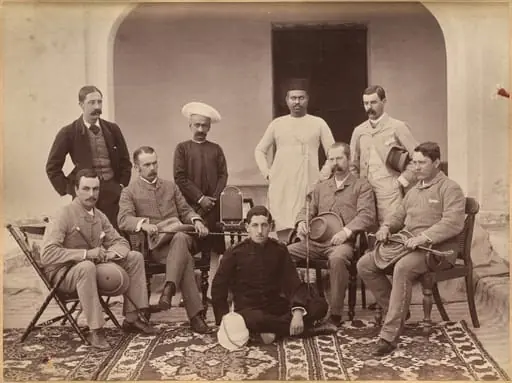
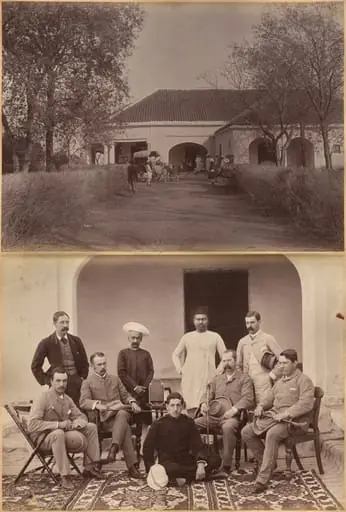 Civil officers at Jhansi (recto); Mr. William's House, Jhansi (verso)
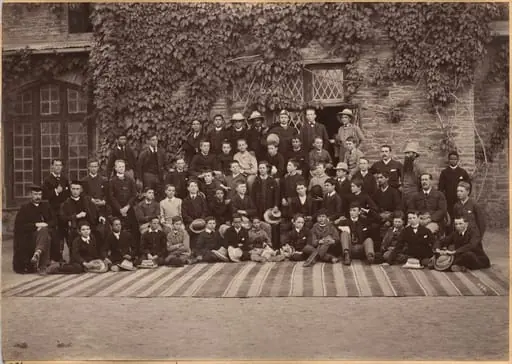 Middle Class Students and Staff, Bishop Cotton School, Shimla (verso)
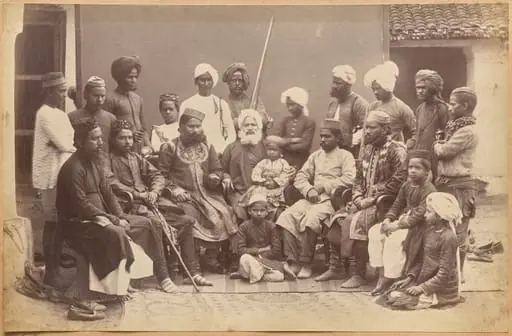 Mowhri Rahman Alli Khan family, Rewa (recto, bottom)
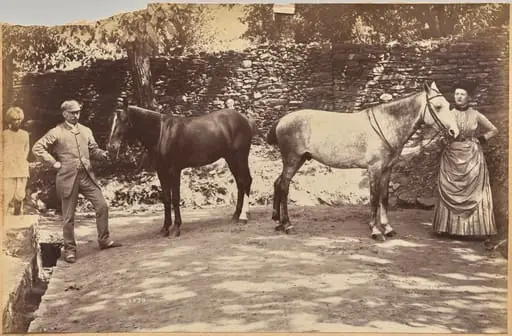
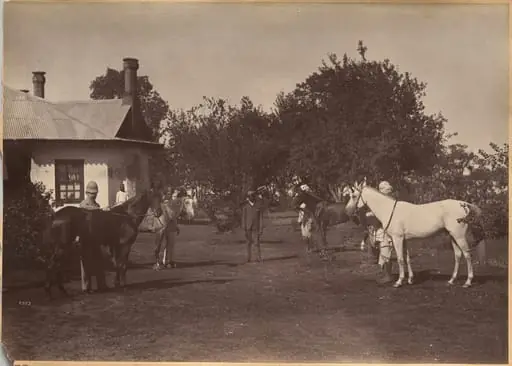 Lord William Beresford's horses
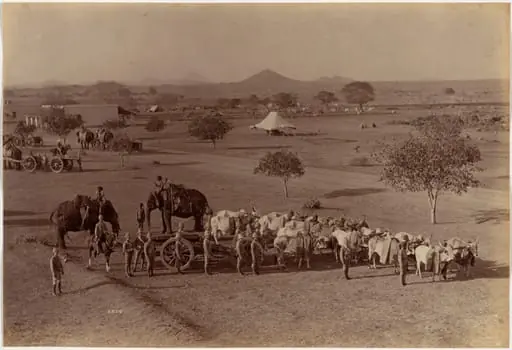 Heavy Field Battery, Jhansi