Artwork
J.Barbey d'Aurevilly
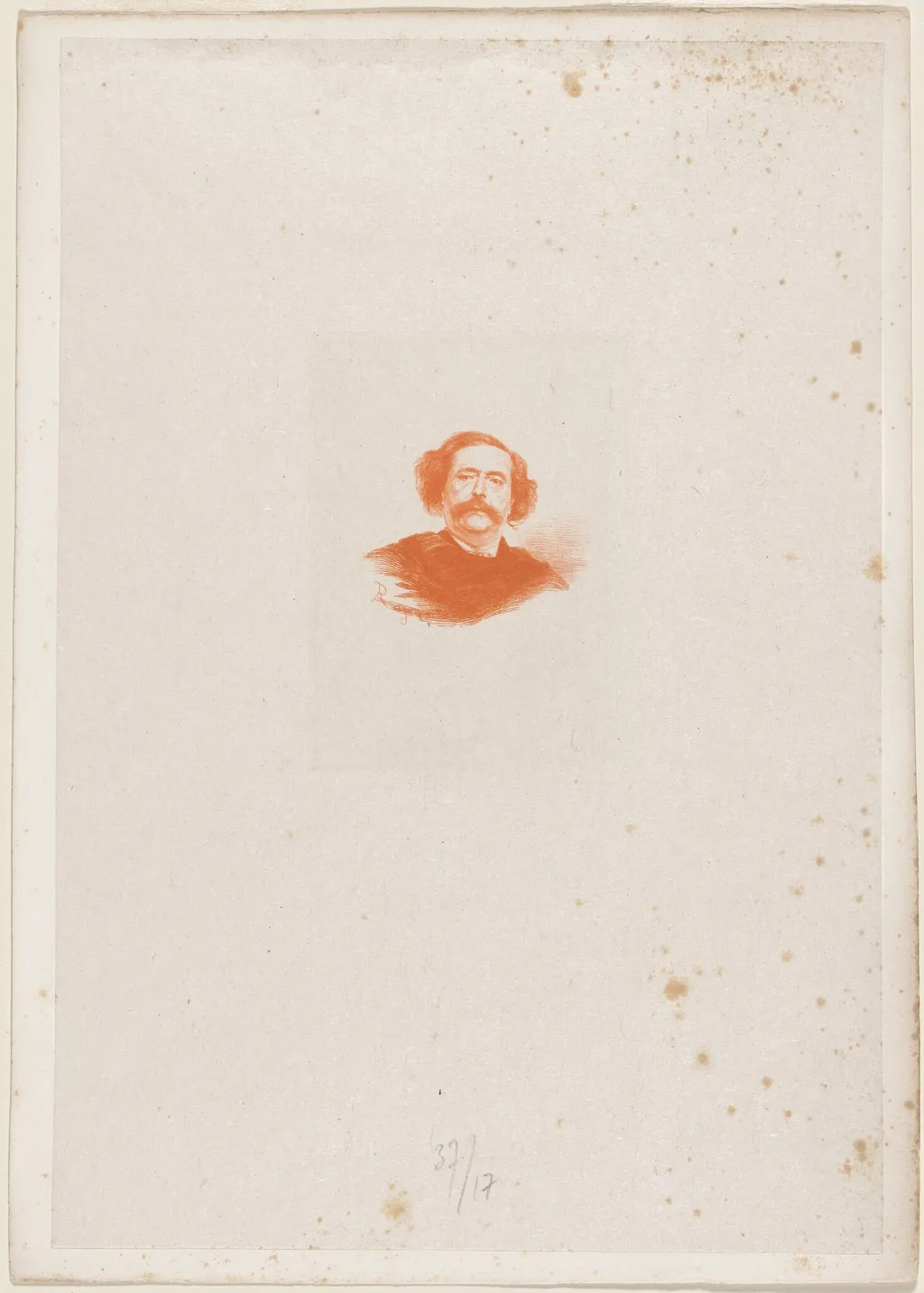
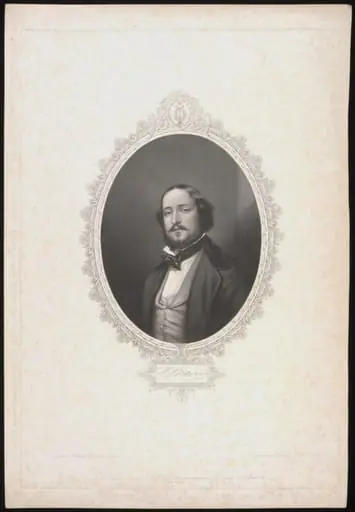
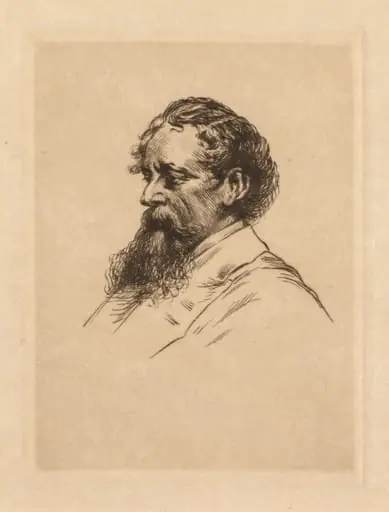
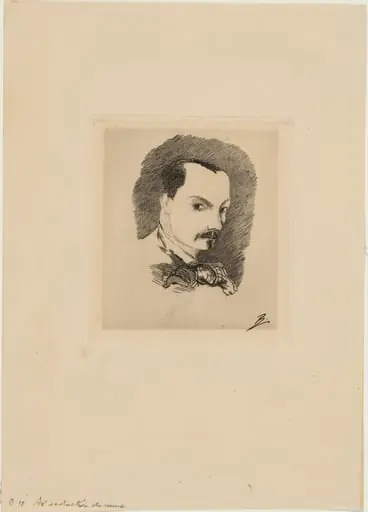
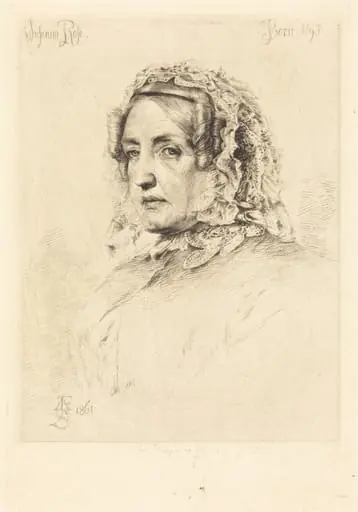
J.Barbey d'Aurevilly is an ink print by the Romanticist artist Paul Adolphe Rajon. It dates from 1879 and is held in the collection of the National Gallery of Art.
About this work
Overview
The composition centers the figure against a light, unoccupied field, emphasizing solitude and quiet intensity.
This small print, created in 1879 by Paul Adolphe Rajon, depicts the French writer Jules Barbey d'Aurevilly. Executed in etching and drypoint, the image is printed in red ink on delicate Japanese paper. The composition centers the figure against a light, unoccupied field, emphasizing solitude and quiet intensity. The modest scale and restrained palette invite close viewing, reinforcing the portrait’s introspective tone.
Subject & Meaning
Barbey d'Aurevilly, a prominent literary figure known for his sharp critiques and Gothic sensibilities, is rendered with subtle psychological depth. His dark hair, mustache, and somber attire suggest a reserved, intellectual presence. His gaze, directed slightly off-center, conveys contemplation rather than engagement, aligning with his reputation as a detached observer of society and human nature.
Technique & Style
Rajon employed drypoint for rich, velvety lines and etching for finer detail, both printed in red to evoke warmth and immediacy. The thin Japanese paper amplifies the delicacy of the ink, allowing subtle textures to emerge. The sparse background and tight framing focus attention on facial expression and gesture, reflecting 19th-century printmaking’s shift toward intimate, character-driven portraiture.
History & Provenance
Created shortly before Barbey d'Aurevilly’s death in 1889, the portrait was likely made for a private or literary circle, not public display. Rajon, known for his portraits of writers and artists, produced this during a period of renewed interest in etching as a medium for literary figures. The faint stains and wear on the paper suggest handling over time, possibly by collectors or scholars.
Context
In late 19th-century France, etching experienced a revival among artists seeking alternatives to mass-produced illustrations. Rajon’s work aligned with this movement, emphasizing handcrafted detail and personal expression. Barbey d'Aurevilly, a figure of literary conservatism, was frequently portrayed in this era as a symbol of intellectual resistance to modernity, making such portraits culturally significant.
Legacy
Though not widely exhibited, this print remains a quiet testament to the intersection of literature and printmaking in fin-de-siècle France. It exemplifies how artists used intimate portraiture to preserve the presence of influential writers beyond their published works. The work continues to be studied for its technical restraint and its role in documenting literary culture of the period.
Artist & collection


![GW. [Sir John Gardner Wilkinson], by Godfrey Thomas Vigne](https://artifactworldgallery.com/img/godfrey-thomas-vigne--gw-sir-john-gardner-wilkinson--64a60946dbe35509-w320.webp)