Artwork
Endpaper with Four Circus (?) Scenes
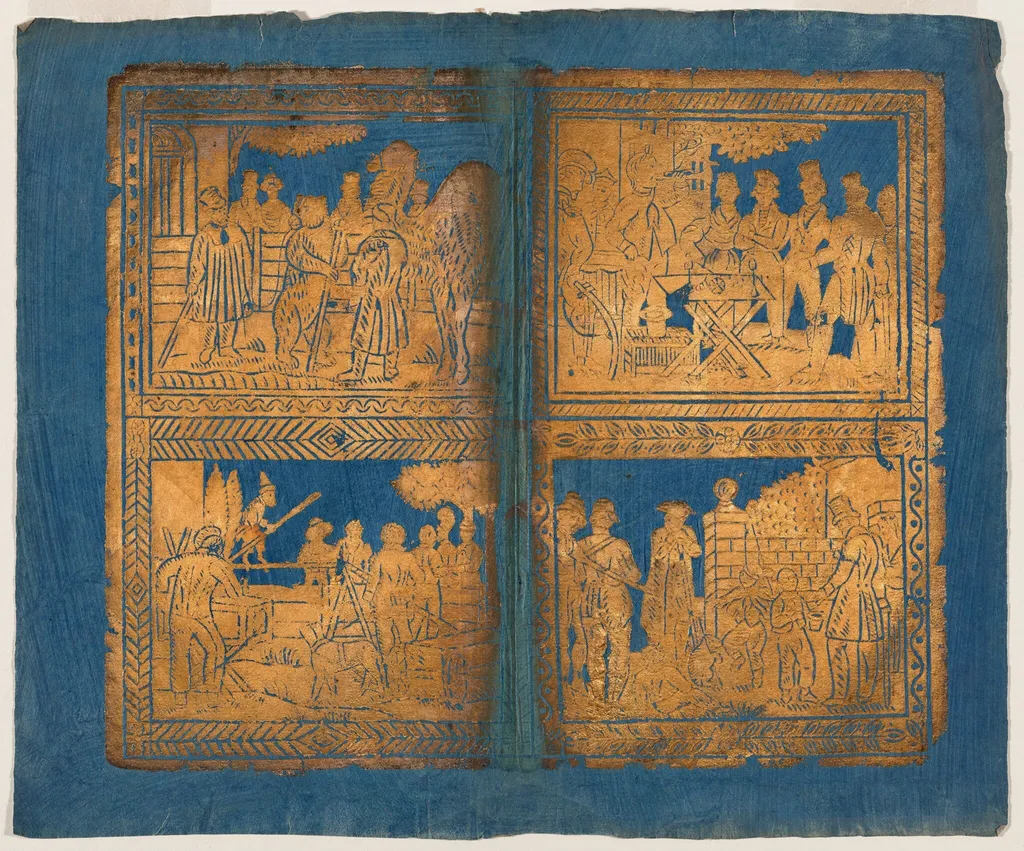
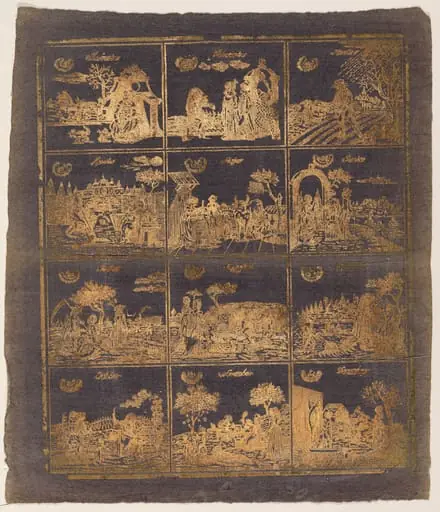
Endpaper with Four Circus (?) Scenes is an ink print by the Baroque artist German 18th Century. It dates from 1750 and is held in the collection of the National Gallery of Art. The work titled *Endpaper with Four Circus (?
About this work
Overview
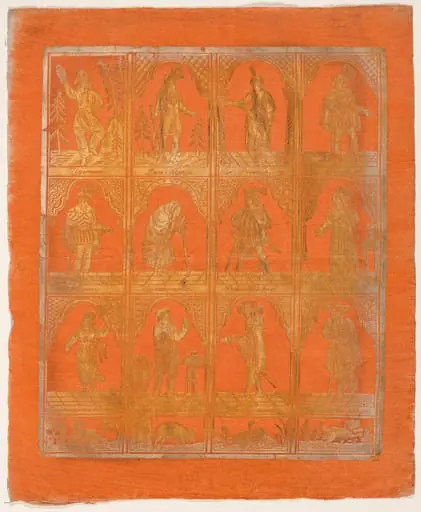
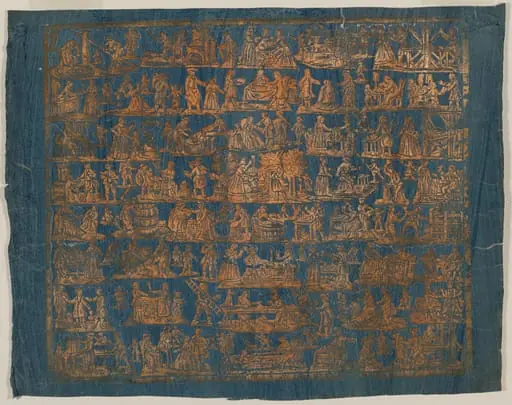
The work titled *Endpaper with Four Circus (?) Scenes* is a small woodcut print executed in gold metallic ink on hand‑washed blue paper. The image is divided into four separate vignettes, each set within a decorative blue border edged with gold foliage and scroll motifs. The scenes are rendered in a flat, linear manner, employing a limited palette of gold against the blue ground.
Subject & Meaning
The recurring motifs of movement and spectacle hint at a visual record of a circus or fair‑ground exhibition.
Each of the four panels depicts a different moment that suggests a travelling entertainment troupe. One vignette shows riders on horseback, another a gathering of spectators before a modest stage, a third features a tall stack of crates, and the fourth presents a group of performers with animals. The recurring motifs of movement and spectacle hint at a visual record of a circus or fair‑ground exhibition.
Technique & Style
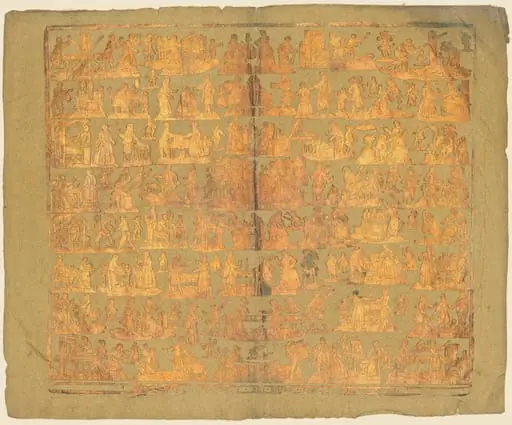
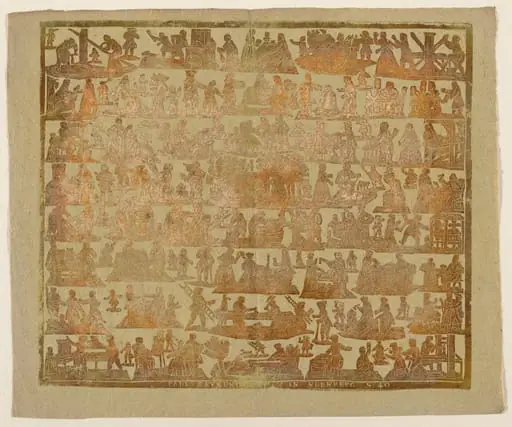
The image was produced by carving a single wood block and printing it with metallic gold ink, a method that yields crisp, high‑contrast lines and a luminous surface. The hand‑washed blue paper provides a textured, uneven field that enhances the metallic sheen. The composition relies on bold outlines and flat areas of color, characteristic of early modern woodcut illustration.
History & Provenance
The print’s precise date and origin are not documented, and its attribution remains uncertain. It appears to have been used as an endpaper, a decorative filler for bound volumes, which was a common practice for luxury books in the 16th–17th centuries. No museum or private collection records have yet identified a previous owner.
Context
Woodcut endpapers were often employed to enrich the visual appeal of manuscripts and early printed books, especially those intended for affluent patrons. The use of gold ink and a blue ground reflects a taste for opulent materials, while the circus theme aligns with the growing popularity of itinerant performances in early modern Europe.
Legacy
Although the piece is modest in size, it exemplifies the intersection of book decoration and popular entertainment imagery. Its survival offers insight into how printmakers incorporated contemporary spectacles into the ornamental fabric of printed objects, contributing to our understanding of visual culture in the period.
Artist & collection
Artist
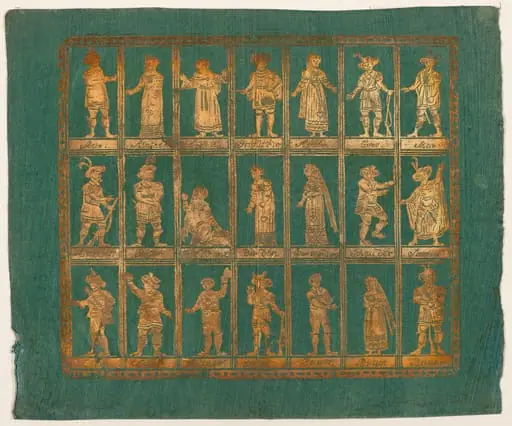
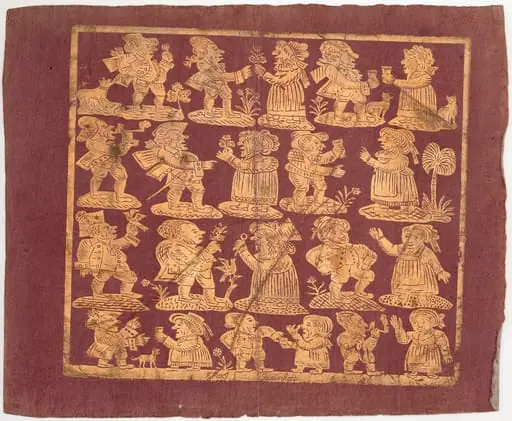
This artist kept meticulous endpapers—like secret notebooks—filled with tiny gold figures standing in a row.