Artwork
Untitled
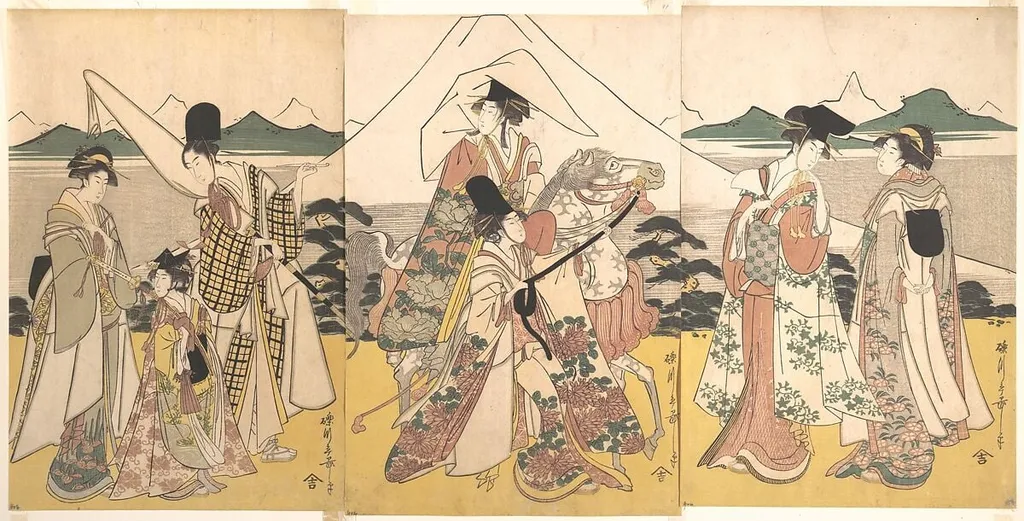
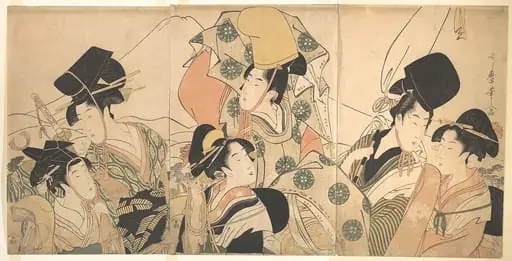
Untitled is an ink print by the Romanticist artist Rekisentei Eiri. It dates from 1783 and is held in the collection of the Metropolitan Museum of Art.
About this work
Overview
The work is part of the collection at The Metropolitan Museum of Art, where it is preserved as an example of late 18th-century Japanese printmaking.
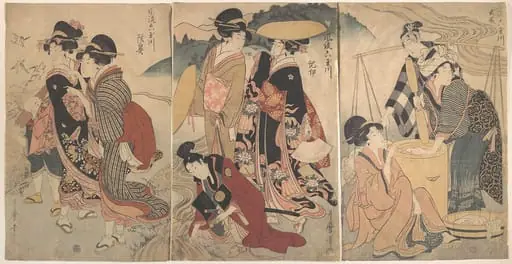
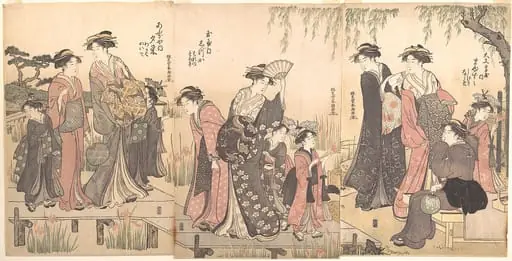
Untitled is a triptych composed of three woodblock prints, produced in 1783 by Rekisentei Eiri. Each panel is rendered in ink and color on paper, forming a unified landscape scene. The work is part of the collection at The Metropolitan Museum of Art, where it is preserved as an example of late 18th-century Japanese printmaking. Its format and medium reflect the conventions of ukiyo-e, though its subject matter diverges from typical urban or theatrical themes.
Subject & Meaning
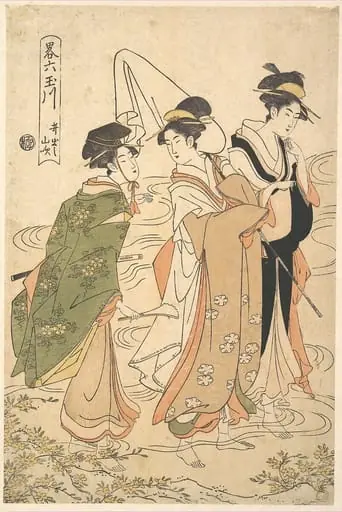
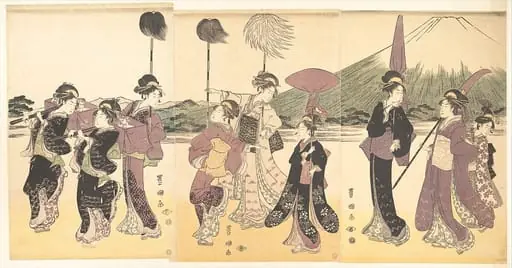
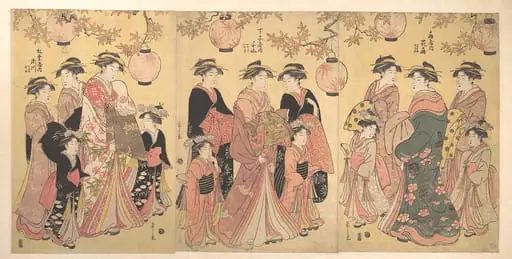
The prints depict a group of figures in traditional attire, gathered within a natural setting of distant mountains and flowing water. Their postures and attire suggest a moment of quiet contemplation, possibly during a seasonal outing. The absence of overt narrative or symbolic markers leaves the scene open to interpretation, emphasizing atmosphere over story. The figures appear integrated with their environment, reflecting a cultural sensitivity to harmony between people and nature.
Technique & Style
Eiri employed fine-line carving and layered color printing to achieve subtle gradations in fabric and landscape. Kimonos display intricate patterns rendered through precise registration of multiple blocks, while the background mountains use soft washes to suggest depth. Subtle tonal variations in ink create volume in the figures without relying on Western-style chiaroscuro. The composition balances detail in the foreground with atmospheric recession, characteristic of refined ukiyo-e practices of the period.
History & Provenance
Created in 1783 during the late Edo period, the triptych likely circulated as a commercial print, though its refined execution suggests a higher-end production. It entered The Metropolitan Museum of Art’s collection in the 20th century, possibly through early Western acquisitions of Japanese prints. No documented prior ownership or exhibition history is publicly available, but its preservation indicates recognition of its technical and aesthetic value within collector circles.
Context
Eiri worked during a time when ukiyo-e artists increasingly turned to landscapes and seasonal themes beyond the traditional focus on actors and courtesans. This shift aligned with growing urban appreciation for nature and travel, fueled by improved transportation and publishing. Though less known than contemporaries like Hokusai, Eiri’s work reflects this broader trend toward lyrical, non-narrative scenes that appealed to educated audiences seeking quiet aesthetic experiences.
Legacy
Untitled contributes to the understanding of ukiyo-e’s evolution beyond popular entertainment into more introspective, landscape-oriented expressions. While not widely reproduced or studied, its technical precision and compositional restraint offer insight into the diversity of Edo-period printmaking. It remains a quiet example of how artists of the time used print media to explore mood and environment, influencing later generations interested in Japanese aesthetics beyond Western narratives.
Artist & collection


 Untitled
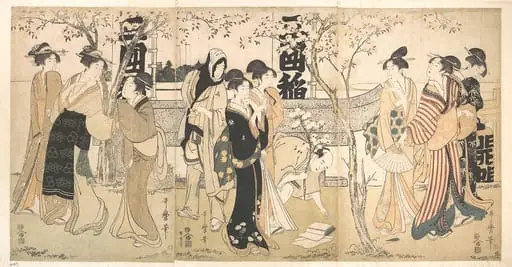 三囲神社の御開帳|Display of Treasures at Mimeguri Shrine (Mimeguri jinja no onkaichō)
 Untitled
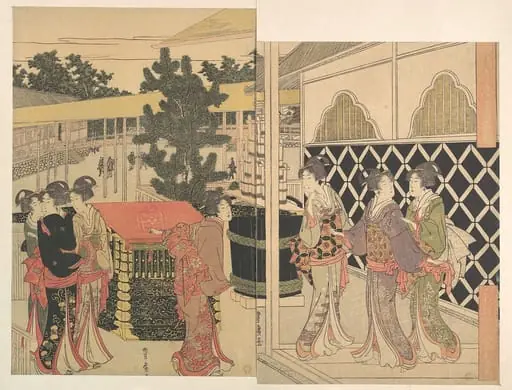 Horinouchi Myōhōji Eho Mairi no Zu|Pilgrimage to Myōhōji in Horinouchi, Edo
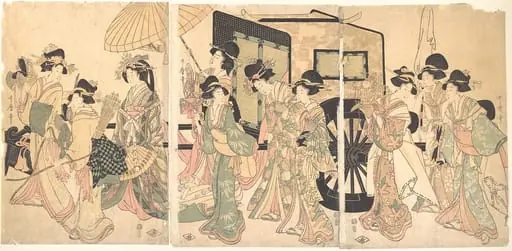 Untitled
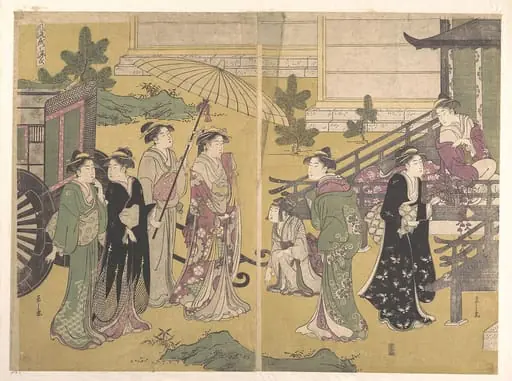 Untitled
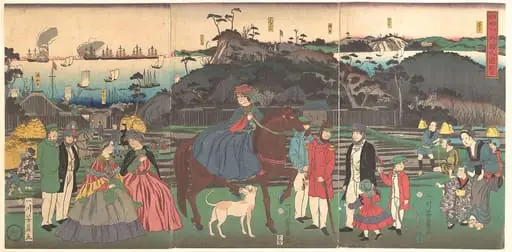 Kanagawa Gongenyama Gaikokujin yūran|Foreigners Visiting the Famous Site of Mt. Gongen in Kanagawa
 風流六玉川 武蔵 紀伊 陸奥|Women and a Man in the Country; Some pageant(?)
 Untitled
 Splendid View at Futamigaura Bay
 Untitled
 Untitled