Artwork
Untitled
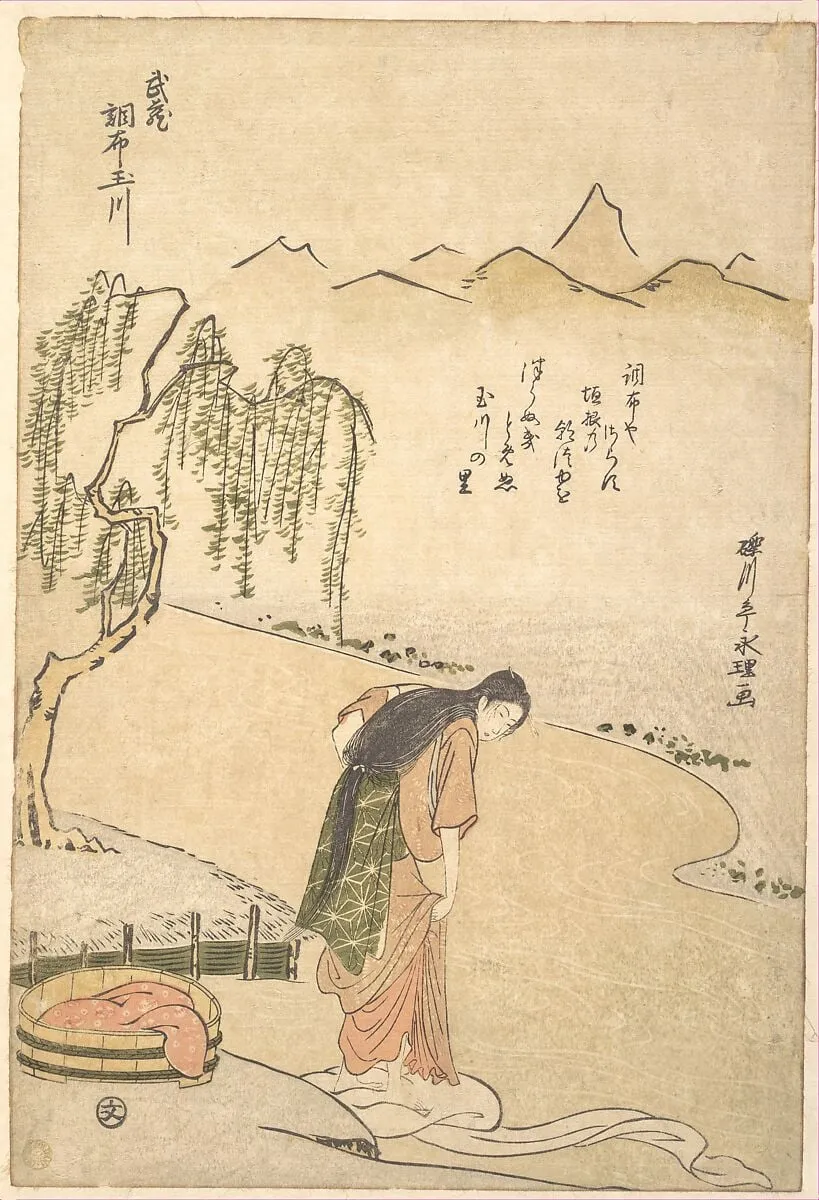
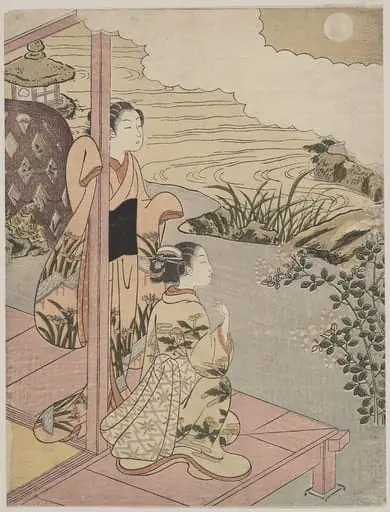
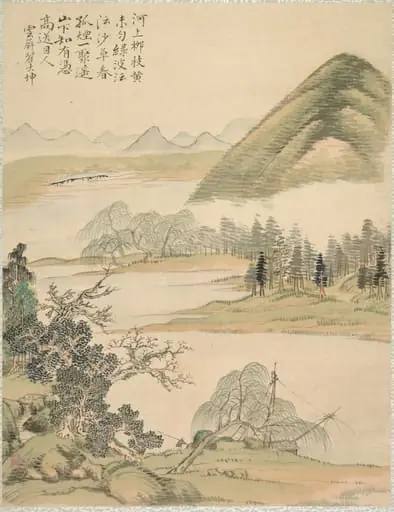
Untitled is an ink print by the Romanticist artist Rekisentei Eiri. It dates from 1791 and is held in the collection of the Metropolitan Museum of Art.
About this work
Overview
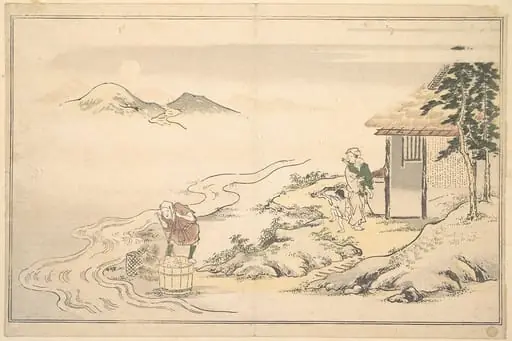
Created around 1791, this woodblock print by Rekisentei Eiri is executed in ink and color on paper. It is part of the collection at The Metropolitan Museum of Art. The composition captures a solitary figure engaged in a quiet domestic act beside a river, rendered with restrained palette and delicate line work characteristic of late Edo-period printmaking.
Subject & Meaning
A woman, her hair bound and robe loosely draped, leans over a wooden tub at the water’s edge. Her posture suggests the routine task of washing, perhaps laundry or utensils. The setting—riverbank, pine trees, distant mountains—evokes solitude and rhythm rather than narrative. The scene holds no overt symbolism; its power lies in the stillness of daily life observed without embellishment.
Technique & Style
The artist employs fine, controlled lines and subtle gradations of ink to suggest form and depth. Soft blurring in the background mountains and minimal shading on the trees create atmospheric perspective. Textures are implied through sparse cross-hatching, particularly in the foliage and water’s surface, avoiding heavy detail in favor of suggestive economy.
History & Provenance
The print is attributed to Rekisentei Eiri, a lesser-known printmaker active in the late 18th century. Its survival and eventual acquisition by The Metropolitan Museum of Art reflect its quiet resonance among collectors of Edo-period prints. No documented exhibition or ownership history prior to the 20th century is known, suggesting it was likely a private, modestly circulated work.
Context
Produced during the late Edo period, this print aligns with a broader trend in ukiyo-e that turned from theatrical or urban subjects to intimate, natural scenes. While most prints of the era depicted actors or courtesans, this work reflects a quieter aesthetic favored by regional artists and literati, emphasizing harmony with landscape and the dignity of ordinary labor.
Legacy
Though not widely reproduced or studied, the print contributes to understanding the diversity within Edo-period printmaking. Its focus on solitude and nature anticipates later shifts in Japanese art toward personal, contemplative imagery. It remains a quiet example of how everyday moments were rendered with sensitivity outside the mainstream of commercial print culture.
Artist & collection


 Untitled
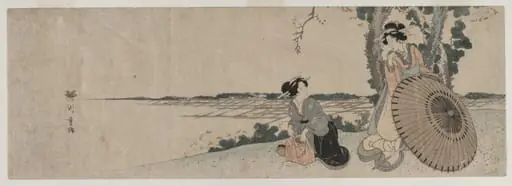 Two Women on a Hilltop
 狂月坊|The Full Moon at the Time of the Imo Harvest
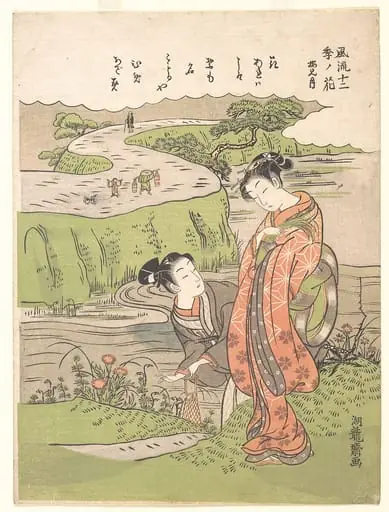 Umemi Tsuki|Plum-Seeing Month: Second Month
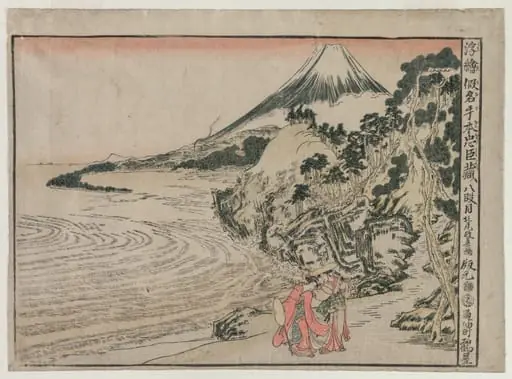 Chushingura: Act VIII (from the series Perspective Pictures for The Treasure House of Loyalty)
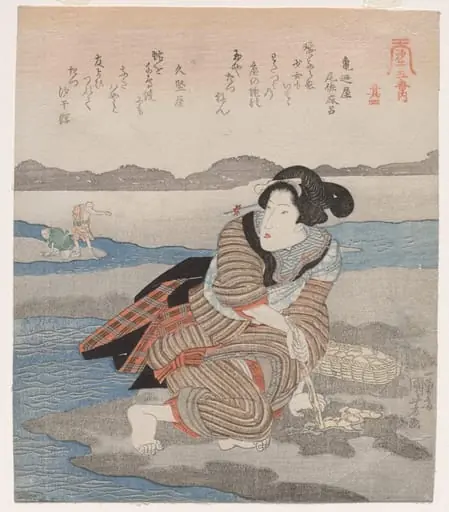 Fourth Print from A Low Tide Pentaptych
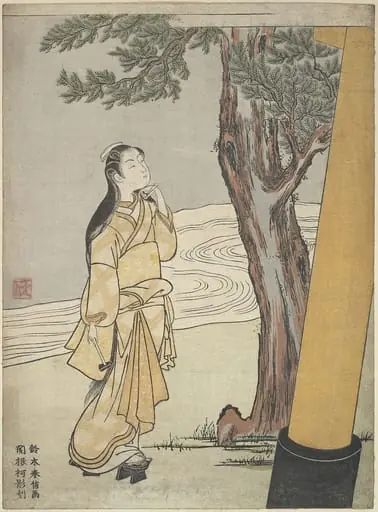 Untitled
 Untitled
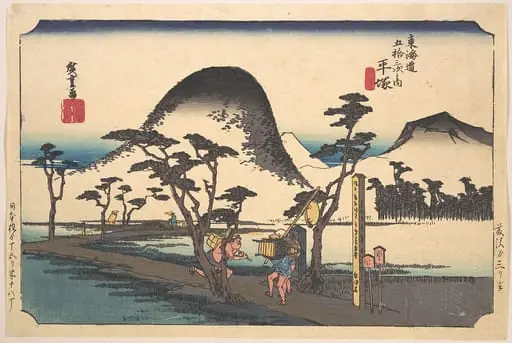 東海道五十三次之内 平塚 縄手道|Hiratsuka, Nawate Do
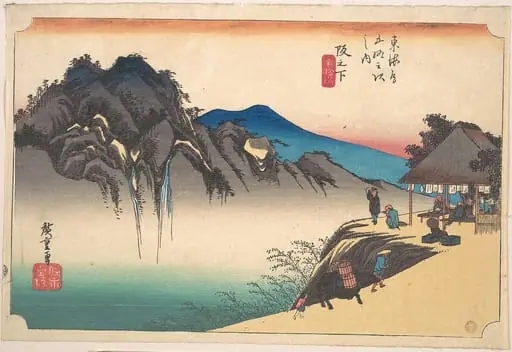 東海道五十三次之内 阪之下 筆捨嶺|Saka-no-shita, Fude-sute Mine
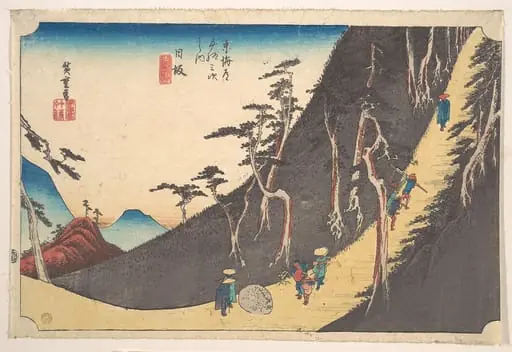 東海道五十三次之内 日坂 佐夜の中山|Nissaka, Sayo Nakayama
 Willow Branches in Spring