Artwork
Fasnachtshelge "Zur Kassa"
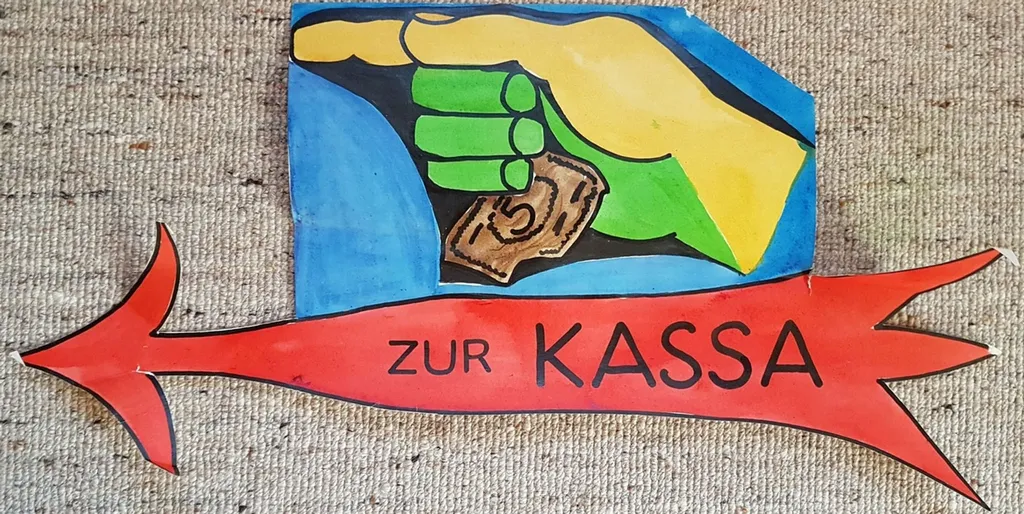
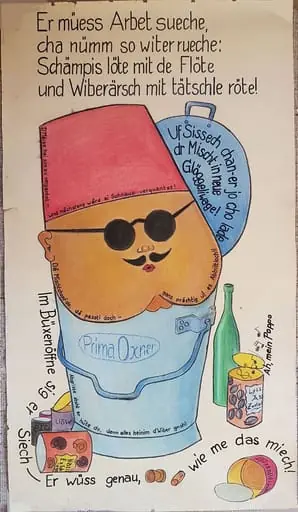
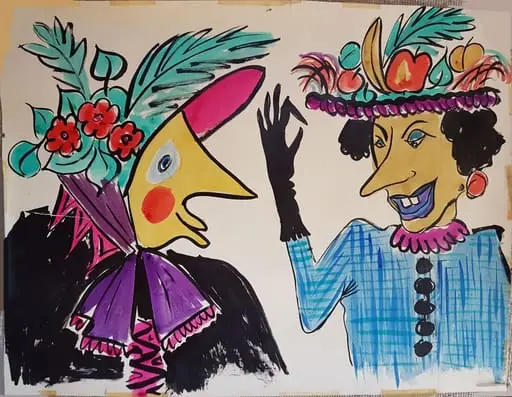
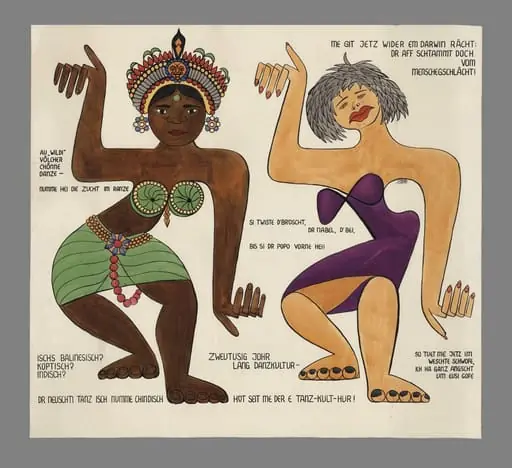
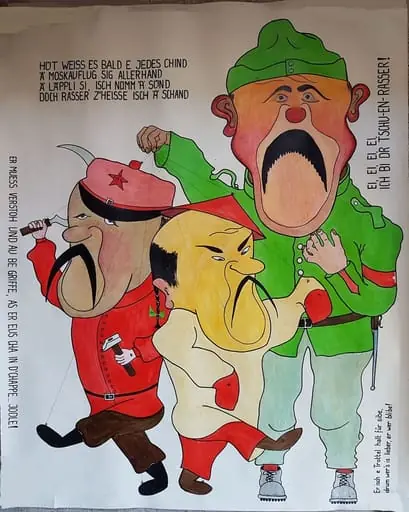
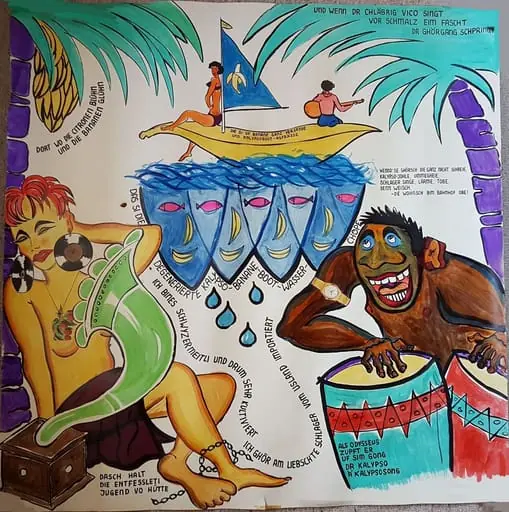
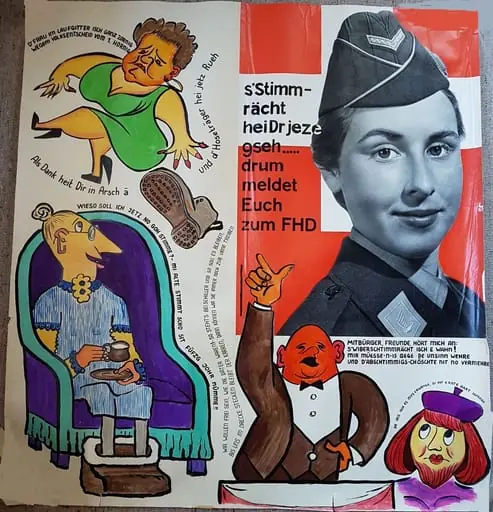
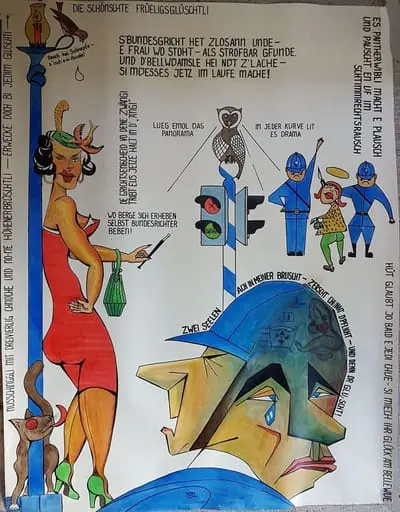
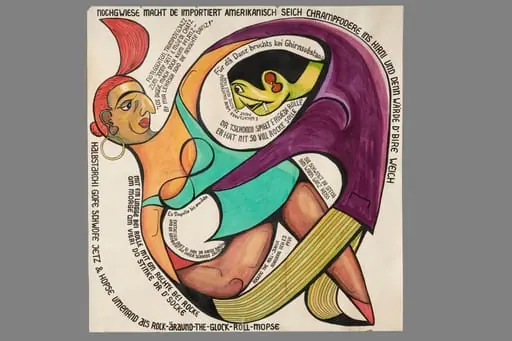
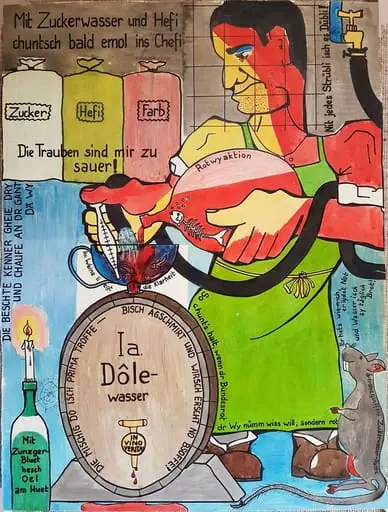
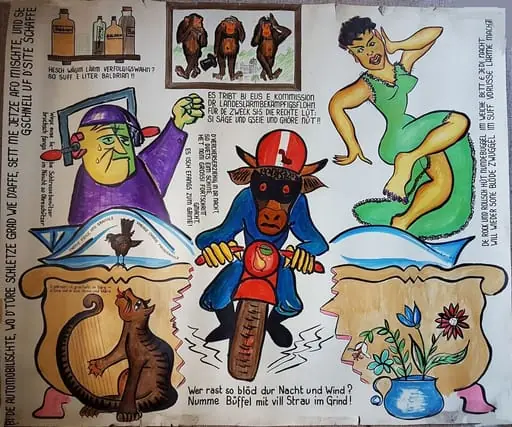
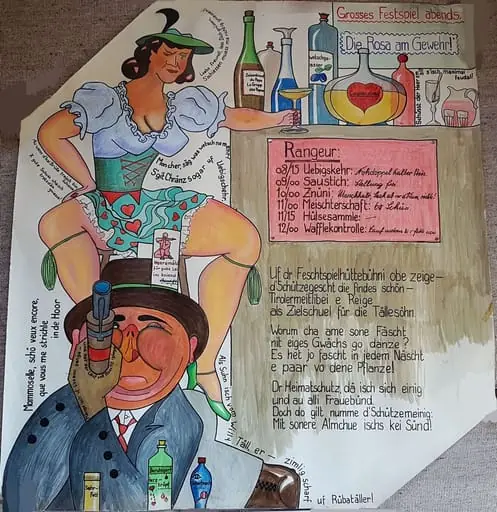
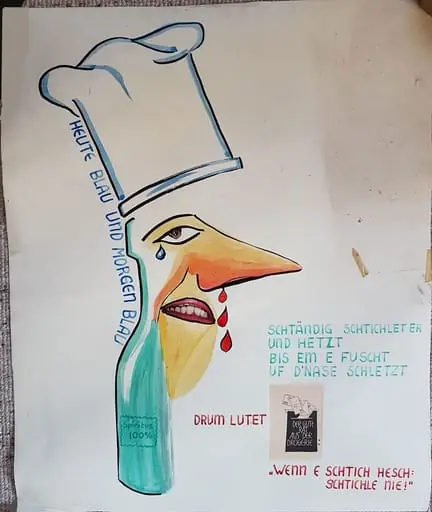
Fasnachtshelge "Zur Kassa" is an unspecified painting by Max Rickenbacher-Hufschmid. It dates from 1957 and is held in the collection of the Archaeology and Museum Baselland. Fasnachtshelge “Zur Kassa” is an image created around 1957 by Swiss artist Max Rickenbacher‑Hufschmid.
About this work
Overview
Fasnachtshelge “Zur Kassa” is an image created around 1957 by Swiss artist Max Rickenbacher‑Hufschmid. The work is part of the collection of the Museum of Ethnography, where it is displayed as an example of mid‑century graphic art linked to folk celebrations.
Subject & Meaning
The composition centers on a stylised hand rendered in flat, vivid hues—yellow skin, green fingernails and blue vein lines—grasping a brown, spiralled object.
The composition centers on a stylised hand rendered in flat, vivid hues—yellow skin, green fingernails and blue vein lines—grasping a brown, spiralled object. Beneath the hand a red banner, shaped like a fish tail with star‑like fins, bears the German phrase “ZUR KASSA,” meaning “to the cash register.” The wording suggests a connection to carnival or market‑day rituals where payments were publicly announced.
Technique & Style
Rickenbacher‑Hufschmid employs bold, unmodulated colour blocks and simplified geometric forms, echoing the visual language of folk signage and early pop‑art. The hand’s segmentation into distinct colour fields and the banner’s graphic outline create a flat, two‑dimensional effect that emphasizes readability over illusionistic depth.
History & Provenance
The image was produced in the late 1950s, a period when Swiss artists increasingly explored regional customs in visual form. It entered the Museum of Ethnography’s holdings through a donation in the early 2000s, where it has been catalogued as part of the institution’s collection of carnival‑related artifacts.
Context
“Fasnacht” refers to the pre‑Lenten carnival celebrated in many German‑speaking regions. Objects such as the hand‑holding motif and the cash‑register banner were common in temporary signage used by vendors and guilds during the festivities, serving both promotional and ceremonial purposes within the communal celebration.
Artist & collection
Artist
Max Rickenbacher-Hufschmid spent years drawing the same carnival clowns in Basel’s back alleys.