Artwork
Fasnachtshelge "Töffraser"
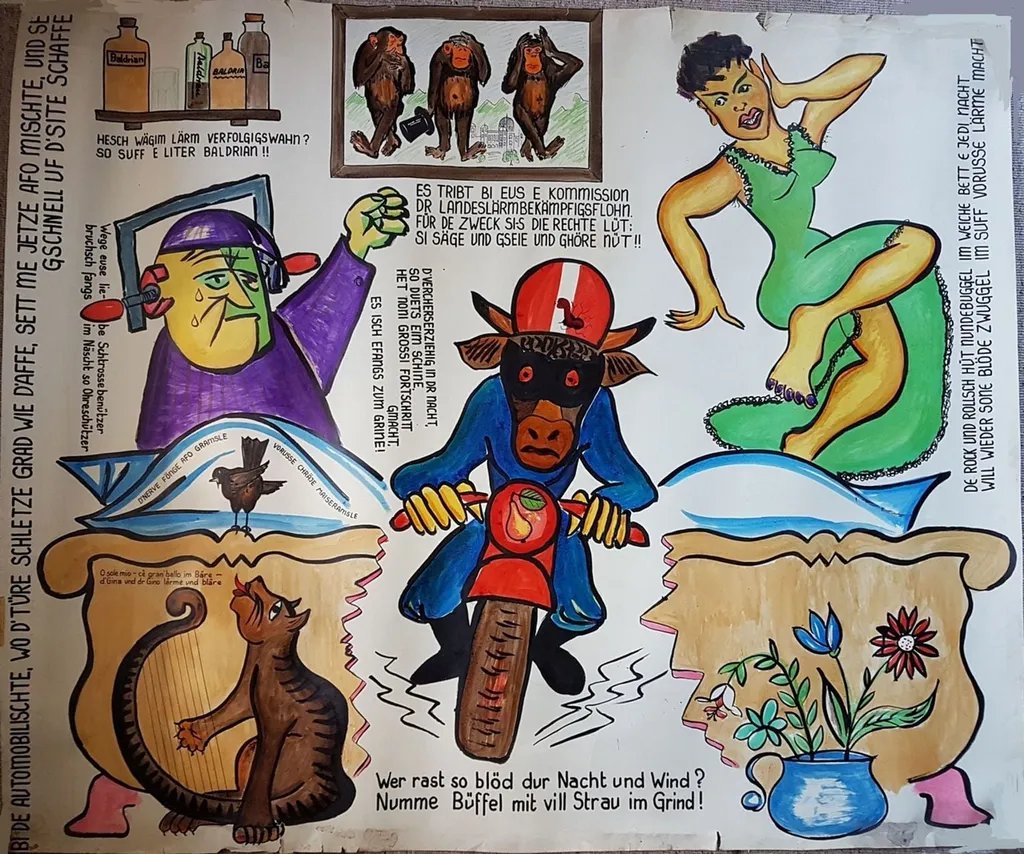
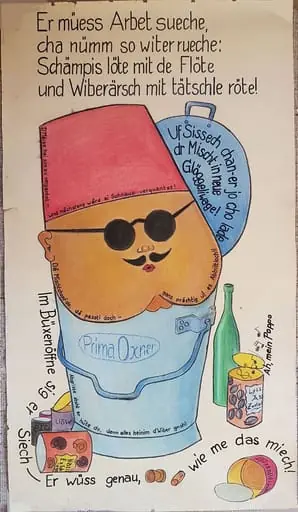
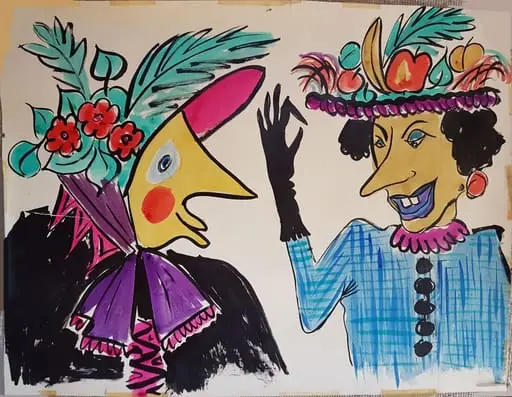
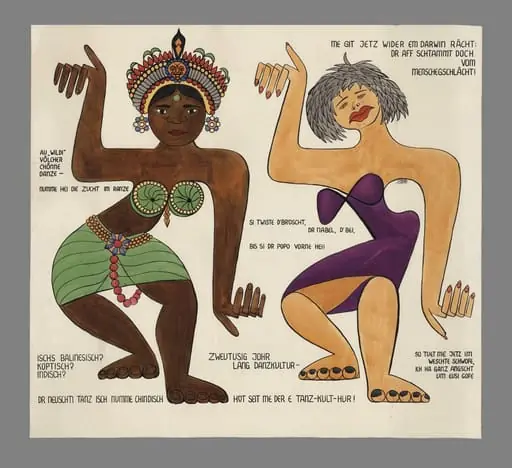
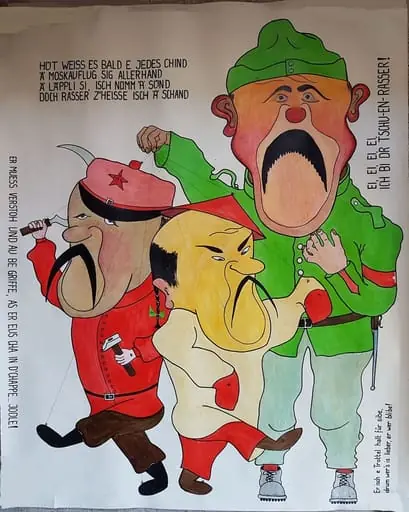
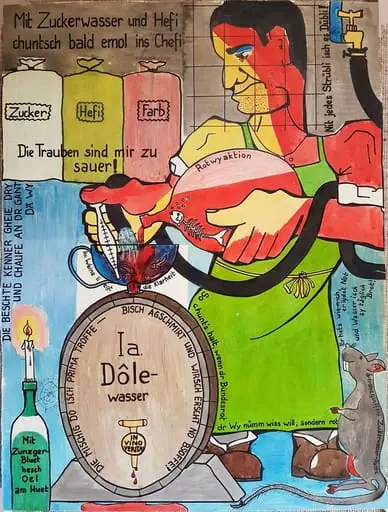
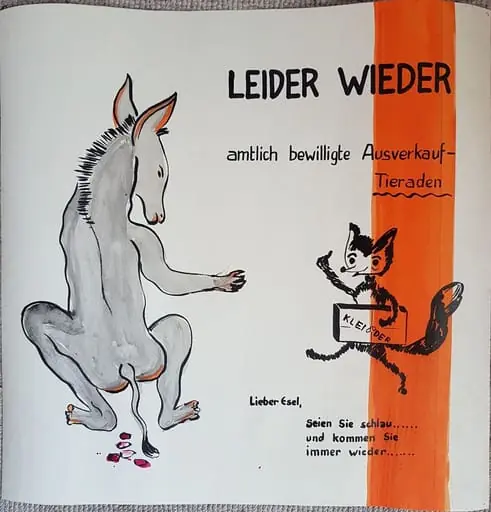
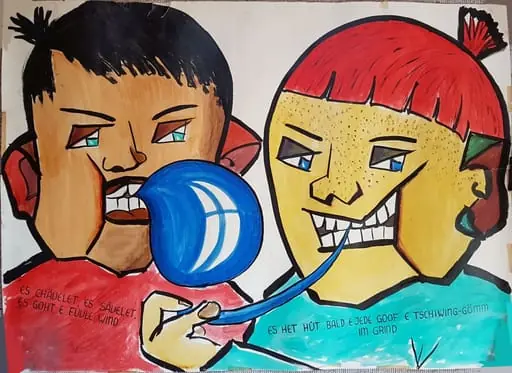
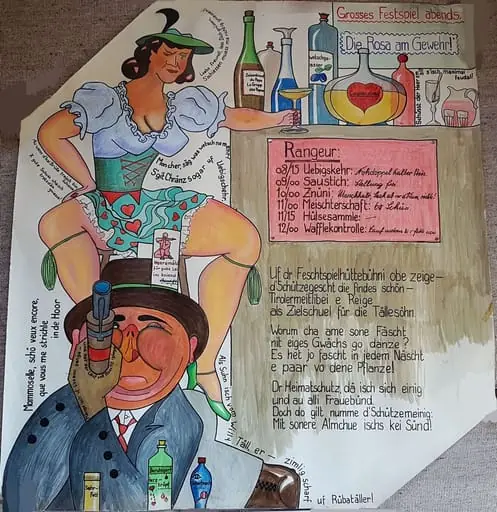
Fasnachtshelge "Töffraser" is an unspecified painting by Max Rickenbacher-Hufschmid. It dates from 1957 and is held in the collection of the Archaeology and Museum Baselland.
About this work
Overview
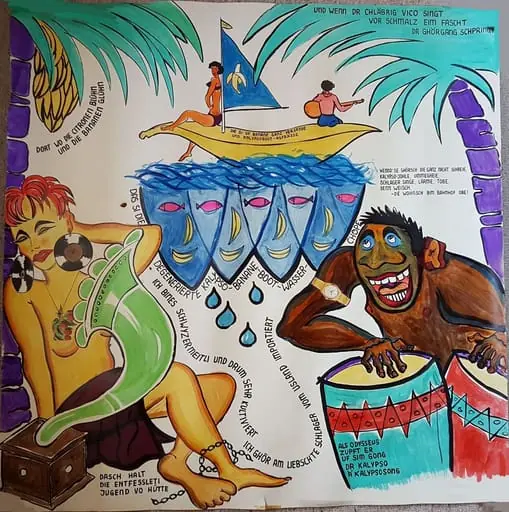
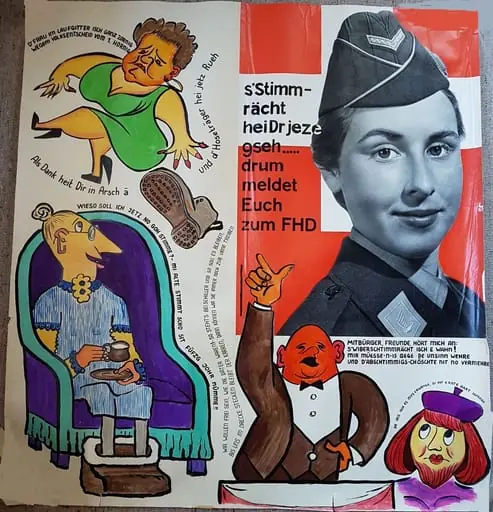
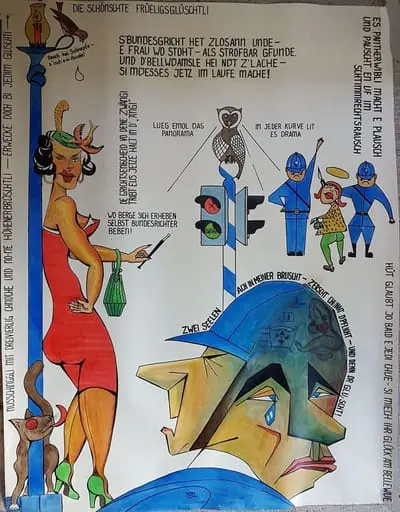
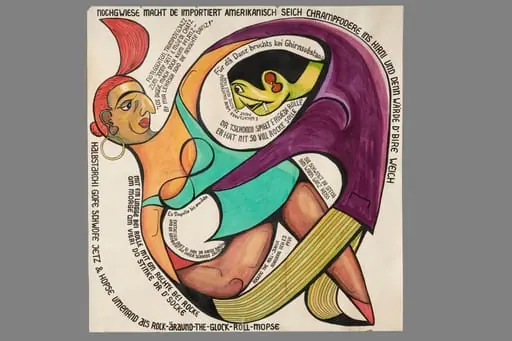
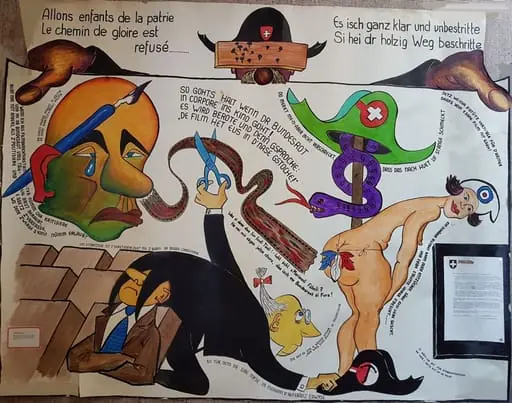
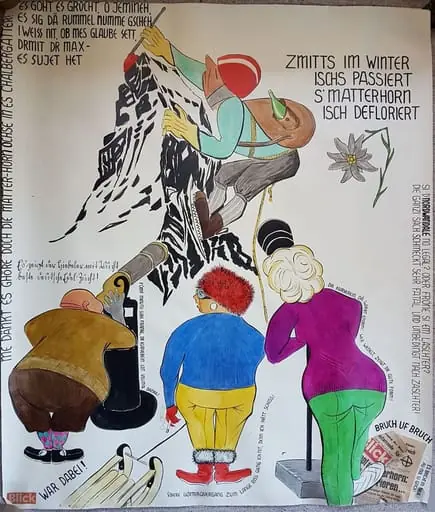
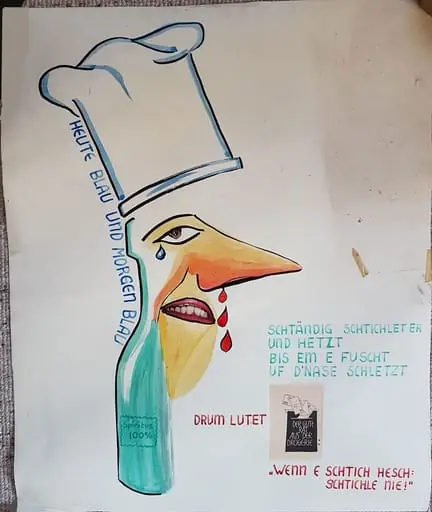
Fasnachtshelge 'Töffraser' is a painted work by Swiss artist Max Rickenbacher-Hufschmid, dated around 1957. It depicts a surreal, crowded scene centered on a man on a motorcycle, surrounded by domestic and whimsical elements. The piece is part of the Museum of Ethnography’s collection, where it is contextualized within folk traditions and modern visual culture.
Subject & Meaning
The central figure, dressed in a blue jacket and red helmet, rides a motorcycle amid symbolic objects: a cat, a bird, a vase of flowers, and a woman in green.
The central figure, dressed in a blue jacket and red helmet, rides a motorcycle amid symbolic objects: a cat, a bird, a vase of flowers, and a woman in green. These elements blend carnival imagery with everyday life, suggesting a fusion of ritual, memory, and modernity. The inclusion of foreign-language text at the edges hints at layered cultural references, possibly tied to local Fasnacht customs.
Technique & Style
The painting employs flat, saturated colors and simplified forms, avoiding perspective in favor of decorative arrangement. Figures and objects are arranged without spatial depth, creating a patterned, almost textile-like surface. The bold contrasts and stylized details reflect influences from folk art and early 20th-century modernism, prioritizing symbolic expression over realism.
History & Provenance
Created in the late 1950s, the work entered the Museum of Ethnography’s holdings as part of a broader effort to document vernacular artistic practices. Its origin lies in Swiss carnival traditions, though its exact commission or context remains undocumented. The museum preserves it as an example of individual expression within regional customs.
Context
The painting emerges from a period when Swiss artists were reinterpreting folk motifs through modern lenses. Fasnacht, a pre-Lenten festival, provided rich visual material, but Rickenbacher-Hufschmid’s interpretation diverges from literal representation. The motorcycle, an uncommon symbol in traditional carnival art, signals the intrusion of industrial modernity into rural ritual.
Legacy
Though not widely exhibited beyond institutional settings, the work contributes to understanding how Swiss artists engaged with local identity during postwar cultural shifts. It stands as a quiet testament to personal vision within collective traditions, offering insight into how everyday objects and figures were reimagined in painted form.
Artist & collection
Artist
Max Rickenbacher-Hufschmid spent years drawing the same carnival clowns in Basel’s back alleys.