Artwork
Fasnachtshelge "Wiipansche"
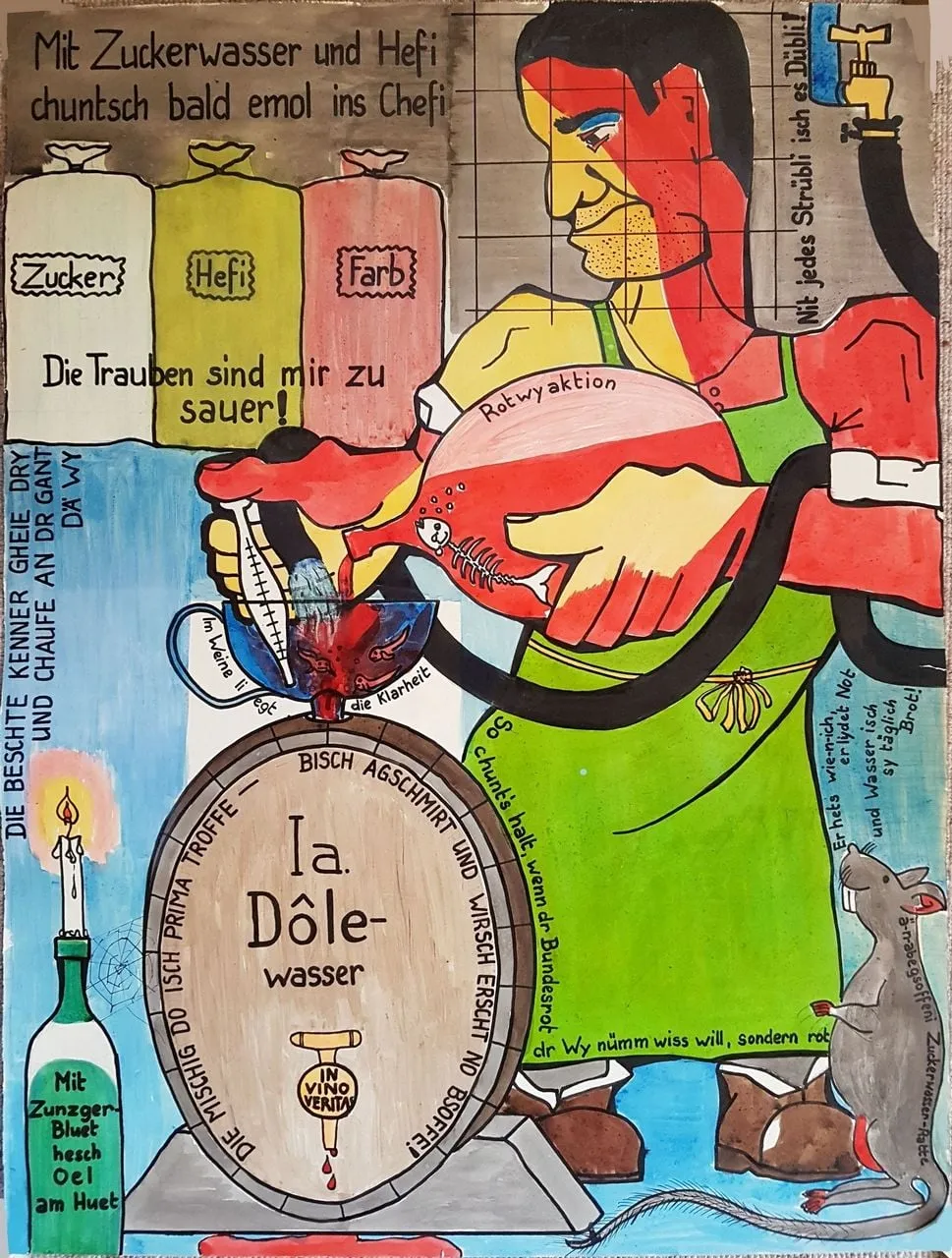
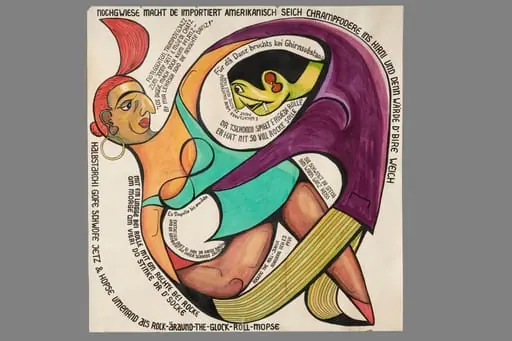
Fasnachtshelge "Wiipansche" is a drawing by Max Rickenbacher-Hufschmid. It dates from 1957 and is held in the collection of the Archaeology and Museum Baselland.
About this work
Overview
Fasnachtshelge “Wiipansche,” executed around 1957 by Max Rickenbacher‑Hufschmid, is a graphic work preserved in the collection of the Museum of Ethnography. The piece presents a densely populated scene rendered in vivid, saturated hues, combining figurative elements with textual fragments in a lively, almost theatrical composition.
Subject & Meaning
” Around him float German words such as “Zucker” (sugar) and “Hefi” (yeast), while a goat, a bird and other small figures mingle in the space.
At the centre stands a broad‑shouldered figure wearing a chef’s hat, his face flushed red, clutching a large barrel marked “Dôlewasser.” Around him float German words such as “Zucker” (sugar) and “Hefi” (yeast), while a goat, a bird and other small figures mingle in the space. The juxtaposition of culinary symbols and playful language suggests a satirical take on traditional carnival customs, turning everyday food‑related items into visual jokes.
Technique & Style
Rickenbacher‑Hufschmid employs a flat, folk‑art aesthetic, using bold outlines and flat areas of color that recall early comic strips. The drawing integrates text directly into the pictorial field, allowing words to become visual motifs. The overall effect is a lively, almost naïve tableau that blurs the boundary between illustration and decorative design.
History & Provenance
Created in the late 1950s, the work entered the Museum of Ethnography’s holdings, where it is catalogued as an example of mid‑century Swiss carnival imagery. Its acquisition reflects the museum’s interest in documenting popular visual culture and the ways in which regional festivities are expressed through graphic art.
Artist & collection
Artist
Max Rickenbacher-Hufschmid spent years drawing the same carnival clowns in Basel’s back alleys.
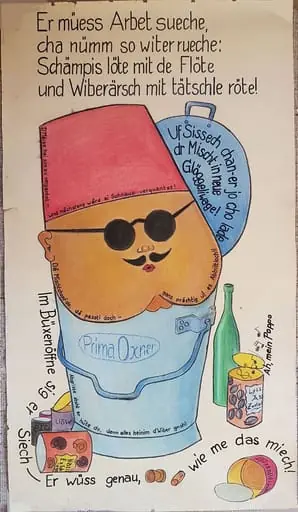
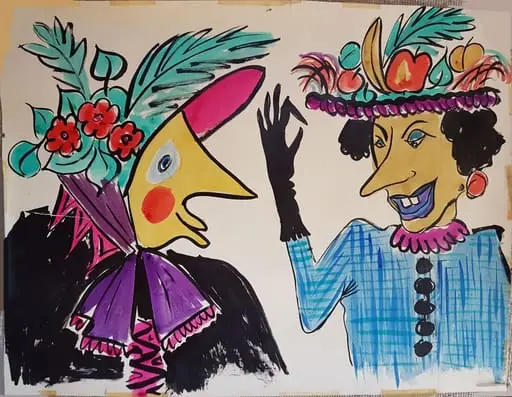
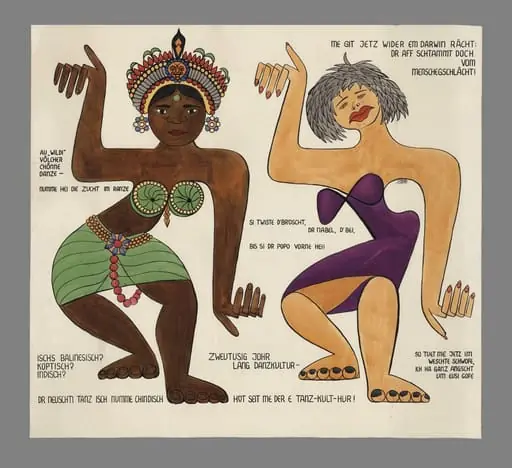
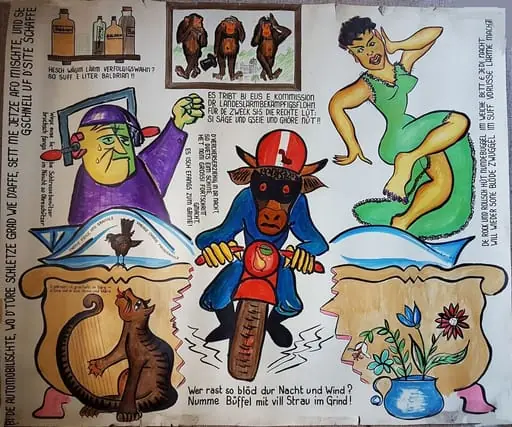 Fasnachtshelge "Töffraser"
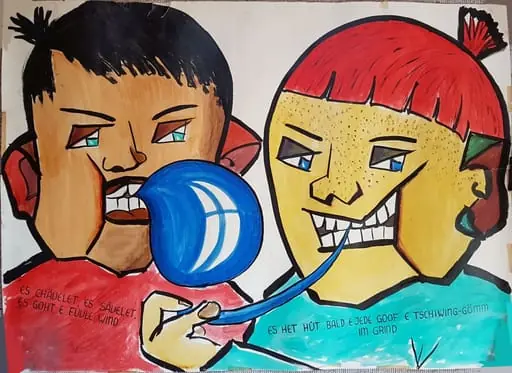 Fasnachtshelge "Tschiwing Gömm"
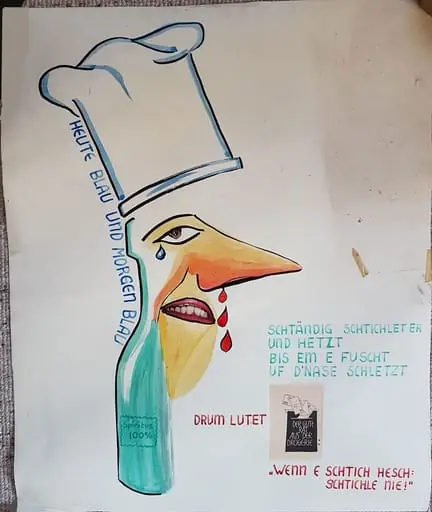 Fasnachtshelge "Heute blau und morgen blau"
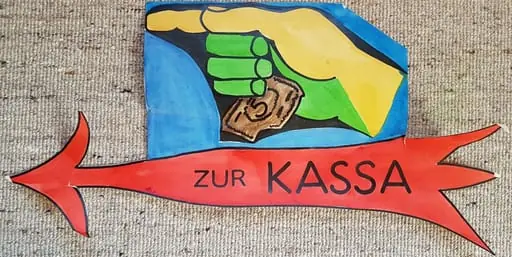 Fasnachtshelge "Zur Kassa"
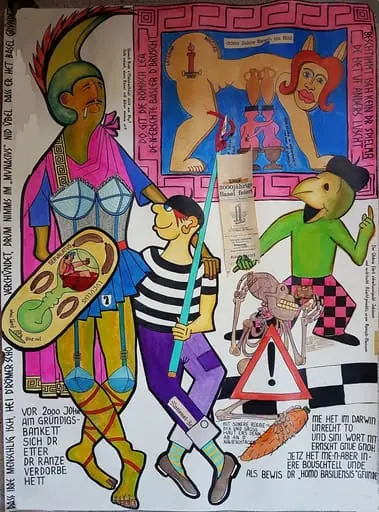 Fasnachtshelge "2000 Johr Basel"
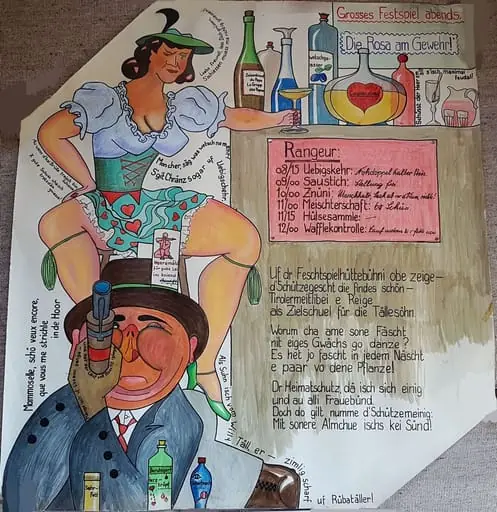 Fasnachtshelge "Die Rosa am Gewehr"
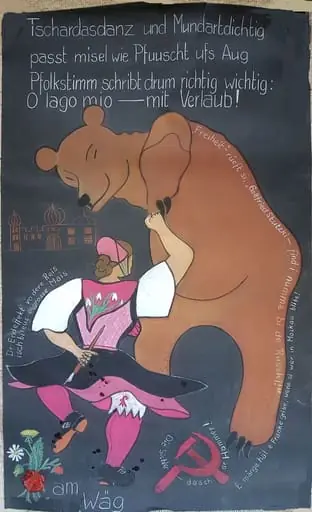 Fasnachtshelge "Tschardastanz"
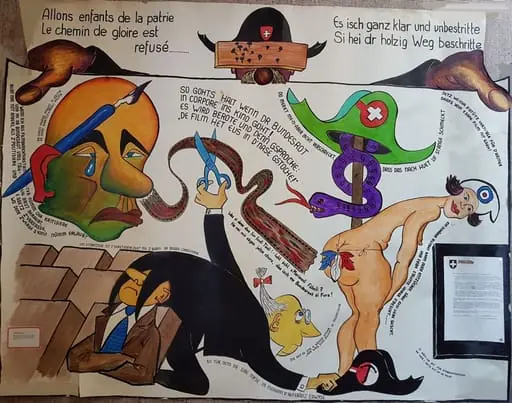 Fasnachtshelge "Allons enfants de la patrie"
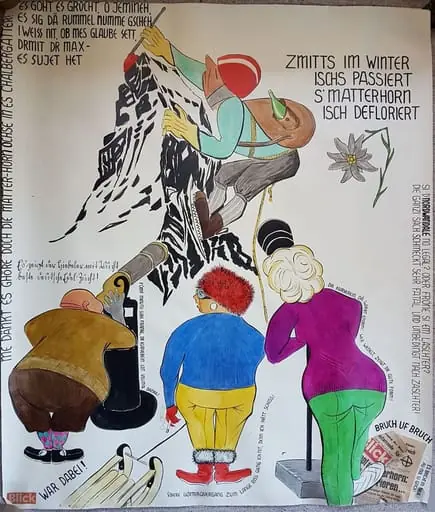 Fasnachtshelge "Matterhorn Wintererstbegehung"