Artwork
Diane au levrier (Diana and a Greyhound)
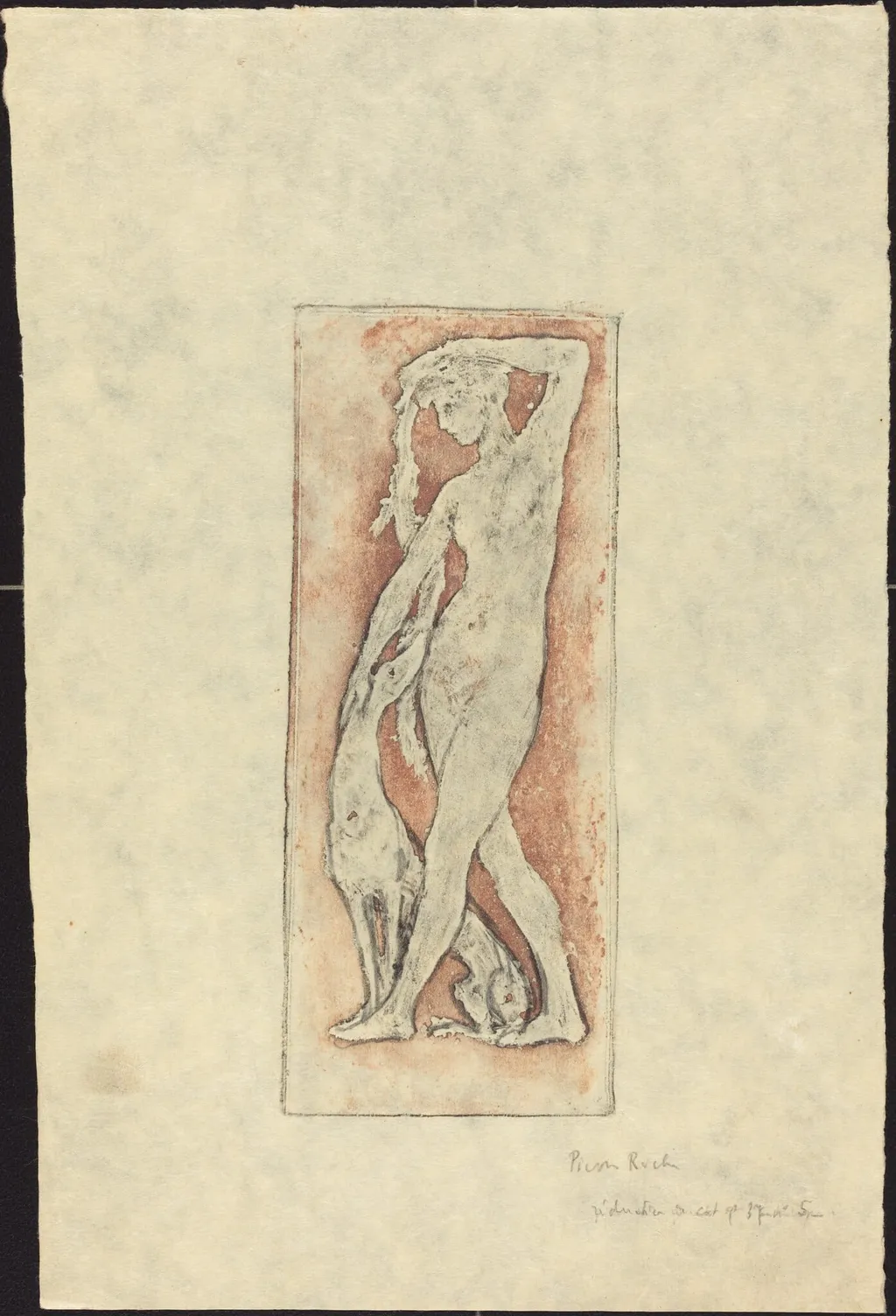
Diane au levrier (Diana and a Greyhound) is a print by Pierre Roche. It dates from 1912 and is held in the collection of the National Gallery of Art.
About this work
Overview
Created using a technique involving chalk or plaster on paper, the work reflects Roche’s transition from scientific studies to the visual arts.
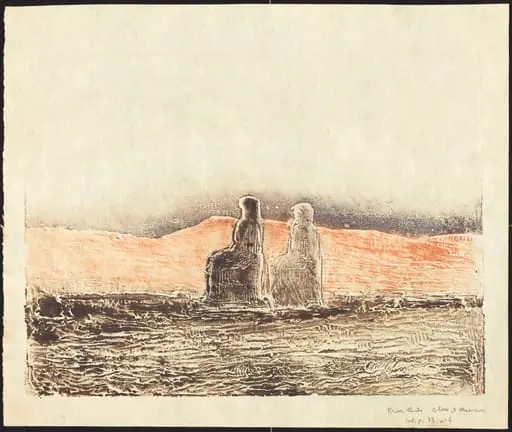
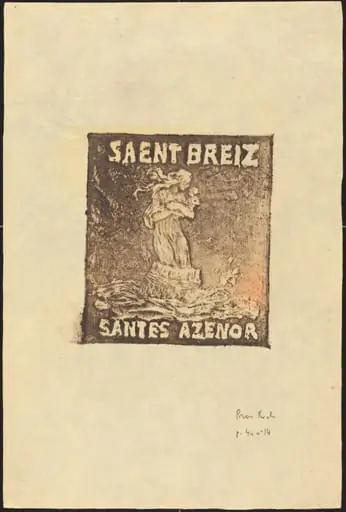
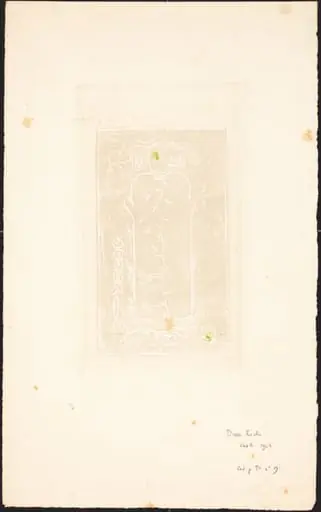
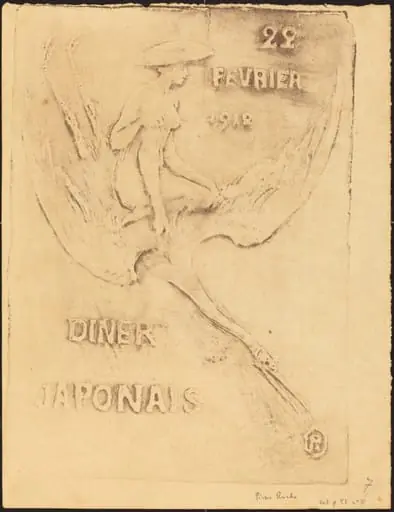
Pierre Roche’s 1912 gypsograph, *Diane au lévrier*, is a monochrome print portraying the Roman goddess Diana accompanied by a greyhound. Created using a technique involving chalk or plaster on paper, the work reflects Roche’s transition from scientific studies to the visual arts. Though less known than his sculptural commissions, this print demonstrates his interest in classical themes and dynamic figural composition.
Subject & Meaning
The image presents Diana, goddess of the hunt, in a moment of quiet vigilance. Her raised arm and poised stance suggest readiness, while the greyhound, standing on its hind legs, leans against her in a gesture of trust. The pairing evokes classical associations of the goddess with nature and wild animals, yet the intimacy of the scene softens mythological grandeur into a tender, almost domestic encounter.
Technique & Style
Rendered in gypsograph, the print uses subtle tonal gradations to model form without color. The figures are defined by soft, flowing lines and delicate shading that emphasize volume and movement. Diana’s flowing hair and the dog’s muscular contours are rendered with precision, capturing motion through weight distribution and anatomical tension. The monochrome palette focuses attention on gesture and structure rather than ornamentation.
History & Provenance
Born Pierre Henry Ferdinand Massignon in 1855, Roche initially pursued medicine before studying art at the Académie Julian under Alfred Roll. He exhibited at the Paris Salon in the 1880s and later turned to sculpture under Jules Dalou’s influence. This print likely emerged during a period when Roche was exploring graphic media alongside his sculptural work, though its exact provenance remains undocumented in public records.
Context
In early 20th-century France, mythological subjects remained popular among artists seeking to reconcile classical ideals with modern sensibilities. Roche’s work aligns with a broader trend of figurative prints that emphasized naturalism and emotional nuance over narrative spectacle. His background in both science and art informed a precise, anatomically aware approach to the human form.
Legacy
While Roche is primarily remembered for his public sculptures and medals, *Diane au lévrier* stands as a refined example of his graphic work. It reveals his ability to convey movement and intimacy within a restrained medium. The print contributes to understanding the breadth of his practice beyond monumental commissions, offering insight into his quieter, more personal artistic explorations.
Artist & collection

Artist
Pierre Roche (Paris, 2 August 1855 – Paris, 18 January 1922), pseudonym of Pierre Henry Ferdinand Massignon, was a French sculptor, painter, ceramist and medallist.

![Standing Figure [verso], by James McNeill Whistler](https://artifactworldgallery.com/img/james-mcneill-whistler--standing-figure-verso--3089b1e67635ba44-w320.webp)