Artwork
Buste de Bellone
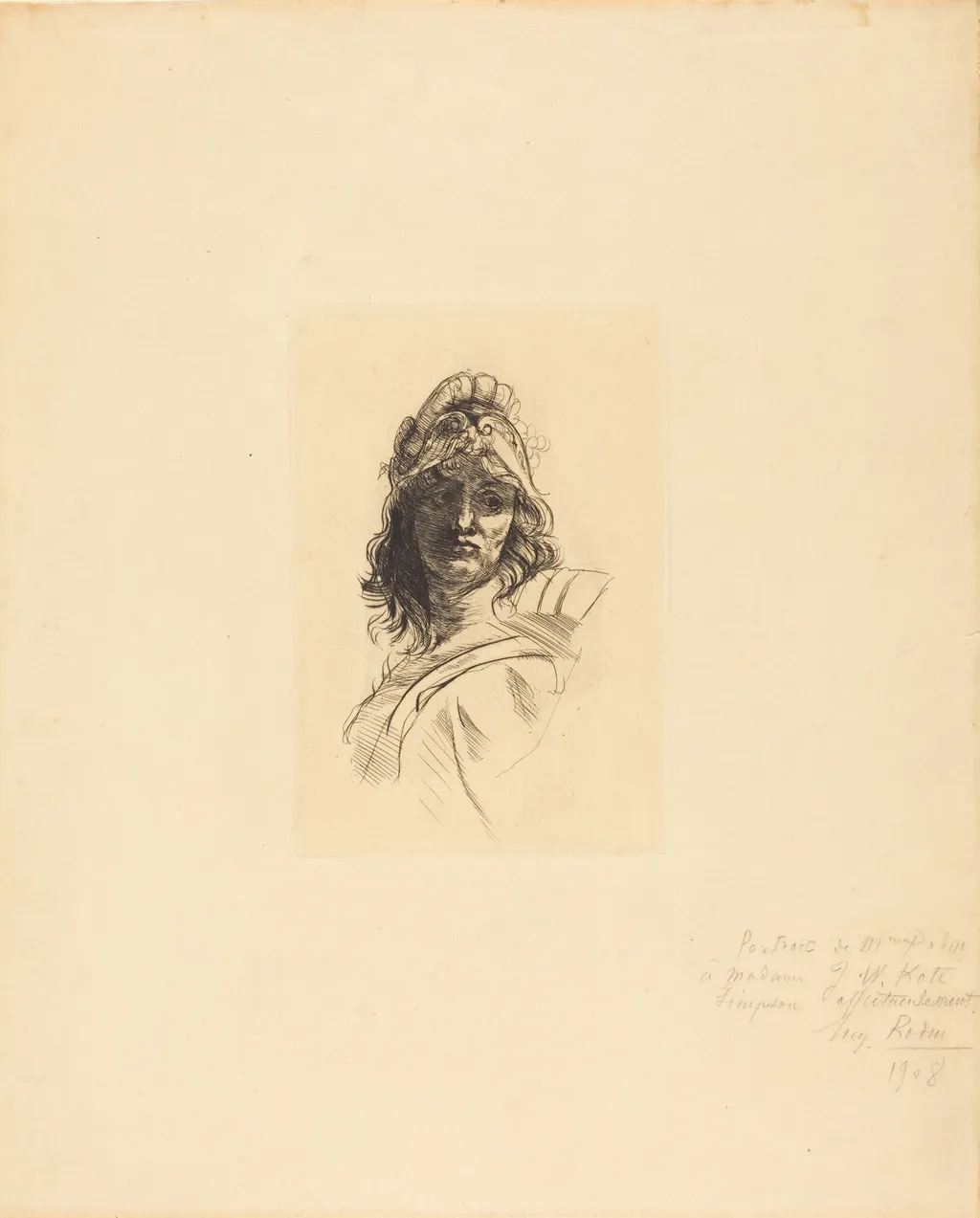
Buste de Bellone is an ink print by the Impressionist artist Auguste Rodin. It dates from 1883 and is held in the collection of the National Gallery of Art.
About this work
Overview
Created in 1883, *Buste de Bellone* is a print made by the French artist Auguste Rodin. The work combines etching with drypoint techniques, producing a monochrome image on a light‑toned paper. It presents a sculptural bust of the Roman war goddess Bellona, rendered in Rodin’s characteristic attention to surface texture.
Subject & Meaning
The figure is a female head and shoulders crowned with a plumed helmet, her long hair flowing down her back. She looks to the left with a solemn expression, evoking the martial dignity associated with Bellona, the deity of war in Roman mythology.
Technique & Style
Rodin employed both etching, which allows for fine line work, and drypoint, which adds rich, velvety burrs to the inked lines. The interplay of crisp contours and softer, textured strokes creates a sense of depth and three‑dimensionality, echoing the sculptor’s experience in modeling clay.
History & Provenance
The print was produced during a period when Rodin was expanding his practice beyond sculpture into graphic media. While the original plate’s ownership history is not extensively documented, the work is catalogued among his early print experiments and appears in several museum collections of 19th‑century prints.
Context
At the time of its creation, Rodin was still establishing his reputation, having trained in the academic tradition before developing a more expressive approach to form. *Buste de Bellone* reflects his interest in classical subjects and his willingness to explore new media to capture the tactile qualities of stone and bronze in two‑dimensional works.
Artist & collection
Artist
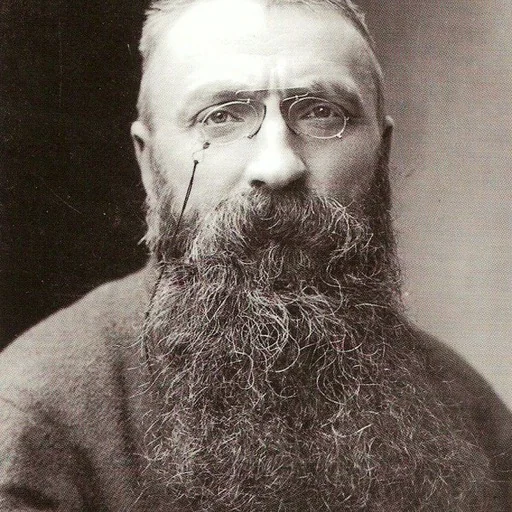
François Auguste René Rodin (; French: ; 12 November 1840 – 17 November 1917) was a French sculptor generally considered the founder of modern sculpture.

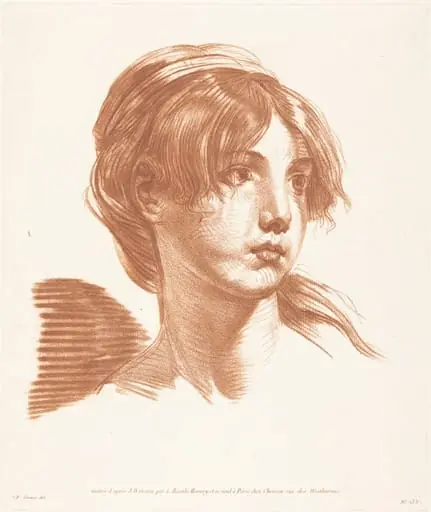 Head of a Girl
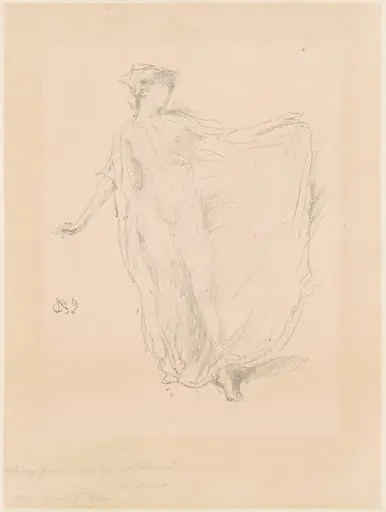 The Dancing Girl
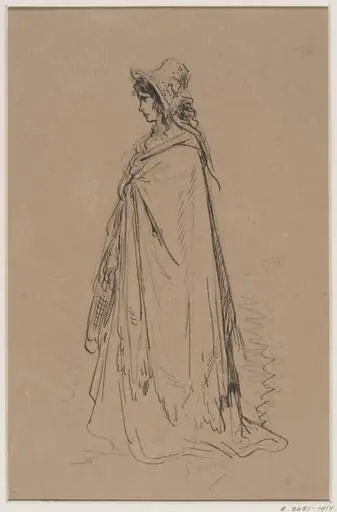 Original sketch of a female figure
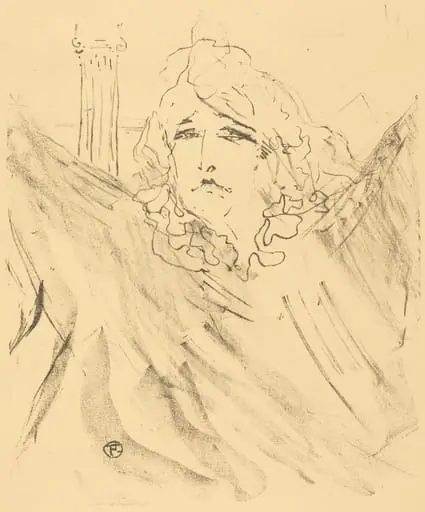 Sarah Bernhardt in "Cleopatra" (Sarah Bernhardt dans "Cléopatre")
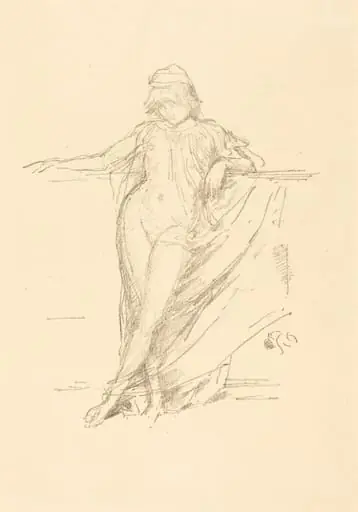 Little Draped Figure, Leaning
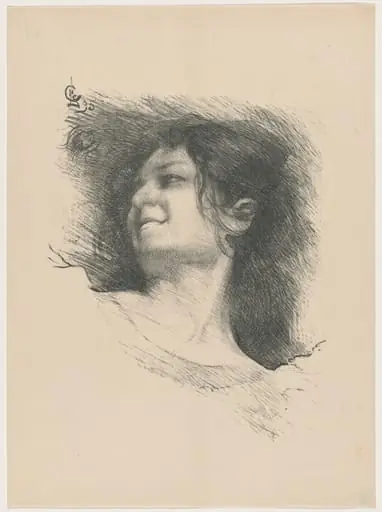 Etude de femme
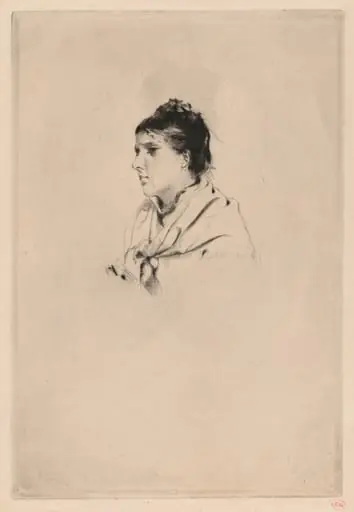 Bust of an Italian Woman
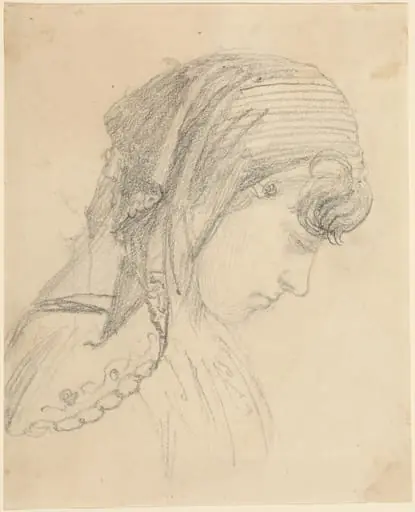 Head of a Woman in a Scarf, Looking Down
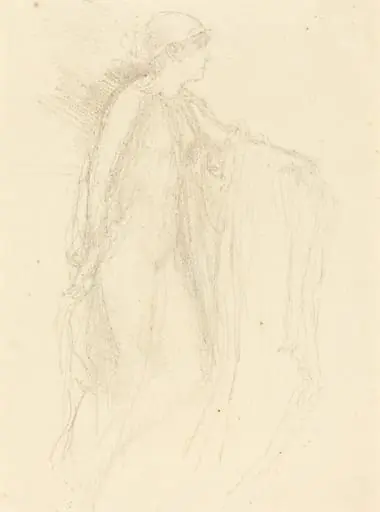 The Cap
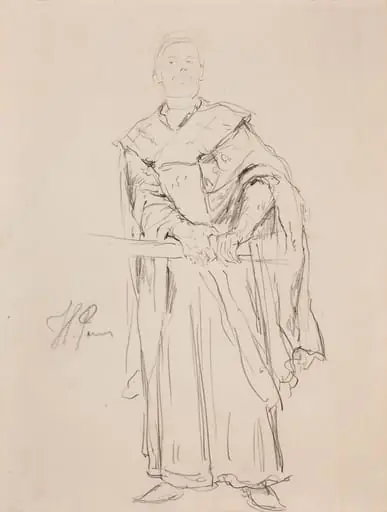 Luonnos maalaukseen Pyhä Nikolaus Lyykian Myrasta
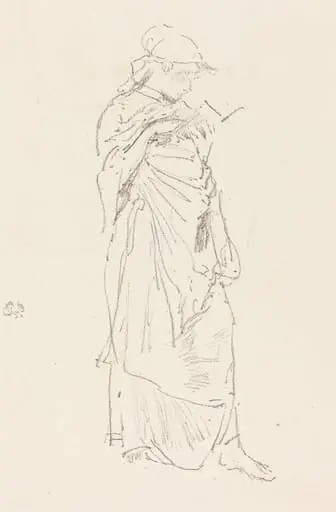 The Novel: Girl Reading
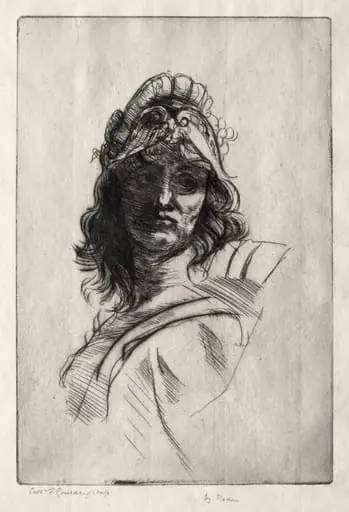 Bust of Bellone