Artwork
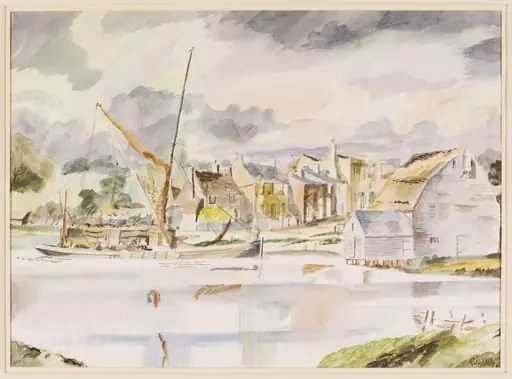
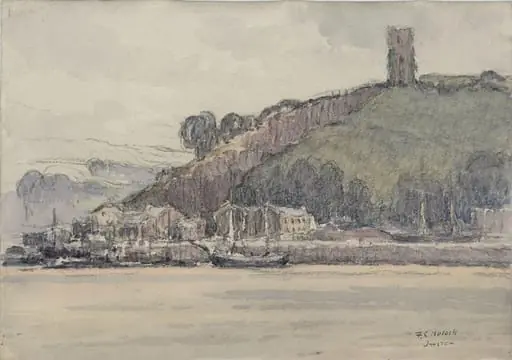
Topsham, from the river
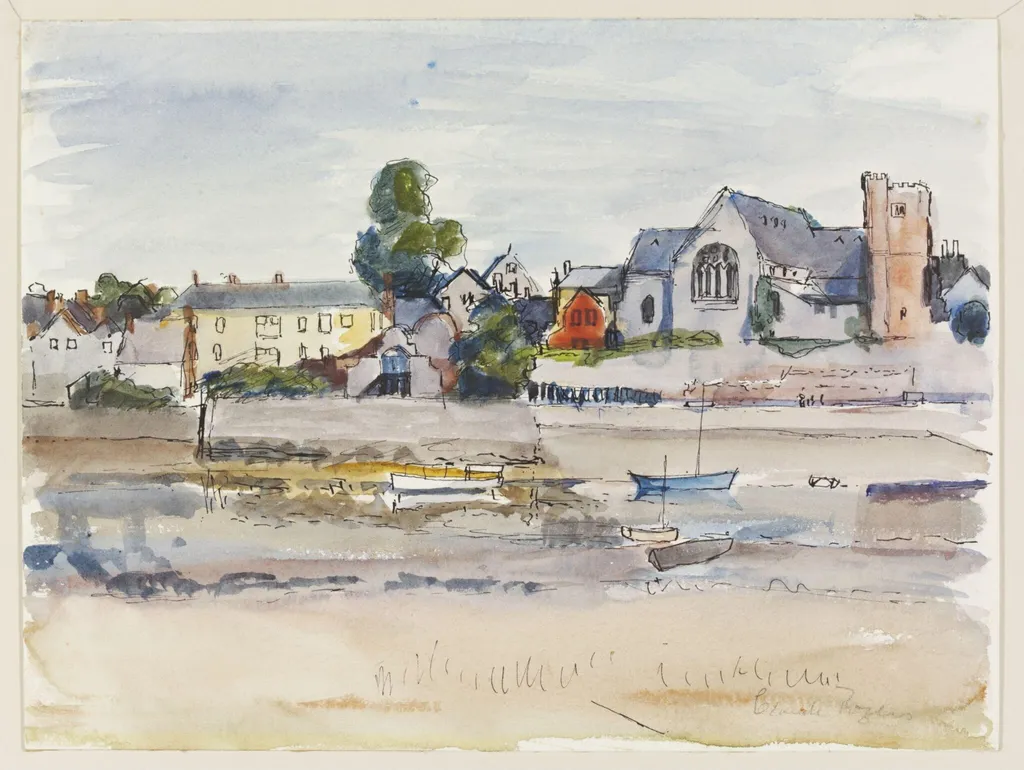
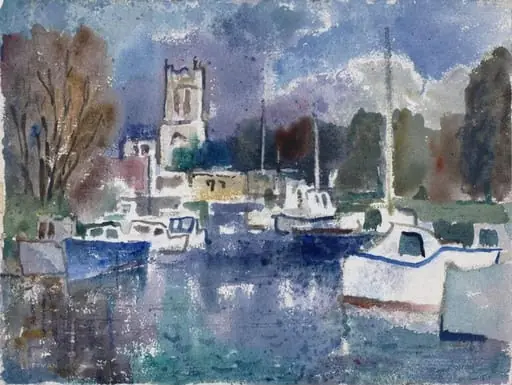
Topsham, from the river is a watercolor work on paper by Rogers. It dates from 1940 and is held in the collection of the Victoria and Albert Museum.
About this work
Overview
Created in 1940, this watercolour by Rogers captures a quiet stretch of the River Exe near Topsham, Devon. Part of the *Recording Britain* initiative, the work was made during wartime to preserve visual records of the English landscape. Signed and dated by the artist, it reflects a deliberate effort to document everyday scenes at risk of being lost to conflict or modernization.
Subject & Meaning
The composition emphasizes stillness and continuity, contrasting the fragile tranquility of rural life against the looming uncertainties of war.
The scene presents a modest riverside settlement: small boats rest near the shore, while a cluster of modest dwellings and a church with a tall spire rise on the elevated bank. The composition emphasizes stillness and continuity, contrasting the fragile tranquility of rural life against the looming uncertainties of war. The church, a longstanding landmark, anchors the image as a symbol of enduring local identity.
Technique & Style
Rogers employed loose, fluid brushwork to suggest movement in the water and foliage, using diluted pigments to create soft, translucent layers. Buildings are rendered with quick, economical strokes that imply structure without detailed rendering. The pale sky and muted tones unify the scene, reinforcing a sense of quiet observation. The technique prioritizes atmosphere over precision, characteristic of the project’s emphasis on evocative documentation.
History & Provenance
The painting was produced under the *Recording Britain* project, funded by the Pilgrim Trust and managed by the Committee for the Employment of Artists in Wartime. It was one of over 1,500 works commissioned between 1939 and 1942 to safeguard visual records of the British countryside. The piece entered the Victoria and Albert Museum’s collection as part of this initiative, where it remains accessible for public study.
Context
The *Recording Britain* project emerged as a cultural response to wartime threats, aiming to preserve images of places perceived as vulnerable to bombing or development. While focused on England, it excluded Northern Ireland and included only select Welsh regions. Artists were chosen for their skill in watercolour, a medium seen as both traditional and adaptable to rapid fieldwork during a time of restricted travel.
Legacy
The work contributes to a broader archive of British topographical art that continues to inform historical and environmental studies. Its modest scale and unembellished realism offer a counterpoint to grander wartime narratives, preserving the quiet rhythms of everyday landscapes. Today, it stands as a testament to the role of art in documenting cultural memory during periods of upheaval.
Artist & collection

 St Osyth's Quay
 The Locks on Grand Union Canal at Brentford Bridge
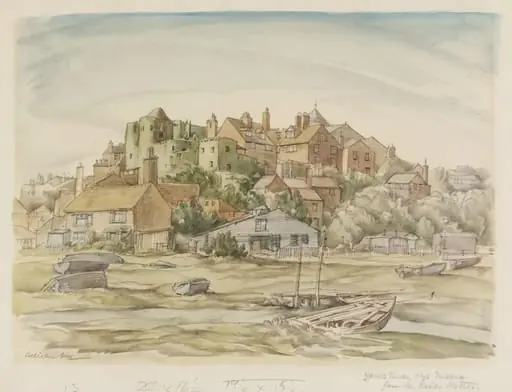 Ypres Tower, Rye, from the River Rother, Sussex
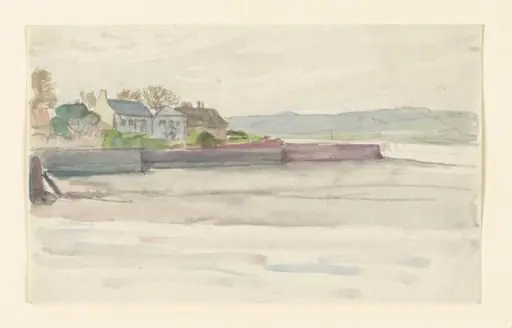 Shaldon, near Teignmouth
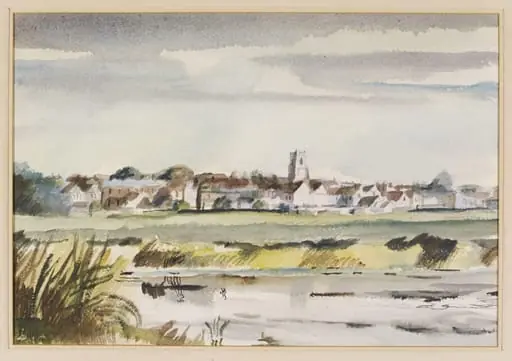 Evening View of Sudbury from the South-west
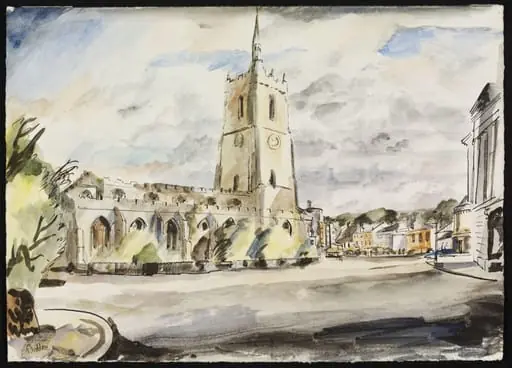 St. Peter's Church and Market Hill, Sudbury
 Christchurch, Hampshire
 Whitstable, 1934
 The Creek, West Wittering
 Henning Mill on the Stour
 Chanter's Folly
 View of Pickering