Artwork
Sir Philip Sidney
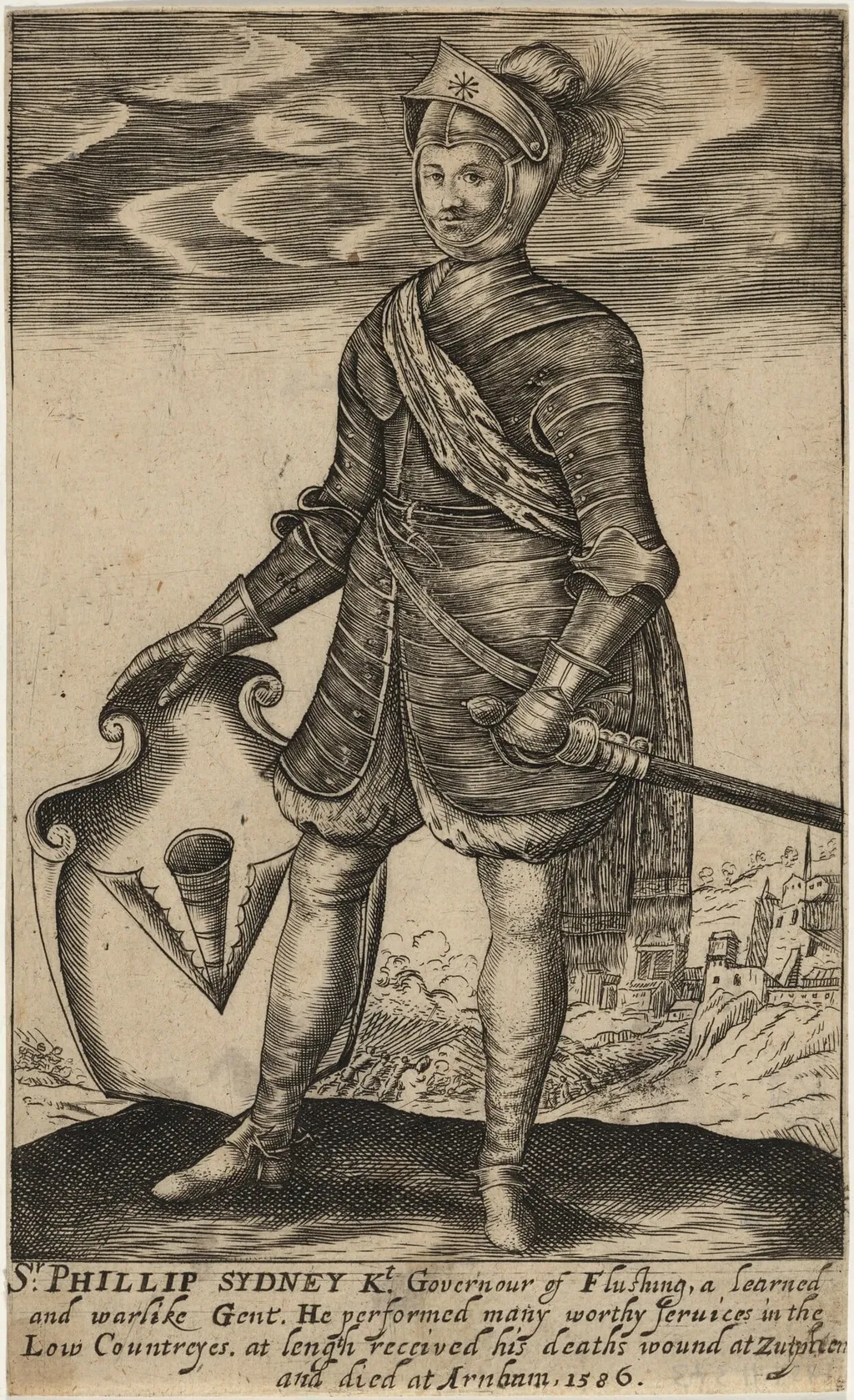
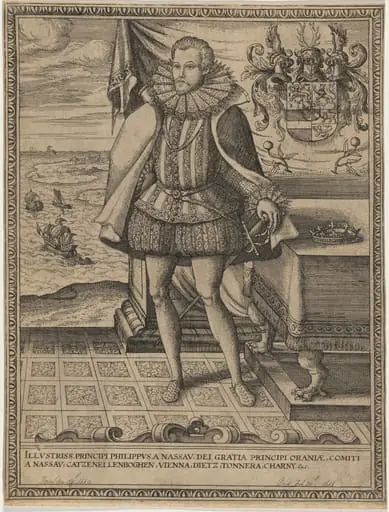
Sir Philip Sidney is an ink print by the Baroque artist Robert Vaughan. It dates from 1622 and is held in the collection of the National Gallery of Art.
About this work
His helmet has a feather or plume on top, and there’s a tiny landscape scene in the background with buildings and trees.
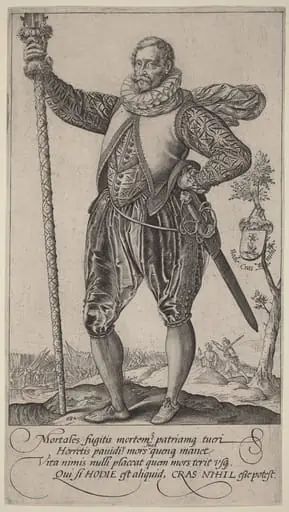
This is a black-and-white engraving of a man in fancy armor. He’s standing with one foot forward, holding a curved sword in one hand and a small cup in the other. His helmet has a feather or plume on top, and there’s a tiny landscape scene in the background with buildings and trees. The lines are sharp, showing every fold in his clothes and the texture of his armor.
The text below says this man was a governor and died in 1586, but the picture was made much later. The artist used fine lines to create shadows and depth, making the armor look almost three-dimensional.
Try looking up engraving to see how artists like this made detailed prints without paint.
Overview
An engraving by Robert Vaughan, dated 1622, depicts Sir Philip Sidney in full armor. Rendered in monochrome, the print captures Sidney standing with one foot advanced, holding a curved sword and a small cup. Fine, precise lines define the texture of his armor and clothing, while a distant landscape of trees and buildings frames the figure. The image was produced over three decades after Sidney’s death, serving as a posthumous commemoration rather than a contemporary portrait.
Subject & Meaning
Sir Philip Sidney, a celebrated courtier and soldier, is portrayed in ceremonial armor, suggesting his dual identity as a nobleman and military leader. The cup he holds may reference his legendary act of offering water to a dying soldier, symbolizing virtue and selflessness. The inclusion of a feathered helmet and the inscription identifying him as governor reinforce his status and legacy, transforming the image into a moral emblem rather than a literal likeness.
Technique & Style
Vaughan employed fine, controlled engraving lines to model form and texture, creating the illusion of three-dimensionality in the armor’s surfaces and the folds of fabric. The sharp, incised strokes allow for subtle gradations of light and shadow, enhancing realism without color. Background elements are rendered with lighter, sparser lines, receding visually to emphasize the figure. This method reflects the precision expected in portrait engravings of the early 17th century.
History & Provenance
Created in 1622, the engraving was made more than 35 years after Sidney’s death in 1586, during a period of renewed interest in his literary and military legacy. Vaughan, a London-based printmaker, likely based the image on earlier portraits or descriptions. The print was probably produced for a public audience seeking to honor Sidney’s reputation, aligning with the broader cultural veneration of Elizabethan figures in the Jacobean era.
Context
In early 17th-century England, engraved portraits of deceased national figures were common tools for shaping collective memory. Sidney, admired for his poetry and chivalric conduct, became a symbol of idealized nobility. This print reflects the period’s fascination with moral exemplars and the use of print media to disseminate historical ideals, particularly among the educated classes who valued literary and martial virtue.
Legacy
Vaughan’s engraving contributed to the enduring visual representation of Sidney as a paragon of Renaissance virtue. Though not a direct likeness, its widespread circulation helped standardize his image in later publications and collections. The work remains a key example of how printmaking shaped historical memory, preserving the cultural significance of figures long after their deaths through carefully crafted visual narratives.
Artist & collection

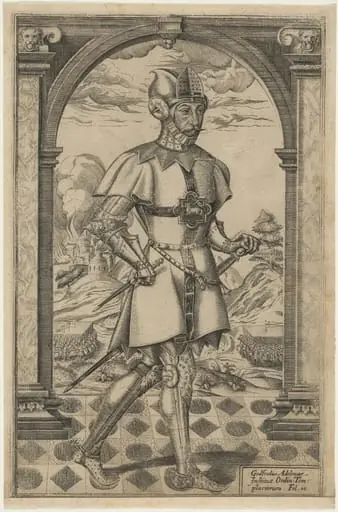 Godfrey Adelmar, Founder of the Knights Templar
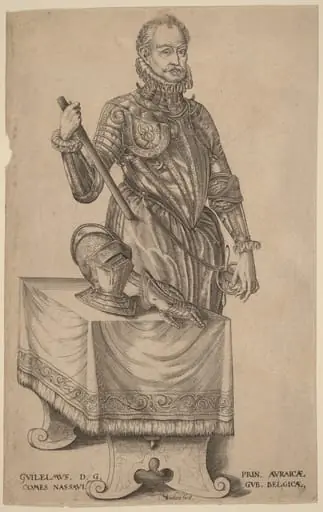 William of Nassau, Prince of Orange
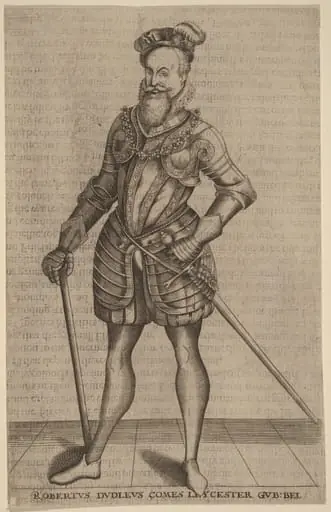 Robert Dudley, Earl of Leicester
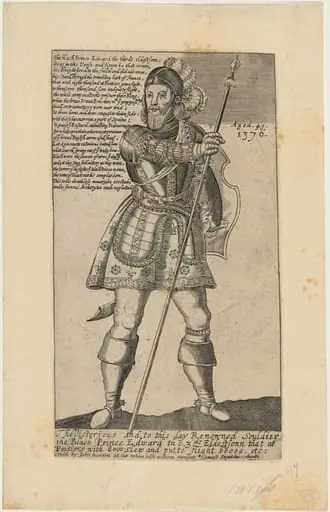 Edward, the Black Prince at the Age of 49
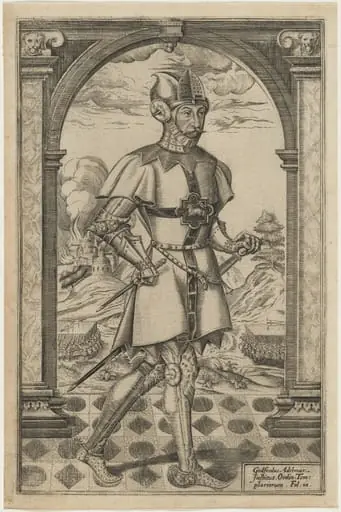 Godfredus Aldemarus Alexandrino (Godfrey Adelmar)
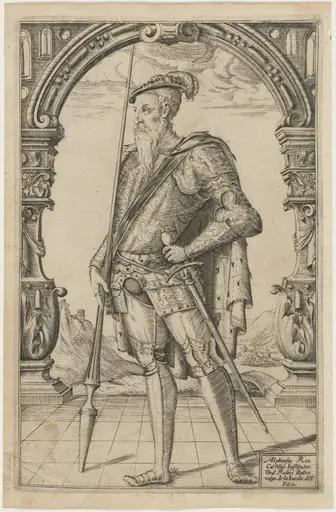 Alphonso, King of Castile
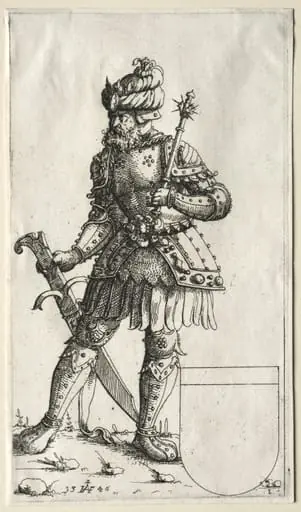 Sigismund II, King of Poland
 A Pike-Man Turned to the Left
 Christian II of Denmark
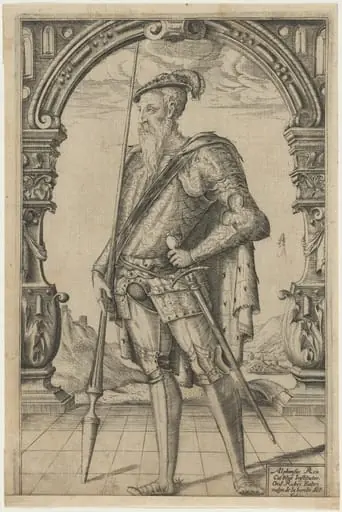 Alphonso, King of Castile
 Ludwig II, King of Hungary
 Philip William, Prince of Nassau