Artwork
Alexander de Medicis and Cosmo de Medicis
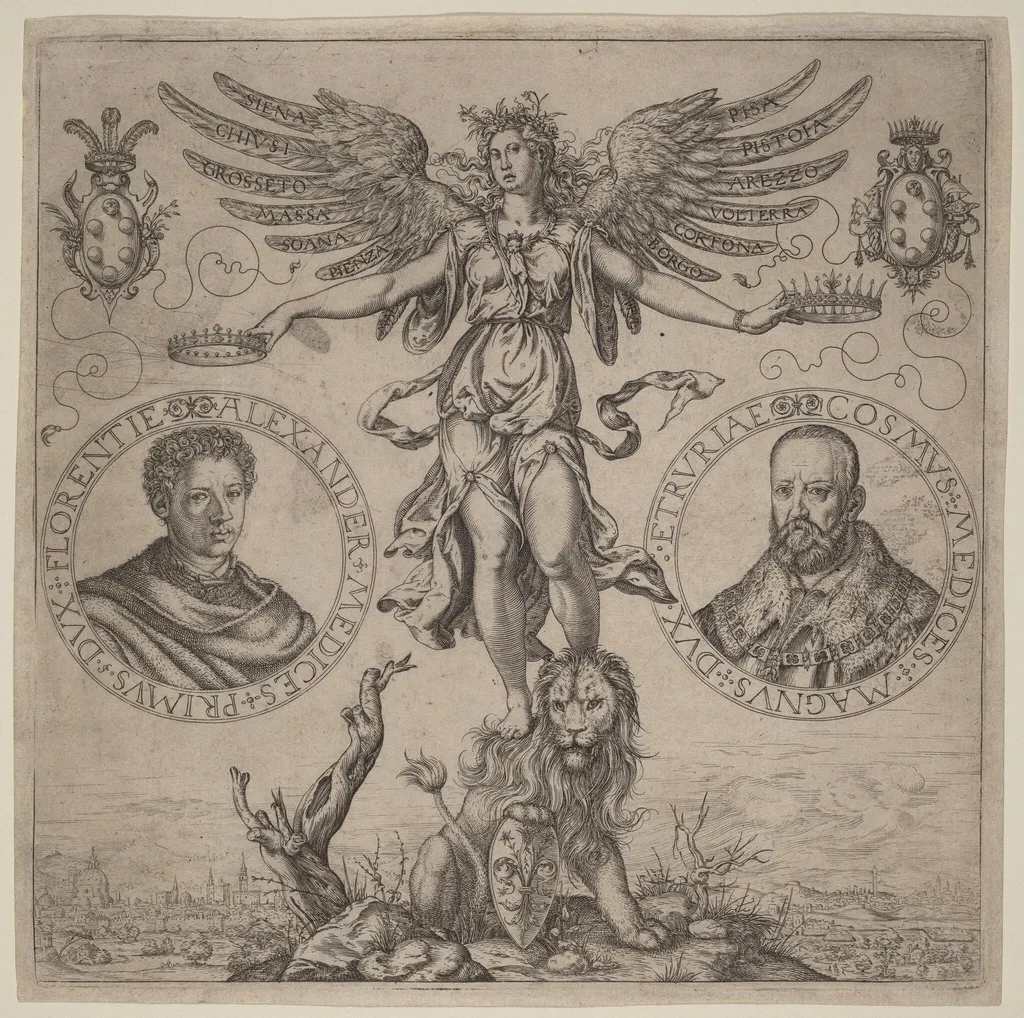
Alexander de Medicis and Cosmo de Medicis is an ink print by the Renaissance artist Martino Rota. It dates from 1552 and is held in the collection of the National Gallery of Art.
About this work
Overview
Martino Rota, a 16th‑century engraver originally from Šibenik in Dalmatia, produced an engraving in 1552 that presents two members of the Medici lineage, Alexander and Cosimo. The composition places their portrait heads within circular frames at the lower edge of the plate, while a mythic winged figure hovers above, surrounded by Latin inscriptions and a list of Italian city names.
Subject & Meaning
The two framed portraits are identified by Latin captions as Alexander de’ Medici and Cosimo de’ Medici, linking the figures directly to the prominent Florentine dynasty. The winged, lion‑mane figure bearing a crown and scroll suggests an allegorical embodiment of authority or protection, reinforcing the Medici’s political and cultural influence across the named cities such as Siena, Pisa and Florence.
Technique & Style
Executed as an engraving, the work relies on incised lines cut into a copper plate, allowing Rota to render fine detail in the facial features, ornamental frames, and the intricate drapery of the winged figure. The use of chiaroscuro through cross‑hatching creates depth, while the architectural framing and decorative motifs reflect the Renaissance taste for classical order and elaborate symbolism.
History & Provenance
Rota, who spent much of his career in Venice, Rome and later Vienna, was known for producing prints after the designs of leading artists of his time.
Rota, who spent much of his career in Venice, Rome and later Vienna, was known for producing prints after the designs of leading artists of his time. This 1552 plate was likely commissioned to celebrate or publicize the Medici family’s status, though specific patronage records are absent. Surviving impressions have appeared in several European collections, indicating a wide distribution in the mid‑16th century.
Context
The engraving emerges from a period when the Medici were consolidating power in Tuscany and seeking representation in the visual arts. Portraiture combined with allegorical figures was a common means of asserting dynastic legitimacy. Rota’s work aligns with contemporary print culture that disseminated political imagery beyond courtly circles, reaching a broader audience through affordable reproductions.
Artist & collection
Artist
Martino Rota, also Martin Rota and Martin Rota Kolunić (c. 1520–1583) was an artist, now mainly known for his printmaking, from Dalmatia. Martino Rota was born in about the year 1520 in Šibenik (Sebenico), Dalmatia.…

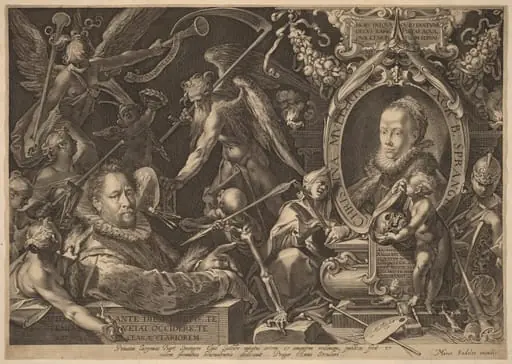 Bartholomaeus Spranger and his Late Wife Christina Muller
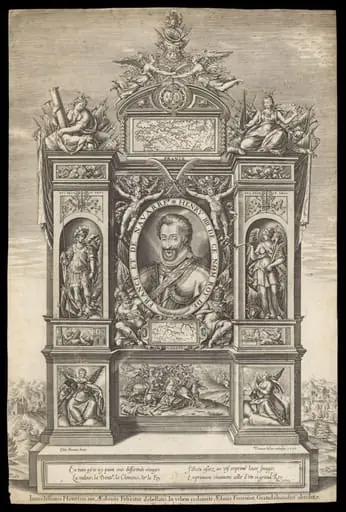 H Beard Print Collection
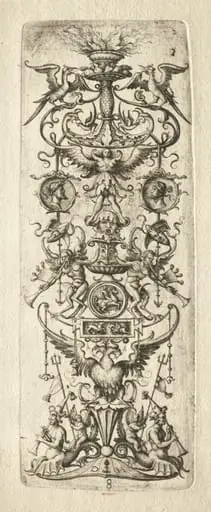 Ornament Fillet
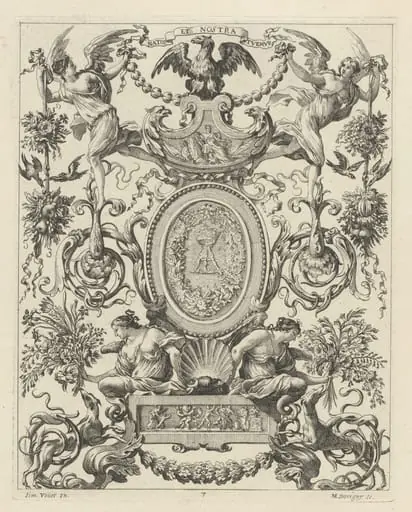 Ornamental Panel Surmounted by an Eagle and the Motto NATOS ET NOSTRA TUEMUR
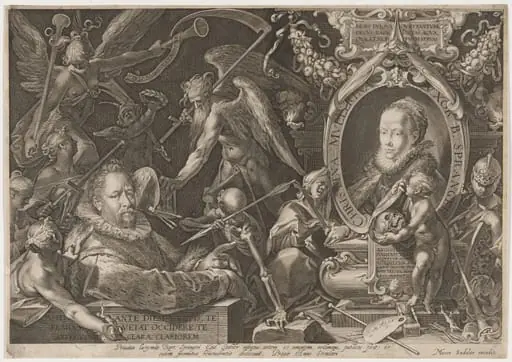 Bartholomew and Christina Spranger
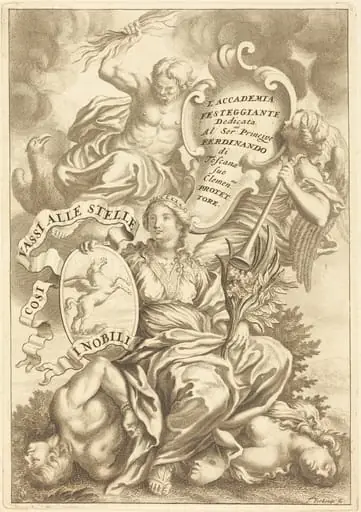 Dedication Plate
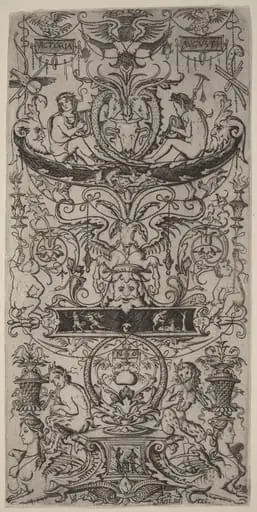 Ornament Panel: Victoria Augusta
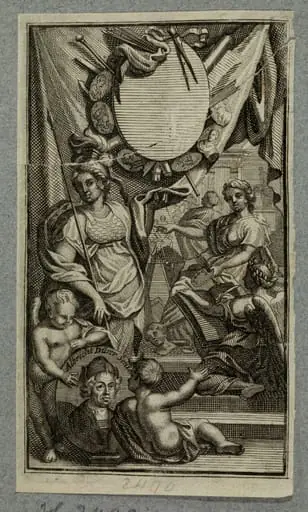 Frontispiece with portrait of Albrecht Dürer d.Ä.
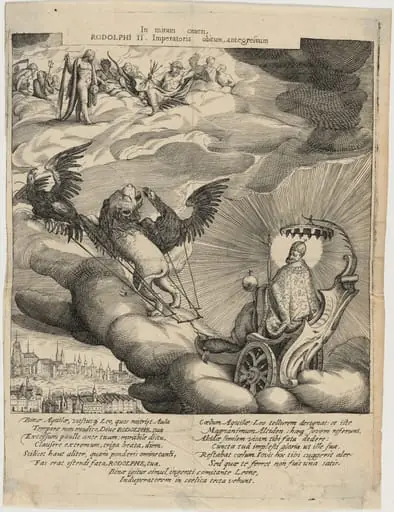 Rudolph II in Chariot Drawn by Lion and Eagle
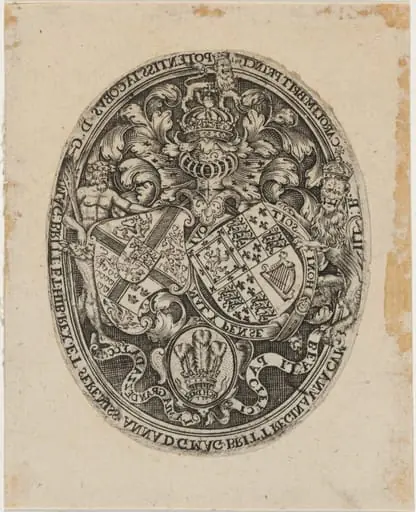 Shield of James I, Anne of Denmark, and Prince Charles
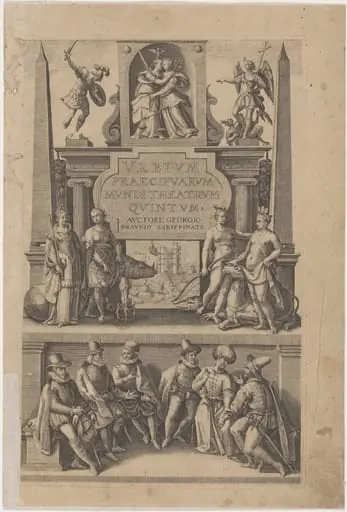 Title Page to Urbium Praecipuarum Mundi Theatrum Quintum
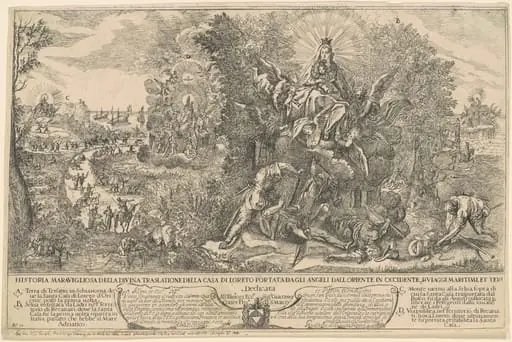 The Transport of the Holy House of Loreto