Artwork
Guisborough Priory
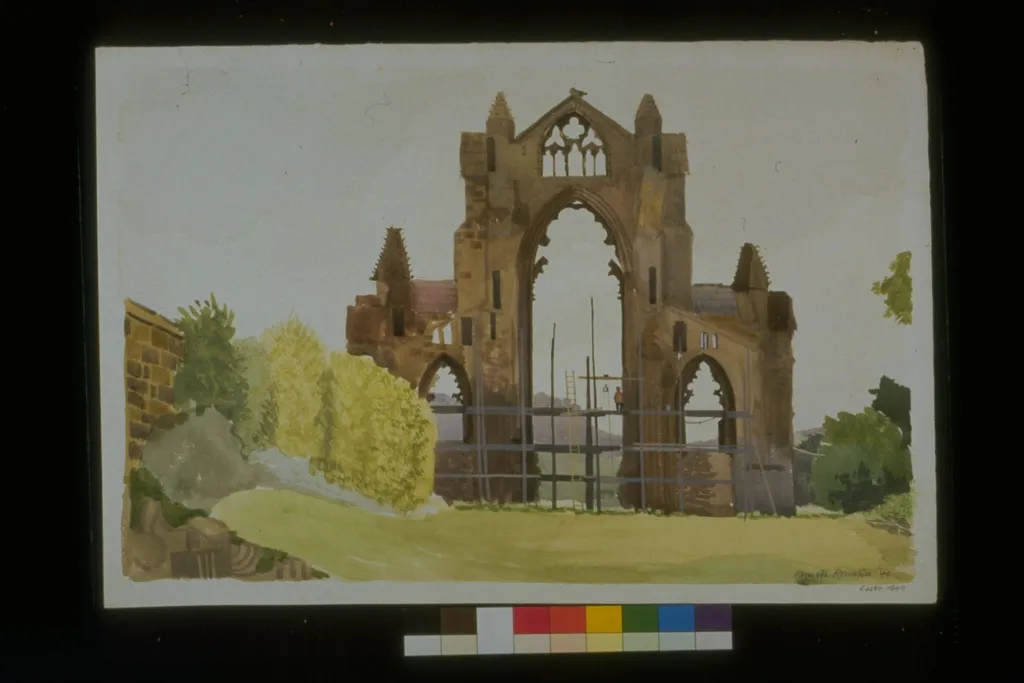
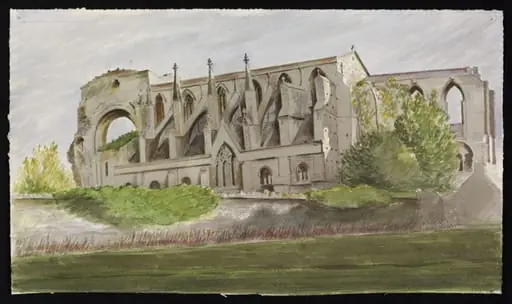
Guisborough Priory is a watercolor work on paper by the British Romanticist artist Kenneth Rowntree. It dates from 1940 and is held in the collection of the Victoria and Albert Museum.
About this work
This watercolor shows a crumbling stone archway with pointed windows and a broken roof.
This watercolor shows a crumbling stone archway with pointed windows and a broken roof. Trees with green and yellow leaves frame the scene, and a fence blocks the foreground. The sky is pale, and the whole thing looks quiet and worn, like a place left to time.
The artist painted it in 1940, focusing on the ruins’ rough texture and faded colors. The watercolor style keeps things simple but lets the decay stand out.
Next, check out the Victoria and Albert Museum to see this painting in person.
Overview
This 1940 watercolour captures the ruins of Guisborough Priory in North Yorkshire, painted during the early years of the Second World War. It was produced as part of the *Recording Britain* initiative, a government-backed effort to document at-risk landscapes and architectural heritage. The scene emphasizes quiet decay, with no human activity beyond a single figure on scaffolding, underscoring the fragility of historical sites amid wartime uncertainty.
Subject & Meaning
The painting focuses on the priory’s fragmented stonework—crumbling arches, broken rooflines, and vacant windows—rendered without romanticization. The presence of scaffolding suggests ongoing, modest conservation efforts, while the empty foreground fence implies separation from the present world. The image conveys a sense of endurance rather than loss, portraying the ruins as silent witnesses to time, not merely relics to be saved.
Technique & Style
Executed in transparent watercolour, the work uses muted tones and loose washes to evoke the weathered texture of stone and the softness of autumn foliage. The artist avoids sharp detail, allowing the medium’s natural bleed to mimic erosion and age. Pale skies and subdued greens and yellows reinforce the scene’s stillness, while the lack of dramatic lighting keeps attention on the structure’s quiet deterioration.
History & Provenance
Commissioned in 1940 under the *Recording Britain* project, initiated by Sir Kenneth Clark, the painting was one of hundreds created to preserve visual records of sites threatened by war or modernization. It entered the Victoria and Albert Museum’s collection as part of this national archive, where it remains as a testament to the cultural priorities of wartime Britain and the role of art in historical preservation.
Context
During the early 1940s, Britain faced widespread destruction from aerial bombing and rapid urban development. The *Recording Britain* project responded to fears that historic places might vanish without documentation. Artists were sent across the country to depict rural landscapes, vernacular buildings, and ruins—offering not propaganda, but a sober inventory of what might be lost if the nation’s heritage was neglected.
Legacy
The watercolour endures as part of a significant archive that redefined how heritage is valued—not through grandeur, but through quiet observation. Its inclusion in the V&A’s permanent collection ensures continued access to a visual record shaped by wartime anxiety and a commitment to cultural memory. It stands as a modest but enduring example of art serving historical documentation.
Artist & collection
Artist
Kenneth Rowntree painted quiet British places in watercolour around 1940, from barn-stacked Essex fields to the carved oak pews of Caernarvonshire chapels.

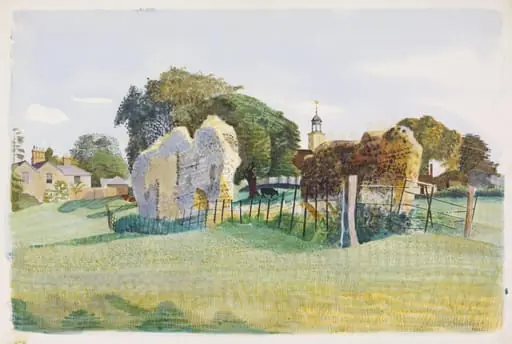 View of the Ruins of the Cloister, the Belfry of St. Mary's Church, and the Vicarage, Tilty
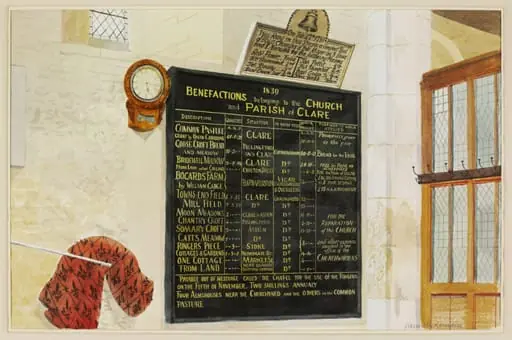 The Bellringer's Chamber, SS. Peter and Paul Church, Clare
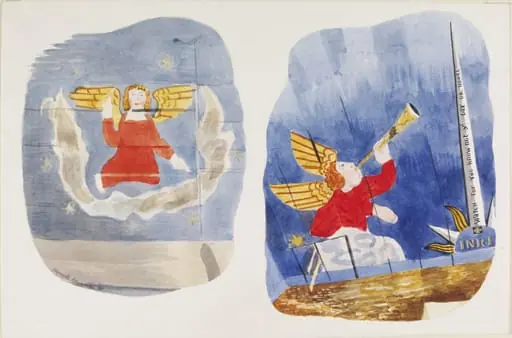 Detail of Ceiling at Gwydir Uchar Chapel, Llanrwst, Caernarvonshire
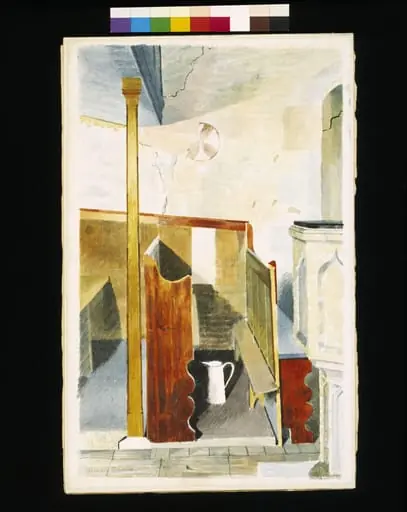 Interior of SS Peter and Paul, Little Saling, Essex
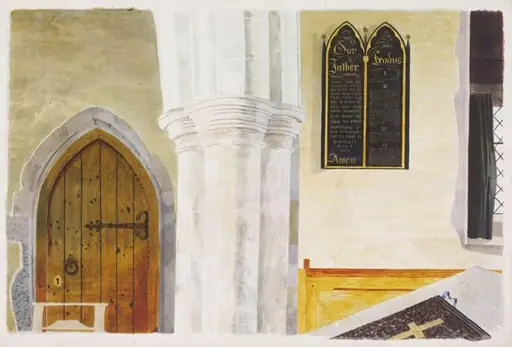 Interior of the Church of St. Mary the Virgin, Lindsell
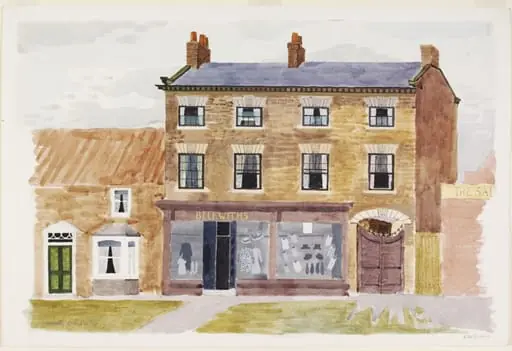 House at Easingwold
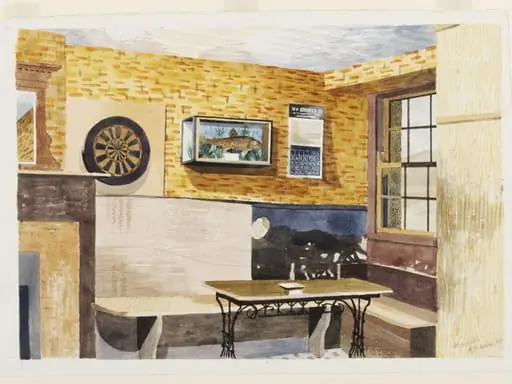 The Smoke Room, Ashopton Inn
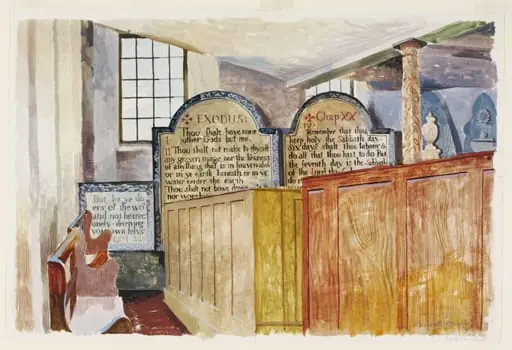 Pews in St Mary's Church, Whitby