Artwork
Gwydir Uchaf - the Chapel built by Sir Richard Wynne, 1673. Caernarvonshire
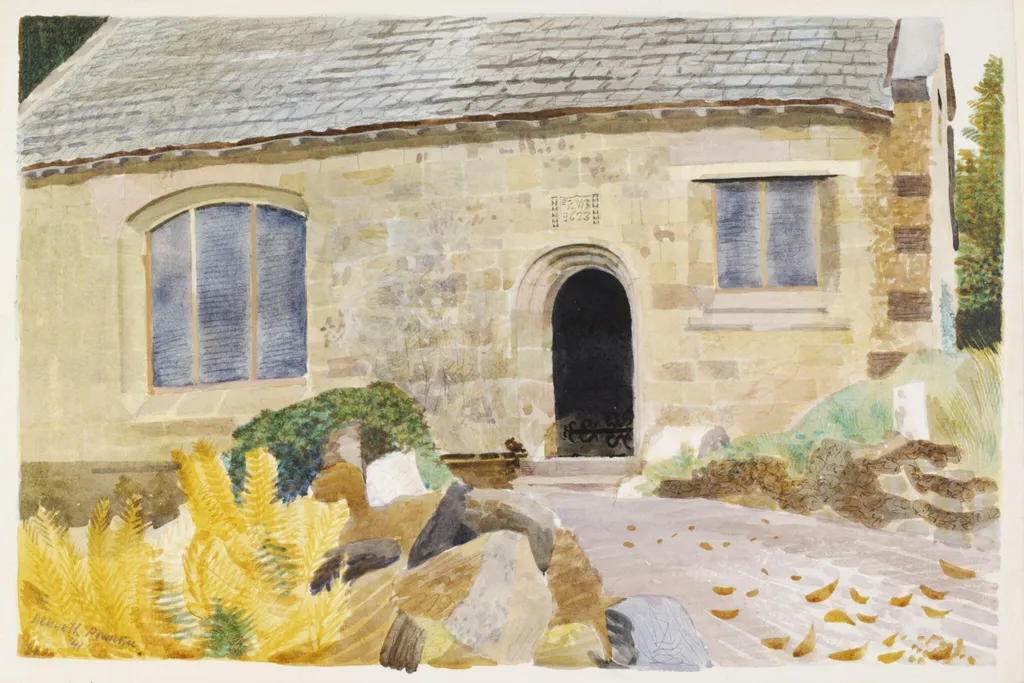
Gwydir Uchaf - the Chapel built by Sir Richard Wynne, 1673. Caernarvonshire is a watercolor work on paper by Kenneth Rowntree. It dates from 1941 and is held in the collection of the Victoria and Albert Museum. This watercolour, created in 1941, captures the exterior of Gwydir Uchaf Chapel in Caernarvonshire.
About this work
In front, a pile of fallen leaves and rocks covers the ground, while a small tree and some ferns grow near the corner.
This painting shows an old stone chapel with a dark arched doorway and two shuttered windows. The walls are rough and weathered, with patches of moss or lichen creeping up the sides. In front, a pile of fallen leaves and rocks covers the ground, while a small tree and some ferns grow near the corner.
The artist painted the date *1673* above the door—likely the chapel’s construction year. The scene feels quiet, like a forgotten corner of the countryside.
Look up Rowntree, Kenneth to see more of his watercolor work.
Overview
This watercolour, created in 1941, captures the exterior of Gwydir Uchaf Chapel in Caernarvonshire. It was produced as part of the Recording Britain project, a wartime effort to visually archive vulnerable rural architecture. The artist, likely Kenneth Rowntree, rendered the scene with quiet precision, emphasizing the chapel’s age and isolation. The work is one of hundreds compiled to safeguard visual records of heritage sites during a time of national uncertainty.
Subject & Meaning
The chapel, built in 1673, stands as a modest stone structure in a secluded landscape. Its arched doorway and shuttered windows suggest a history of quiet devotion, now abandoned. The surrounding vegetation—moss, ferns, fallen leaves—hints at time’s quiet reclamation. The inscription above the door anchors the building in its original era, contrasting with the solitude of its present state. The image evokes endurance and neglect, not as a monument, but as a quiet witness to change.
Technique & Style
Rendered in watercolour, the piece employs soft washes and delicate line work to convey texture and atmosphere. The weathered stone is suggested through layered greys and muted earth tones, while patches of moss are hinted with subtle green accents. The composition is restrained, with no human figures or dramatic lighting, focusing instead on the chapel’s quiet presence. The artist’s brushwork is precise yet unobtrusive, allowing the subject’s simplicity to dominate.
History & Provenance
The watercolour was made in 1941 under the Recording Britain initiative, funded by the Pilgrim Trust and directed by Sir Kenneth Clark. It was one of many topographical studies commissioned to document architectural heritage at risk from wartime destruction or modernization. The work entered the Victoria and Albert Museum’s collection as part of this project’s broader archive, preserving a moment in time when rural Britain’s past was being systematically recorded.
Context
During the early 1940s, Britain faced the threat of aerial bombardment and rapid urban change. The Recording Britain project responded by mobilizing artists to capture landscapes and buildings deemed culturally significant but vulnerable. Gwydir Uchaf Chapel, though unremarkable in scale, represented the quiet vernacular architecture of the Welsh countryside—structures that, if lost, would leave no trace beyond memory or image.
Legacy
The painting endures as part of a vital historical record, offering insight into Britain’s rural architecture during a pivotal era. It reflects the project’s commitment to documenting the ordinary as much as the grand. Today, it serves as both an artistic document and a historical marker, reminding viewers of the fragility of place and the value of visual preservation in times of upheaval.
Artist & collection
Artist
Kenneth Rowntree painted quiet British places in watercolour around 1940, from barn-stacked Essex fields to the carved oak pews of Caernarvonshire chapels.

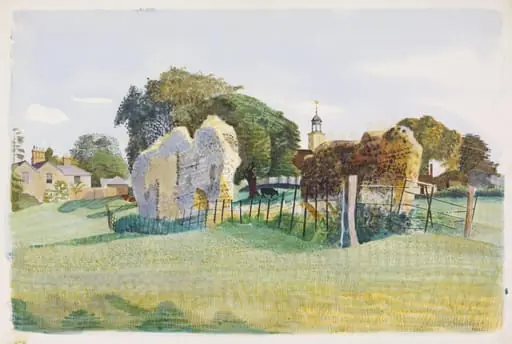 View of the Ruins of the Cloister, the Belfry of St. Mary's Church, and the Vicarage, Tilty
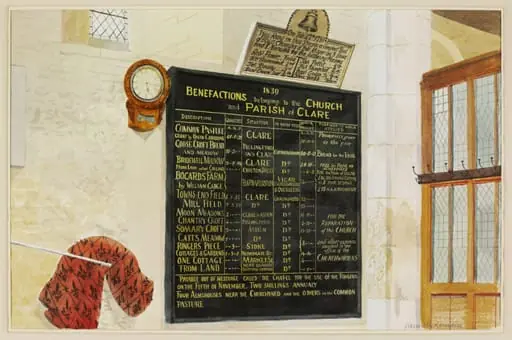 The Bellringer's Chamber, SS. Peter and Paul Church, Clare
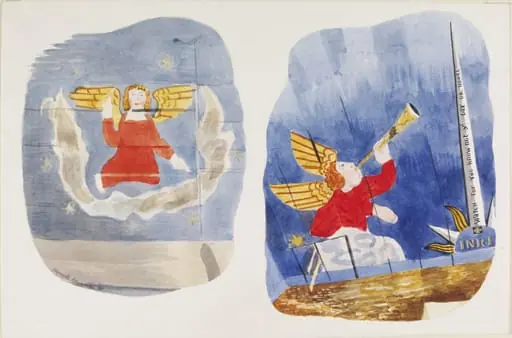 Detail of Ceiling at Gwydir Uchar Chapel, Llanrwst, Caernarvonshire
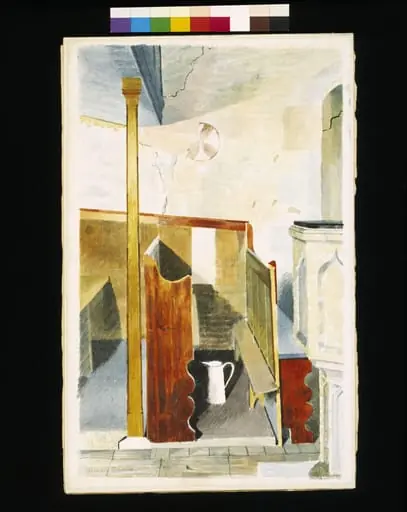 Interior of SS Peter and Paul, Little Saling, Essex
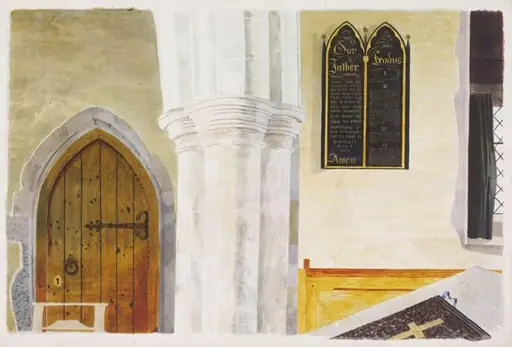 Interior of the Church of St. Mary the Virgin, Lindsell
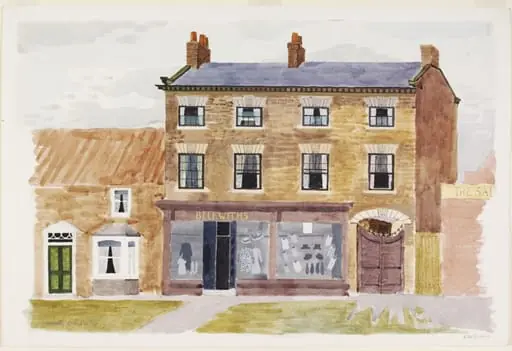 House at Easingwold
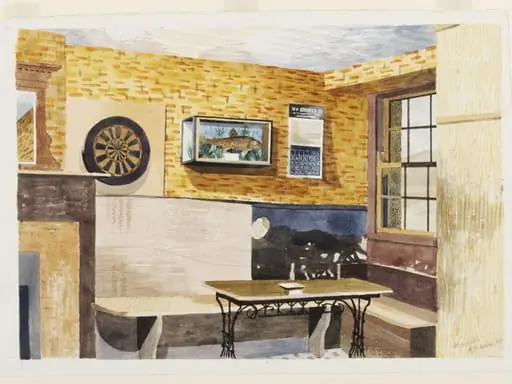 The Smoke Room, Ashopton Inn
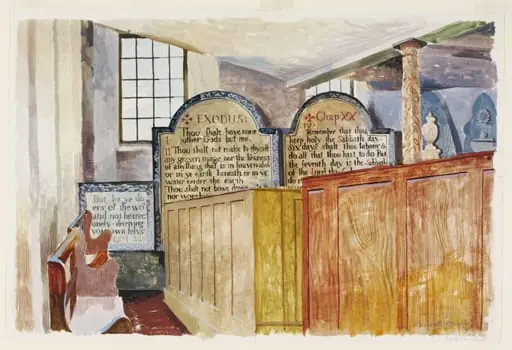 Pews in St Mary's Church, Whitby
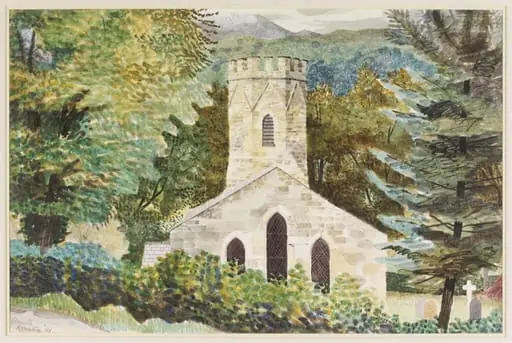 New Church, Llangelynnin, Conway Valley, Caernarvonshire
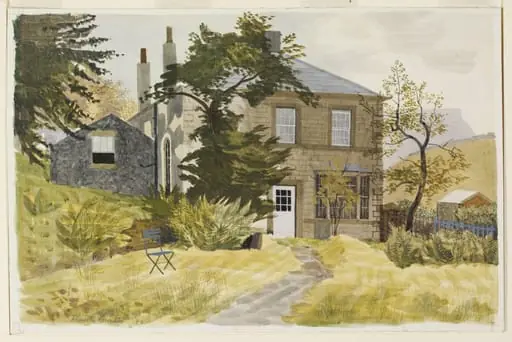 Ashopton Inn, showing Bamford Edge
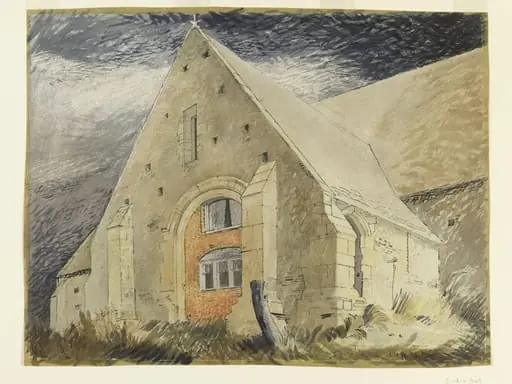 Tithe Barn, Great Coxwell, Berkshire
 West Front of the Priory Church, Dunstable, Bedfordshire
 The approach from the Valley, Rievaulx
 St. Mary's, Whitby - Exterior
 Hertford Castle
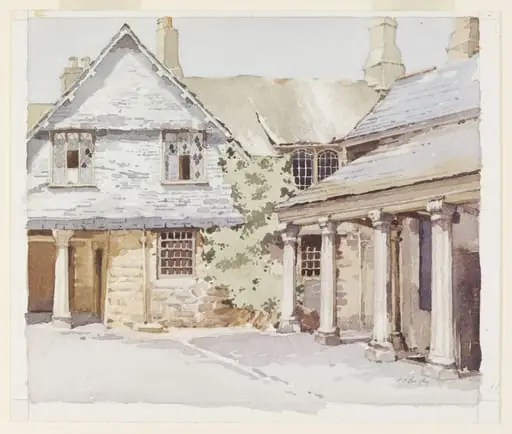 The Guildhall, Totnes
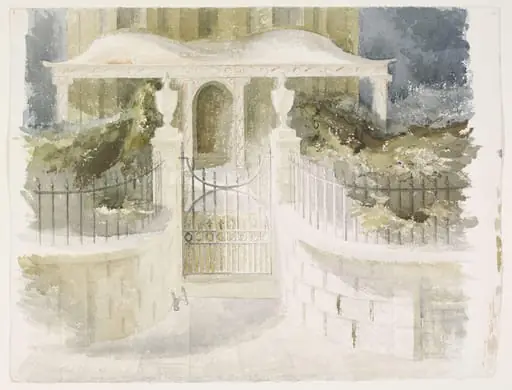 Gateway, Cedar Lodge, Lambridge, Bath
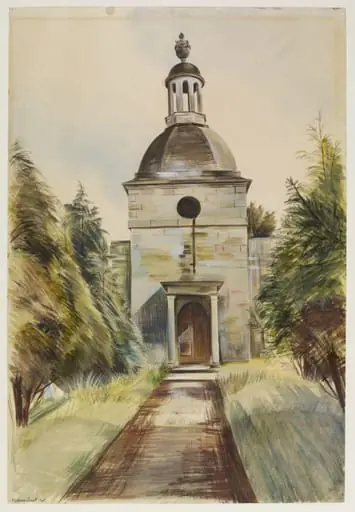 St. Mary's Church, Mappleton (or Mapleton)
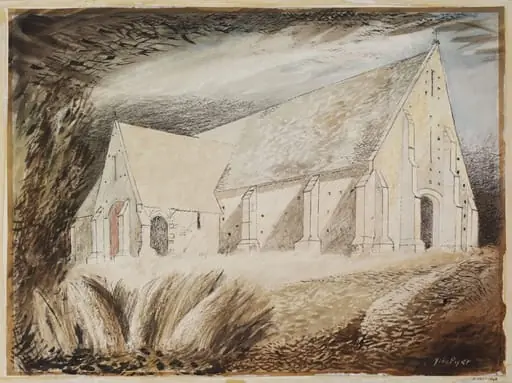 The Tithe Barn, Great Coxwell