Artwork
New Church, Llangelynnin, Conway Valley, Caernarvonshire
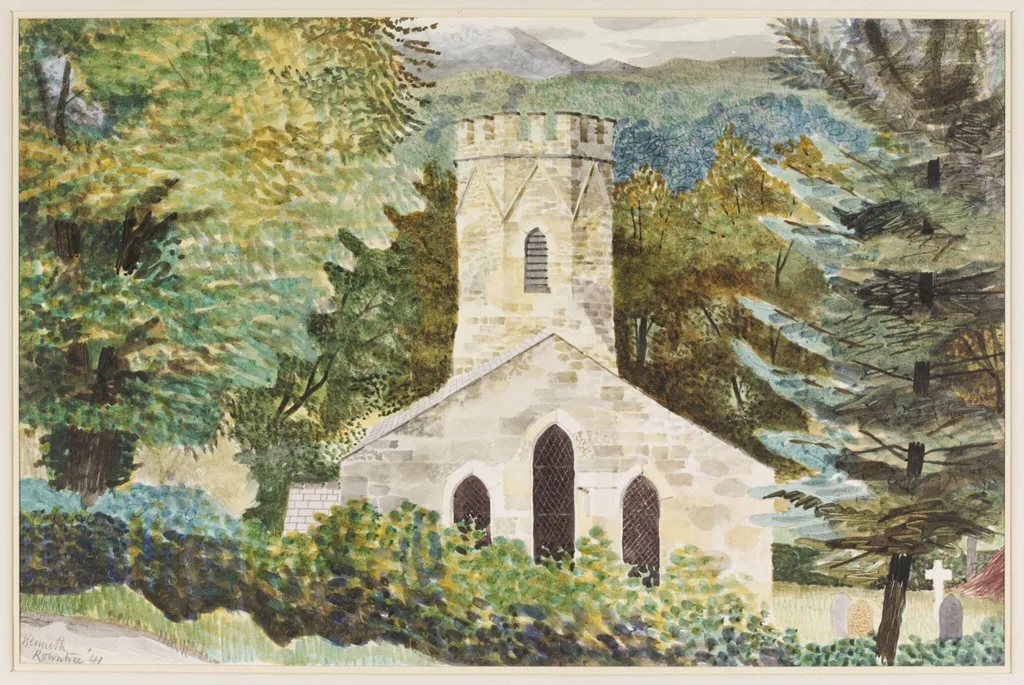
New Church, Llangelynnin, Conway Valley, Caernarvonshire is a watercolor work on paper by Rowntree. It dates from 1941 and is held in the collection of the Victoria and Albert Museum.
About this work
Overview
The project sought to preserve visual records of Britain’s heritage amid the uncertainties of conflict, emphasizing quiet resilience over grandeur.
Created in 1941, this watercolour by Rowntree captures New Church in Llangelynnin, a rural place of worship nestled in the Conway Valley. Part of the *Recording Britain* initiative, the work was produced during wartime to record landscapes and structures deemed culturally meaningful. The project sought to preserve visual records of Britain’s heritage amid the uncertainties of conflict, emphasizing quiet resilience over grandeur.
Subject & Meaning
The church, partially obscured by dense foliage, stands as a quiet sentinel in the valley. Its weathered stone tower and modest arched entrances suggest age and endurance. Surrounded by trees and distant hills, the scene conveys a sense of isolation and continuity. The composition avoids drama, instead inviting contemplation of a place unchanged by modernity, embodying a quiet devotion to place and memory.
Technique & Style
Rowntree employed loose, fluid brushwork to suggest light filtering through foliage and the texture of stone. Earth tones dominate—greens, browns, and grays—while subtle hints of blue and yellow in the background hills introduce depth without contrast. The watercolour medium allows for transparency and soft edges, reinforcing the scene’s stillness. The sketch-like quality conveys immediacy, as if the artist captured the moment in passing.
History & Provenance
The work was commissioned as part of the *Recording Britain* project, launched in 1939 by the Pilgrim Trust and the Victoria and Albert Museum. Artists were sent across the country to document vernacular architecture and landscapes at risk from war or neglect. This watercolour entered the V&A’s collection through the initiative and remains part of its permanent holdings, preserved as a record of Britain’s rural heritage during wartime.
Context
During the Second World War, Britain faced widespread disruption, and cultural preservation became a form of quiet resistance. The *Recording Britain* project responded to fears of loss—of buildings, landscapes, and communal memory. Rowntree’s depiction of a remote church reflects a broader effort to affirm continuity, grounding national identity in the enduring presence of ordinary, unassuming places.
Legacy
The watercolour endures as a quiet testament to a wartime effort to safeguard visual heritage. It contributes to a larger archive that now serves historians and the public as a record of Britain’s rural character in the early 20th century. Its unassuming aesthetic and documentary purpose continue to inform how cultural memory is preserved through art, beyond the realm of celebrated monuments.
Artist & collection

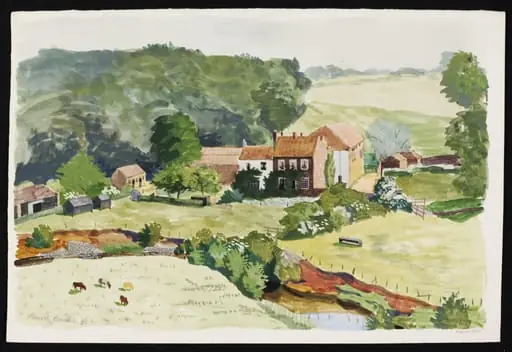
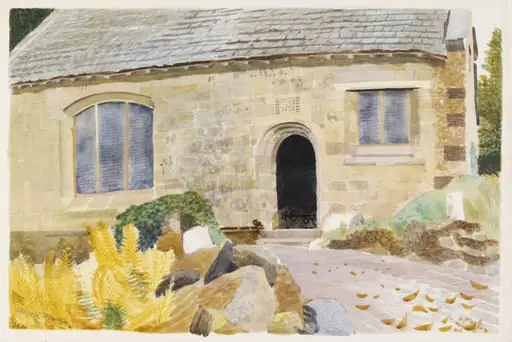 Gwydir Uchaf - the Chapel built by Sir Richard Wynne, 1673. Caernarvonshire
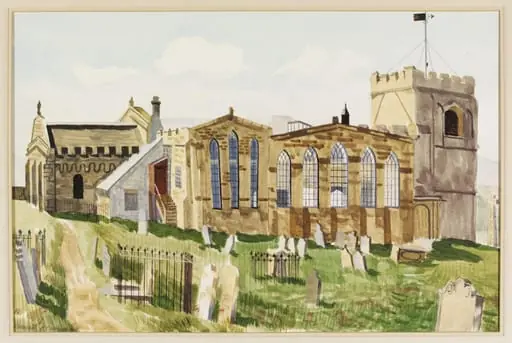 St. Mary's, Whitby - Exterior
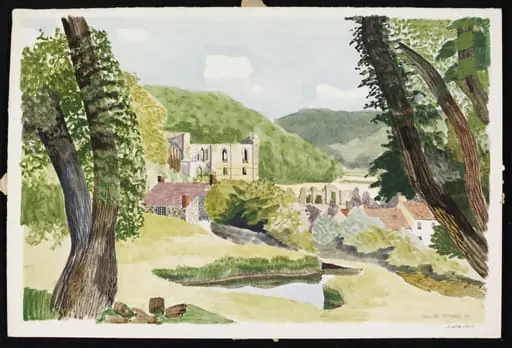 Distant view of Rievaulx Abbey
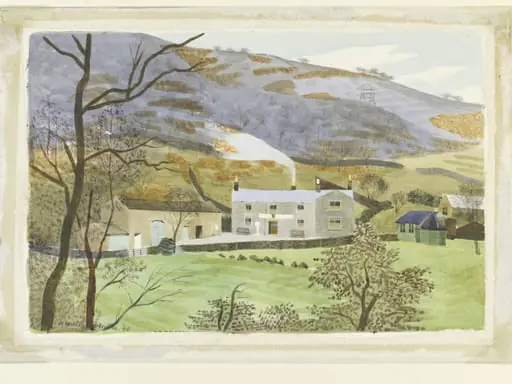 The Ladybower Inn, Ashopton
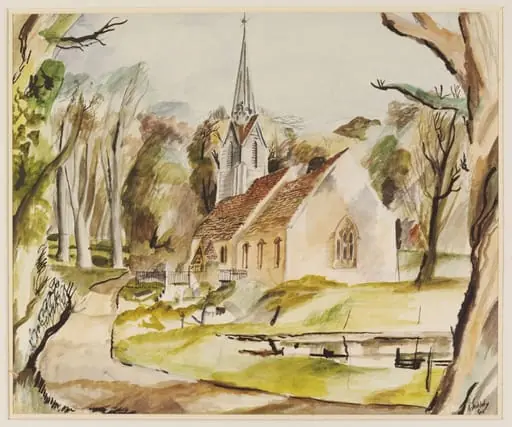 Middleton Church
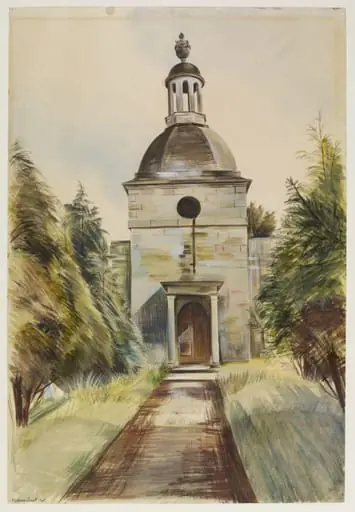 St. Mary's Church, Mappleton (or Mapleton)
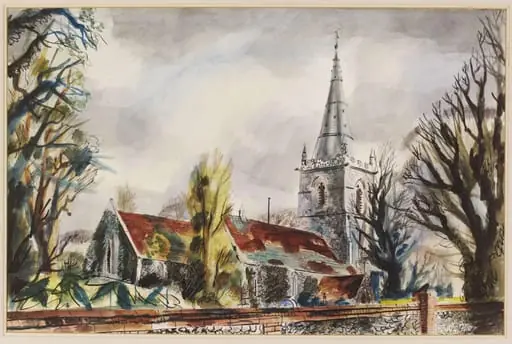 St. Edmund's Church, Tendring, Nr. Harwich
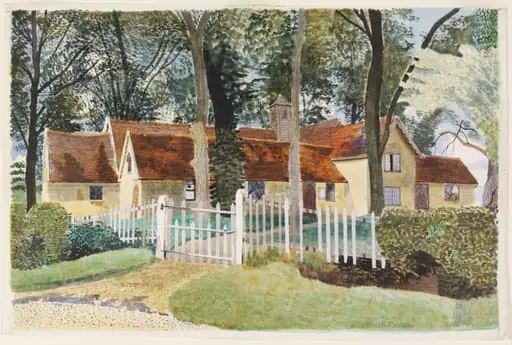 Exterior, Black Chapel North End, Nr. Dunmow
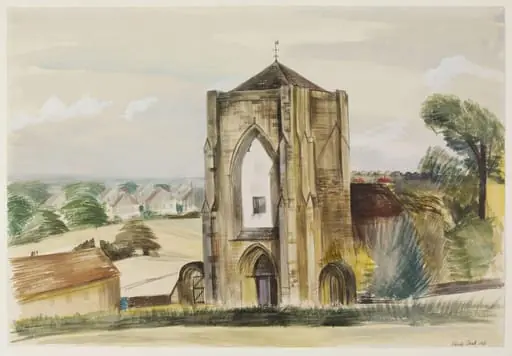 Beauchief Abbey
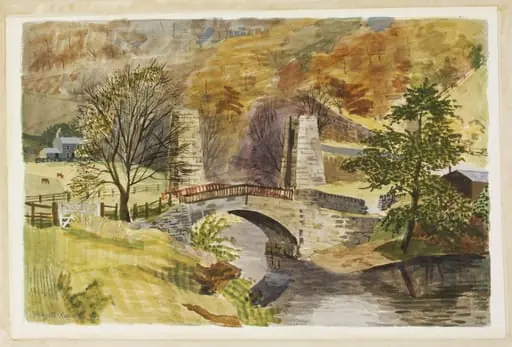 Bridge to Cox's Farm, Ashopton
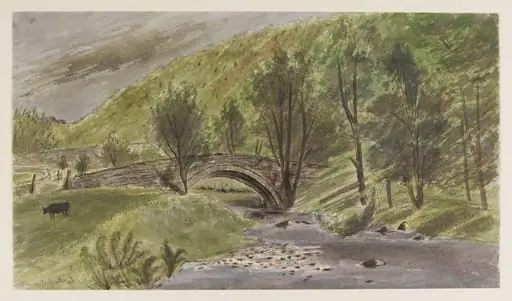 Dol-y-moch Bridge in the Maentwrog Valley, Merionethshire