Artwork
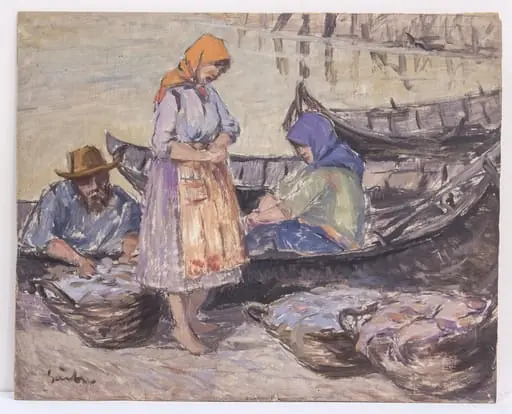
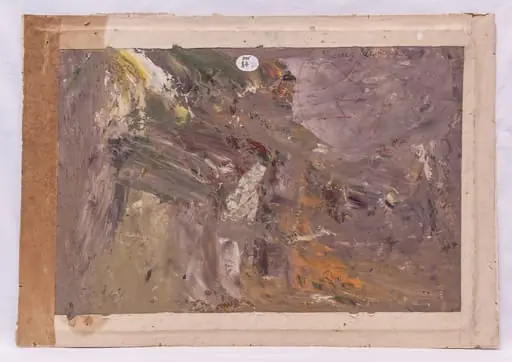
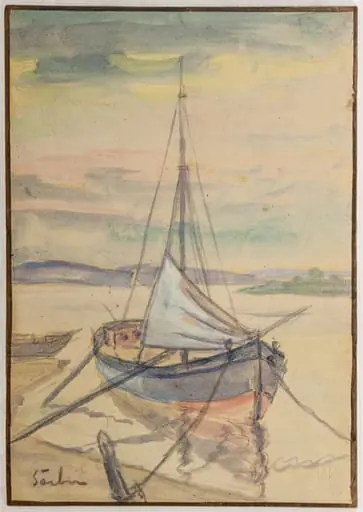
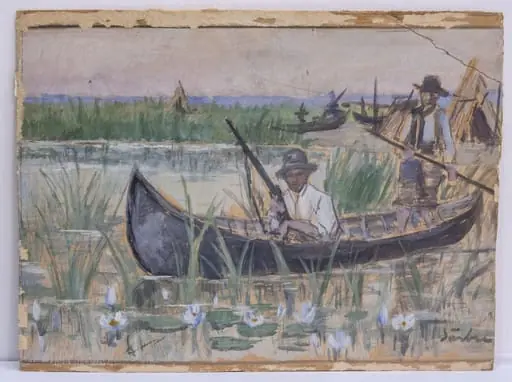
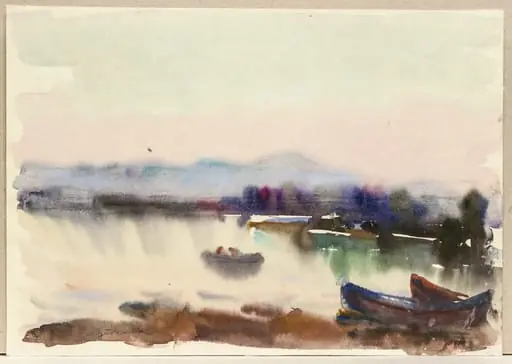
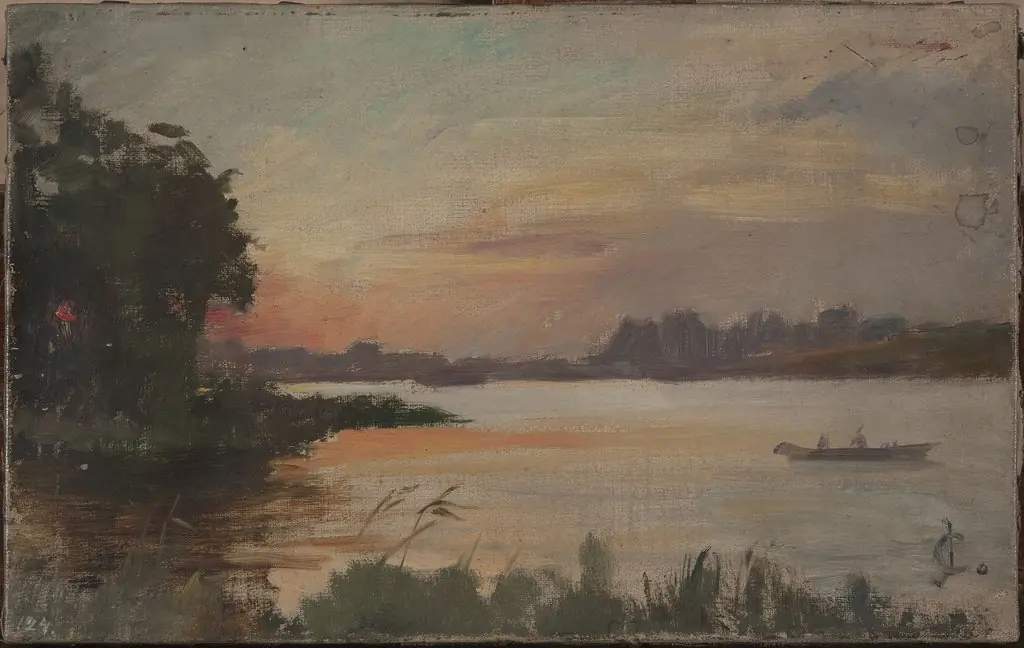
Barcă cu pescari
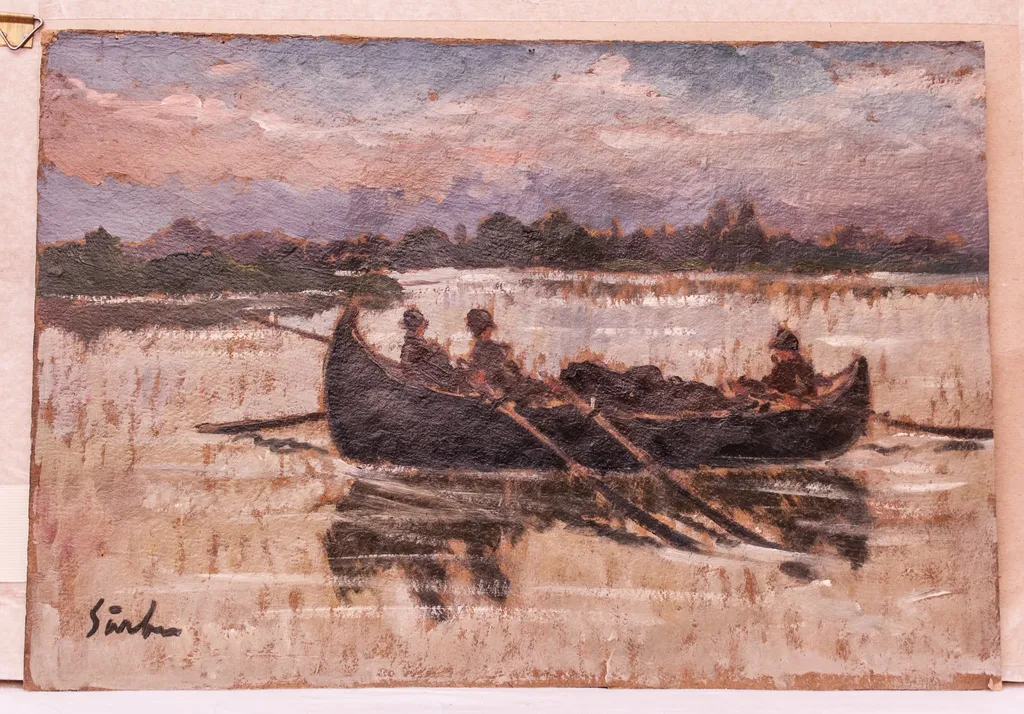
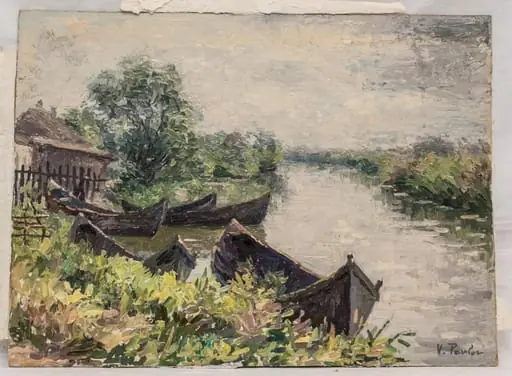
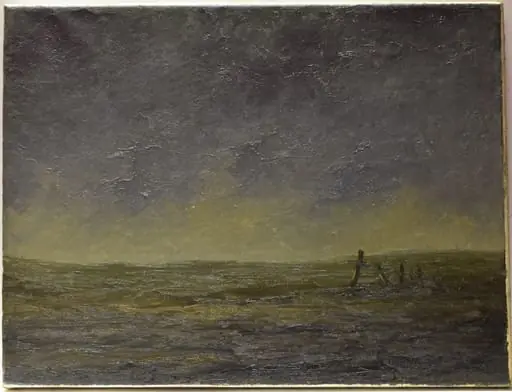
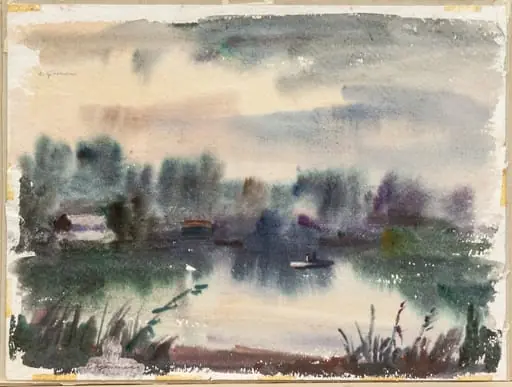
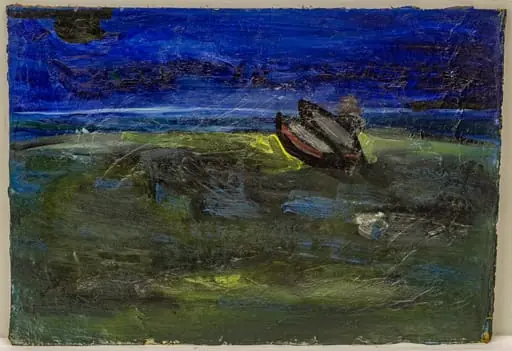
Barcă cu pescari is a print by Gheorghe Sârbu. It dates from 1929 and is held in the collection of the Gavrila Simion Eco-Museum Research Institute Tulcea.
About this work
Overview
Barcă cu pescari, dated around 1929, is a painting by Romanian artist Gheorghe Sârbu. It depicts a modest fishing boat on calm water, populated by figures in traditional headwear. The work is part of the collection at the Museum of Ethnography in Bucharest, where it is preserved as an example of early 20th-century Romanian rural life rendered in quiet realism.
Subject & Meaning
The scene portrays fishermen in a moment of stillness, suggesting the rhythm of daily labor rather than action. The figures, indistinct yet clearly present, are integrated into the landscape, emphasizing harmony with nature. The absence of dramatic elements underscores a quiet dignity in ordinary life, reflecting a cultural focus on endurance and simplicity in rural communities.
Technique & Style
Sârbu employs a restrained palette of browns, grays, and soft blues, avoiding vivid contrasts to maintain a subdued tone. Brushwork is precise but not overly detailed, capturing texture in the boat’s wood and the water’s subtle reflections. The composition is balanced, with the boat centered and the horizon low, drawing attention to the sky and the stillness of the scene.
History & Provenance
Created in the late 1920s, the painting entered the Museum of Ethnography’s collection shortly after its completion. Its preservation there suggests early recognition of its value as a document of folk life. No significant changes in ownership are recorded, and it has remained in institutional care since its acquisition, likely as part of a broader effort to archive regional visual culture.
Context
In interwar Romania, artists increasingly turned to rural subjects as national identity was being redefined. Sârbu’s work aligns with this trend, portraying everyday scenes without romanticization. The painting reflects a broader movement to capture authentic, unidealized moments of peasant life, distinct from urban or academic traditions of the time.
Legacy
Barcă cu pescari remains a representative example of Romanian realist painting from the interwar period. While not widely exhibited beyond institutional settings, it contributes to scholarly understanding of how regional artists engaged with vernacular life. Its quiet presence in the Museum of Ethnography continues to support research into rural visual culture of early 20th-century Romania.
Artist & collection
Museum
Gavrila Simion Eco-Museum Research Institute Tulcea
Continue through works from the same source collection.