Artwork
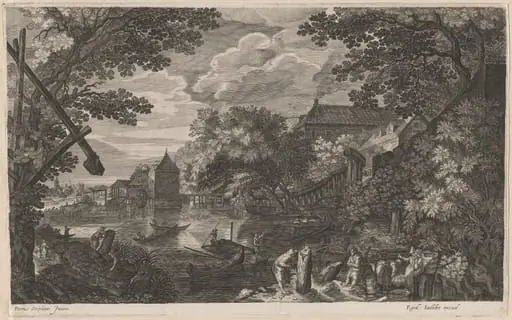
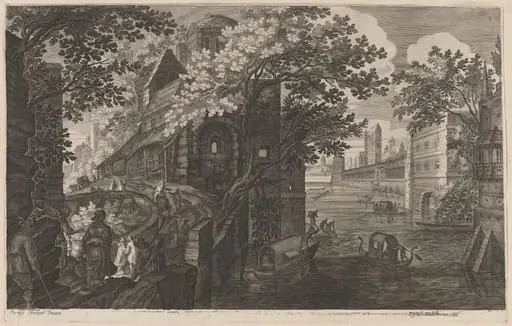
Fishermen by an Island Watermill
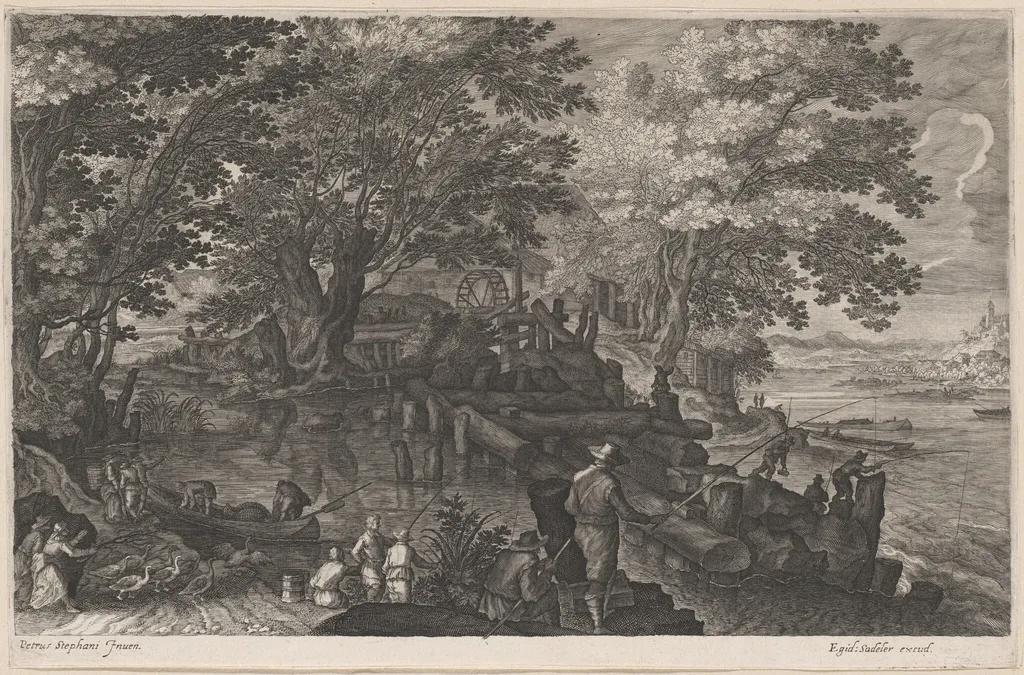
Fishermen by an Island Watermill is an ink print by the Baroque artist Aegidius Sadeler II. It dates from 1612 and is held in the collection of the National Gallery of Art.
About this work
Overview
Fishermen by an Island Watermill is a 1612 engraving on laid paper by Aegidius Sadeler II, a Flemish engraver associated with the Prague court of Rudolf II.
Subject & Meaning
The print depicts a serene riverside scene with fishermen, a watermill on a small island, and surrounding landscape elements, capturing daily life in a natural setting.
Technique & Style
Sadeler employed cross-hatching, characterized by fine lines building up shadows and textures, to achieve depth and detail in the engraving, highlighting his technical skill.
History & Provenance
Created during Sadeler's tenure under Rudolf II and his successors, the work exemplifies his role in the Prague court, though specific provenance details are not provided.
Context
As part of Sadeler's oeuvre of reproductive engravings, Fishermen by an Island Watermill reflects the early 17th-century interest in detailed landscapes and everyday life scenes within the European courtly context.
Legacy
While the broader impact of Fishermen by an Island Watermill on subsequent art movements is not explicitly outlined, it contributes to the historical record of Sadeler's contributions to the engraving tradition of his time.
Artist & collection

Artist
Aegidius Sadeler or Aegidius Sadeler II (1570–1629) was a Flemish engraver who was principally active at the Prague court of Rudolf II, Holy Roman Emperor and his successors.

 Riverscape with Fishermen by a Fortified Town
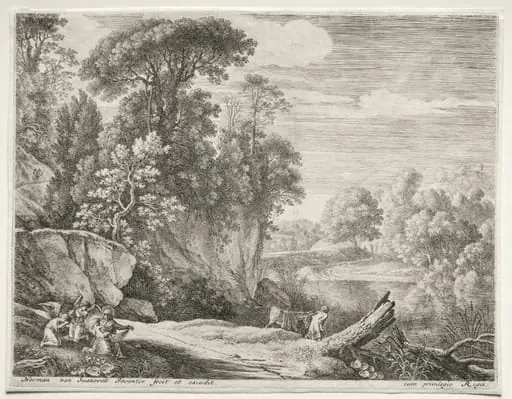 The Donkey Led to the River
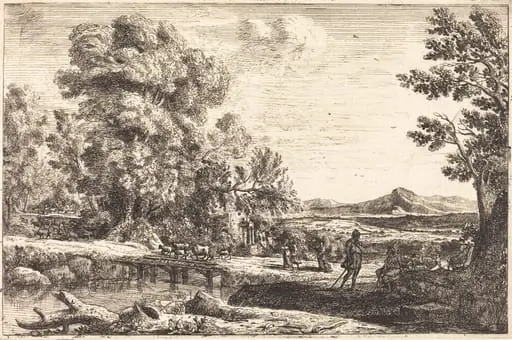 Rebecca and Eliezer (Le pont de bois)
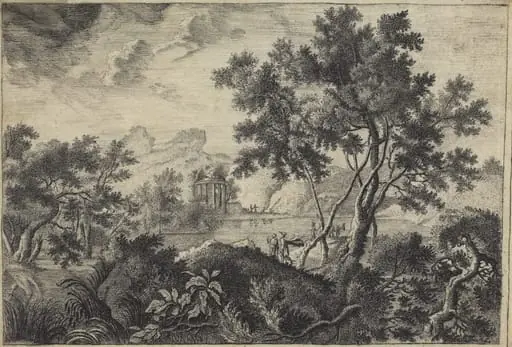 Classical Landscape with a Tempietto
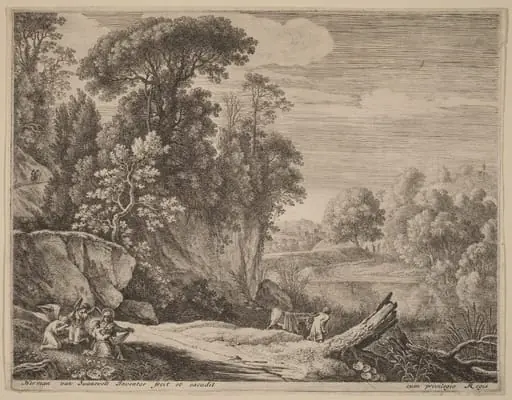 The Donkey Led to the River
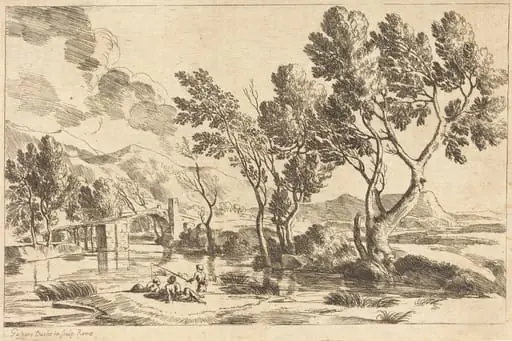 Roman Landscape
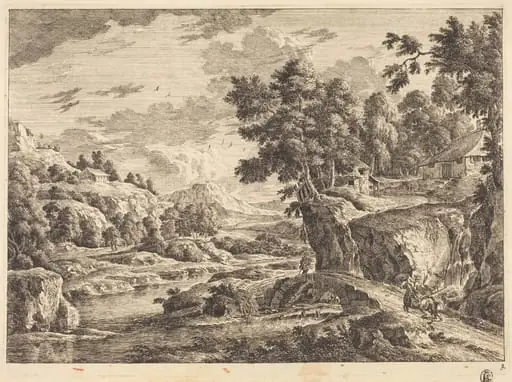 Landscape with a Bridge and Three Farm Buildings
 Rock in the Middle of a River
 Travelers Resting in a Forest near a Hut
 Woodland Scene
 The Fishermen
 Gondolas on a River by a Palace