Artwork
Ballet Champêtre (Country Ballet)
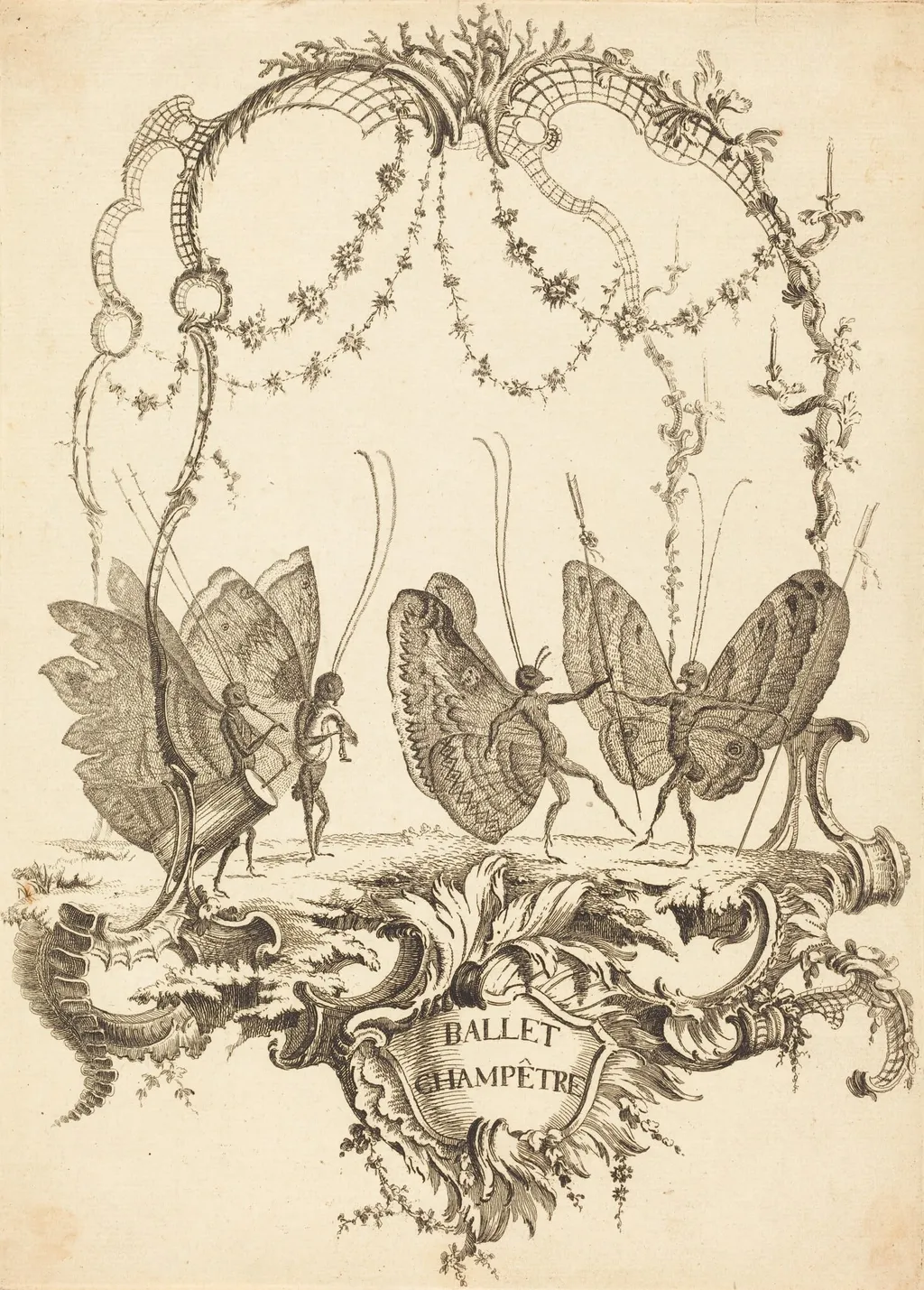
Ballet Champêtre (Country Ballet) is an ink print by the Romanticist artist Charles Germain de Saint-Aubin. It dates from 1756 and is held in the collection of the National Gallery of Art.
About this work
Overview
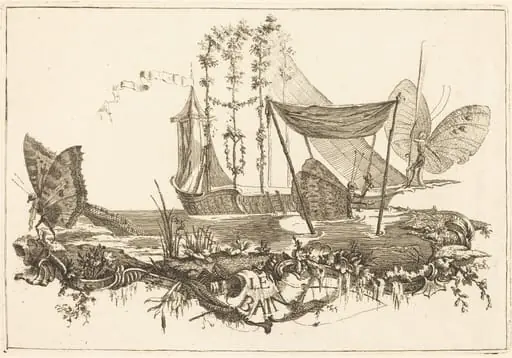
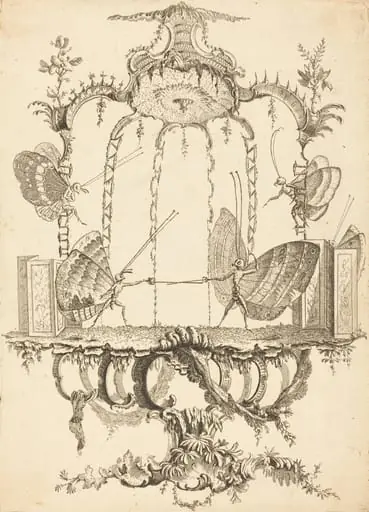
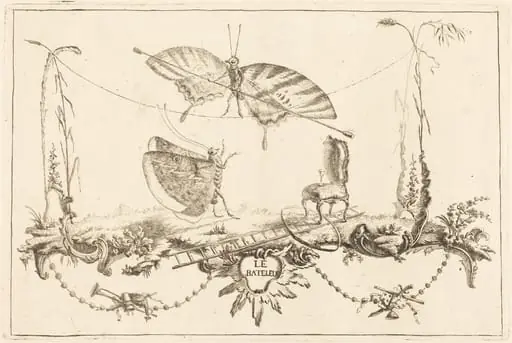
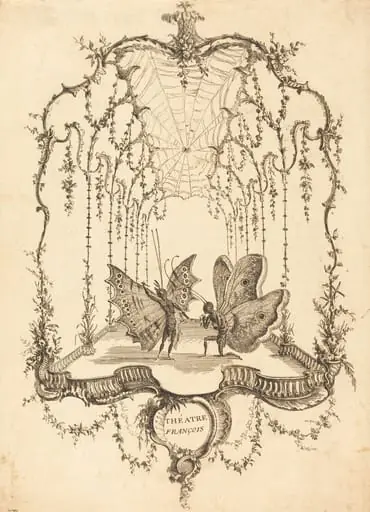
Ballet Champêtre, created in 1756 by Charles Germain de Saint-Aubin, is an etching on laid paper depicting a whimsical forest scene. Three slender figures, adorned with large butterfly wings and wielding slender staffs, move in a loose dance among dense vegetation. The composition is densely packed with intricate natural elements, suggesting a realm where play and fantasy replace labor.
Subject & Meaning
Their wings and wands evoke mythological or fairy-tale associations, transforming the rural setting into a dreamlike space.
The figures appear neither as peasants nor as courtiers, but as ethereal beings engaged in unrestrained movement. Their wings and wands evoke mythological or fairy-tale associations, transforming the rural setting into a dreamlike space. The absence of work-related tools or signs of toil implies a world governed by imagination rather than obligation, reflecting 18th-century fascination with the pastoral ideal.
Technique & Style
Saint-Aubin employed fine, controlled etching lines to render every leaf, vine, and petal with meticulous detail. The paper’s laid texture subtly enhances the organic feel of the scene. The dense, border-like framing of foliage creates a sense of enclosure, drawing attention inward to the dancers. The precision of the lines reveals the artist’s training in decorative arts and his sensitivity to surface texture.
History & Provenance
Created during Saint-Aubin’s active years as a draftsman for the French court, the print likely circulated among collectors of decorative prints. It was not part of a major published series but may have been produced as a standalone work or for private dissemination. Its survival in good condition suggests it was carefully preserved by early admirers of his delicate draftsmanship.
Context
In mid-18th-century France, interest in pastoral themes and fanciful ornamentation flourished in art and design. Saint-Aubin’s work aligns with the Rococo sensibility, where nature was idealized and infused with playful fantasy. This print reflects a broader cultural shift toward intimate, decorative imagery, distinct from grand historical or religious subjects.
Legacy
Though not widely reproduced, Ballet Champêtre remains a notable example of Saint-Aubin’s contribution to French graphic arts. It illustrates how etching could convey narrative and whimsy with subtlety, influencing later illustrators drawn to botanical detail and magical realism. The work endures as a quiet testament to the artistic exploration of fantasy within everyday natural forms.
Artist & collection


!["Taking the Air" in Hyde Park [verso], by George Cruikshank](https://artifactworldgallery.com/img/george-cruikshank--taking-the-air-in-hyde-park-verso--fca533d3cbd8a4b7-w320.webp)