Artwork
Théâtre Italien (Italian Theater)
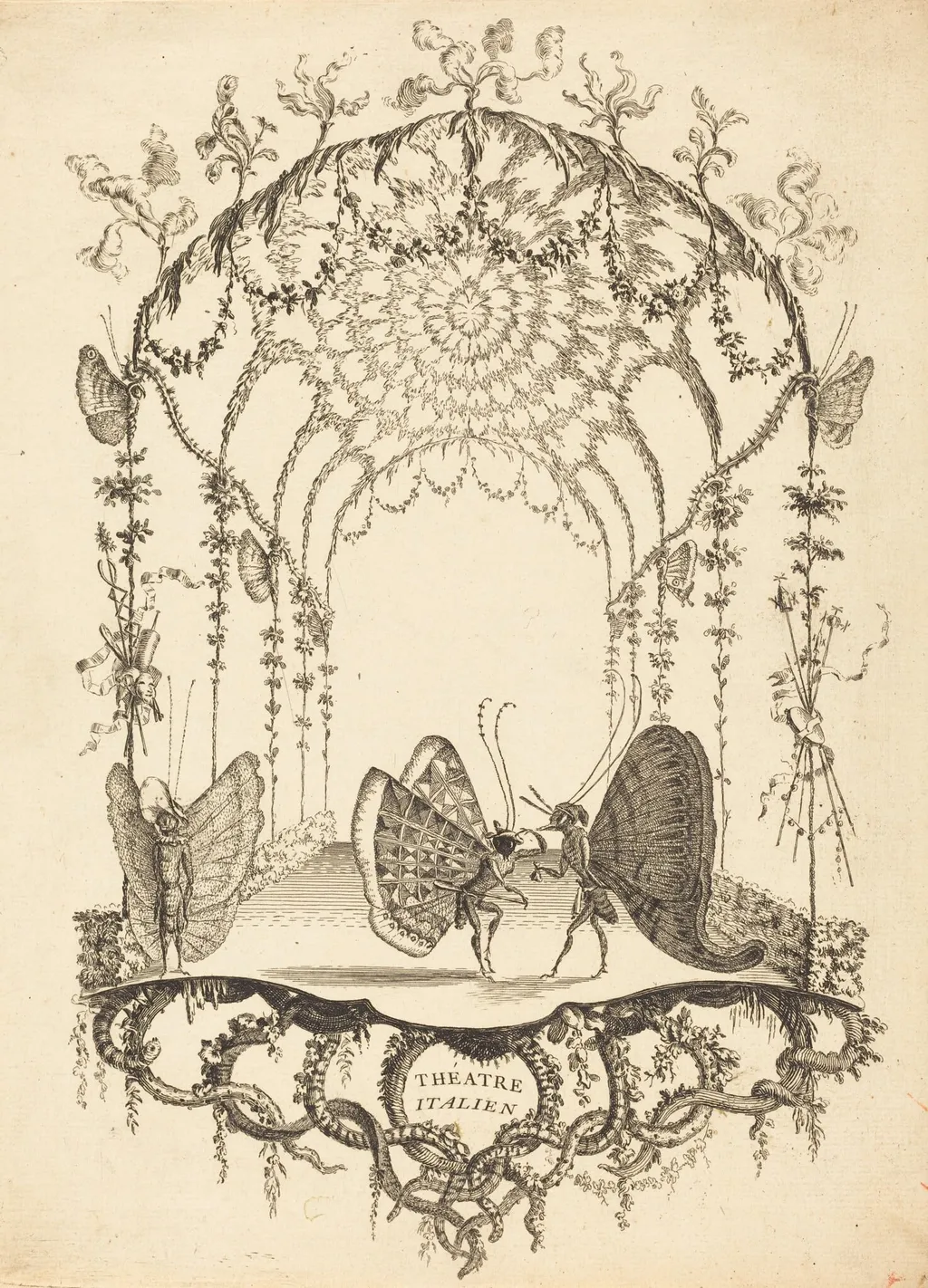
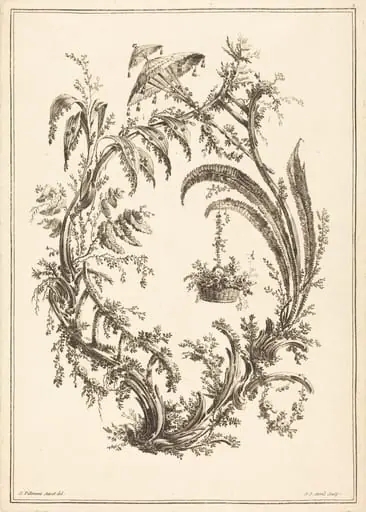
Théâtre Italien (Italian Theater) is an ink print by the Romanticist artist Charles Germain de Saint-Aubin. It dates from 1756 and is held in the collection of the National Gallery of Art. Charles Germain de Saint‑Aubin’s 1756 etching, titled Théâtre Italien, presents a theatrical interior rendered on laid paper.
About this work
Overview
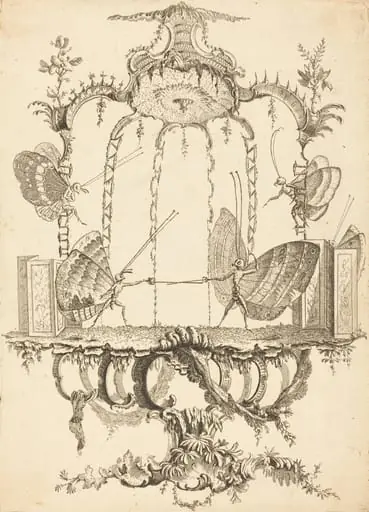
Charles Germain de Saint‑Aubin’s 1756 etching, titled Théâtre Italien, presents a theatrical interior rendered on laid paper. The composition centers on a broad archway framed by ornamental foliage, through which a stage scene unfolds. Light‑toned background washes give the image a subdued atmosphere, while the artist’s hand is evident in the fine linear work characteristic of the medium.
Subject & Meaning
The inclusion of these fanciful creatures suggests an allegorical or theatrical motif, perhaps alluding to transformation or the fleeting nature of performance.
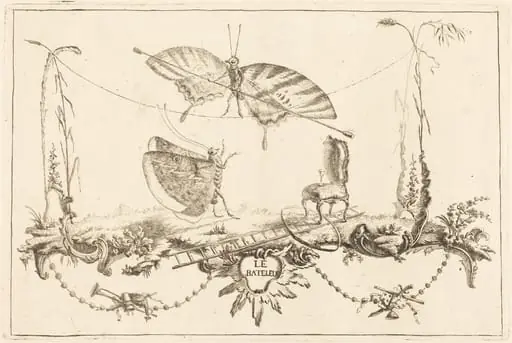
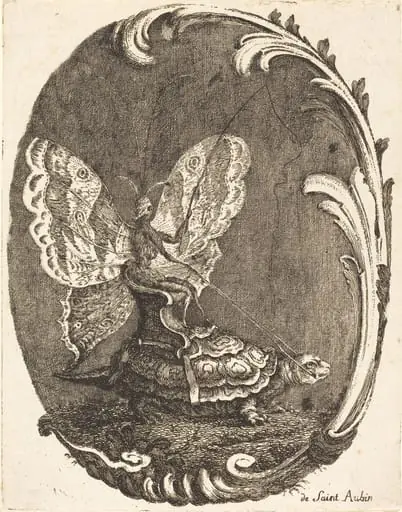
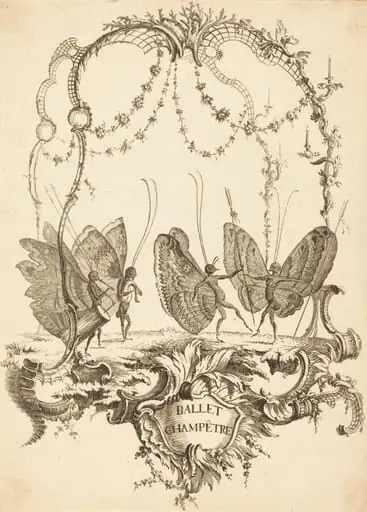
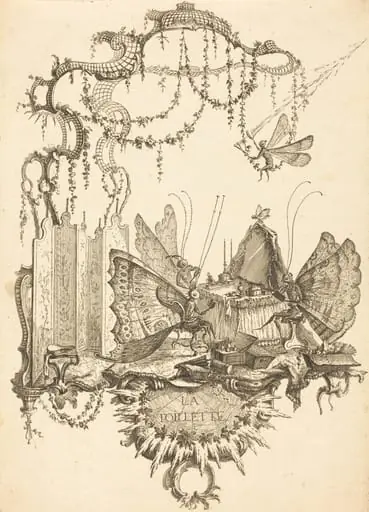
The print depicts a stage set reminiscent of an Italian opera house, with a decorative arch supporting a canopy of flowers and vines. At the focal point stands a winged, butterfly‑like figure, accompanied by a smaller counterpart perched on the arch’s left side. The inclusion of these fanciful creatures suggests an allegorical or theatrical motif, perhaps alluding to transformation or the fleeting nature of performance.
Technique & Style
Executed as an etching, Saint‑Aubin employed acid‑etched lines on a copper plate to achieve delicate detailing and tonal variation. The use of laid paper, with its subtle ribbed texture, enhances the softness of the background washes. The intricate vegetal motifs and graceful figures reflect the ornamental sensibilities of mid‑eighteenth‑century French printmaking, emphasizing precision over dramatic contrast.
History & Provenance
Created in 1756, Théâtre Italien is documented as part of Saint‑Aubin’s output during his active period as a draftsman and printmaker for the French court. While specific ownership records are scarce, the work has appeared in several 19th‑century catalogues of French prints, indicating its circulation among collectors of decorative and theatrical imagery.
Artist & collection


![Archetypa studiaque patris Georgii Hoefnagelii [Part 2, Plate 11], by Jacob Hoefnagel](https://artifactworldgallery.com/img/jacob-hoefnagel--archetypa-studiaque-patris-georgii-hoefnagelii-part-2-plate--8358636d735d242a-w320.webp)