Artwork
Théâtre Français (French Theater)
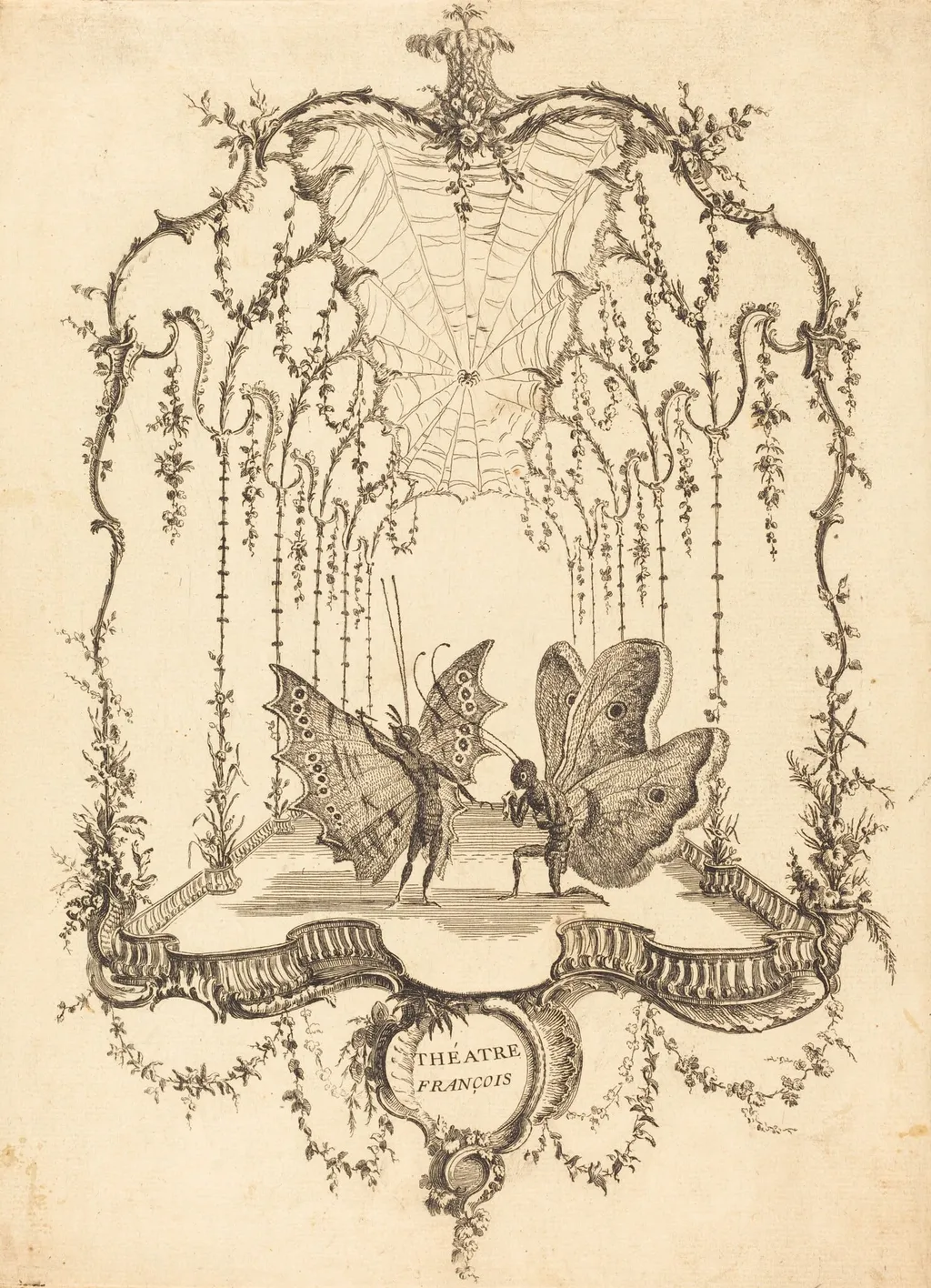
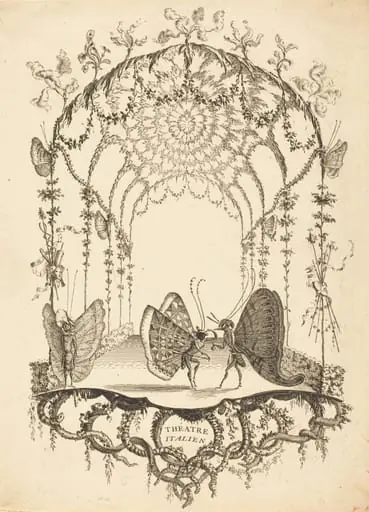
Théâtre Français (French Theater) is an ink print by the Romanticist artist Charles Germain de Saint-Aubin. It dates from 1756 and is held in the collection of the National Gallery of Art.
About this work
Overview
The composition blends meticulous detail with imaginative fantasy, reflecting the artist’s engagement with decorative arts and theatrical culture.
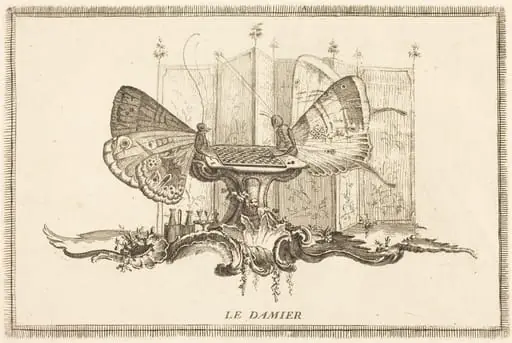
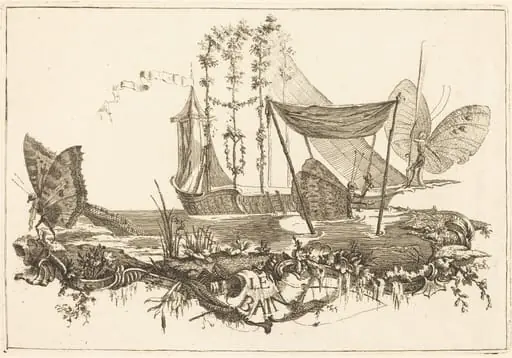
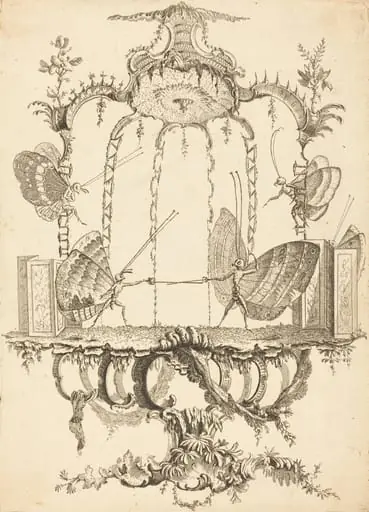
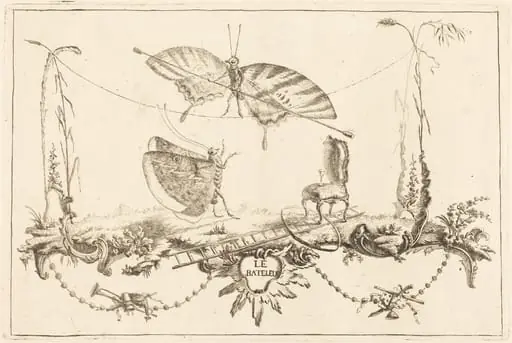
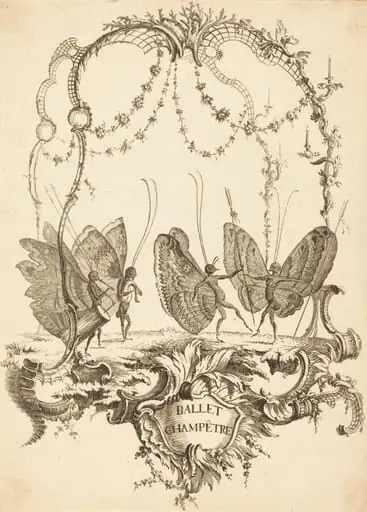
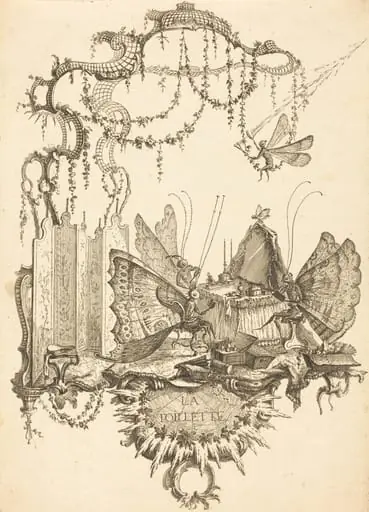
Created in 1756, Théâtre Français is an etching by Charles Germain de Saint-Aubin, executed on laid paper. The work presents a miniature theatrical scene populated by anthropomorphized butterflies, one holding a violin and the other playing it, with a small figure positioned between them. Ornate scrollwork and floral motifs frame the stage, beneath which the words 'Théâtre Français' appear. The composition blends meticulous detail with imaginative fantasy, reflecting the artist’s engagement with decorative arts and theatrical culture.
Subject & Meaning
The butterflies, dressed as performers, transform the stage into a whimsical allegory of art and performance. Their delicate forms contrast with the grandeur implied by the theater’s title, suggesting a satirical or playful commentary on the formality of French theatrical traditions. The inclusion of a violinist and audience figure evokes the ritual of performance, while the scale inversion—tiny creatures in a grand setting—invites reflection on the fragility and artifice of cultural institutions.
Technique & Style
Saint-Aubin employed etching to achieve fine, controlled lines characteristic of 18th-century decorative printmaking. The intricate scrollwork, floral borders, and delicate textures of the butterflies’ wings demonstrate mastery of the medium’s capacity for detail. The use of laid paper, with its subtle watermark texture, enhances the tactile quality of the image. The composition is tightly contained, emphasizing ornamental precision over spatial depth, aligning with the Rococo aesthetic of elegance and ornament.
History & Provenance
The print was produced during Saint-Aubin’s active years as a draftsman and designer for the French court, where he contributed to decorative arts and theatrical ephemera. While no early ownership records are widely documented, the work aligns with the period’s fascination with miniature theatrical scenes and cabinet prints. It likely circulated among collectors of prints and connoisseurs of French decorative culture, valued for its craftsmanship rather than its narrative.
Context
In mid-18th-century France, theatrical culture was central to aristocratic life, and visual representations of performance were common in decorative arts. Saint-Aubin’s etching reflects this milieu, blending real-world references to the Théâtre Français with fantastical elements. The work resonates with contemporaneous trends in Rococo illustration, where nature and artifice merged in playful, intricate compositions, often intended for private contemplation rather than public display.
Legacy
Théâtre Français endures as an example of how printmaking could convey both technical virtuosity and imaginative wit. Though not widely reproduced or exhibited today, it remains a significant artifact of French Rococo graphic art, illustrating the intersection of theater, natural forms, and decorative design. Its quiet charm continues to inform scholarly interest in the role of fantasy within Enlightenment-era visual culture.
Artist & collection