Artwork
Cornelia Tappen Clinton
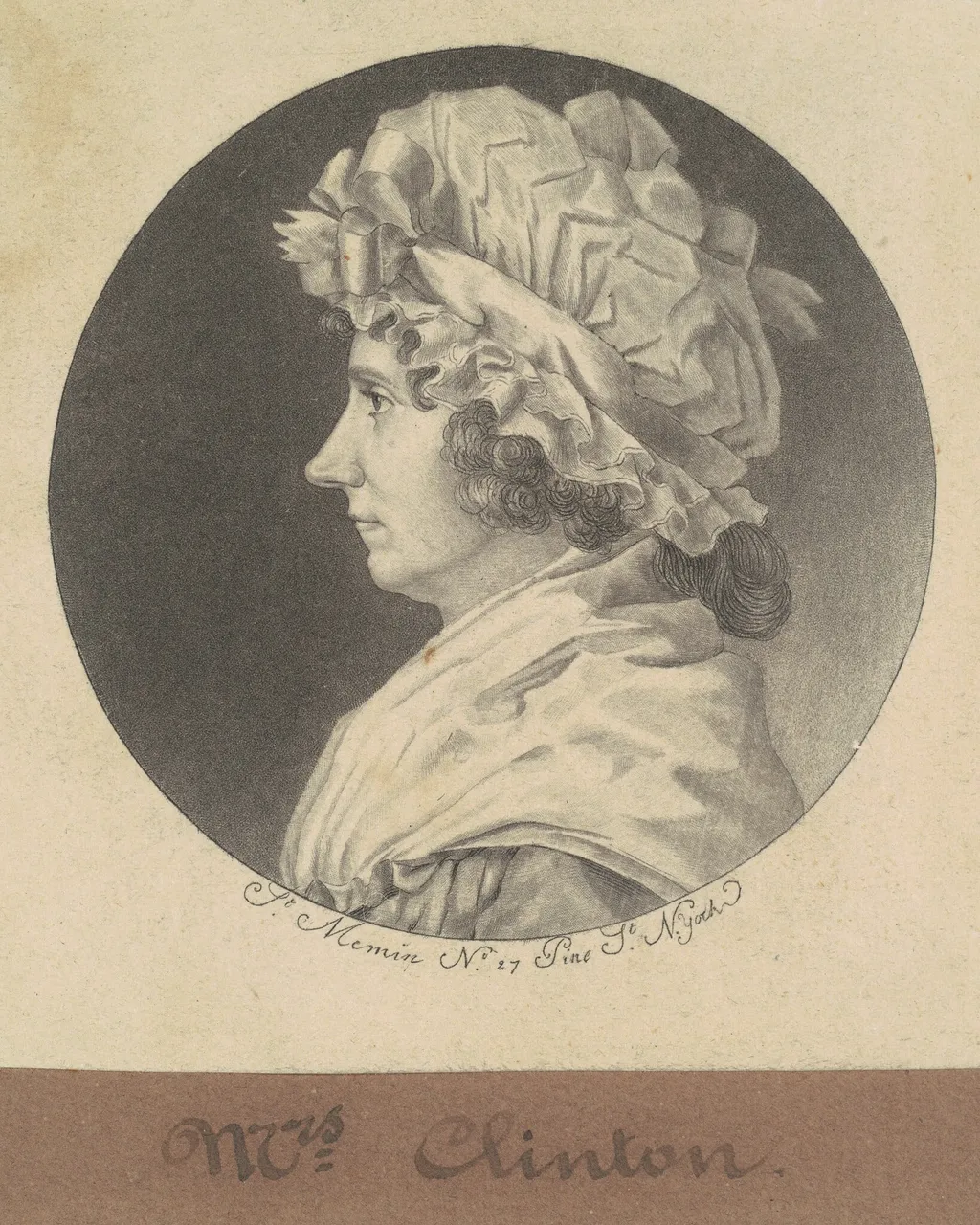
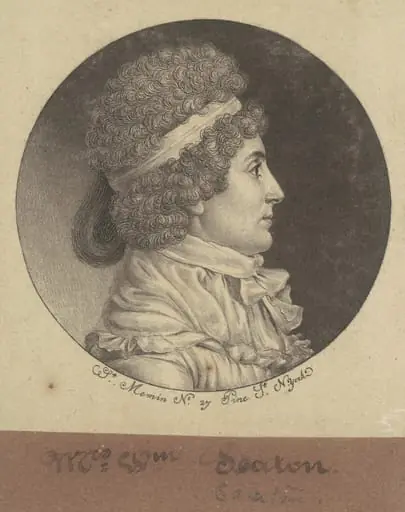
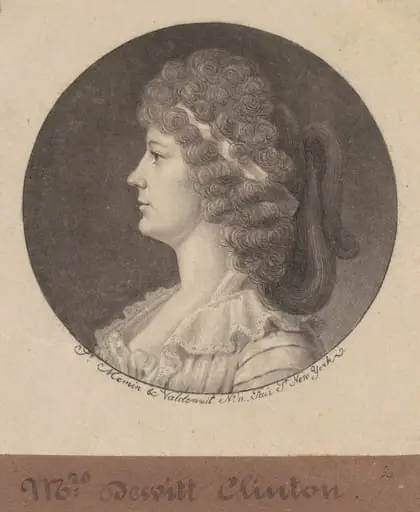
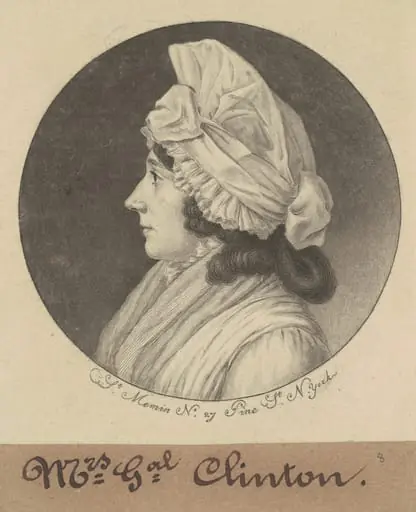
Cornelia Tappen Clinton is an ink print by the Romanticist artist Charles Balthazar Julien Févret de Saint-Mémin. It dates from 1797 and is held in the collection of the National Gallery of Art.
About this work
Overview
Created in 1797, this small mezzotint and engraving presents a profile view of Cornelia Tappen Clinton. Rendered in black on wove paper that has been mounted to a brown-wove backing, the image measures just over five and a half centimeters on each side, emphasizing its intimate, miniature character within the artist’s broader portrait series.
Subject & Meaning
The work captures Clinton’s right side, her hair curled beneath a modest cap, and her gaze directed forward with a composed demeanor. The careful rendering of facial features and the subtle suggestion of clothing folds convey a sense of personal dignity and the genteel poise associated with women of her social standing in the late eighteenth century.
Technique & Style
Executed through a combination of mezzotint and engraving, the print employs fine line work and tonal gradations to achieve depth within a monochrome palette. The artist’s meticulous attention to texture—evident in the hair, cap, and fabric—demonstrates the capabilities of the mezzotint process for rendering delicate surfaces on a compact format.
History & Provenance
Attributed to Charles B. J. Févret de Saint‑Mémin, the portrait forms part of his extensive Saint‑Mémin Collection of Portraits, a series of individualized likenesses produced for a range of patrons. The piece has remained within this collection, reflecting the artist’s systematic approach to portraiture and the continued scholarly interest in his printed works.
Artist & collection

Artist
Charles Balthazar Julien Févret de Saint-Mémin
Charles Balthazar Julien Févret de Saint-Mémin (French pronunciation: ; 1770–1852) was a French portrait painter and museum director.