Artwork
Elizabeth Livingston
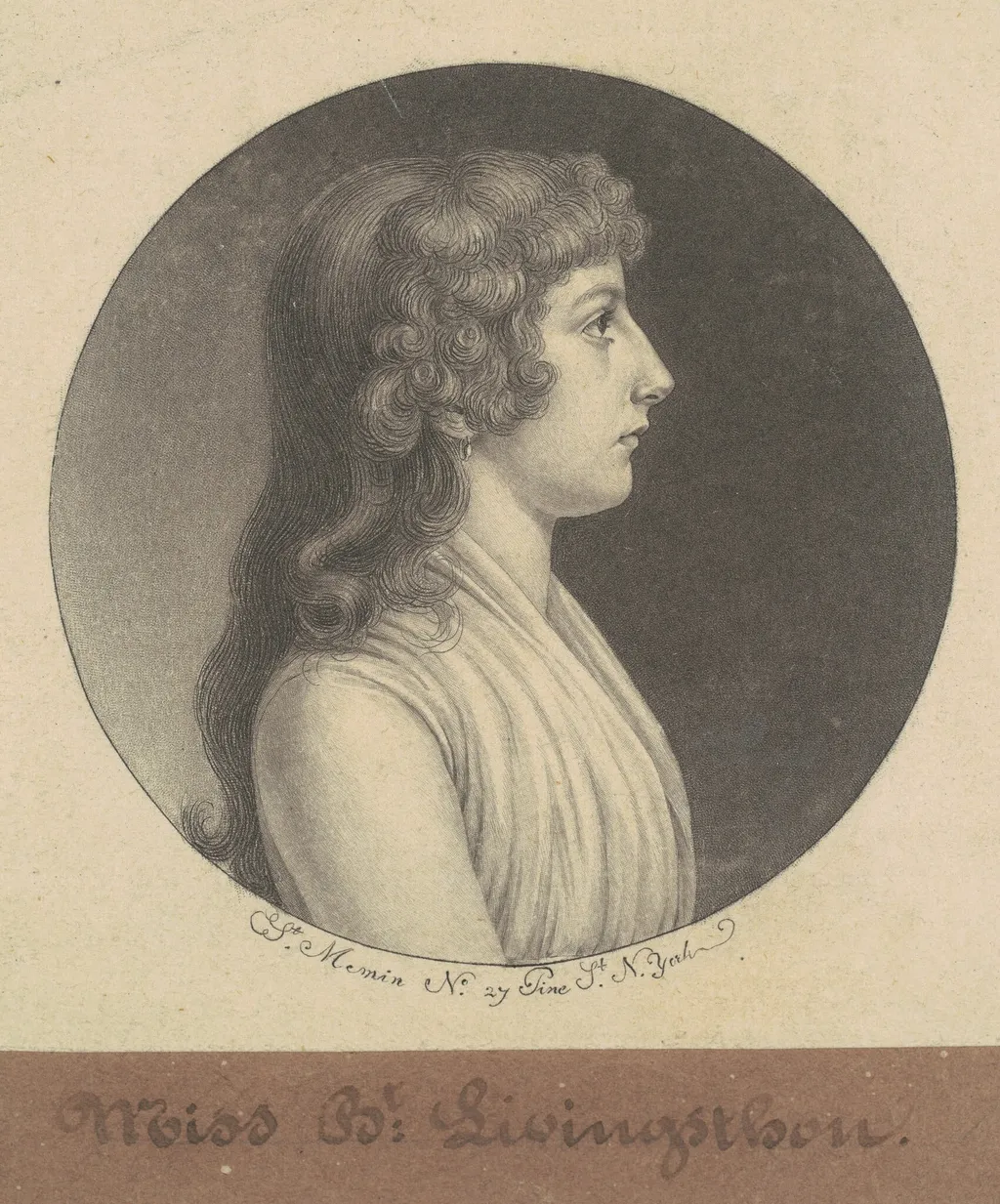
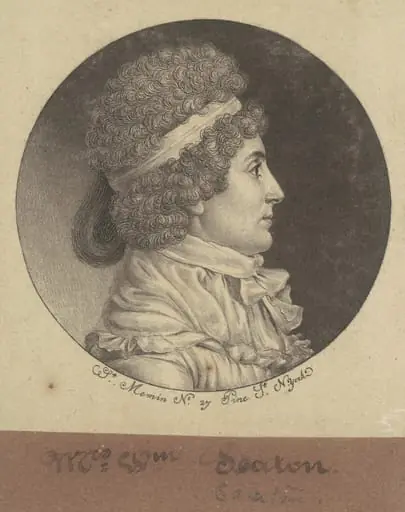
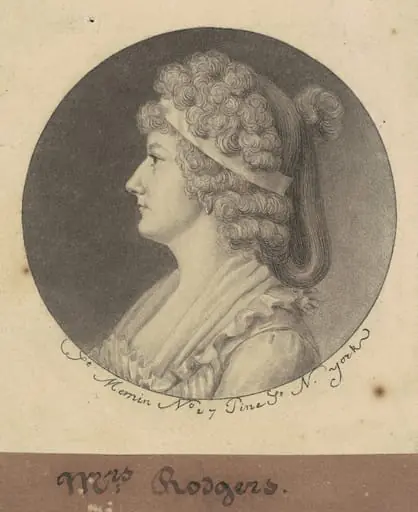
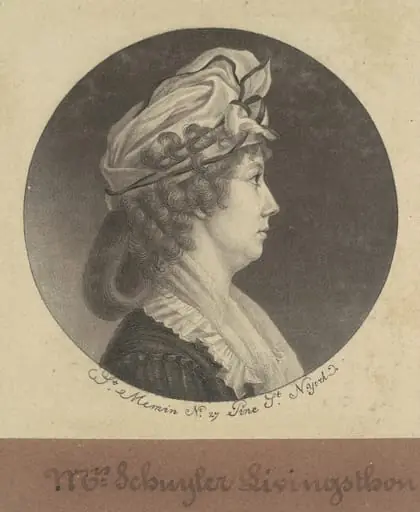
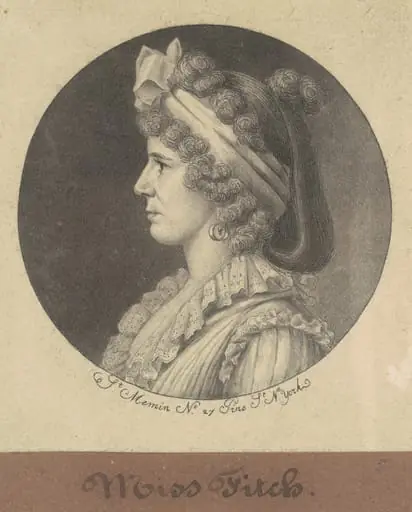
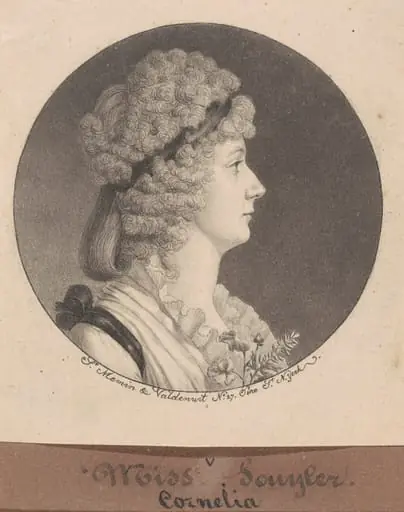
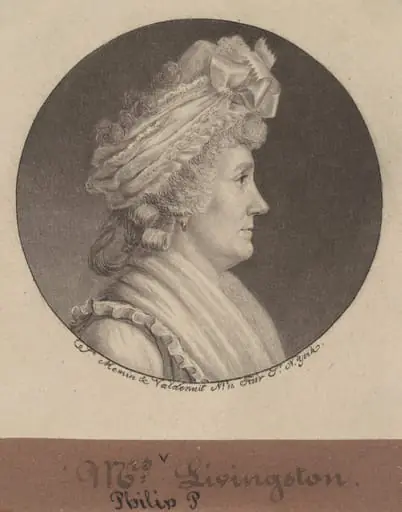
Elizabeth Livingston is an ink print by the Romanticist artist Charles Balthazar Julien Févret de Saint-Mémin. It dates from 1797 and is held in the collection of the National Gallery of Art. Created in 1797 by Charles B.
About this work
Overview
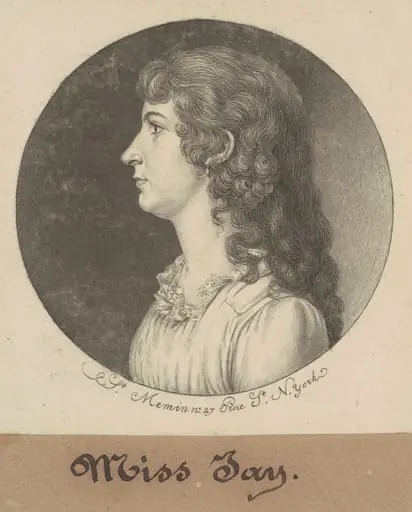
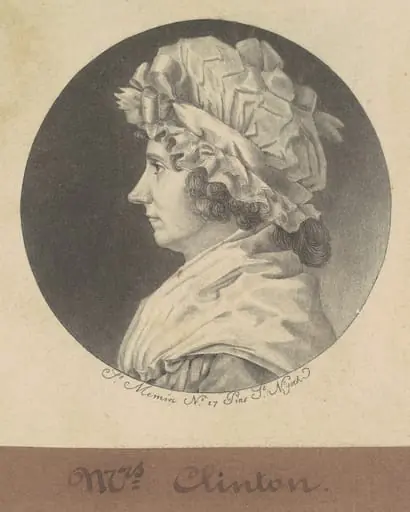
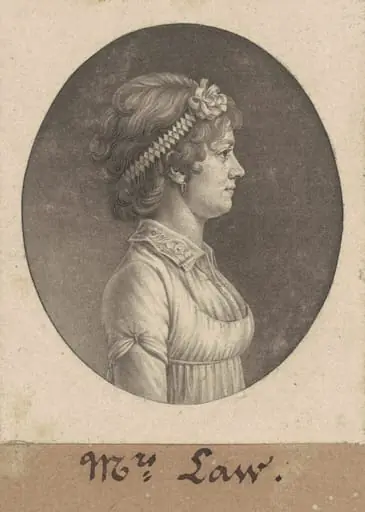
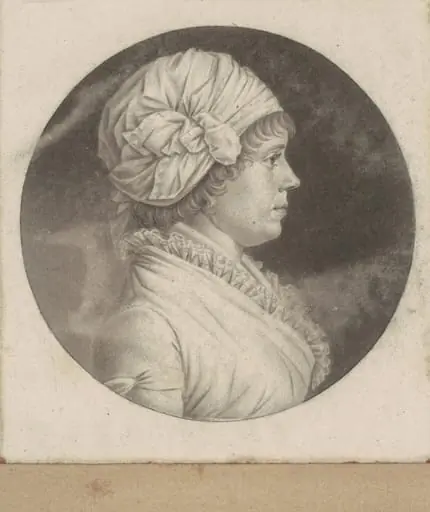
Created in 1797 by Charles B. J. Févret de Saint‑Mémin, this small print measures 5.56 by 5.56 centimeters. Executed as a mezzotint and engraving in black ink, the image is mounted on brown wove paper over a white wove backing. The work presents a tightly cropped, profile view of a woman, rendered with careful attention to line and tonal gradation.
Subject & Meaning
The figure is shown in profile, her wavy hair swept back and an earring catching the light. She wears a simple sleeveless garment that frames the neck, emphasizing the elegance of the pose. While no narrative context is supplied, the portrait follows eighteenth‑century conventions of individual representation, focusing on the sitter’s facial features and modest attire.
Technique & Style
Saint‑Mémin combined mezzotint’s rich, velvety shadows with fine engraving lines to achieve a realistic rendering of hair and skin. The black ink on wove paper allows subtle tonal transitions, while the mounting on brown paper adds depth to the overall composition. The precision of the profile and the delicate handling of light reflect the artist’s expertise in printmaking.
History & Provenance
The print originates from the late eighteenth century, a period when portrait mezzotints were popular among the European elite. It has survived as a fine‑art reproduction, documented in collections that specialize in historic print media. No further ownership records are presently noted, but its attribution to Saint‑Mémin is well established through stylistic analysis.
Artist & collection

Artist
Charles Balthazar Julien Févret de Saint-Mémin
Charles Balthazar Julien Févret de Saint-Mémin (French pronunciation: ; 1770–1852) was a French portrait painter and museum director.