Artwork
David Montagu Erskine
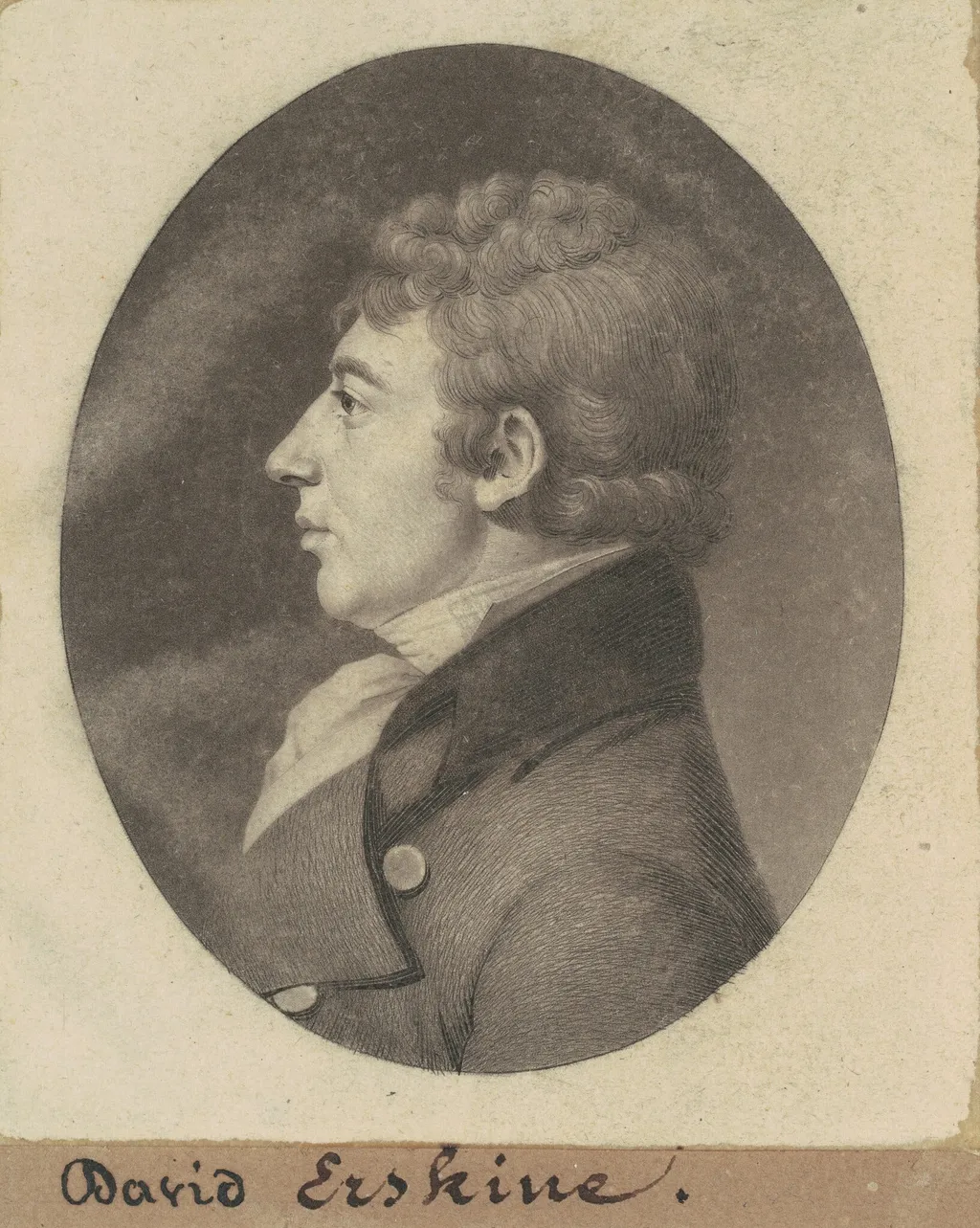
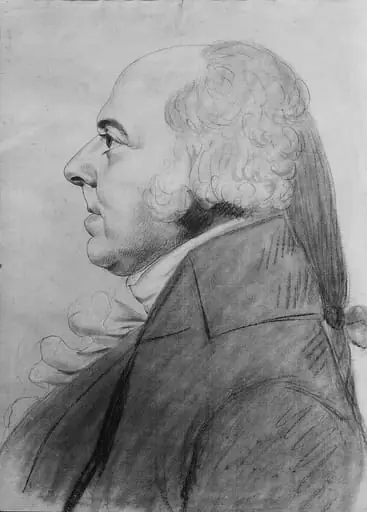
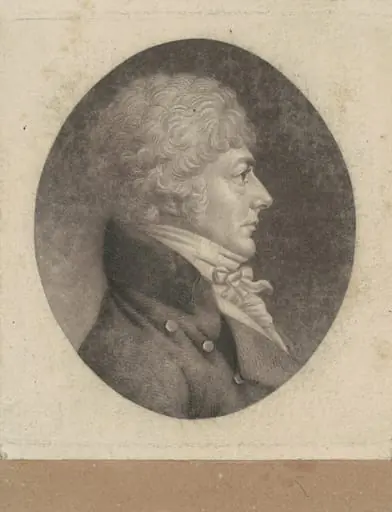
David Montagu Erskine is an ink print by the Romanticist artist Charles Balthazar Julien Févret de Saint-Mémin. It dates from 1799 and is held in the collection of the National Gallery of Art.
About this work
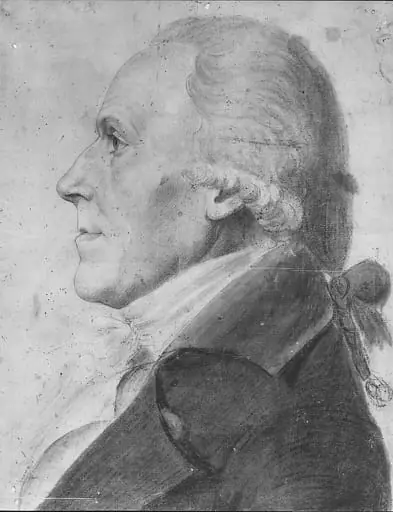
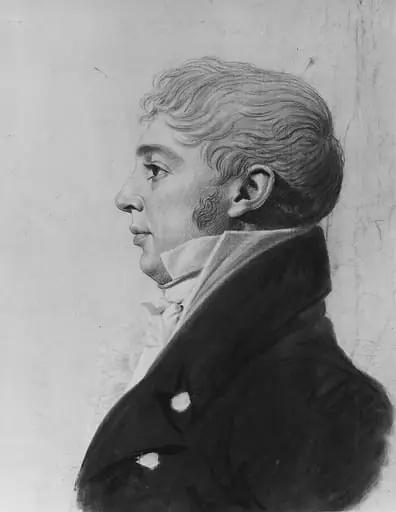
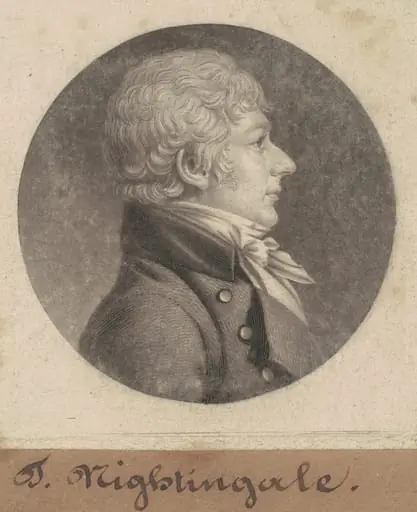
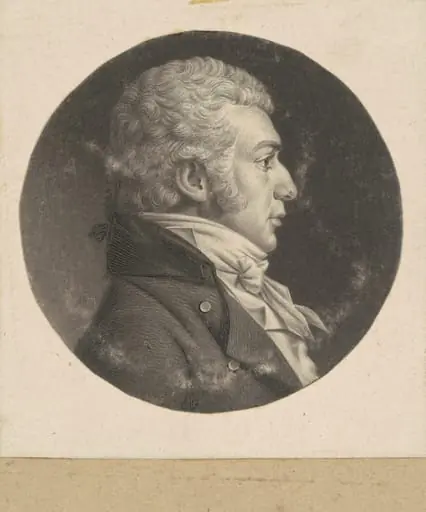
This 1799 print shows David Montagu Erskine in profile. His dark coat and white cravat stand out against the plain background.
Mezzotint prints like this use a roughened metal plate to hold ink. The artist scraped the plate to create smooth areas for light and rough areas for dark.
See how the curls in his hair catch the light? Compare it to Saint-Mémin, Charles B. J. Févret de’s other portraits.
Overview
Created in 1799, this print presents David Montagu Erskine, the 5th Earl of Kellie, shown in profile. Executed as a mezzotint combined with engraving, the image is rendered in black on wove paper that has been mounted to a brown wove backing, giving the work a modest, two‑tone presentation.
Subject & Meaning
Erskine is depicted wearing a dark coat and a white cravat, his curly hair and pronounced nose rendered with careful attention. The profile pose, common in portraiture of the period, emphasizes the sitter’s dignified bearing and social rank.
Technique & Style
The mezzotint process involves roughening a copper plate to retain ink, then smoothing selected areas to produce lighter tones, while engraving adds fine line work. This combination allows subtle gradations of shadow, evident in the way the curls of Erskine’s hair catch the imagined light.
History & Provenance
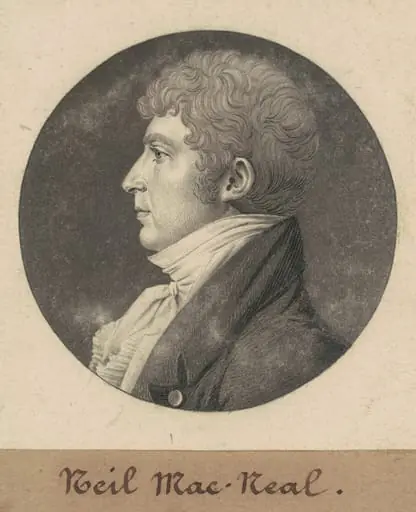
The work is attributed to Charles B. J. Févret de Saint‑Mémin, a French artist active in the United States during the late eighteenth century. Saint‑Mémin’s portrait series documented prominent figures of his time, and this print forms part of that larger body of work.
Context
Printed at the close of the eighteenth century, the portrait reflects the transatlantic exchange of artistic techniques. Mezzotint, a method popular in Britain for reproducing oil paintings, was employed by Saint‑Mémin to convey the status of his American and British subjects.
Artist & collection

Artist
Charles Balthazar Julien Févret de Saint-Mémin
Charles Balthazar Julien Févret de Saint-Mémin (French pronunciation: ; 1770–1852) was a French portrait painter and museum director.