Artwork
Elizabeth Rittenhouse Sergeant
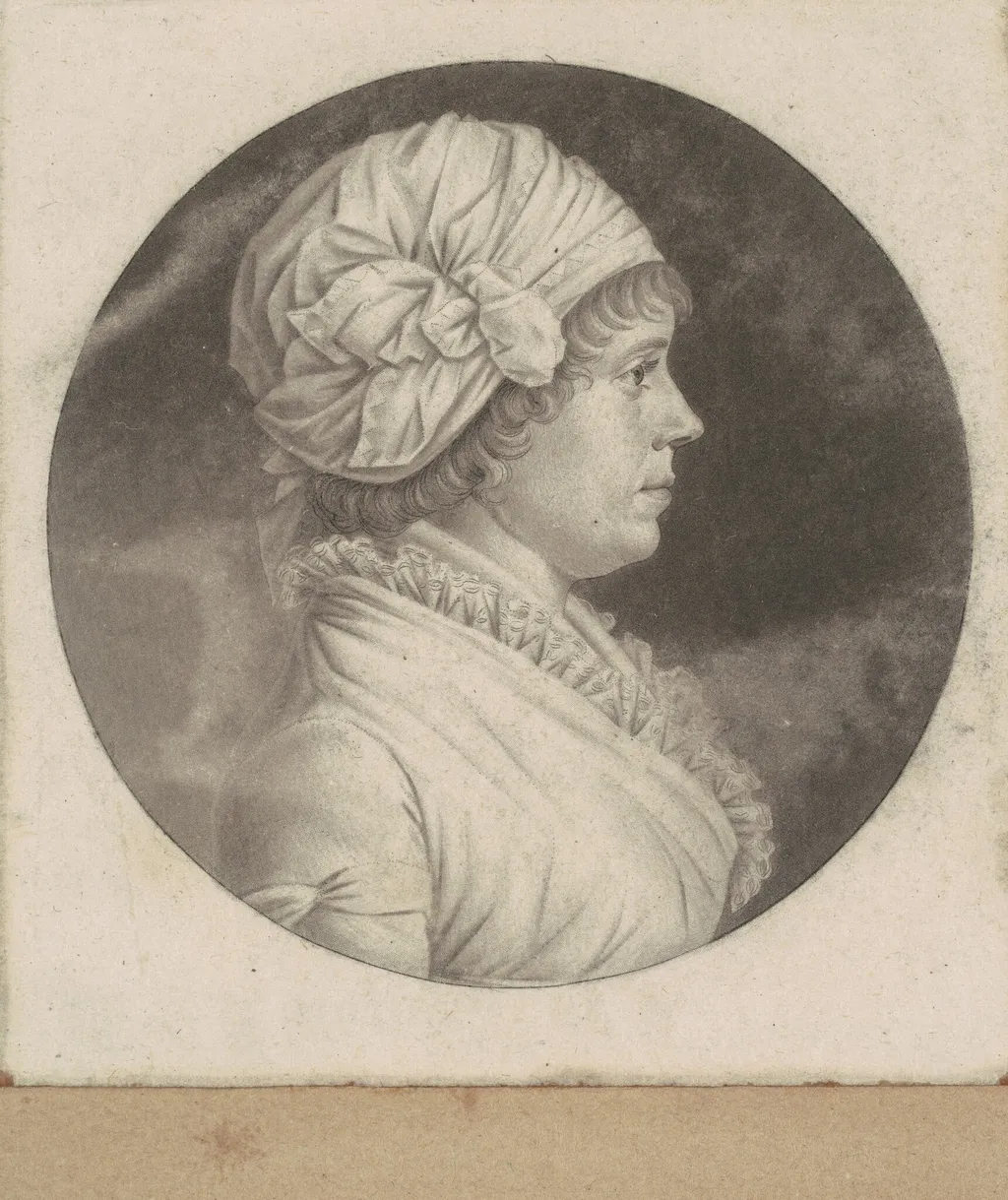
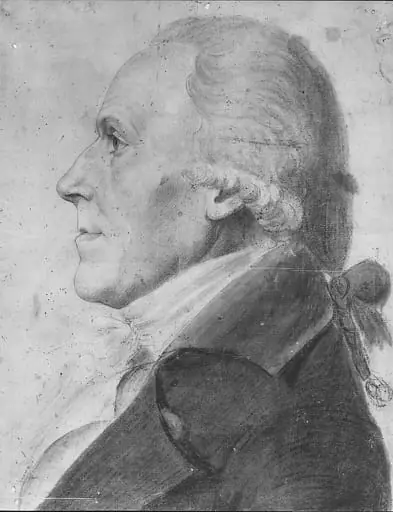
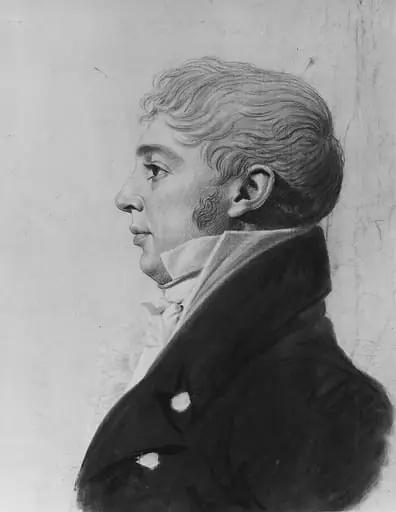
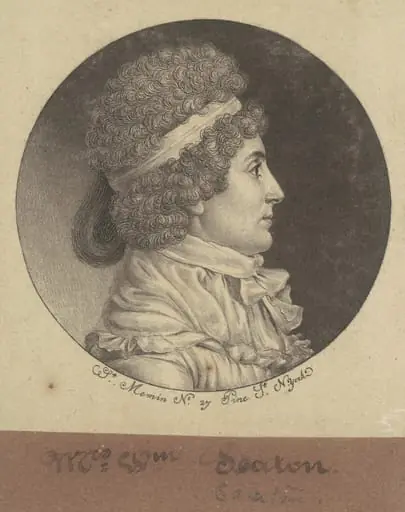
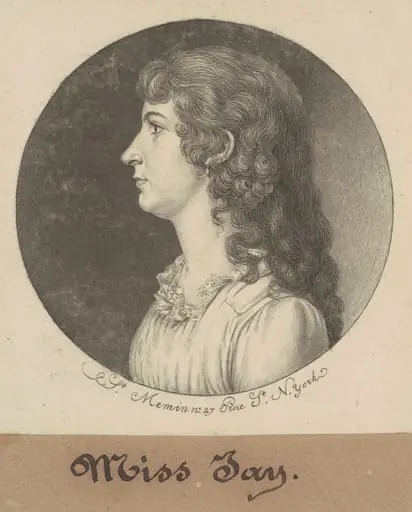
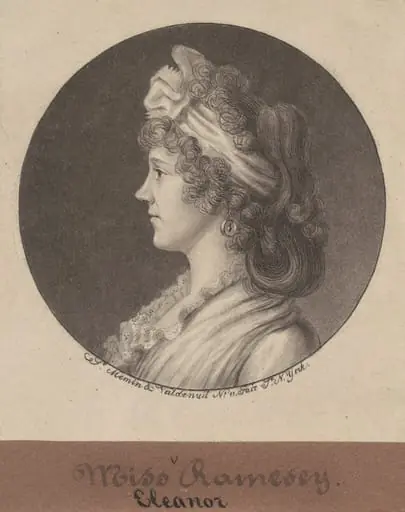
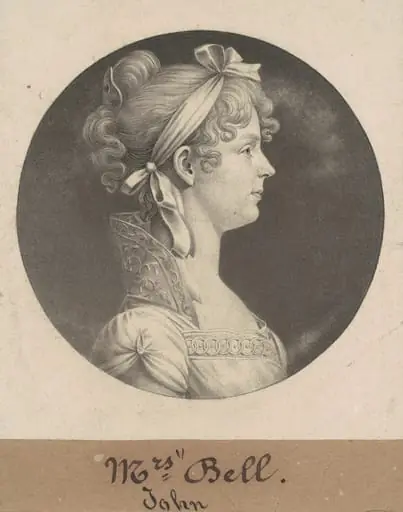
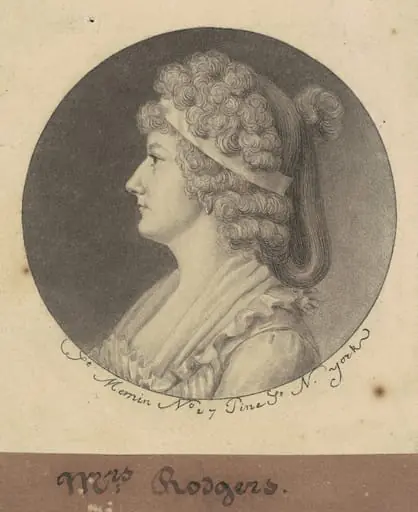
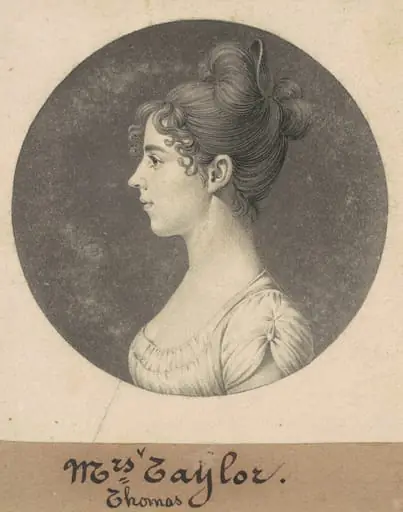
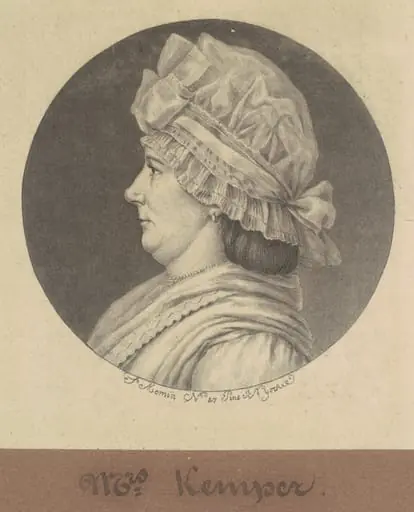
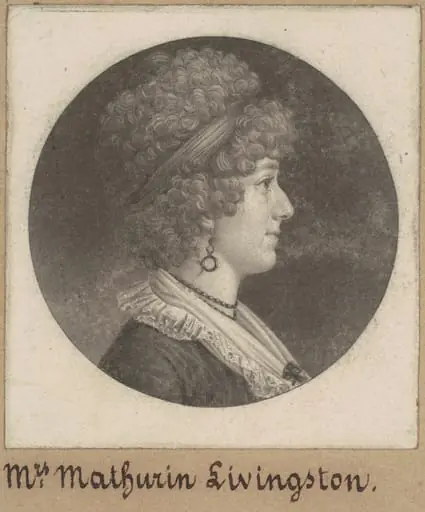
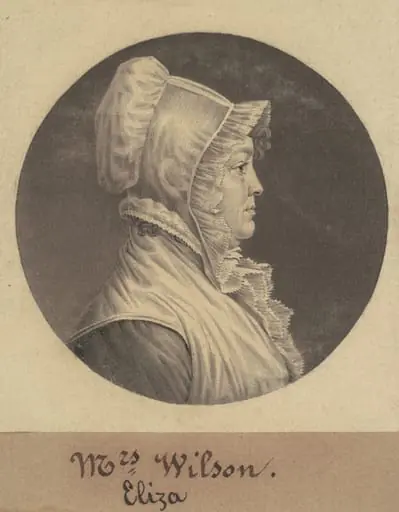
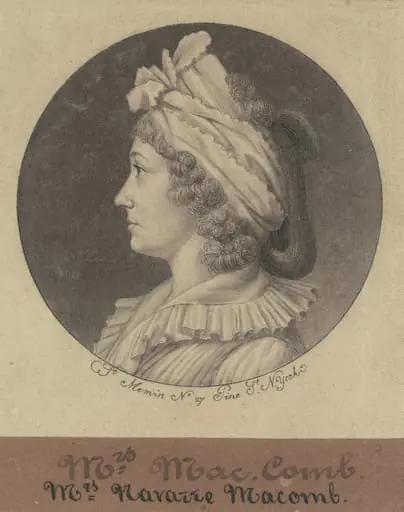
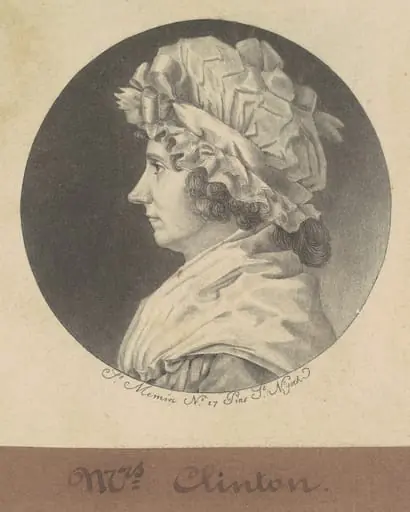
Elizabeth Rittenhouse Sergeant is an ink print by the Romanticist artist Charles Balthazar Julien Févret de Saint-Mémin. It dates from 1800 and is held in the collection of the National Gallery of Art. This print is a mezzotint and engraving on wove paper, mounted to brown wove paper, created in 1796 by Charles B.
About this work
The woman in the portrait, Elizabeth Rittenhouse, was painted multiple times by the same artist, which suggests that she was an important figure.
You see a portrait of a woman in a formal dress.
She's sitting with a calm expression.
The artist used a lot of detail to show her clothing and accessories, which is interesting because it tells us about her social status.
The woman in the portrait, Elizabeth Rittenhouse, was painted multiple times by the same artist, which suggests that she was an important figure.
The artist also made a painting of her in 1796, which is now part of a collection of portraits.
To learn more about the artist who created this portrait, look up Saint-Mémin, Charles B. J. Févret de.
Overview
This print is a mezzotint and engraving on wove paper, mounted to brown wove paper, created in 1796 by Charles B. J. Févret de Saint-Mémin. It depicts Elizabeth Rittenhouse Sergeant, a woman of documented social standing, rendered in monochrome with fine linear detail. The work belongs to Saint-Mémin’s broader series of portrait engravings, produced during his time in the United States, and is held in the collection of the National Gallery of Art.
Subject & Meaning
Elizabeth Rittenhouse Sergeant is portrayed in formal attire, her posture composed and expression serene. The precision of her dress, jewelry, and hair reflects her position within early American elite society. The repeated depiction of her by Saint-Mémin suggests she was a notable figure, possibly connected to intellectual or civic circles. The portrait functions as both likeness and social document, conveying status through refined presentation rather than overt symbolism.
Technique & Style
Saint-Mémin employed mezzotint and engraving to achieve subtle tonal gradations and sharp linear definition. The black ink on paper emphasizes texture—fabric folds, lace, and hair are rendered with meticulous care. The composition is tightly framed, focusing attention on the sitter’s face and upper body. The technique, favored for reproductive portraiture, allowed for multiple impressions, aligning with Saint-Mémin’s practice of disseminating likenesses of prominent individuals.
History & Provenance
The print is part of the Saint-Mémin Collection of Portraits, a group of over 200 engraved likenesses of American figures commissioned between 1793 and 1815. Elizabeth Rittenhouse Sergeant was among those repeatedly portrayed by the artist, indicating her significance in his circle. The work entered the National Gallery of Art’s holdings through institutional acquisitions of the Saint-Mémin archive, preserving its place in early American visual culture.
Context
During the 1790s, Saint-Mémin, a French émigré, established himself in the U.S. as a portraitist specializing in engraved likenesses for the emerging American elite. His practice combined European engraving traditions with American subject matter. Portraits like this one served as tokens of social identity, circulating among families and institutions as markers of respectability and connection to the nation’s founding generation.
Legacy
Saint-Mémin’s portraits, including this one, remain key sources for understanding the visual culture of early republican America. The repeated depiction of Elizabeth Rittenhouse Sergeant underscores the role of print in constructing public identity. Today, these works are studied for their technical precision and as records of social hierarchy, offering insight into how status was visually articulated in a nascent democracy.
Artist & collection

Artist
Charles Balthazar Julien Févret de Saint-Mémin
Charles Balthazar Julien Févret de Saint-Mémin (French pronunciation: ; 1770–1852) was a French portrait painter and museum director.