Artwork
John Davenport
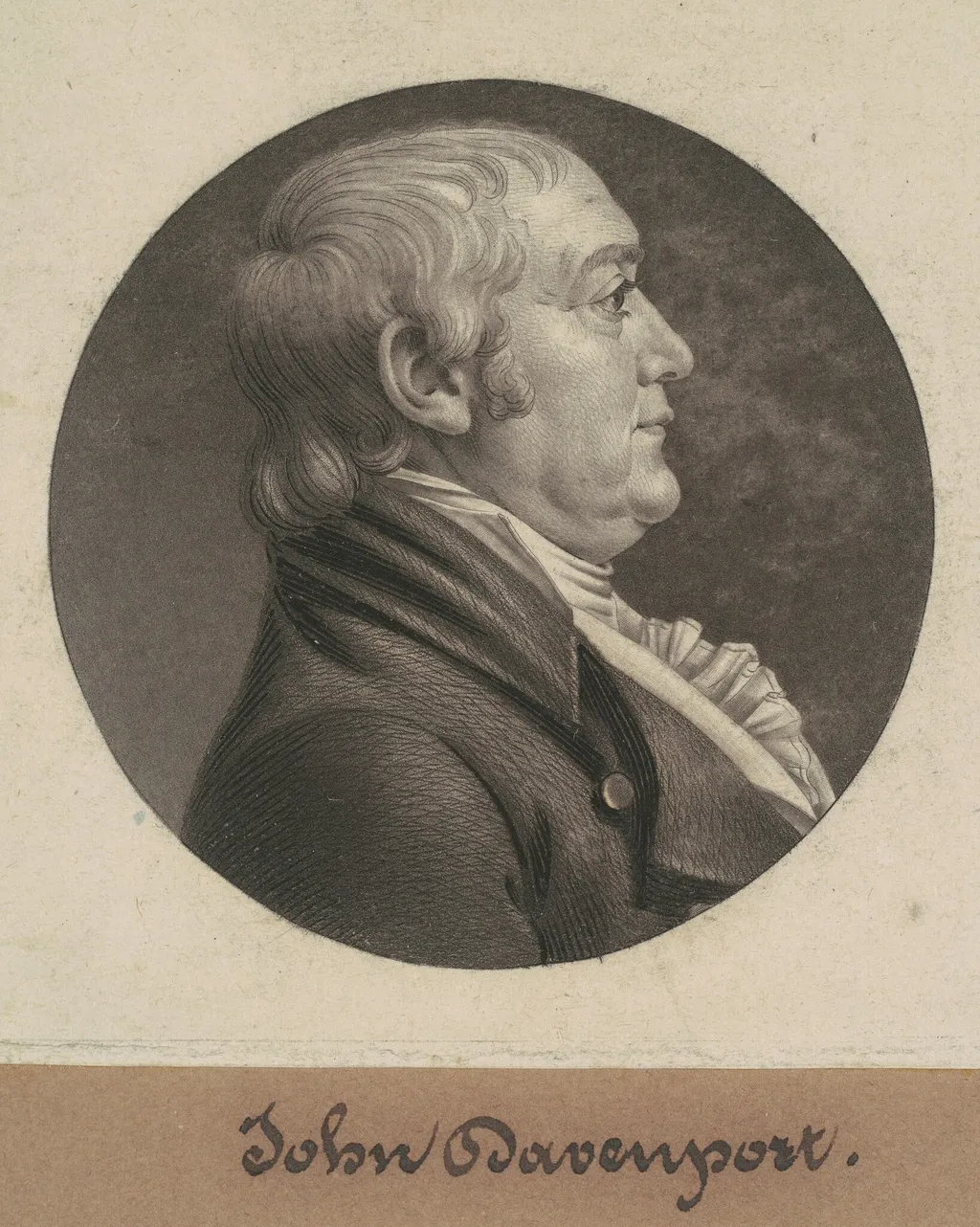
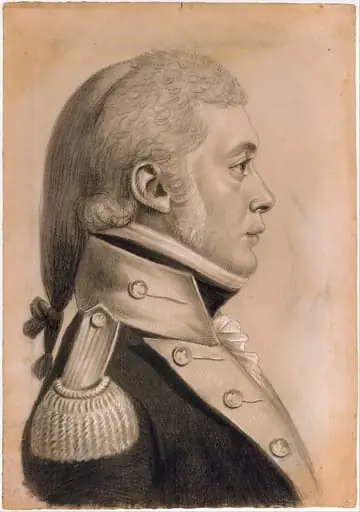
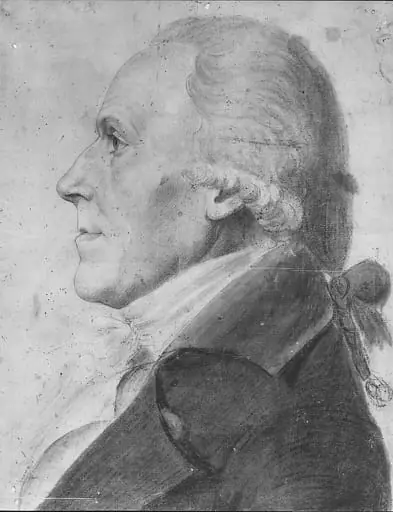
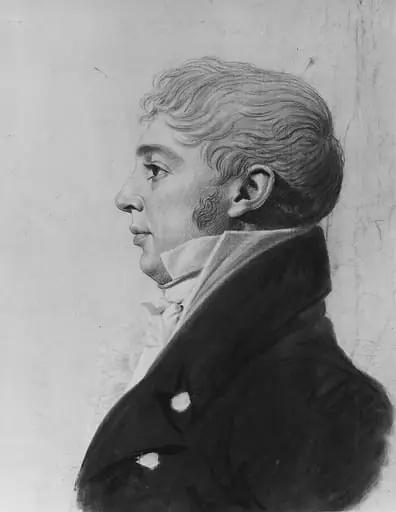
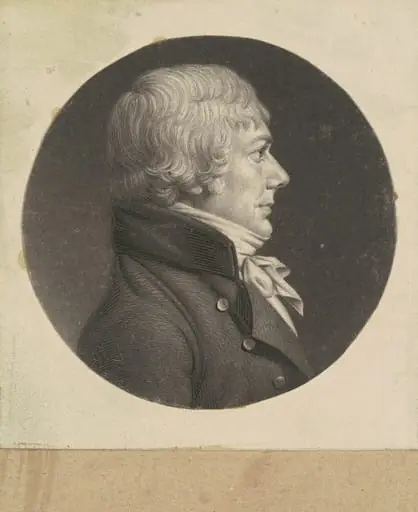
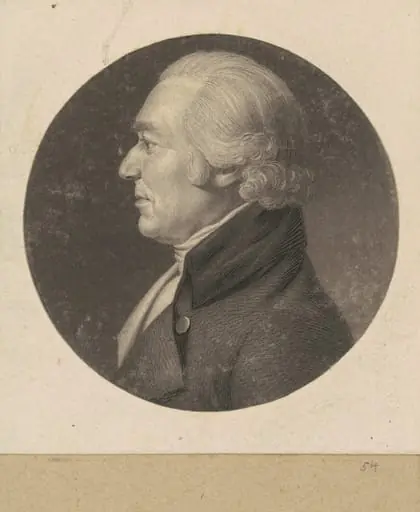
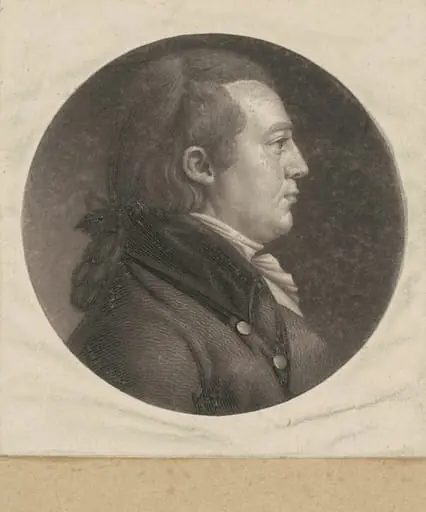
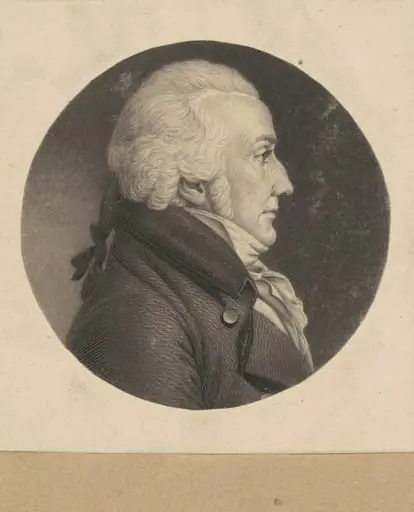
John Davenport is an ink print by the Romanticist artist Charles Balthazar Julien Févret de Saint-Mémin. It dates from 1806 and is held in the collection of the National Gallery of Art.
About this work
Overview
This black-and-white print, executed in mezzotint and engraving, portrays John Davenport in a three‑quarter profile. The figure is set against an unadorned background, emphasizing his sharply rendered facial features and the contrast between his dark coat and white cravat.
Subject & Meaning
The portrait follows the conventions of late‑eighteenth‑century American portraiture, presenting Davenport as a dignified individual through a restrained pose and clear delineation of attire, suggesting both personal status and the period’s taste for modest, direct representation.
Technique & Style
Mezzotint allows the artist to achieve deep, velvety blacks and subtle tonal transitions, while the engraved lines provide precise definition. Saint‑Mémin’s handling of light and shadow creates a near‑drawing quality, with fine hatching that models the face and clothing without reliance on elaborate background detail.
History & Provenance
Created by Charles B. J. Févret de Saint‑Mémin, a French émigré active in early American printmaking, the work exemplifies the limited use of mezzotint in the United States during the post‑Revolutionary era, marking a rare instance of this technique in American portrait prints.
Context
At the time of its production, American portraiture was transitioning from colonial styles to a more refined, neoclassical aesthetic. The portrait’s simplicity and focus on individual likeness reflect this shift, while the technical choice of mezzotint signals an engagement with European print traditions.
Artist & collection

Artist
Charles Balthazar Julien Févret de Saint-Mémin
Charles Balthazar Julien Févret de Saint-Mémin (French pronunciation: ; 1770–1852) was a French portrait painter and museum director.