Artwork
Josiah Quincy
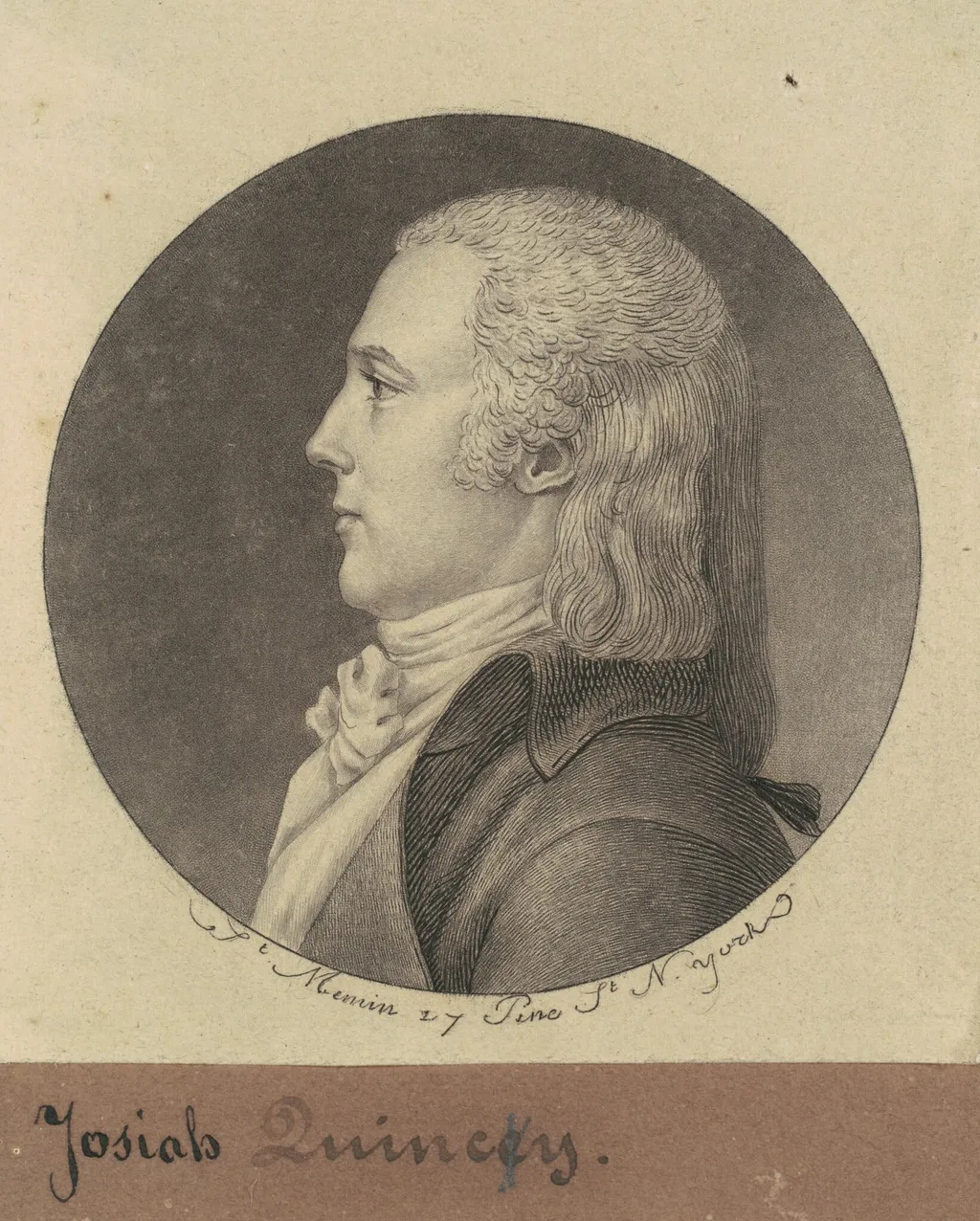
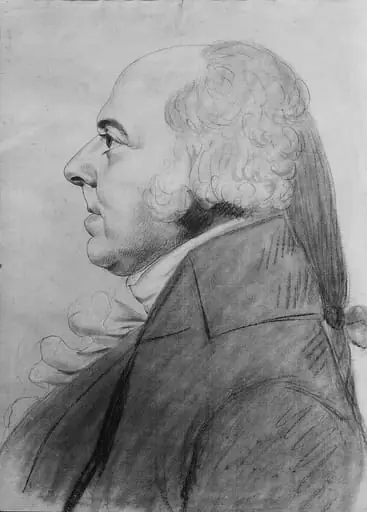
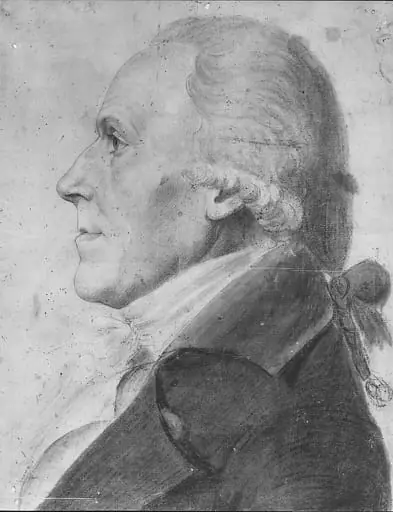
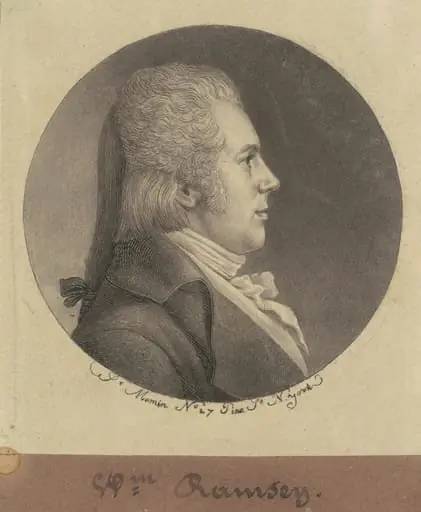
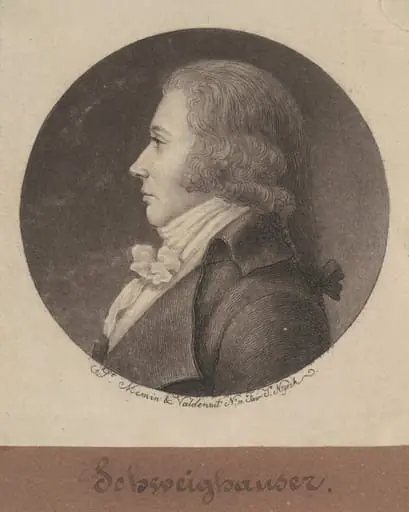
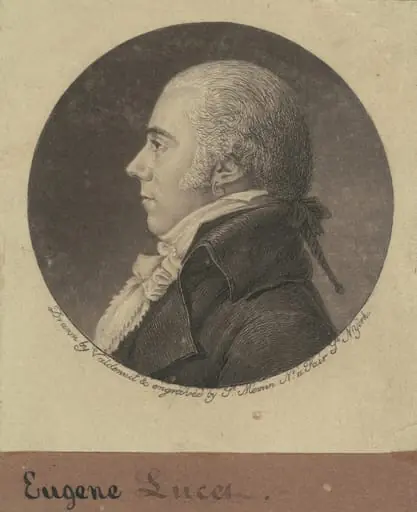
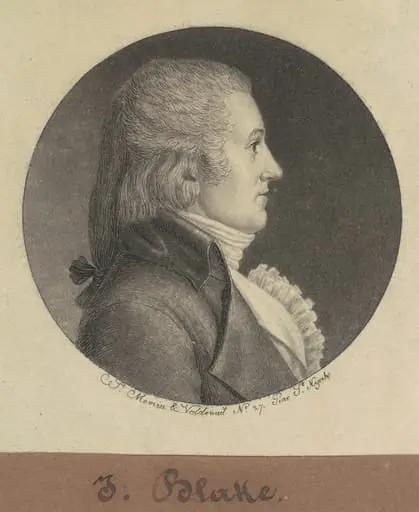
Josiah Quincy is an ink print by the Romanticist artist Charles Balthazar Julien Févret de Saint-Mémin. It dates from 1796 and is held in the collection of the National Gallery of Art. Charles B.
About this work
Overview
Charles B. J. Févret de Saint‑Mémin’s portrait of Josiah Quincy III is a black‑and‑white print executed in mezzotint and engraving on wove paper, later mounted to a brown wove backing. The work measures roughly 118 by 93 centimeters and is held by the Harvard Art Museums.
Subject & Meaning
The image presents Josiah Quincy III turned toward the left, attired in a dark coat with a white cravat. His distinctive nose and steady gaze dominate the composition, set against an unadorned background that focuses attention on his facial features.
Technique & Style
Saint‑Mémin employed the mezzotint process, a method that allows for subtle tonal transitions resembling photographic gradations. The combination of mezzotint with fine engraving lines creates a rich, velvety texture and depth in the portrait’s shading.
History & Provenance
Only one hundred impressions of this print were produced, reflecting its limited distribution. The work entered the Harvard Art Museums’ collection, where it remains accessible for study and public viewing.
Context
Created during the early 19th century, the portrait aligns with a period when mezzotint was favored for its capacity to render detailed, lifelike likenesses, particularly in portraiture of prominent American figures such as Quincy, a noted politician and educator.
Artist & collection

Artist
Charles Balthazar Julien Févret de Saint-Mémin
Charles Balthazar Julien Févret de Saint-Mémin (French pronunciation: ; 1770–1852) was a French portrait painter and museum director.