Artwork
Samuel Hambleton
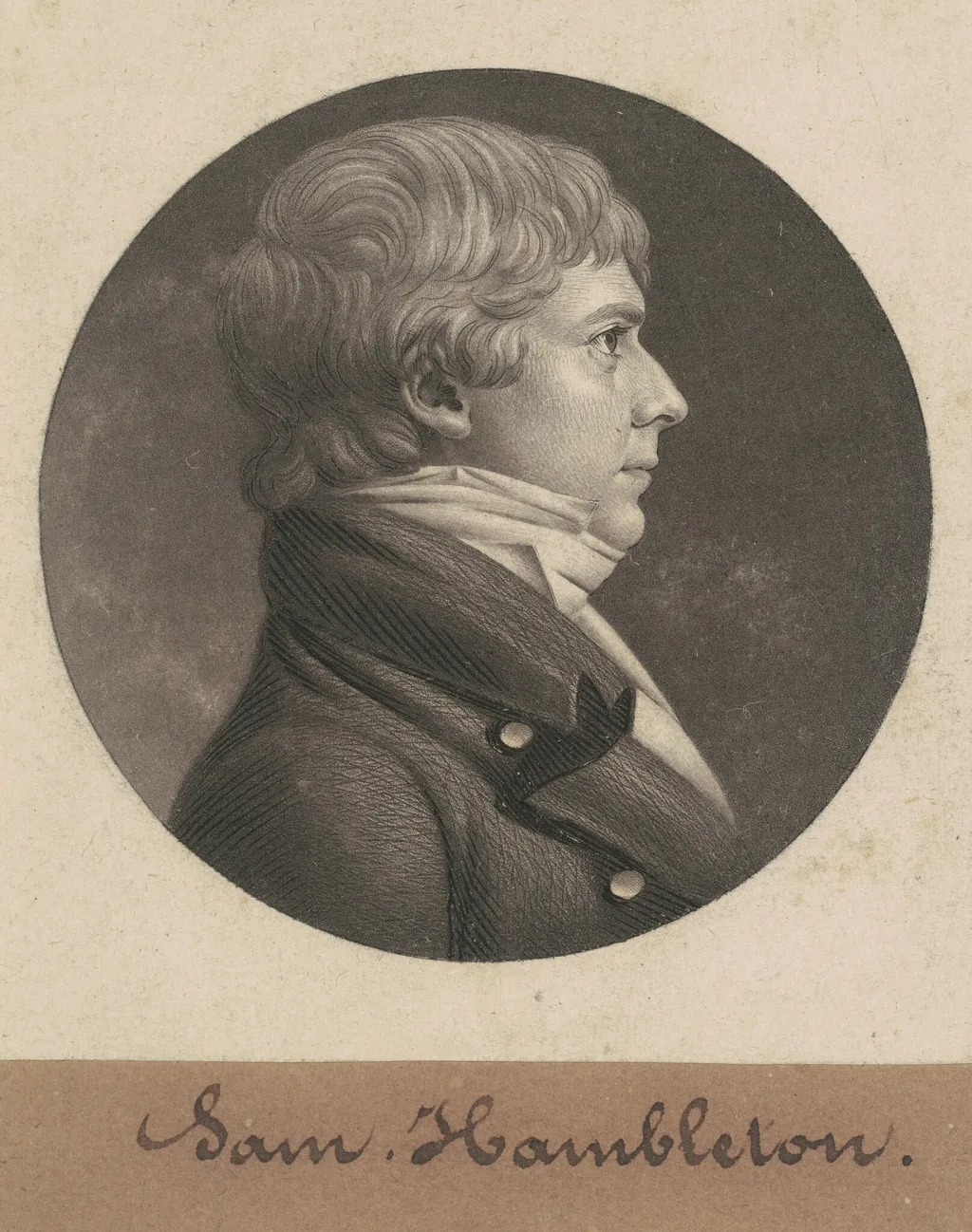
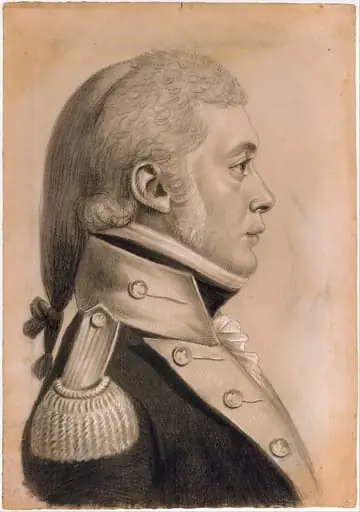
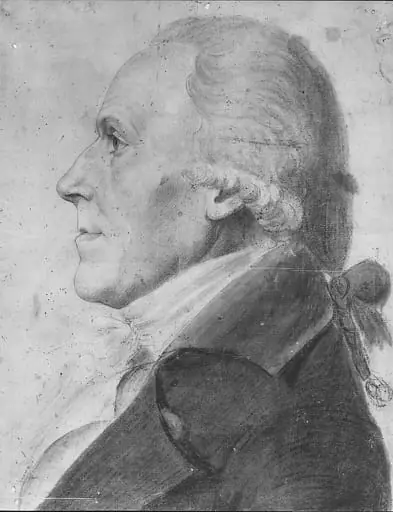
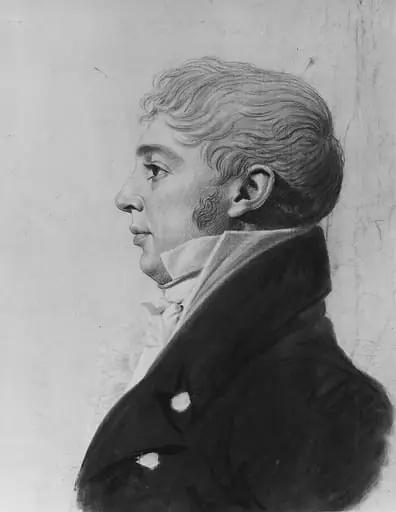
Samuel Hambleton is an ink print by the Romanticist artist Charles Balthazar Julien Févret de Saint-Mémin. It dates from 1806 and is held in the collection of the National Gallery of Art.
About this work
Overview
6 centimeters, reflecting the compact format typical of personal portraiture in early 19th-century America.
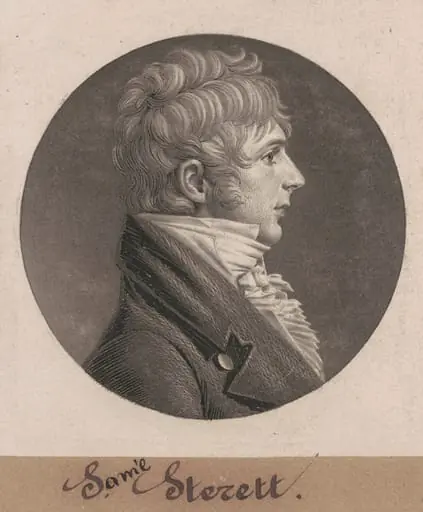
This small portrait print, created in 1806, depicts Samuel Hambleton in profile facing left. Executed in mezzotint and engraving on wove paper, it is mounted on a heavier brown sheet for stability. The dimensions are approximately 5.7 by 5.6 centimeters, reflecting the compact format typical of personal portraiture in early 19th-century America. The work is one of many produced by Charles B. J. Févret de Saint-Mémin during his time in the United States.
Subject & Meaning
Samuel Hambleton, a naval officer and aide to Commodore Stephen Decatur, is portrayed with quiet dignity. The composition focuses on his head and shoulders, emphasizing his formal attire—a dark coat and crisp white collar—suggesting his professional status. The absence of background or symbolic elements directs attention solely to the individual, aligning with the era’s preference for straightforward, unadorned likenesses in printed portraiture.
Technique & Style
The image employs mezzotint to achieve subtle gradations of tone, particularly in the modeling of the face and coat, while fine engraving lines define details like the collar and hair. The technique allows for rich blacks and soft transitions, characteristic of Saint-Mémin’s approach. The paper’s smooth surface and careful mounting onto a darker substrate enhance contrast and durability, reflecting practical considerations for reproduction and display.
History & Provenance
Created during Saint-Mémin’s residency in the United States, this print was likely made for private circulation rather than public sale. As a French émigré artist, Saint-Mémin catered to American elites seeking affordable, accurate likenesses. The print’s survival in collections today suggests it was preserved by Hambleton’s associates or descendants, though its exact early ownership remains undocumented.
Context
In the early 1800s, mezzotint and engraving were favored for portraiture due to their ability to reproduce fine detail and tonal range without requiring a sitter’s prolonged presence. Saint-Mémin’s work contributed to a growing market for accessible likenesses in a young republic where painted portraits remained costly. This print reflects the intersection of European technique and American demand for civic and military portraiture.
Legacy
Saint-Mémin’s prints, including this one, represent a significant chapter in American graphic arts, bridging European printmaking traditions with emerging national identity. While not widely known today, his body of work provided a visual record of early American figures, influencing later generations of portrait engravers and preserving the likenesses of individuals who shaped the nation’s formative years.
Artist & collection

Artist
Charles Balthazar Julien Févret de Saint-Mémin
Charles Balthazar Julien Févret de Saint-Mémin (French pronunciation: ; 1770–1852) was a French portrait painter and museum director.