Artwork
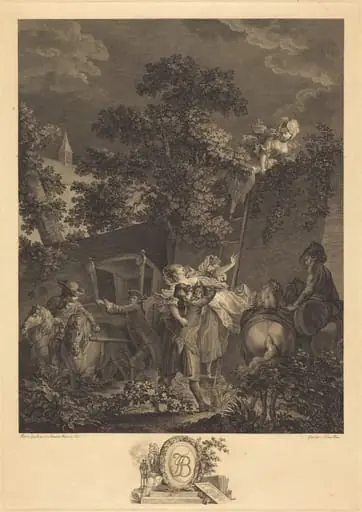
Pensionnaires de l’Académie allants de Rome à Naples par le procaccio et passants pendant la nuit la forest de fondi (Pensionnaires from the French Academy Going from Rome to Naples by Carriage and Passing through a Forest in Fondi during the Night)
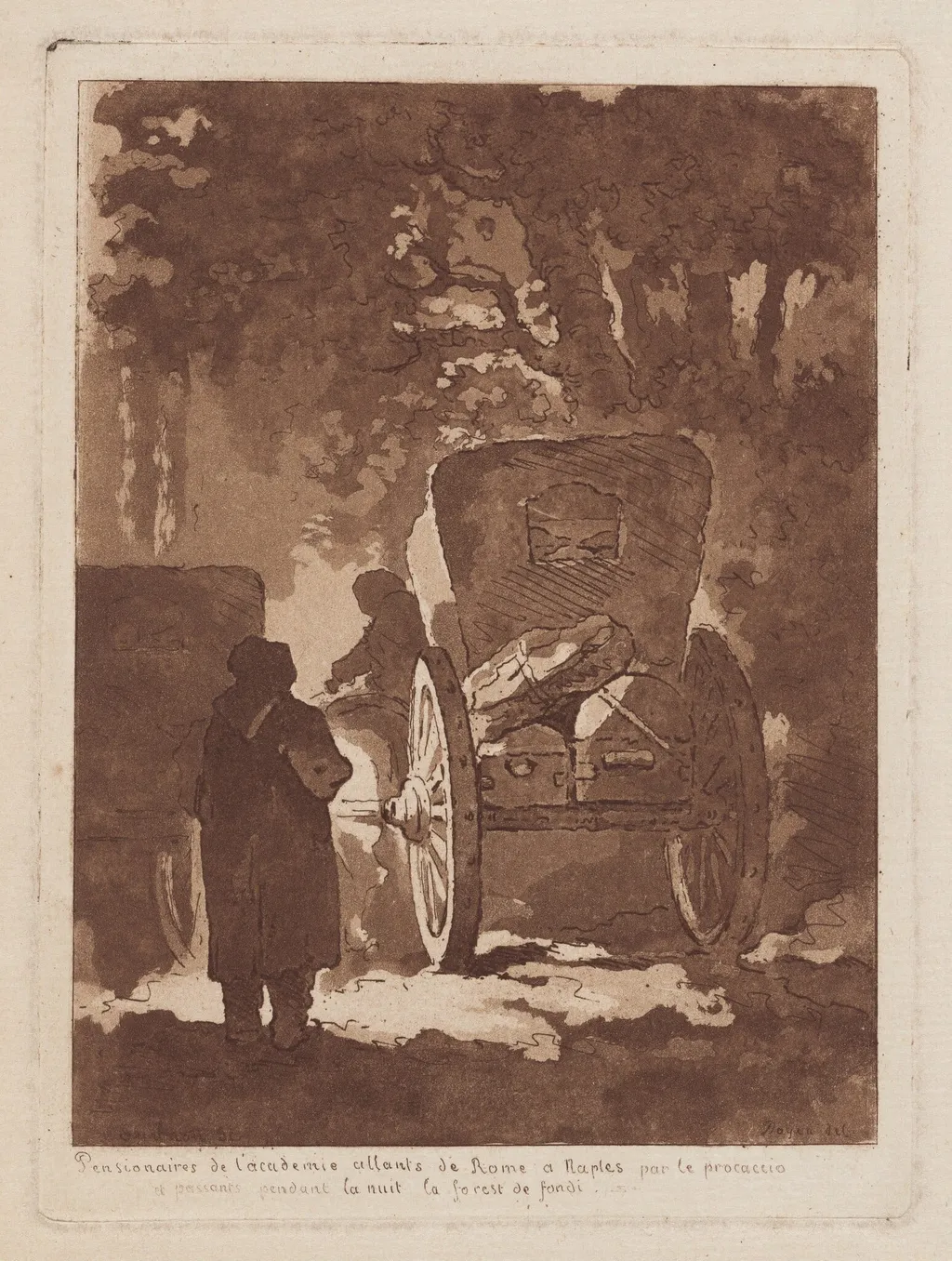
Pensionnaires de l’Académie allants de Rome à Naples par le procaccio et passants pendant la nuit la forest de fondi (Pensionnaires from the French Academy Going from Rome to Naples by Carriage and Passing through a Forest in Fondi during the Night) is an ink print by the Romanticist artist Jean-Claude-Richard, Abbé de Saint-Non. It dates from 1769 and is held in the collection of the National Gallery of Art.
About this work
Overview
Created around 1769 by Jean-Claude-Richard, Abbé de Saint-Non, this print depicts a nocturnal journey between Rome and Naples.
Created around 1769 by Jean-Claude-Richard, Abbé de Saint-Non, this print depicts a nocturnal journey between Rome and Naples. Executed in aquatint and etching on laid paper, it captures a moment of travel through the forest near Fondi. The work belongs to a series documenting the experiences of French Academy students, rendered in muted brown ink to evoke the stillness and solitude of night travel.
Subject & Meaning
The scene portrays pensionnaires—students supported by the French Academy—traveling by carriage under cover of darkness. A solitary figure walks beside the vehicle, suggesting the quiet rhythm of the journey. The forest, dense and looming, frames their passage as a moment of transition, both physical and symbolic, between the cultural centers of Rome and Naples, and the uncertainty of the road ahead.
Technique & Style
Saint-Non employed aquatint to achieve subtle gradations of tone, mimicking the soft shadows of moonlight filtering through trees. Etching defined the carriage, figures, and branches with fine, controlled lines. The limited brown palette enhances the nocturnal atmosphere, avoiding sharp contrasts in favor of atmospheric depth. The technique allows the paper’s texture to subtly influence the surface, reinforcing the tactile quality of the night scene.
History & Provenance
The print was produced during Saint-Non’s time in Italy, where he accompanied French art students and documented their travels. It was later acquired by the National Gallery of Art in Washington, D.C., as part of its collection of 18th-century European prints. Its survival reflects the interest in academic travel as both cultural practice and artistic subject during the Enlightenment.
Context
In the mid-18th century, the French Academy in Rome sent its pensionnaires on educational journeys to study classical and Renaissance sites. These trips were carefully recorded, often through drawings and prints, to document the experience beyond formal study. Saint-Non’s work captures the less formal, more personal side of this tradition—moments of rest, travel, and solitude amid the landscape.
Legacy
This print contributes to a broader visual record of academic travel in the Grand Tour era. While not widely exhibited, it remains a quiet testament to the daily realities faced by young artists abroad. Its restrained aesthetic and focus on atmosphere influenced later topographical printmakers who sought to convey mood as much as topography.
Artist & collection

Artist
Jean-Claude-Richard, Abbé de Saint-Non
Saint-Non, Jean-Claude-Richard, Abbé de (1727–1791) was an artist.

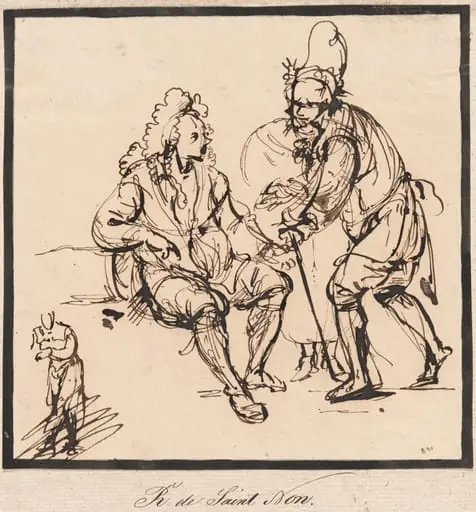 A Gardener and a Gentleman
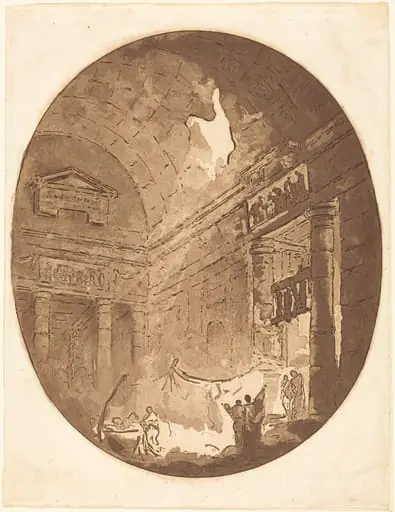 Interior of a Roman Villa
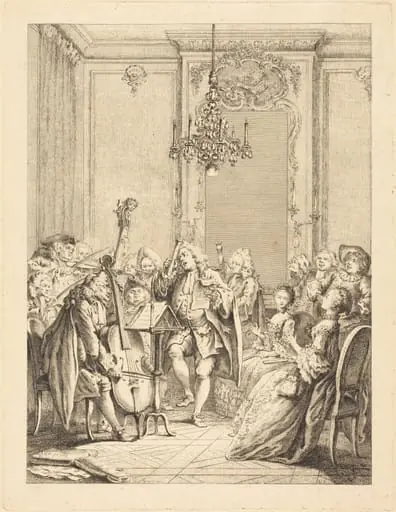 Le concert
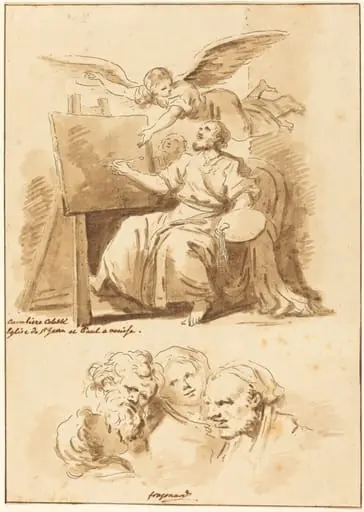 Saint Luke at His Easel and Four Expressive Heads
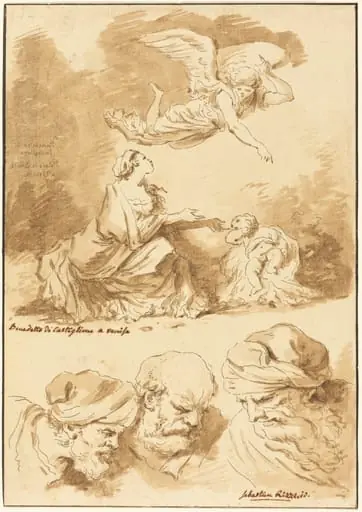 Hagar Consoled by an Angel (from a painting by Castiglione) and Three Heads of Old Men (from a painting by Ricci of Jesus and the Adultress)
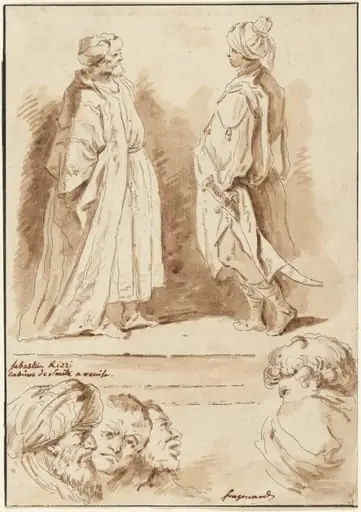 Details from "The Adoration of the Magi" and "The Pool at Bethesda"
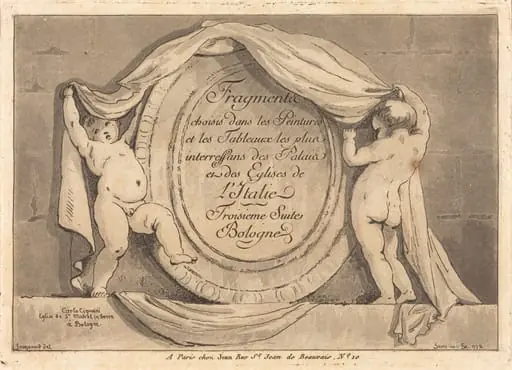 Title Page: Oval Design from the Church of San Michele de Bosco, Bologna
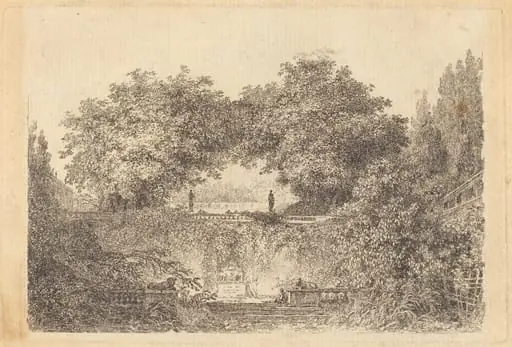 Le Petit Parc
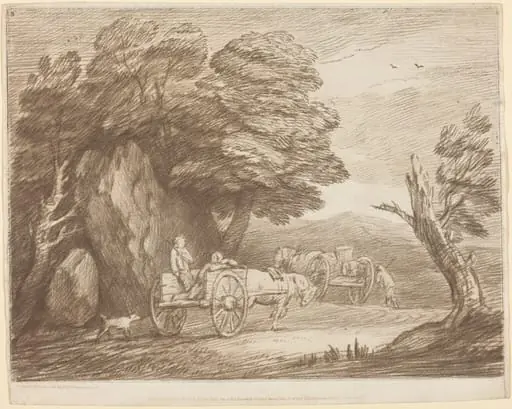 Wooded Landscape with Two Country Carts and Figures
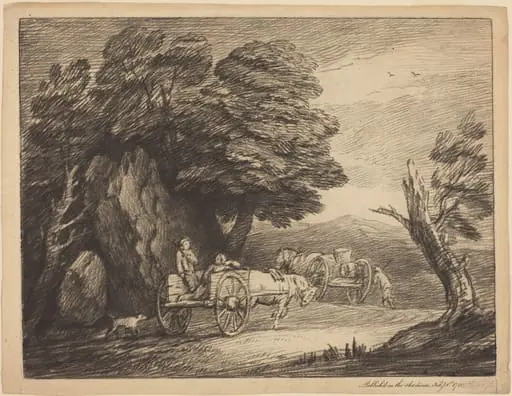 Wooded Landscape with Two Country Carts and Figures
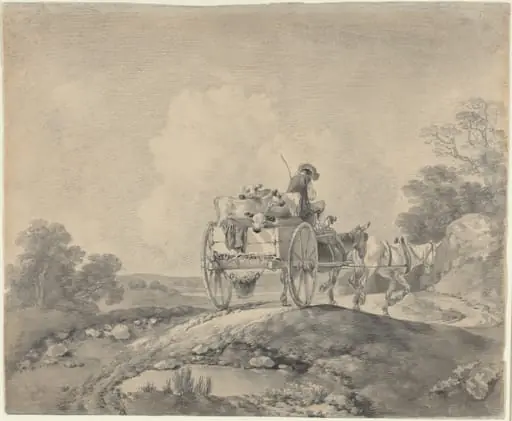 Drover with Calves in a Country Cart
 Jaunting car passing under an archway
![Le tonneau d'arrosage [upper half], by Gabriel de Saint-Aubin](https://artifactworldgallery.com/img/gabriel-de-saint-aubin--le-tonneau-d-arrosage-upper-half--a57323e669478730-w320.webp) Le tonneau d'arrosage [upper half]
Le tonneau d'arrosage [upper half] The Barrow - Quartier des Marolles, Brussels
 Market Scene
 L'enlevement nocturne
 L'enlevement nocturne
 Returning with the Hay (Rentrant le Foin)
 The Wagon Passing Over a Bridge
 Spleen et Idéal