Artwork
Bridge of Shops, Srinagar, Kashmir
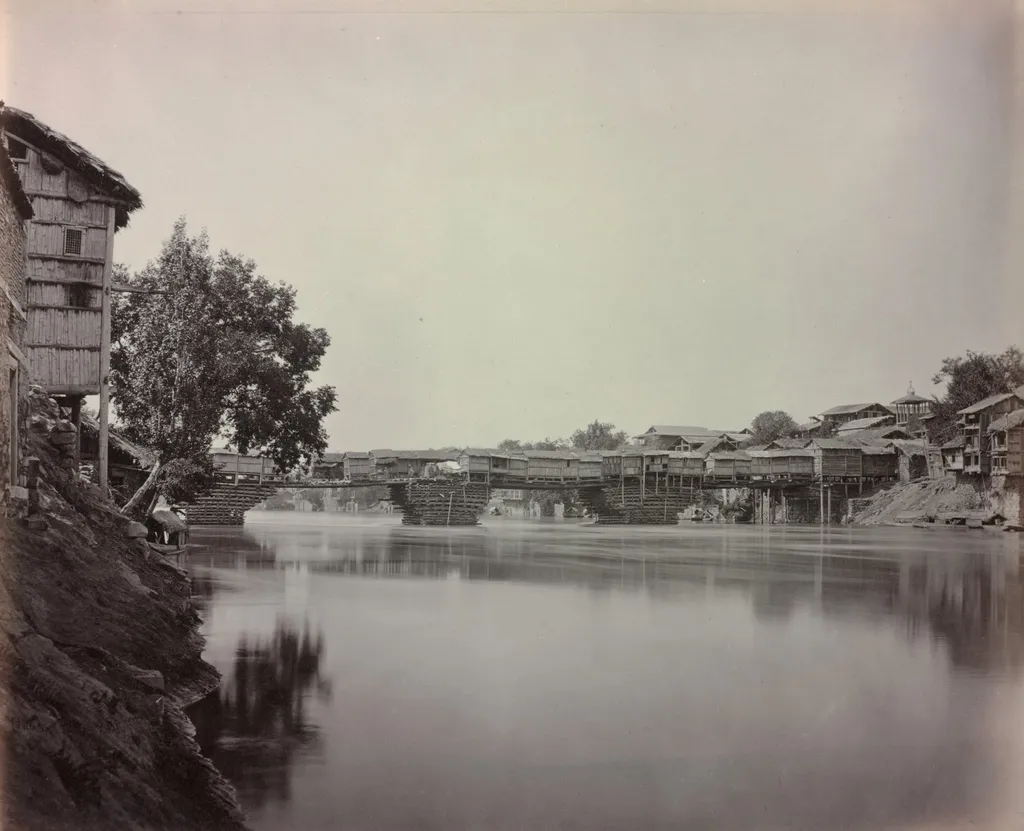
Bridge of Shops, Srinagar, Kashmir is a photography by the Impressionist artist Samuel Bourne. It dates from 1864 and is held in the collection of the Cleveland Museum of Art.
About this work
Bourne took this in 1864 while traveling India with a camera instead of a bank ledger.
This photo shows a wooden bridge in Kashmir packed with small wooden huts. The huts crowd the bridge in two uneven rows, some leaning a little. Bourne took this in 1864 while traveling India with a camera instead of a bank ledger.
He shot it on glass plates with long exposures, so people vanish into blurs. Only the still huts and water stay sharp, making the scene feel both busy and quiet. He wanted to sell these images back in England.
See this in person at The Cleveland Museum of Art.
Overview
Samuel Bourne, a British photographer who abandoned banking for the camera in his teens, captured this image of a wooden bridge in Srinagar, Kashmir, in 1864. Using large-format glass plates and long exposures, he documented India’s landscapes with technical precision. The photograph, part of a broader project to record the subcontinent, reflects his aim to present Indian scenes to British audiences through carefully composed imagery.
Subject & Meaning
The bridge, densely lined with modest wooden huts, functions as both a thoroughfare and a marketplace. The crowded, uneven structures suggest informal urban life, while the absence of human figures—blurred by long exposure—emphasizes the architecture and environment. The scene conveys a sense of quiet industry, where daily activity is implied rather than shown, inviting contemplation of daily life in a region rarely depicted in Western photographic records of the time.
Technique & Style
Bourne employed glass plate negatives and extended exposure times, which rendered moving figures as faint smudges while preserving the solidity of structures and water. His careful attention to light and shadow defines the texture of wood, the ripples of the river, and the layered roofs of the huts. The composition balances asymmetry with harmony, guiding the eye along the bridge’s length and reinforcing the calm stillness beneath apparent bustle.
History & Provenance
Taken during Bourne’s travels across India between 1863 and 1870, this image was produced for commercial sale in Britain, where interest in colonial imagery was growing. The photograph was likely printed as a stereoscopic card or albumen print for private collectors and institutions. It entered the collection of The Cleveland Museum of Art, where it remains as part of a significant body of 19th-century Indian photography.
Context
Srinagar’s wooden bridges, built over the Jhelum River, were vital to the city’s commerce and daily movement. The huts, often used as shops or dwellings, reflected a common adaptation of infrastructure in Kashmir’s urban fabric. Bourne’s image captures a local practice unfamiliar to British viewers, offering a glimpse into the integration of commerce and architecture in a region shaped by geography and tradition.
Legacy
Bourne’s photographs of India helped shape Western perceptions of the subcontinent’s landscapes and architecture. His technical rigor and compositional discipline set a standard for documentary photography in colonial contexts. Though his work served imperial interests, it also preserved visual records of places and practices that have since changed or vanished, lending historical weight to his images beyond their original commercial intent.
Artist & collection

Artist
Samuel Bourne was a British photographer known for his prolific seven years' work in India, from 1863 to 1870.

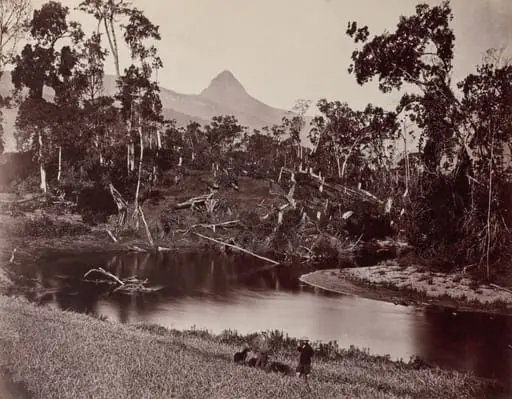 Ceylon Views to Adam's Tooth
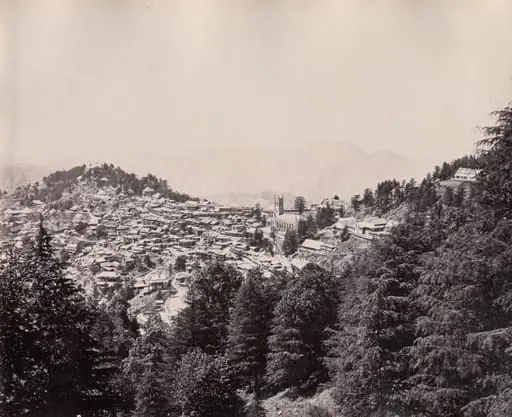 Shimla
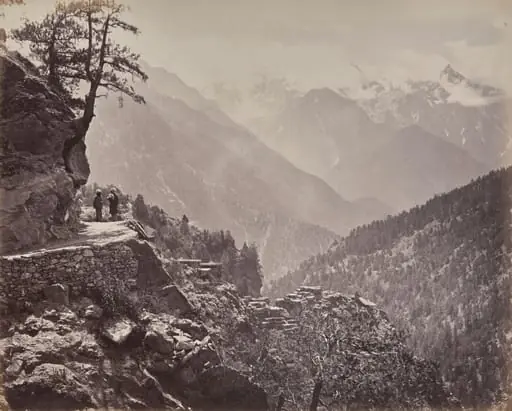 The Upper Himmalayahs. View on the New Road between India and China. Mt. Pangi with the Snowy Peaks of China in the Distance
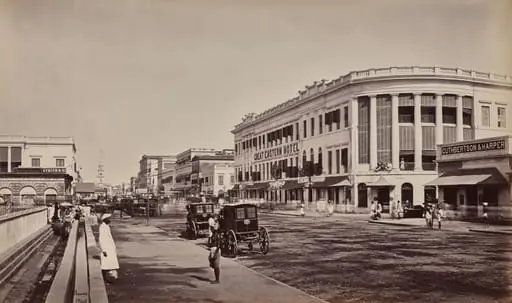 Calcutta. Old Court House Street
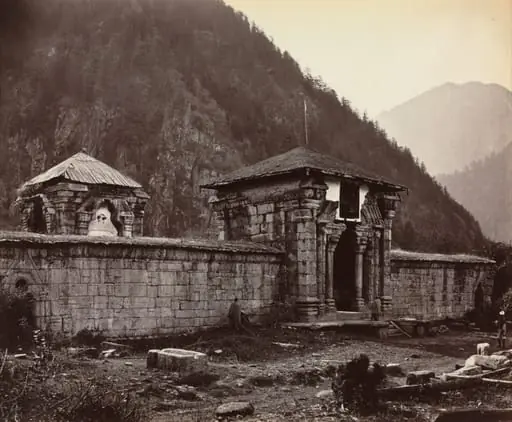 Temple at Naveshera, Kashmir, India
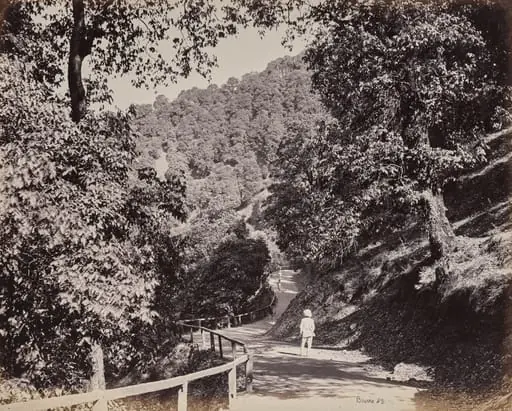 Shimla. The Mall near Rabq Lodge
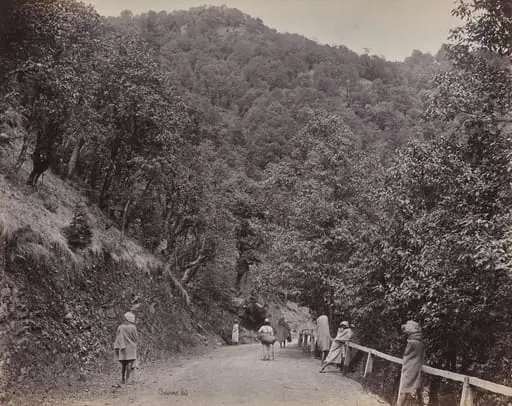 Shimla. The Mall or Principal
 Murree. A Hill Station in the Himmalayahs, View Through the Forest
 Tank and Temples at Bunshunkuree
 The Iron Bridge
 The Upper Himmalayahs. Village of Harkundu with Traveller's Bungalow in Rest-House
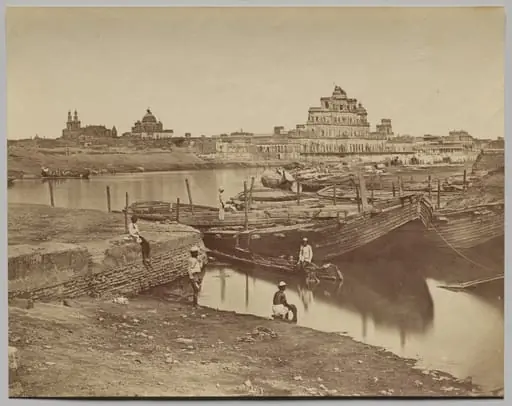 Bridge of Boats over the Gumti River near the Chattar Manzil and Fusseed Bakah or Old Palace
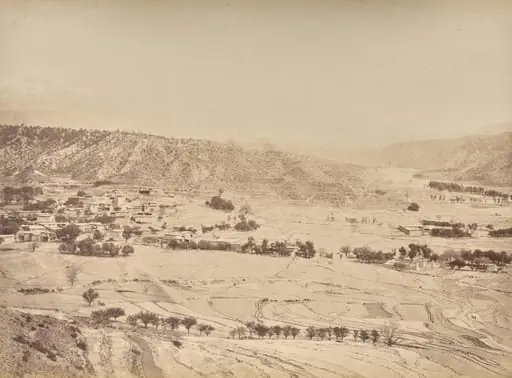 Ali Keyl, Pewar Kotal
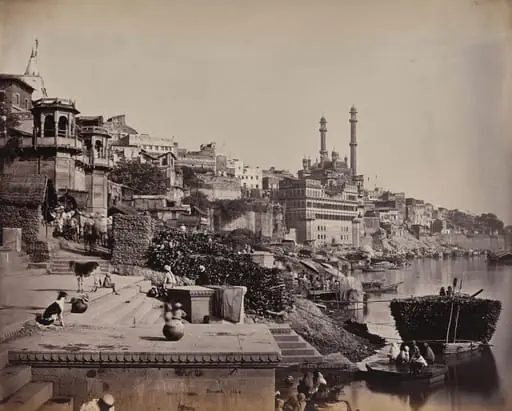 The City of Benares, on the Ganges, View of the Great Mosque of A (?) and Adjoining Landing Places
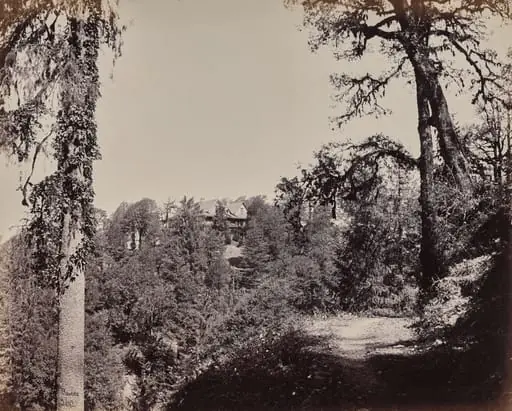 Shimla. Sir Hugh Rose's Bungalow at Mahasso
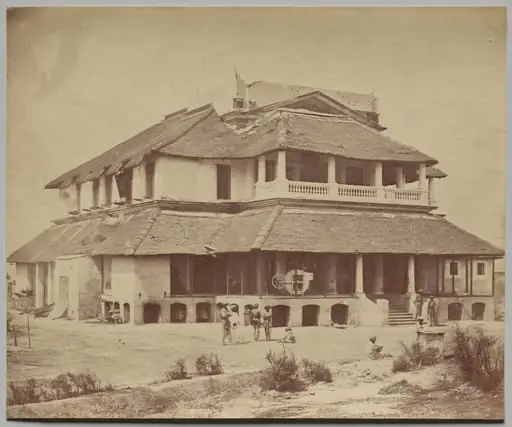 Bank's House
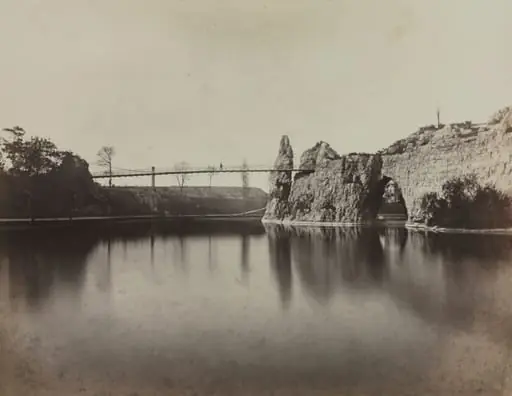 Buttes Chaumont, Paris
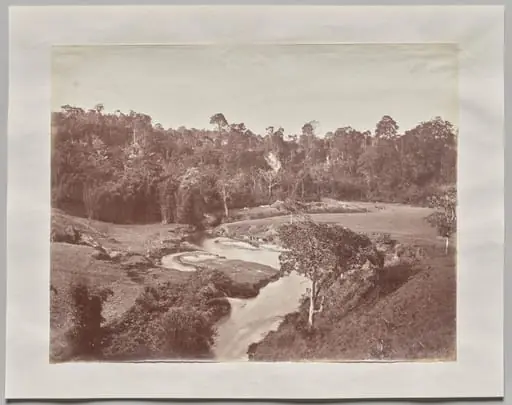 Untitled (River, Hong Kong or Macau, China)
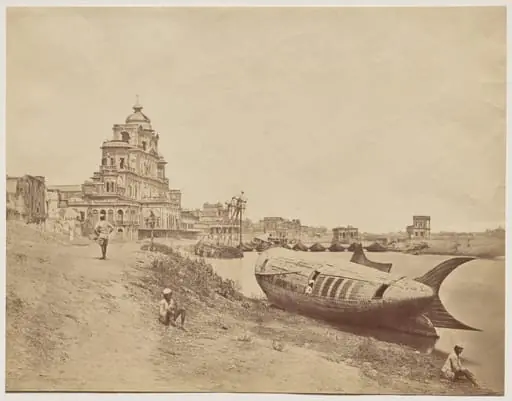 Chutter Manzil Palace, with the King's Boat in the Shape of a Fish
 Shimla. From Mount Jakko, Looking West