Artwork
Papigno on the River Nar, Umbria
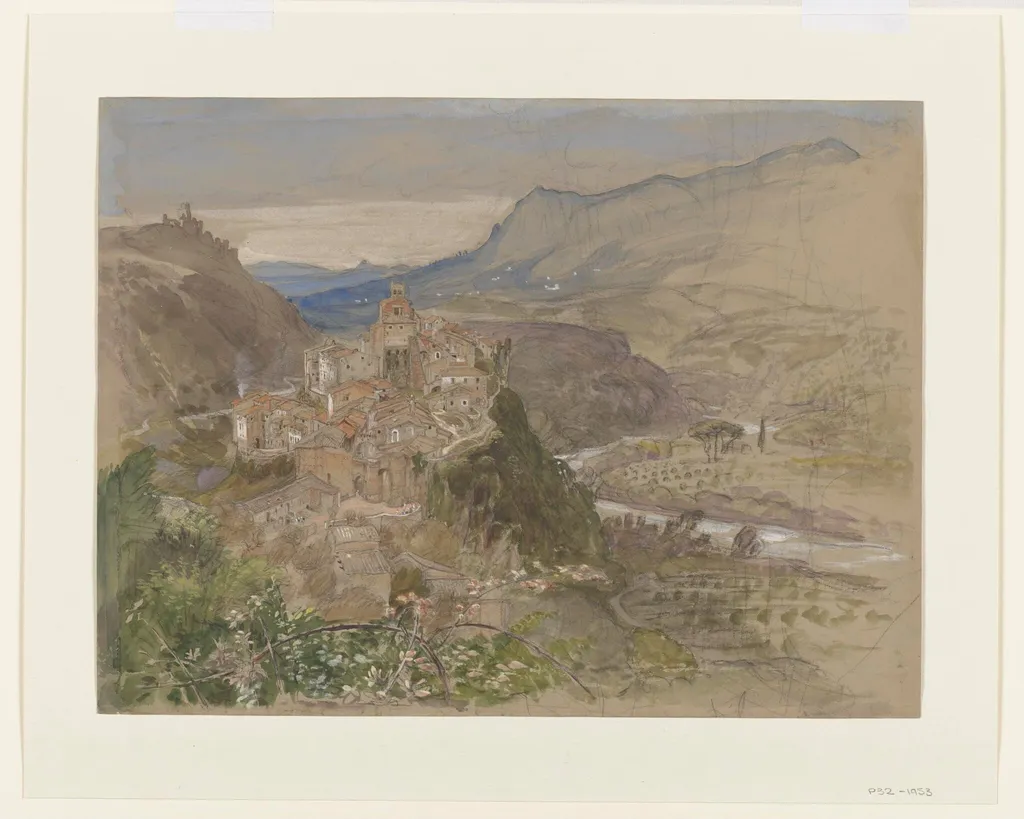
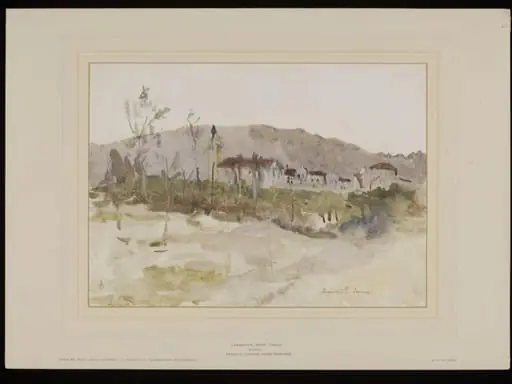
Papigno on the River Nar, Umbria is a watercolor work on paper by the Romanticist artist Samuel Palmer. It dates from 1839 and is held in the collection of the Victoria and Albert Museum.
About this work
Overview
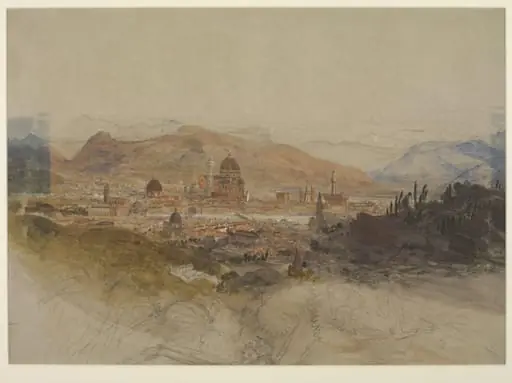
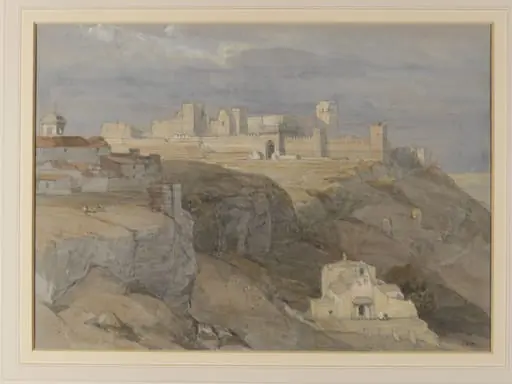
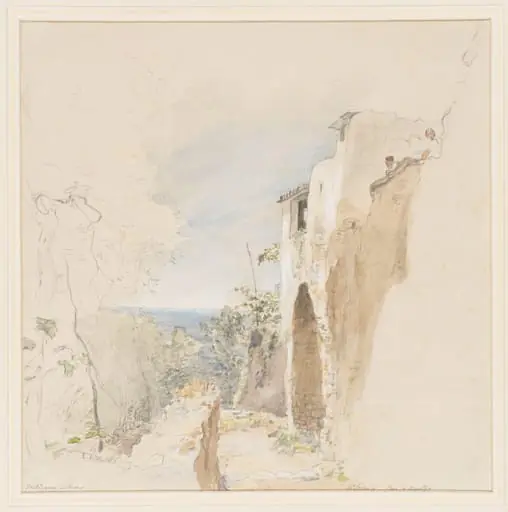
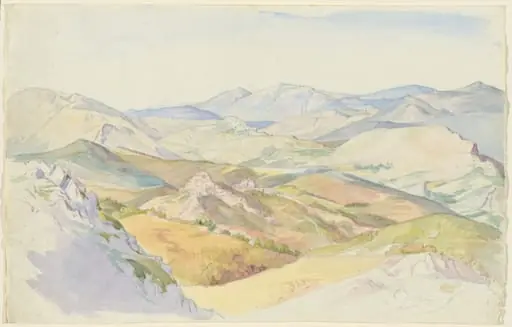
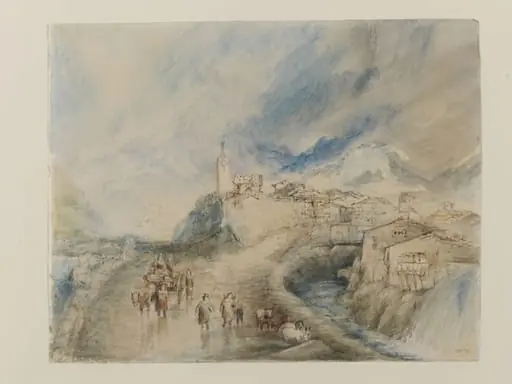
Painted in 1839, this watercolour by Samuel Palmer captures a quiet Umbrian village clinging to a hillside, framed by rolling terrain and distant peaks. Executed in delicate washes, the work reflects Palmer’s interest in landscape as a vessel for quiet contemplation. Its modest scale and intimate view distinguish it from grander topographical records of the period.
Subject & Meaning
The scene centers on a clustered settlement with a prominent church tower, nestled between rugged slopes and the winding River Nar. Buildings with warm-toned roofs suggest human habitation softened by time and nature. The absence of figures and the hazy horizon evoke a sense of solitude, aligning with Romantic ideals that valued nature as a spiritual refuge rather than a mere backdrop.
Technique & Style
Palmer employed loose, fluid watercolour washes to suggest atmosphere rather than define form. Subtle gradations of pale sky and muted greens give way to distant blue mountains, while foreground vegetation is rendered with minimal, sketchy strokes. The technique prioritizes mood over precision, using transparency and negative space to evoke light and distance.
History & Provenance
The work was once in the collection of Sir Frank Short, a noted engraver and admirer of Palmer’s art. In 1926, Short lent it to the Victoria & Albert Museum for a major retrospective of Palmer’s work, helping to revive interest in his lesser-known landscapes. Its presence in the exhibition marked a step in its recognition beyond private circles.
Context
Created during Palmer’s later years, this piece reflects his continued engagement with natural forms after his early association with the Shoreham Ancients. Though painted in Italy, its tone echoes the mystical landscapes of his English period. It aligns with broader Romantic trends that sought emotional resonance in nature, away from industrial modernity.
Legacy
Though not among Palmer’s most widely reproduced works, this watercolour contributes to understanding his sustained exploration of light, place, and stillness. Its inclusion in the 1926 V&A exhibition helped anchor his reputation as a painter of introspective landscapes, influencing later perceptions of 19th-century British watercolour.
Own this work as a print
Artist & collection
Artist
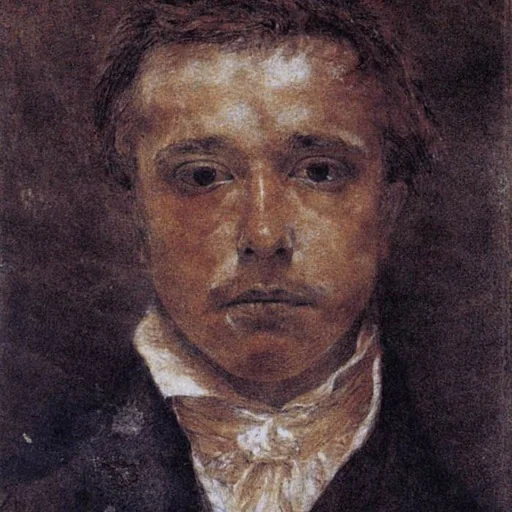
Samuel Palmer Hon.RE (Hon. Fellow of the Society of Painter-Etchers) (27 January 1805 – 24 May 1881) was a British landscape painter, etcher and printmaker. He was also a prolific writer. Palmer was a key figure in…